.webp&w=384&q=75)

Loading, please wait...
Loading, please wait...

A recent study published in the Journal of Neurosurgery explores how AI surgical skill assessment systems can evaluate performance during complex brain tumor resections. Surgical procedures at varying tissue depths pose significant challenges to precision and accessibility. Therefore, researchers used an AI-powered system to analyze how surgeons at different career stages adapt to these challenges.
The study utilized the Intelligent Continuous Expertise Monitoring System (ICEMS) to track performance metrics in real-time. Specifically, the system measured instrument tip separation, bleeding risk, and tissue injury risk across 45 participants. These participants included expert neurosurgeons, trainees, and medical students. Furthermore, the analysis looked at performance changes as the surgical task moved from superficial to deeper tissue layers.
Interestingly, the results showed distinct patterns based on experience level. Expert neurosurgeons maintained consistent performance regardless of tissue depth. However, senior trainees showed a decline in scores as they reached deeper, more complex areas. Conversely, medical students and junior trainees improved their instrument techniques at greater depths, although they remained in the novice category. Additionally, bleeding risk increased for all participants as depth increased, emphasizing the inherent difficulty of deep-seated tumor resection.
These findings highlight the potential for AI to personalize medical education in India and globally. By identifying specific points where a trainee's performance falters, institutions can develop adaptive modules. Consequently, these modules can target individual learning curves more effectively. In conclusion, the integration of AI in surgical simulations provides a robust framework for mastering technical skills in high-stakes environments.
The AI system evaluates several parameters, including instrument tip separation, bleeding risk, healthy tissue injury risk, and the force applied by surgical tools like aspirators and bipolar cautery.
Not necessarily. While senior trainees showed a decline, experts maintained their performance, and junior participants actually showed slight improvements in technique as they adapted to the challenge, though their overall scores were still novice-level.
Disclaimer: This content is for informational and educational purposes only and does not constitute medical advice or endorsement of any specific product or technique. High-fidelity simulations are training aids and should be used as part of a comprehensive curriculum. Refer to the latest local and national guidelines for clinical practice.
References

Read summarized clinical updates, watch expert medical content, and earn CME certifications right from your smartphone.
Open your smartphone camera to scan and install.





A case series study uses AI to evaluate how surgical expertise adapts to tissue depth during brain tumor resections, highlighting the need for adaptive trai...
5 months ago
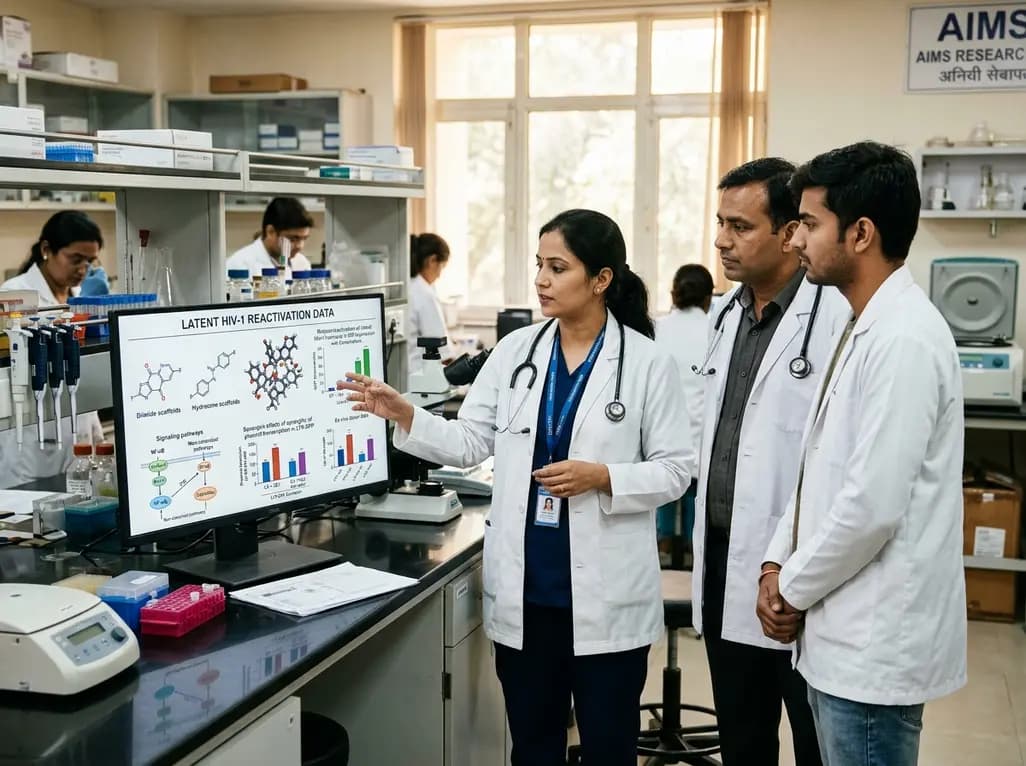
Novel diimide and hydrazone scaffolds, particularly compound #C4, synergistically reactivate latent HIV-1 when combined with JQ1 or PKC activators. Demonstrating donor-matched proviral transcription ex vivo and non-canonical signaling, these findings advance shock and kill strategies toward reservoir eradication.
Today

A cross-sectional study reveals that maternal RSV vaccination coverage reached only 43.7% in Argentina, with maternal vaccine knowledge being the sole independent predictor of uptake. Clinicians play a crucial role in eliminating informational and structural barriers to optimize infant health.
Today

Review how tailored exercise programs benefit frail older patients with heart failure. Explore pathophysiological mechanisms, individualized training prescriptions, and strategies to overcome adherence barriers in clinical practice.
Yesterday

This comparative study evaluates posterior labral tears with and without glenohumeral instability, highlighting distinct demographic patterns, MRI underestimation in stable shoulders, and successful arthroscopic repair outcomes.
Yesterday

A clinical study demonstrates that early intervention with tocilizumab, either as monotherapy or bridged with corticosteroids, achieves significant proptosis reduction and resolves active inflammation in treatment-naive thyroid eye disease.
Yesterday
