.webp&w=384&q=75)

Loading, please wait...
Loading, please wait...

Hearing healthcare is undergoing a transformative technological shift as artificial intelligence enters acoustic signal processing. Modern AI-powered hearing aids now address the historic clinical challenge of speech intelligibility in complex acoustic environments. Swiss hearing care pioneer Sonova has officially introduced its third-generation platform, branded as the Phonak EON. This next-generation system utilizes real-time deep neural network architecture to separate speech from background noise instantly. Consequently, the technology promises to elevate clinical rehabilitation outcomes, lower cognitive fatigue, and improve adherence among elderly patients.
Traditional digital hearing instruments historically relied on fixed acoustic rules and basic directional microphones. While these older systems amplified acoustic signals effectively, they often failed in noisy social situations. As a result, patients frequently reported severe listening fatigue and social isolation. Modern AI-powered hearing aids overcome these fundamental limitations through real-time machine learning. Instead of applying crude linear amplification, contemporary platforms analyze soundscapes hundreds of times per second.
Sonova introduced its initial real-time artificial intelligence platform in 2024. Building on that foundation, the newly unveiled Phonak EON platform incorporates the advanced HYPERSONIC processing chip. This hardware architecture supports dual artificial intelligence systems operating simultaneously. Specifically, the device pairs Spheric Speech Clarity 3.0 with AutoSense OS 8.0 to monitor sound environments continuously. Consequently, the hearing aid dynamically adapts to acoustic fluctuations without requiring manual user adjustments. Furthermore, clinical trials indicate that this real-time neural processing makes speech twice as understandable in loud settings. Because the device processes sound locally, it eliminates latency issues and preserves natural localization cues.
Sensorineural hearing loss does not merely reduce peripheral auditory volume. In addition, it fundamentally impairs the central auditory system's capacity to segregate overlapping spectral cues. When background noise masks target speech, the prefrontal cortex must recruit compensatory cognitive resources. Consequently, patients expend excessive listening effort simply to decode conversational fragments. Over time, this chronic cognitive load accelerates mental fatigue, social withdrawal, and potential cognitive decline.
Advanced neural denoising directly alleviates this neurocognitive burden. By running deep neural networks directly on the ear-level processor, the platform extracts speech targets before neural transmission. Recent neuroimaging investigations demonstrate that real-time AI noise reduction significantly decreases blood oxygenation demands within the left prefrontal cortex. Therefore, patients experience meaningful relief from subjective mental exhaustion during extended conversations. Moreover, objective laboratory evaluations confirm substantial improvements in signal-to-noise ratios, even in dynamic acoustic scenes like crowded restaurants or family gatherings. Thus, clinicians can now prescribe devices that actively protect cognitive reserves while restoring communication efficacy.
Device size and battery longevity remain critical determinants of patient compliance in auditory rehabilitation. Historically, integrating power-hungry artificial intelligence microchips forced manufacturers to produce bulkier ear-level devices. However, Sonova engineered the Phonak EON platform to achieve significant ergonomic refinements. Specifically, the new hardware is 25 percent smaller and 20 percent lighter than previous-generation AI models. This compact form factor markedly improves physical comfort and aesthetic discretion for daily wearers.
Furthermore, the updated microchip delivers enhanced power efficiency, supporting up to 38 hours of continuous operation on a single charge. This extended runtime ensures dependable performance throughout demanding daily schedules. In addition, the platform introduces WindBlock 2.0 algorithms to suppress turbulent wind noise by up to 50 decibels during outdoor activities. As a result, users maintain clear conversational tracking across both indoor and outdoor environments. Healthcare providers often encounter patients who discontinue hearing aid usage due to physical discomfort or cumbersome maintenance. Consequently, these ergonomic and power advancements directly support sustained long-term compliance and superior rehabilitation success.
Sonova initiated the commercial rollout of the Phonak EON platform in the United States, with immediate expansion planned for Australia and major European markets including Germany, France, Italy, and Britain. Subsequently, the company plans a broader international rollout targeting high-growth regions across the Asia-Pacific and Latin America. Emerging markets represent a pivotal growth frontier due to rapidly aging demographic profiles and expanding access to audiological diagnostic services.
Under Chief Executive Officer Eric Bernard, the company focuses on accelerating technology replacement cycles while attracting first-time device wearers. Because untreated hearing loss carries enormous socio-economic burdens, modern technological advancements play a vital public health role. In regions like Asia-Pacific, rising healthcare awareness encourages older adults to seek early interventions. Moreover, the premium positioning of real-time AI devices helps bridge the gap between traditional prosthetics and advanced consumer hearables. Therefore, otolaryngologists and audiologists gain powerful therapeutic tools to engage tech-savvy patients early in their hearing loss trajectory. Ultimately, widespread adoption of intelligent hearing devices could substantially reduce the global burden of untreated presbycusis.
For otolaryngologists, audiologists, and primary care physicians, the advent of real-time neural hearing platforms changes routine clinical counseling. Clinicians should educate patients that modern hearing rehabilitation extends beyond mere volume amplification. When evaluating candidates with sensorineural loss, practitioners must assess both pure-tone thresholds and speech-in-noise comprehension deficits. Patients who struggle predominantly in social gatherings represent prime candidates for deep neural network processing.
Additionally, successful implementation requires objective verification and thorough patient education. Clinicians should utilize real-ear measurements to ensure accurate target acoustic gain before activating advanced artificial intelligence features. Furthermore, counseling should emphasize that neural adaptation takes several weeks as the central auditory cortex recalibrates. By guiding patients through this acclimation period, clinicians maximize device satisfaction and minimize abandonment rates. In addition, interdisciplinary collaboration between primary care doctors and hearing specialists ensures timely screening of geriatric cohorts. Consequently, incorporating sophisticated AI platforms into standardized care pathways enhances long-term quality of life for individuals with hearing impairment.
Q1: How do AI-powered hearing aids differ from traditional digital hearing aids?
Traditional digital devices rely on static frequency shaping and directional microphones that often amplify ambient noise alongside speech. In contrast, AI-powered hearing aids utilize deep neural networks trained on millions of real-world acoustic samples. These advanced processors analyze sound environments in real time, actively extracting and enhancing speech signals while suppressing background clamor, which significantly improves speech intelligibility without manual setting adjustments.
Q2: Why is real-time AI processing critical for reducing patient cognitive fatigue?
When individuals with hearing loss struggle to decipher muffled speech in noisy settings, the brain recruits extensive compensatory cognitive resources from the prefrontal cortex. This sustained mental exertion leads to severe listening exhaustion and mental fatigue. Real-time AI processing isolates clean speech instantly at the device level, effectively lowering this cognitive workload and preserving mental energy throughout daily social interactions.
Q3: Which patient populations benefit most from the Phonak EON hearing platform?
Patients with mild-to-severe sensorineural hearing loss who lead active lifestyles or frequently encounter complex acoustic environments benefit most from this platform. This includes professionals attending group meetings, older adults frequenting busy social gatherings, and first-time users seeking discreet, lightweight devices. Furthermore, individuals experiencing listening fatigue or previous dissatisfaction with traditional amplification achieve substantial functional improvements with real-time neural processing.
Disclaimer: This content is for informational and educational purposes only. It does not constitute medical advice or replace professional judgment. Refer to the latest local and national guidelines for clinical practice.
References

Read summarized clinical updates, watch expert medical content, and earn CME certifications right from your smartphone.
Open your smartphone camera to scan and install.





Sonova has launched its third-generation real-time AI hearing aid platform, Phonak EON. Featuring the HYPERSONIC chip and advanced deep neural networks, the device doubles speech intelligibility in noisy environments while reducing listening effort and cognitive fatigue in patients with presbycusis.
last month
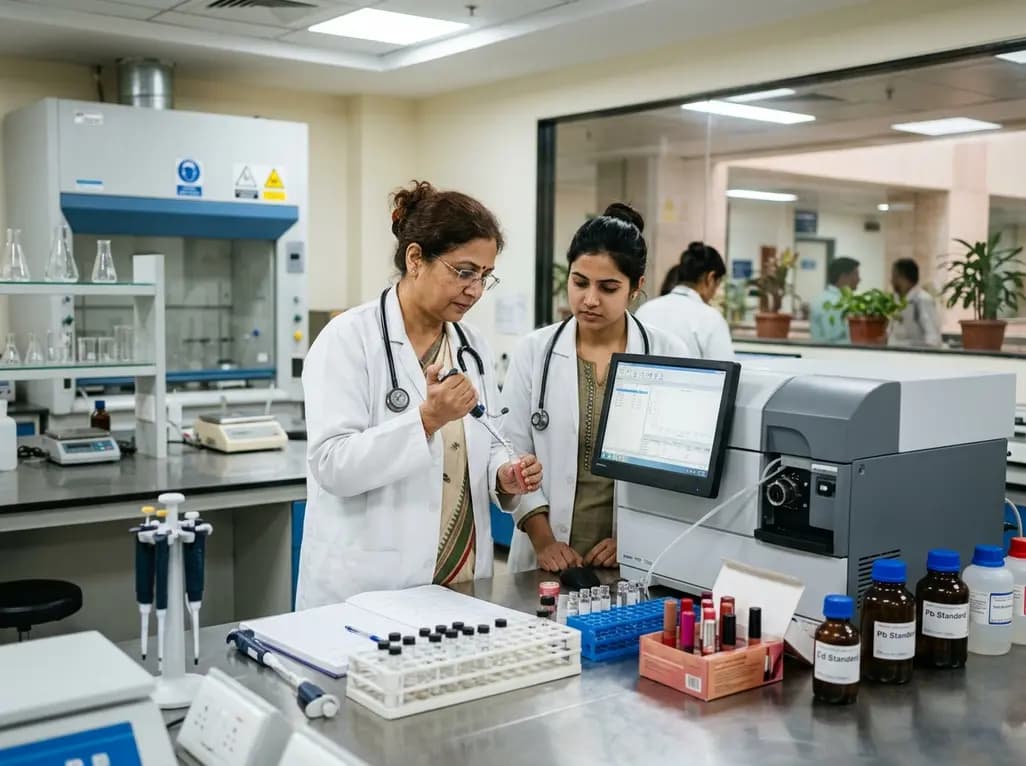
A recent ICP-MS study evaluated seven toxic elements in lip cosmetics. While carcinogenic risks remain negligible, elevated nickel and copper levels along with high hazard indices in lip glazes highlight the need for improved regulatory standards, clinical awareness of cheilitis, and patient education.
Today

A ten-year cohort study of ABU case logs reveals that URPS fellowship training significantly drives higher annual case volumes, advanced surgical complexity, and increased female representation in pelvic floor reconstruction, underscoring the vital need for structured subspecialty training.
Today

Systemic amyloidosis management is undergoing a therapeutic revolution. This clinical review synthesizes updates from the International Society of Amyloidosis, detailing novel plasma cell therapies, TTR stabilizers, silencers, translational models, and artificial intelligence in drug development.
Today

Posttraumatic pisotriquetral instability is a rare wrist injury causing severe hypothenar pain and weakness. Explore clinical examination, imaging, and pisiformectomy.
Today

A comprehensive review analyzes periconceptional GLP-1 receptor agonist exposure, revealing reassuring data on congenital anomalies and adverse perinatal outcomes while emphasizing the need for cautious patient counseling.
Yesterday
