.webp&w=384&q=75)

Loading, please wait...
Loading, please wait...

Peripheral arterial disease (PAD) poses a significant challenge for diabetic patients, often resulting in severe complications such as non-healing ulcers or limb loss. Visualizing small, distal vessels during imaging is vital for successful revascularization planning. Recently, a landmark study highlighted the impact of AI iterative reconstruction CTA in refining the clarity of these critical vessels. This deep learning-based algorithm provides superior visualization of the lower extremity vasculature compared to routine hybrid methods.
The research compared a novel Artificial Intelligence Iterative Reconstruction (AIIR) algorithm with standard Hybrid Iterative Reconstruction (HIR) in 59 diabetic patients. Results indicated that AIIR significantly enhanced visualization scores across several key areas. Specifically, the posterior tibial, dorsalis pedis, medial plantar, and dorsal digital arteries showed substantial clarity improvements. Furthermore, AIIR achieved a significantly higher contrast-to-noise ratio (CNR) and signal-to-noise ratio (SNR) than HIR. Consequently, clinicians can identify collateral circulation with much higher confidence, which is essential for determining the viability of limb salvage procedures.
Moreover, AIIR effectively reduces image noise while maintaining sharp vessel edges. Traditional reconstruction techniques often produce grainy images in distal regions where the vessel diameter is minimal. However, AIIR leverages neural networks to distinguish true anatomical signals from background noise. Therefore, this technology allows radiologists to deliver more precise diagnostic reports even in patients with extensive calcification or poor distal flow.
Integrating AI iterative reconstruction CTA into clinical workflows could transform the management of diabetic vascular complications. By offering high-quality depictions of dorsal metatarsal and digital arteries, AIIR supports surgeons in planning intricate microvascular interventions. Additionally, the subjective overall image quality scores were consistently superior for AIIR-processed scans. This advancement confirms that AI-based reconstruction is becoming a fundamental tool for high-precision vascular assessment in high-risk populations.
It enhances the clarity of small distal vessels, such as the dorsalis pedis and plantar arteries, by reducing image noise and increasing the signal-to-noise ratio. This allows for better detection of stenoses and collateral flow in the diabetic foot.
AIIR uses deep learning neural networks to reconstruct images, whereas HIR relies on mathematical blending of data. AIIR typically results in lower noise, better edge sharpness, and superior visualization of fine vascular structures compared to HIR.
Yes, because it provides clearer images of the distal and collateral circulation. Accurate mapping of these vessels is crucial for vascular surgeons to plan successful bypass or endovascular procedures in diabetic patients.
Disclaimer: This content is for informational and educational purposes only and does not constitute medical advice. Always seek the advice of a qualified healthcare provider regarding any medical condition. Refer to the latest local and national guidelines for clinical practice.
References
Wen Y et al. Artificial intelligence iterative reconstruction in lower extremity computed tomography angiography (CTA) of diabetic patients: Improved visualization of distal and collateral arteries. Acta Radiol. 2026 Mar 17. doi: 10.1177/02841851261429969. PMID: 41841341.
McLeavy CM, et al. Deep Learning Image Reconstruction for CT: Technical Principles and Clinical Prospects. Radiology. 2023;306(1):e221257.
Bernard A, et al. Deep learning reconstruction versus iterative reconstruction for cardiac CT angiography: reduced radiation dose and improved image quality. Quant Imaging Med Surg. 2021;11(1):302-311.
"
Read summarized clinical updates, watch expert medical content, and earn CME certifications right from your smartphone.
Open your smartphone camera to scan and install.





A new study demonstrates that AI iterative reconstruction (AIIR) significantly improves the visualization of distal and collateral arteries in diabetic pati...
7 months ago
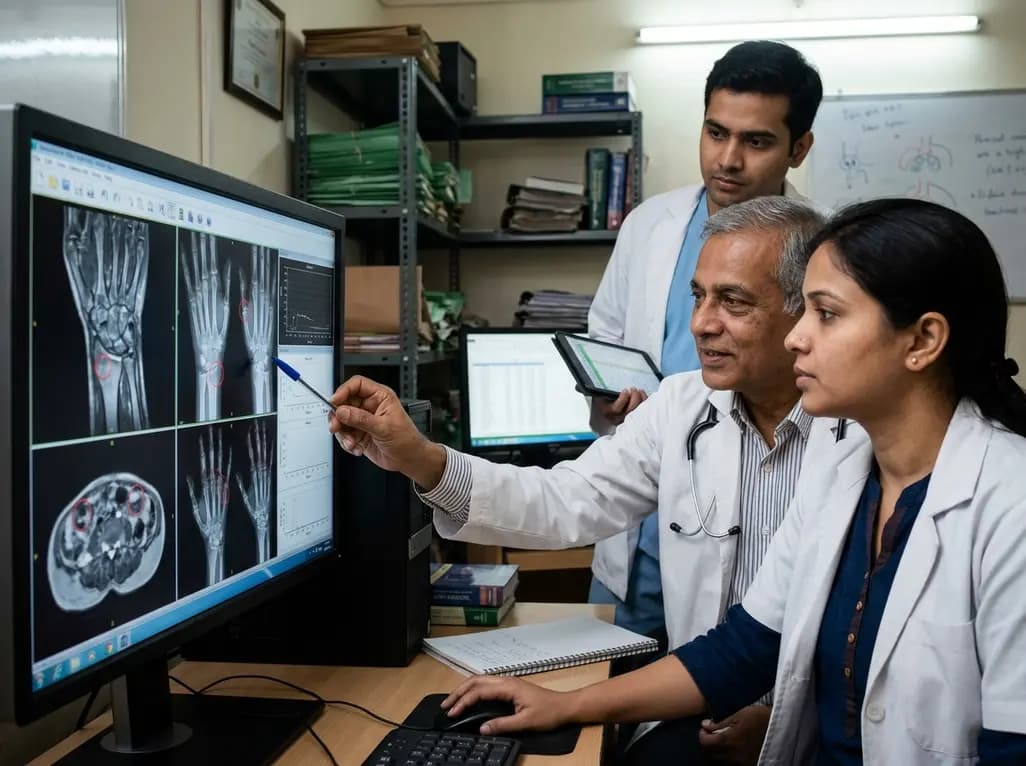
This methodological viewpoint establishes ten rules to constrain noise and enhance precision across image scoring, database handling, and data analysis in rheumatology research.
Today

A study in JAMIA Open shows lightweight open-source reasoning LLMs achieve up to 95% sensitivity and accelerate evidence synthesis screening by nearly twentyfold, presenting a cost-effective, scalable AI solution for biomedical research and systematic reviews.
Yesterday
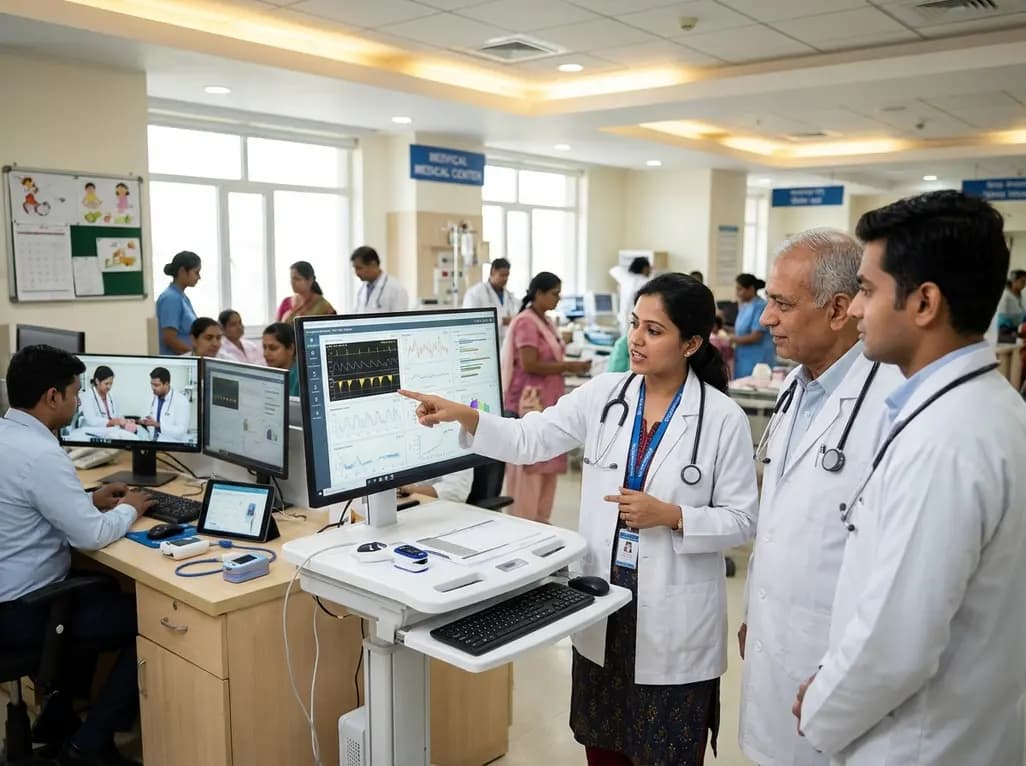
A landmark study details how an enterprise pediatric remote patient management model expanded from a single cardiology pilot to 16 diverse specialty programs by combining centralized digital operations with specialty clinical leadership.
Yesterday
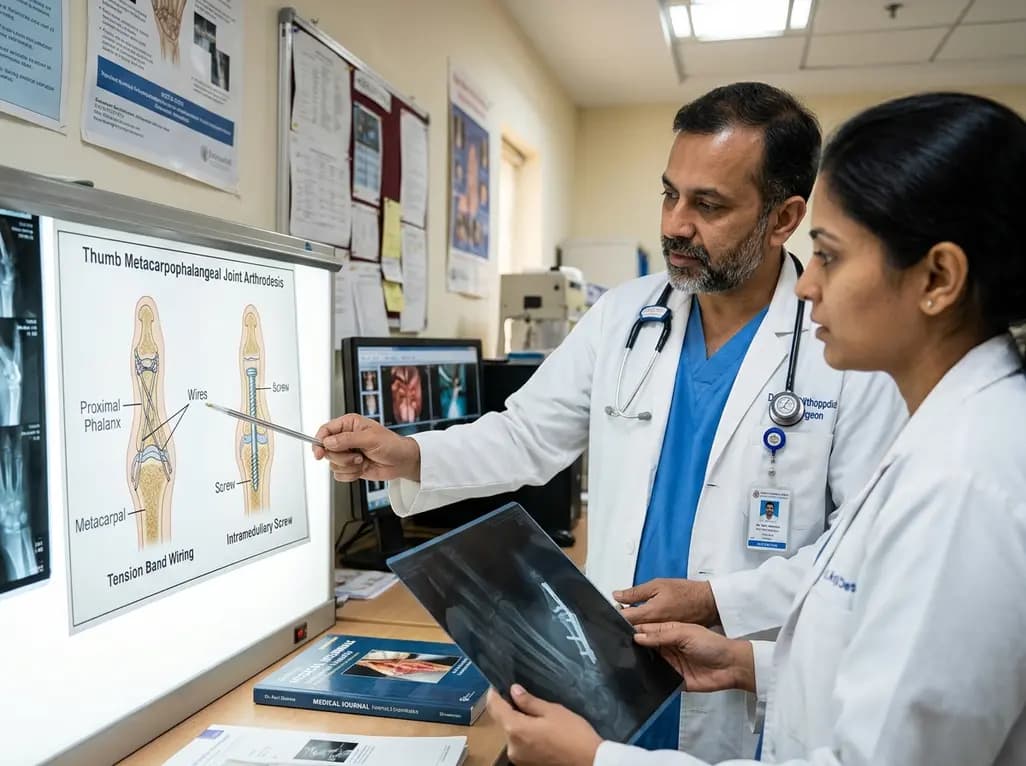
A comparative review of tension band wiring and intramedullary screw fixation in thumb metacarpophalangeal arthrodesis, evaluating union rates, hardware complications, and clinical outcomes.
Yesterday
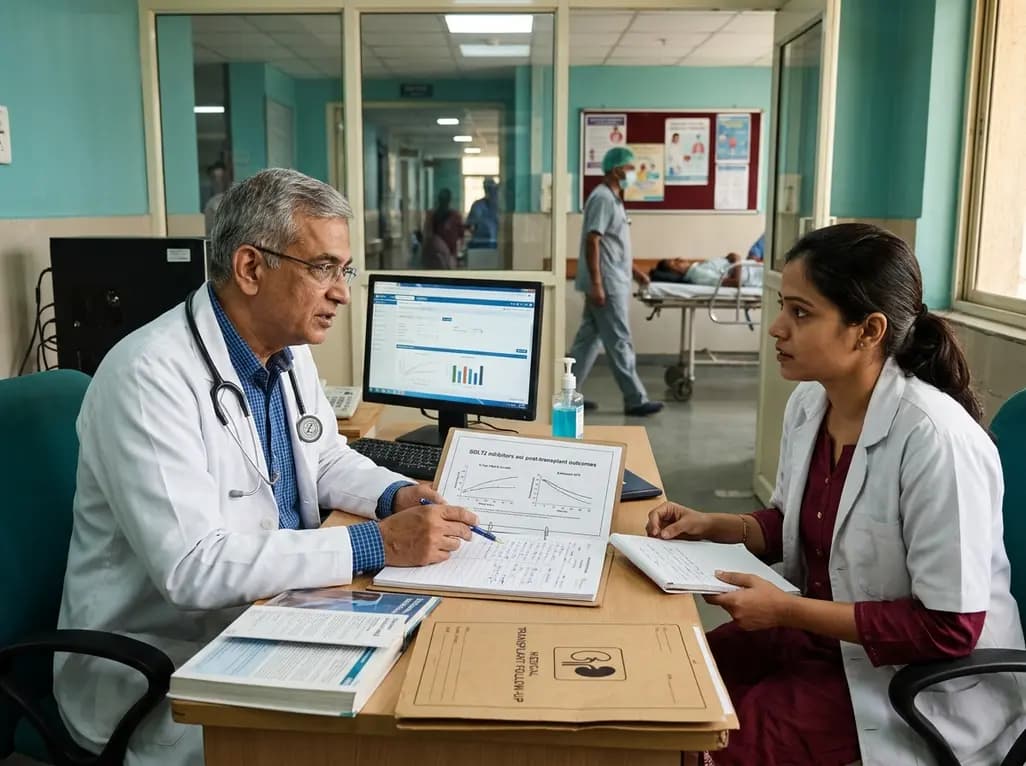
A nationwide observational study from Norway investigates whether SGLT2 inhibitor therapy improves 5-year metabolic parameters in kidney transplant recipients with post-transplantation diabetes mellitus (PTDM), finding comparable glycemic, renal, and blood pressure profiles between user and non-user cohorts.
Today
