

Loading, please wait...
Loading, please wait...
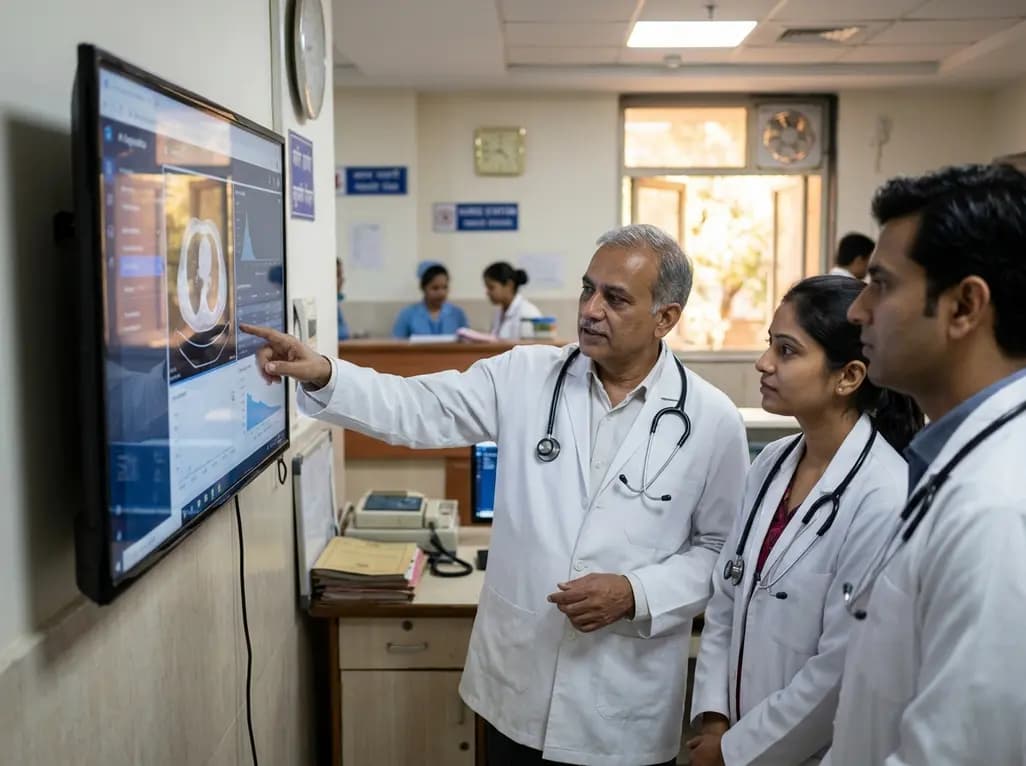
Modern medical practice faces unprecedented shifts as computational innovation intersects with expanding clinical demands. Recently, government leaders, clinicians, and researchers convened at a pivotal national conclave in Varanasi to evaluate the integration of AI in healthcare across India. S. Krishnan, Secretary of the Ministry of Electronics and Information Technology (MeitY), emphasized the profound capacity of algorithmic solutions to bridge longstanding disparities. Furthermore, these technological interventions promise to enhance medical diagnostics, disease screening, and accessibility nationwide. As public healthcare systems adapt to evolving patient demographics, clinicians must understand how emerging digital architectures directly reshape clinical workflows, institutional protocols, and everyday patient management.
Healthcare infrastructure in emerging economies often encounters formidable resource constraints and significant geographical imbalances. For this reason, digital tools provide essential mechanisms to democratize high-quality medical services across remote regions. S. Krishnan emphasized at the Varanasi conclave that computational models can reinforce diagnostic acumen in community healthcare centers. In rural facilities where subspecialists remain scarce, intelligent algorithms assist general practitioners by interpreting complex physiological data and diagnostic images.
Consequently, early clinical interventions become achievable before pathologies progress to irreversible stages. Furthermore, automated clinical decision-support systems evaluate patient records against evidence-based protocols, thereby minimizing diagnostic errors. These intelligent platforms enable primary care teams to triage high-risk cases rapidly, ensuring timely escalation to specialized centers. However, successful clinical deployment demands that medical professionals actively collaborate with software engineers. Doctors must participate in algorithm validation to ensure safety, clinical efficacy, and cultural relevance across heterogeneous demographics. Additionally, regular multidisciplinary audits prevent algorithmic bias from impairing clinical judgment. Ultimately, deploying AI in healthcare pathways elevates frontline service delivery while significantly reducing operational workloads in overburdened public tertiary hospitals. Indeed, ongoing cross-disciplinary training ensures that clinicians utilize computational aids with confidence and rigorous discernment.
Early identification represents the fundamental cornerstone of effective disease management, especially for chronic non-communicable conditions. In this context, artificial intelligence significantly augments early disease detection and diagnostic precision. Deep learning networks can process chest radiographs, digital mammograms, and retinal photographs with remarkable speed and consistency. For instance, automated screening tools can detect diabetic retinopathy and pulmonary nodules during routine outpatient evaluations before noticeable symptoms arise.
Moreover, these algorithms operate within seconds, generating preliminary risk stratification flags for busy hospital clinicians. Such functionality empowers doctors to prioritize urgent investigations and optimize treatment regimens without unnecessary delays. In laboratory medicine, automated morphological analysis accelerates the identification of hematologic anomalies and atypical cellular patterns. Therefore, pathology departments reduce turnaround times while maintaining rigorous diagnostic standards. Nevertheless, practitioners must remember that algorithms serve as supportive instruments rather than autonomous practitioners. Clinicians must synthesize automated findings with comprehensive patient histories, physical assessments, and personalized therapeutic goals. Consequently, technological tools amplify human expertise rather than supplanting clinical acumen. Furthermore, national initiatives like the IndiaAI Mission actively fund research to validate these diagnostic algorithms in diverse real-world clinical environments, ensuring safety across all populations.
Intensive care units demand continuous vigilance and rapid clinical responses to subtle physiological shifts. Unfortunately, certified critical care specialists remain disproportionately concentrated in urban tertiary institutions. To resolve this regional gap, remote ICU monitoring leverages predictive algorithms to protect critically ill patients. Tele-ICU command hubs employ intelligent systems to monitor real-time arterial lines, ventilator parameters, and hemodynamic fluctuations across distant peripheral centers.
Additionally, advanced predictive models forecast acute decompensation, septic shock, and respiratory failure hours before overt manifestations appear. As a result, remote intensivists can guide bedside nursing teams through prompt hemodynamic adjustments and ventilator titrations. This seamless connectivity transforms secondary community hospitals into capable critical care units without requiring extensive specialist relocations. Furthermore, continuous algorithmic surveillance minimizes clinical alarm fatigue by filtering harmless physiological artifacts from genuine crises. Consequently, bedside clinical teams focus their attention on true medical emergencies with greater speed and clarity. However, hospital administrators must establish robust data security frameworks and standardized tele-consultation protocols. When healthcare institutions adopt secure remote monitoring systems, they noticeably lower patient mortality and optimize intensive care bed utilization across regional hospital networks.
Assistive technologies empower individuals with physical, sensory, or neurological impairments to achieve greater functional independence and societal inclusion. During the conclave at IIT BHU, medical experts focused intensely on integrating intelligent computing with assistive hardware. For example, modern neural prosthetics and intelligent mobility aids utilize real-time sensory feedback to adjust seamlessly to dynamic physical environments. Similarly, speech recognition software and predictive text systems assist individuals recovering from severe stroke or neurodegenerative diseases.
Moreover, advanced vision-enhancement tools help visually impaired individuals navigate complex physical environments safely. These assistive innovations directly elevate patient well-being, allowing individuals to regain personal autonomy and functional capacity. Clinicians in rehabilitation medicine, neurology, and orthopedics should actively evaluate these digital interventions during therapy planning. Furthermore, accessible digital interfaces allow patients to report symptoms and track rehabilitation milestones from their homes. Consequently, therapy teams can modify rehabilitation regimens remotely without requiring frequent hospital visits. However, developers must prioritize user affordability and intuitive operation when designing assistive devices. By championing cost-effective assistive designs, healthcare providers ensure that technological breakthroughs remain accessible to individuals across all socioeconomic strata. Additionally, continuous clinical input ensures that functional devices address authentic, lived patient needs.
Developing sustainable medical technology requires robust alignment between academic research, healthcare delivery, and governmental support. During the tech conclave, STPI Director General Arvind Kumar highlighted the vital necessity of indigenous health-tech innovation. India possesses an exceptional information technology infrastructure, which can drive breakthrough clinical software solutions. Through its nationwide network of 27 Centres of Entrepreneurship, STPI actively nurtures budding medical innovators and health-tech enterprises.
Furthermore, academic incubation centers like the Centre for Innovation, Incubation and Entrepreneurship (CIIE) at IIT BHU connect researchers directly with clinical mentors and funding channels. Such institutional synergy accelerates translational research, transforming preliminary laboratory prototypes into clinically approved medical devices. Consequently, startups can navigate intellectual property protection, rigorous clinical trials, and regulatory compliance more effectively. Additionally, the IndiaAI Mission provides crucial compute infrastructure and funding to encourage homegrown artificial intelligence initiatives. Healthcare leaders must encourage young clinicians to participate actively in these biomedical entrepreneurship ecosystems. Moreover, indigenous innovation guarantees that clinical algorithms train on local datasets, improving diagnostic accuracy for domestic patient cohorts. Ultimately, collaborative networks between academia, industry, and healthcare institutions will establish India as a global leader in affordable digital medicine.
Q1: How does AI in healthcare improve early disease screening in resource-limited settings?
Artificial intelligence platforms analyze routine medical data, including radiographs and retinal images, with remarkable diagnostic speed. In resource-limited clinics lacking subspecialists, these computational tools perform immediate triage and flag suspicious abnormalities. Consequently, community healthcare workers can identify high-risk individuals early and expedite referrals. This streamlined workflow reduces diagnostic delays, prevents disease progression, and optimizes clinical resource allocation across underserved populations.
Q2: What role does remote ICU monitoring play in strengthening hospital networks?
Remote ICU monitoring connects peripheral hospitals to centralized command hubs staffed by experienced intensivists and critical care nurses. Intelligent algorithms continuously analyze patient telemetry, ventilator metrics, and vital signs to predict deterioration. Therefore, remote specialists can intervene promptly, guiding local staff through crucial therapeutic corrections. This collaborative model improves patient survival, prevents unnecessary emergency transfers, and elevates care standards in community hospitals.
Q3: How do the IndiaAI Mission and STPI support medical innovation?
The IndiaAI Mission and Software Technology Parks of India provide computing infrastructure, research grants, and incubation centers to foster indigenous health-tech innovation. Through 27 Centres of Entrepreneurship, STPI connects innovators with clinical mentors and funding channels. Furthermore, these initiatives accelerate translational research, converting medical software concepts into validated, scalable healthcare solutions that effectively address pressing public health challenges.
Disclaimer: This content is for informational and educational purposes only. It does not constitute medical advice or replace professional judgment. Refer to the latest local and national guidelines for clinical practice.
References

Read summarized clinical updates, watch expert medical content, and earn CME certifications right from your smartphone.
Open your smartphone camera to scan and install.





MeitY and IIT BHU recently hosted a national conclave exploring AI in healthcare. Discover how government initiatives, remote ICU monitoring, intelligent screening, and assistive technologies are modernizing clinical practice and expanding medical access across underserved communities throughout India.
Today

A quality improvement program integrating nursing education, an EMR-guided pathway, and automated retrospective surveillance significantly enhanced transfusion reaction reporting and increased TACO detection by 293%.
Today
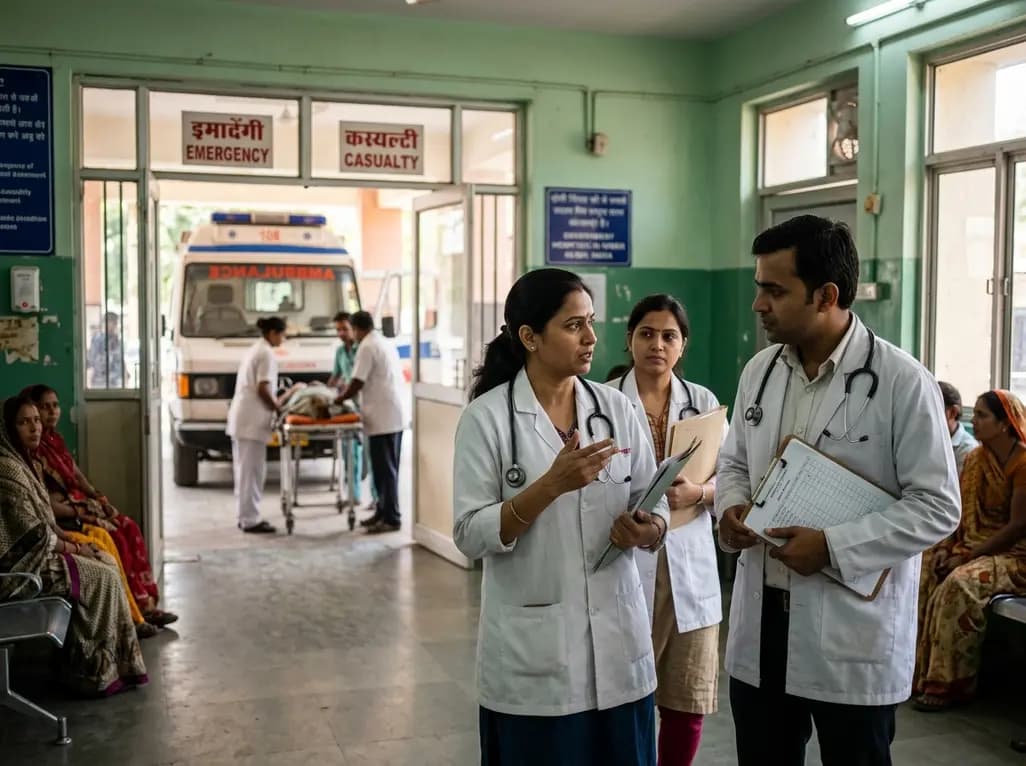
A recent maternal mortality case in Kota has drawn national scrutiny toward operational deficits in emergency transport networks. With low ambulance utilization among high-risk pregnant women, delayed inter-facility transfers, and preventable clinical complications, urgent systemic reforms are vital for patient safety.
Today
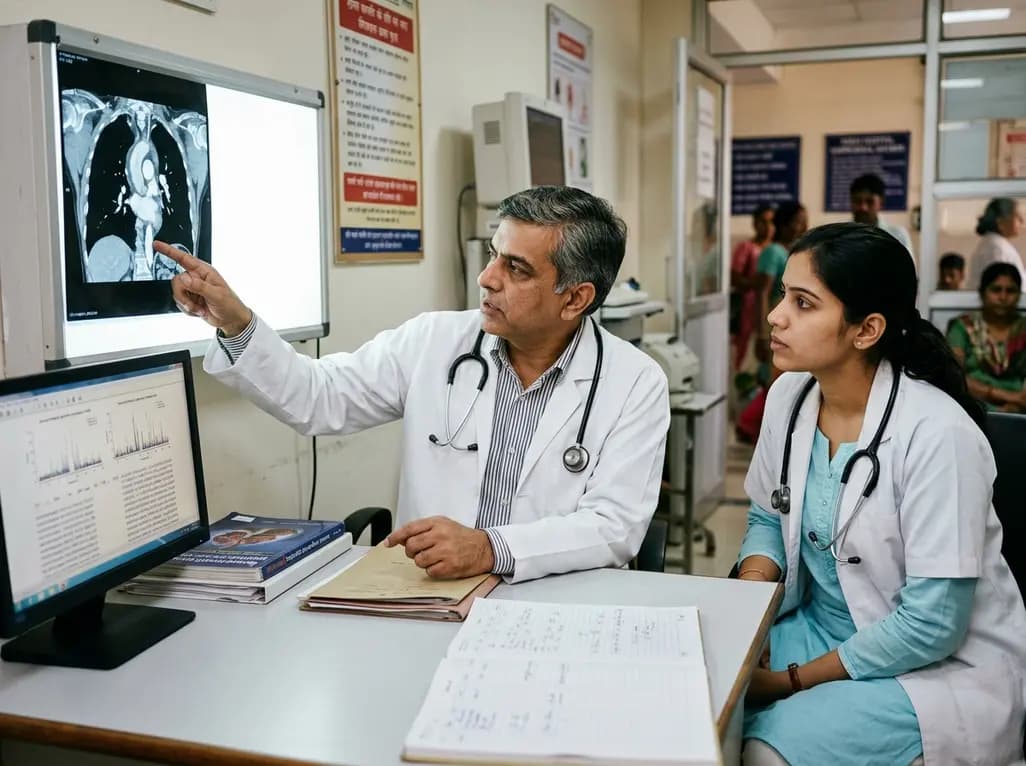
A study reveals that the MYLK c.4079G>A, p.(Gly1360Asp) variant is linked to high-penetrance heritable thoracic aortic disease and early-onset aortic dissection, showing a founder effect in Finnish cohorts. Findings emphasize early cascade screening and vigilant surveillance.
Yesterday
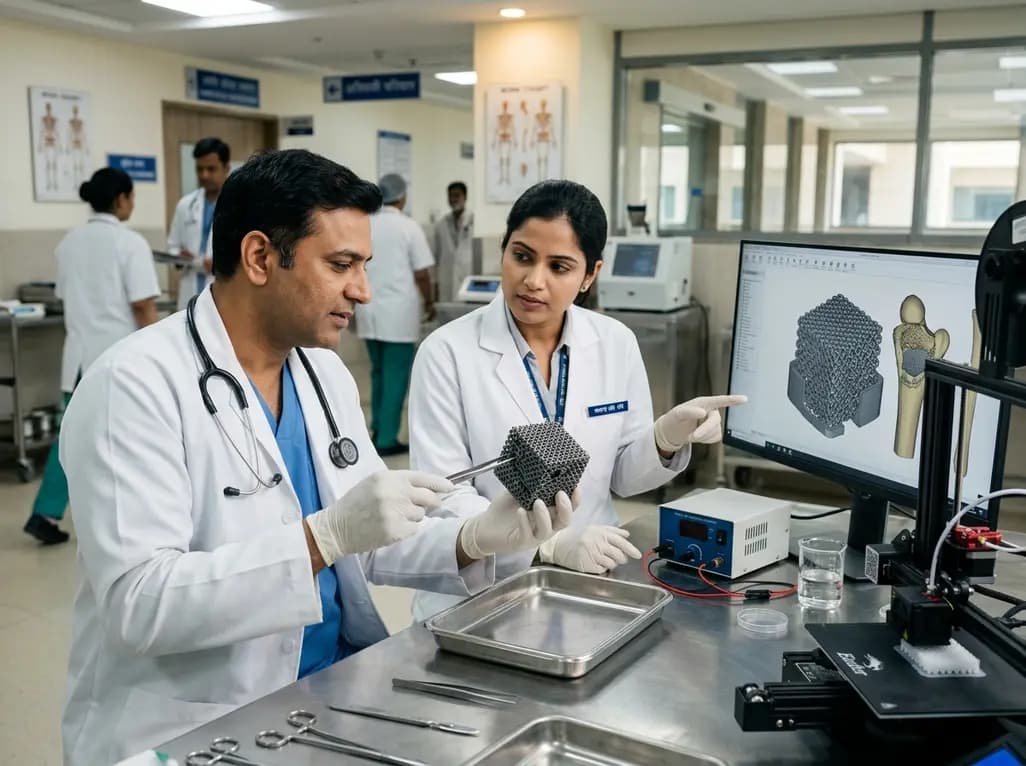
A novel sacrificial-template technique combines FDM polymer 3D printing and micro-arc oxidation to fabricate orientation-controlled porous titanium scaffolds. These bioactive constructs offer tailored stiffness, exceptional multidirectional load resistance, and robust osseointegration for bone defect repair.
Today
A novel label-free electrochemical biosensor utilizing magnetic nanocomposites enables ultrasensitive TERT C228T mutation detection (LOD: 0.67 pM) for rapid risk stratification in papillary thyroid cancer, offering promising point-of-care utility for endocrine oncology.
Today
