.webp&w=384&q=75)

Loading, please wait...
Loading, please wait...
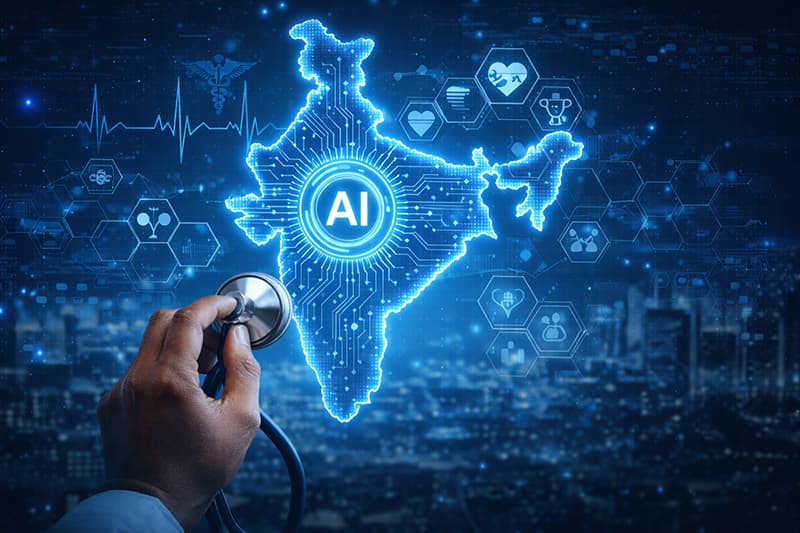
Union Health Minister Jagat Prakash Nadda recently unveiled a major blueprint for AI in healthcare India. This initiative marks a significant step toward regulating digital health tools across the nation. Specifically, the government launched two landmark programs at the India AI Summit 2026. These initiatives aim to ensure that emerging technologies remain safe and accountable for public use. Consequently, the move transitions the sector from mere experimentation to structured oversight.
The Strategy for Artificial Intelligence in Healthcare for India (SAHI) provides a structured framework for the country. It ensures that AI assists rather than replaces doctors and health workers. Furthermore, the framework operates within clear guardrails of transparency and equity. It sets a national direction on governance and data stewardship. By establishing validation standards, SAHI encourages innovation that aligns with public health priorities. Therefore, healthcare providers can expect more reliable digital support in clinical settings.
Alongside SAHI, the government introduced the BODH platform to the public. IIT Kanpur developed this tool in collaboration with the National Health Authority. Additionally, it allows researchers to benchmark AI models on real-world data without exposing patient identities. This privacy-preserving mechanism is essential for building trust in technology. The platform functions as a digital public good under the Ayushman Bharat Digital Mission. Eventually, it will help ensure that AI systems perform reliably across different regions and populations.
Q1: What is the primary purpose of the SAHI framework?
SAHI acts as a national guidance framework for the safe and ethical adoption of artificial intelligence within India's healthcare system, providing strategic direction on governance and deployment.
Q2: How does the BODH platform protect patient privacy?
BODH uses a privacy-preserving mechanism that allows AI models to be rigorously evaluated using real-world health data without sharing or exposing the underlying patient datasets.
Disclaimer: This content is for informational and educational purposes only. It does not constitute medical advice or replace professional judgment. Refer to the latest local and national guidelines for clinical practice.
References

Read summarized clinical updates, watch expert medical content, and earn CME certifications right from your smartphone.
Open your smartphone camera to scan and install.





Union Health Minister J.P. Nadda launched SAHI and BODH to regulate AI in healthcare India, focusing on safety, ethics, and privacy-preserving testing tools...
7 months ago

This clinical review examines the dangerous intersection of climate change and antimicrobial resistance (AMR). It highlights thermal selection, altered transmission pathways, and the imperative for One Health and Planetary Health adaptation frameworks to preserve therapeutic efficacy.
Today
Discover the crucial distinctions between mesonephric and mesonephric-like proliferations of the female genital tract. Learn the key histomorphologic, immunohistochemical, and molecular differences essential for accurate diagnosis and clinical management.
Today
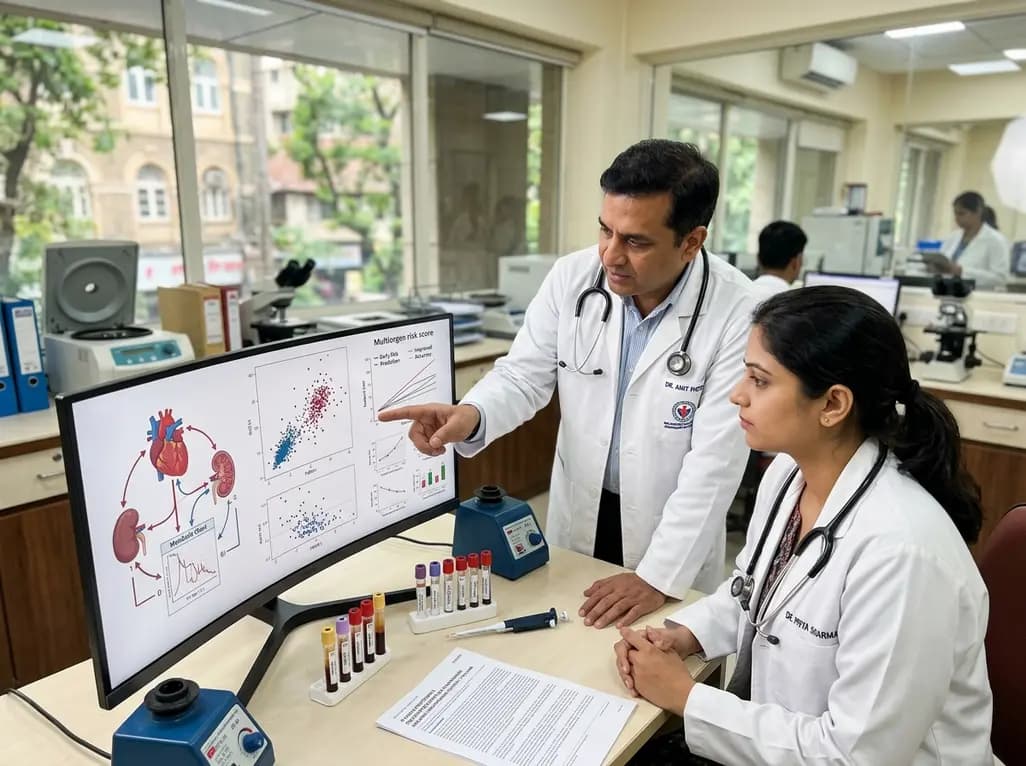
A large UK Biobank study reveals that plasma proteomic signatures capture preclinical organ damage and improve multiorgan risk prediction across early CKM syndrome stages 0 to 2 beyond traditional PREVENT clinical models.
Today
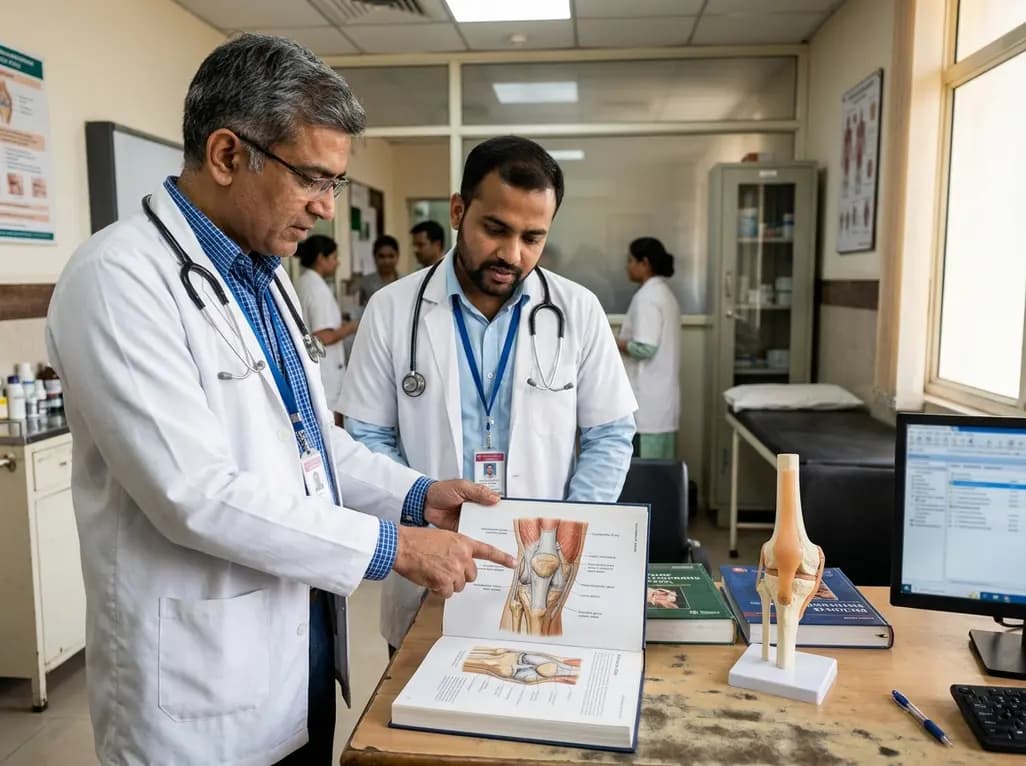
A narrative review investigates whether the articularis genus muscle functions as an independent anatomical entity or blends with the vastus intermedius. We evaluate its morphology, role in retracting the suprapatellar bursa, and direct clinical significance in anterior knee pain and arthroplasty.
Today

A Bayesian multilevel meta-analysis reveals that aerobic training combined with moderate carbohydrate restriction modestly lowers HbA1c in type 2 diabetes. However, sparse data and very low certainty leave incremental benefits over exercise or diet alone unproven, highlighting the need for individualized care.
Today
