.webp&w=384&q=75)

Loading, please wait...
Loading, please wait...
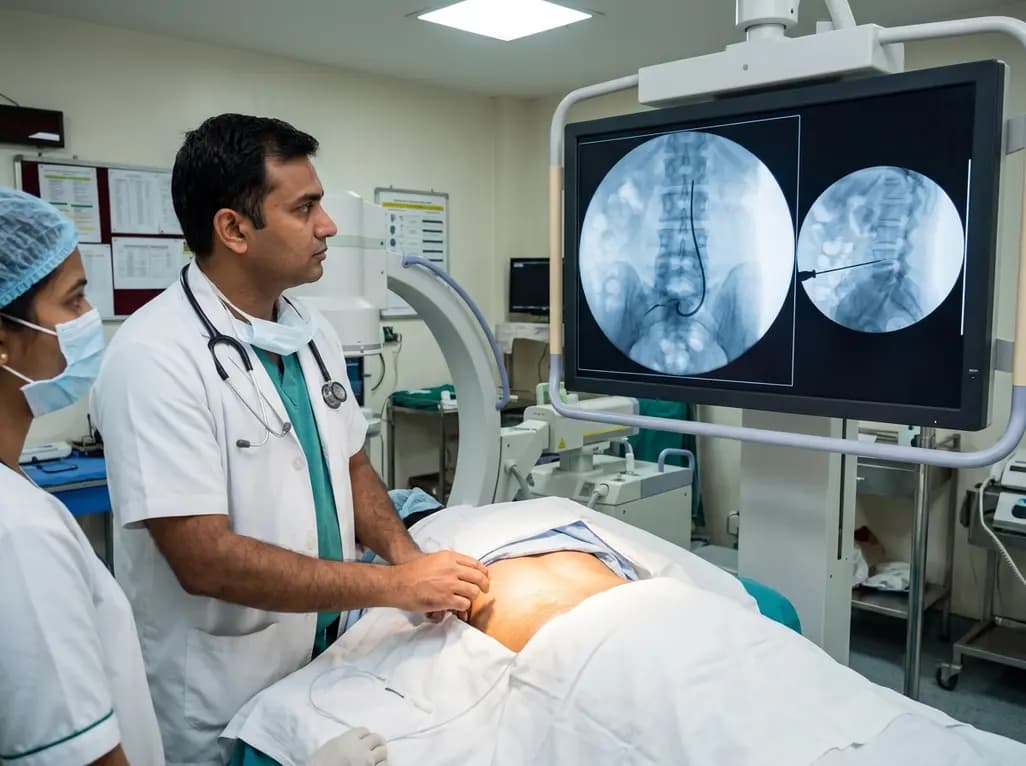
Persistent spinal pain syndrome remains a devastating complication following lumbar spine operations. Consequently, interventional spine specialists frequently implement epidural lysis of adhesions to relieve recalcitrant radicular and axial symptoms. Epidural fibrosis develops when postoperative hematomas organize into dense connective tissue around neural elements. Furthermore, this cicatricial tethering severely diminishes vascular perfusion and restricts the physiologic gliding of nerve roots during movement. Therefore, affected individuals endure intense neuropathic pain and progressive physical disability that resist standard conservative therapy. In particular, surgical intervention at the L5-S1 junction often produces dense epidural scarring within the spinal canal and neural foramina. Although revision spine surgery remains an option, repeated operations carry high complication rates and frequent therapeutic failure. Percutaneous neuroplasty offers an effective minimally invasive alternative for post-laminectomy syndrome. By disrupting fibro-osseous adhesions mechanically and enzymatically, this technique restores normal tissue compliance and promotes perineural microcirculation. Additionally, the procedure facilitates targeted pharmacologic delivery directly to sensitized spinal roots. Recent clinical trials provide vital clarity regarding optimal technical approaches for targeting persistent scarring at the lumbosacral junction.
A landmark double-blind randomized clinical trial conducted at Imam Reza Hospital directly compared two predominant lysis techniques. Specifically, the trial enrolled adult patients who experienced persistent back and leg pain for over three months after L5-S1 lumbar surgery. Investigators randomly allocated participants into two distinct interventional cohorts. The first cohort underwent caudal epidural neuroplasty utilizing a specialized steerable catheter. Meanwhile, the second cohort received targeted L5-S1 transforaminal epidural lysis. Both interventional techniques relied on real-time fluoroscopic guidance and epidurography to assess filling defects. In the caudal catheter arm, clinicians advanced a flexible catheter through the sacral hiatus directly to the L5-S1 space. Consequently, operators performed precise mechanical adhesiolysis before administering therapeutic solutions. Conversely, practitioners in the transforaminal group introduced a needle through the neural foramen to deposit anti-inflammatory medications. Importantly, the researchers systematically evaluated pain severity and functional capacity before intervention and at four and twelve weeks post-intervention. They employed the Numerical Rating Scale alongside the Oswestry Disability Index to assess clinical changes. Thus, this methodology permitted an objective comparison between mechanical catheter navigation and transforaminal needle placement.
The clinical trial demonstrated striking therapeutic advantages for patients receiving caudal catheter adhesiolysis compared to the transforaminal approach. Throughout the twelve-week follow-up period, patients in the caudal catheter cohort achieved markedly greater clinical improvements. Specifically, their back pain Numerical Rating Scale scores decreased significantly more than scores in the transforaminal group. Similarly, radicular leg pain scores showed profound, sustained reductions among catheter-treated individuals. In addition to notable analgesic benefits, functional capacity improved substantially. Patients who received caudal catheter neuroplasty demonstrated significantly lower Oswestry Disability Index scores at four and twelve weeks. In contrast, transforaminal injection recipients exhibited modest short-term relief that deteriorated rapidly over subsequent weeks. Furthermore, objective evaluations of motor and sensory function confirmed meaningful neurological recovery in the catheter group. Because mechanical catheter manipulation breaks dense fibrous tissue, injected medications bathe the perineural sheath more comprehensively. Consequently, patients experienced fewer breakthrough pain episodes and required fewer supplementary analgesics during daily activities. These robust findings indicate that directional catheter placement provides superior long-term clinical control for refractory post-surgical lumbosacral pain.
Analyzing the anatomy of the post-surgical spine explains why caudal catheterization demonstrates superior therapeutic efficacy. Following spinal surgery, dense scar tissue forms irregular physical barriers that encapsulate the nerve root and dorsal root ganglion. When clinicians perform a conventional transforaminal injection, the injected medication routinely follows the path of least resistance. Consequently, scar tissue deflects the injectate away from the compromised nerve root, preventing effective therapeutic bathing. In contrast, a steerable caudal catheter allows the interventionalist to dissect fibrotic adhesions mechanically under continuous fluoroscopic visualization. Furthermore, this deliberate navigation positions the catheter tip directly at the ventral epidural space, where disc pathology and root compression collide. Once the operator disrupts the cicatricial matrix, therapeutic solutions reach their target with minimal hydraulic impedance. Subsequently, the administered local anesthetics, hypertonic saline, and corticosteroids suppress ectopic neural discharges and eliminate perineural edema. Additionally, mechanical mobilization frees the trapped spinal root from surrounding fibrous tissue and bone margins. Therefore, this dual mechanical and pharmacological action achieves comprehensive neural decompression that static needle punctures cannot duplicate.
While percutaneous neuroplasty delivers compelling clinical benefits, interventionalists must maintain rigorous technical vigilance. Fortunately, the randomized clinical trial reported no persistent neurological deficits or major adverse events in either treatment group. However, navigating the post-surgical epidural space involves potential hazards that demand precise technique and continuous fluoroscopic monitoring. For instance, inadvertent dural puncture remains an established risk, which can precipitate low-pressure headaches or high spinal anesthesia. To prevent complications, practitioners must perform contrast epidurography in multiple radiographic planes before injecting medications. Furthermore, clinicians must avoid intravascular uptake, which risks systemic toxicity and localized hematoma formation. Strict aseptic technique is essential to eliminate epidural abscess risks in compromised post-surgical tissue planes. Moreover, operators must measure medication volumes accurately to avoid rapid pressure spikes within the spinal canal. Pain specialists should incorporate steerable caudal adhesiolysis as a preferred intervention when conservative measures fail. Finally, combining targeted mechanical lysis with active physical rehabilitation maximizes long-term functional recovery and patient independence.
Failed back surgery syndrome develops due to complex structural and neuropathic factors after spinal surgery. Most frequently, epidural fibrosis proliferates around delicate nerve roots, causing continuous mechanical tension and ischemic distress. In addition, persistent facet arthropathy, recurrent disc herniation, spinal instability, or altered biomechanics can perpetuate debilitating axial and radicular symptoms. Consequently, patients experience chronic pain that resists conventional oral pharmacotherapy and conservative exercise therapy.
Caudal catheter adhesiolysis provides direct mechanical disruption of fibrotic scar tissue under fluoroscopic visualization. In contrast, transforaminal needles simply inject solutions that scar tissue often diverts away from the entrapped nerve roots. Furthermore, a steerable catheter navigates directly into the anterior epidural space at the L5-S1 level. Consequently, therapeutic agents achieve intimate contact with sensitized neural structures, promoting substantial pain relief and long-term functional recovery.
Clinical studies demonstrate that successful epidural catheter adhesiolysis delivers sustained pain reduction and mobility improvements for several months. In this randomized clinical trial, patients maintained significant reductions in back and leg pain alongside improved Oswestry scores through twelve weeks. Furthermore, published literature confirms that many individuals experience prolonged relief lasting beyond six to twelve months when combined with comprehensive physical rehabilitation and targeted multidisciplinary pain management.
Disclaimer: This content is for informational and educational purposes only... Refer to the latest local and national guidelines for clinical practice.
References
1. Sharafi M et al. Comparison of the Effectiveness of Epidural Lysis of Adhesions by Caudal Catheter Insertion or Transforaminal Epidural Lysis at the L5-S1 Level for Failed Back Surgery Syndrome Treatment. Asian J Anesthesiol. 2026 Sep 02. doi: 10.6859/aja.202608/PP.0001. PMID: 42686638.
2. Manchikanti L, Singh V, Cash KA, Pampati V. Assessment of effectiveness of percutaneous adhesiolysis and caudal epidural injections in managing post lumbar surgery syndrome: 2-year follow-up of a randomized, controlled trial. Pain Physician. 2012;15(1):99-110.
3. Hsu E, et al. Epidural lysis of adhesions for failed back surgery and spinal stenosis: factors associated with treatment outcome. Anesth Analg. 2014;118(1):215-224.
4. Gerdesmeyer L, et al. Long-term efficacy of percutaneous epidural neurolysis of adhesions in chronic lumbar radicular pain: 10 year follow-up of a randomized controlled trial. Pain Physician. 2021;24(5):359-367.

Read summarized clinical updates, watch expert medical content, and earn CME certifications right from your smartphone.
Open your smartphone camera to scan and install.





A randomized clinical trial demonstrates that caudal catheter-guided epidural lysis of adhesions provides superior pain relief and functional restoration compared to transforaminal lysis in patients suffering from failed back surgery syndrome at the L5-S1 level.
4 weeks back

A systematic review of 41 preclinical studies reveals that baicalin dampens systemic inflammation, inhibits NF-κB and NLRP3 pathways, and improves organ preservation in sepsis models. However, substantial study heterogeneity and a complete lack of human clinical trials highlight the need for further translational research.
Today
Discover the crucial distinctions between mesonephric and mesonephric-like proliferations of the female genital tract. Learn the key histomorphologic, immunohistochemical, and molecular differences essential for accurate diagnosis and clinical management.
Today
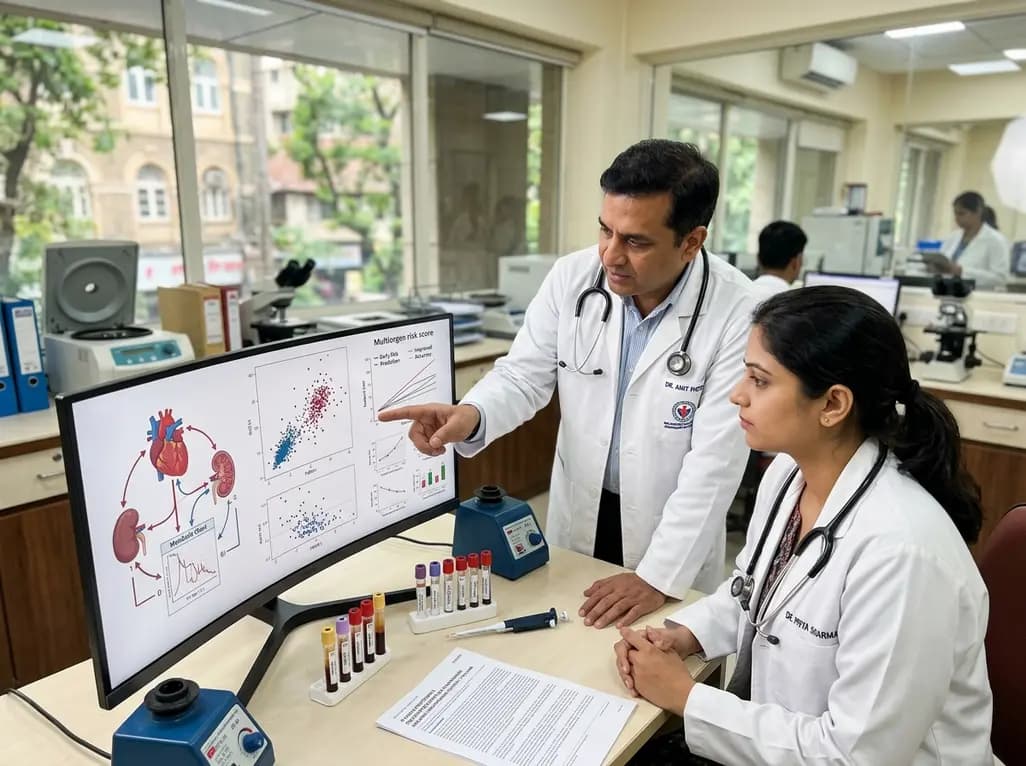
A large UK Biobank study reveals that plasma proteomic signatures capture preclinical organ damage and improve multiorgan risk prediction across early CKM syndrome stages 0 to 2 beyond traditional PREVENT clinical models.
Today
A narrative review investigates whether the articularis genus muscle functions as an independent anatomical entity or blends with the vastus intermedius. We evaluate its morphology, role in retracting the suprapatellar bursa, and direct clinical significance in anterior knee pain and arthroplasty.
Today

A Bayesian multilevel meta-analysis reveals that aerobic training combined with moderate carbohydrate restriction modestly lowers HbA1c in type 2 diabetes. However, sparse data and very low certainty leave incremental benefits over exercise or diet alone unproven, highlighting the need for individualized care.
Today
