

Loading, please wait...
Loading, please wait...

Health Technology Assessment informs critical decisions regarding drug pricing, diagnostic inclusion, and national reimbursement. Today, the rapid emergence of AI in HTA offers transformative opportunities alongside serious methodological challenges. Healthcare leaders and clinicians must carefully examine how automated tools impact clinical evidence appraisal and equitable resource allocation.
Health technology evaluators manage immense volumes of clinical and economic evidence during traditional appraisals. Consequently, research teams increasingly turn to machine learning models, predictive algorithms, and natural language platforms to streamline operational workflows. These digital tools demonstrate exceptional proficiency in screening biomedical literature, performing deduplication, and automating preliminary data extraction from clinical trials. Furthermore, algorithmic platforms accelerate complex decision-analytic simulations and statistical network meta-analyses. In resource-constrained settings, automated processes reduce the appraisal timeline from several months to a few weeks. This rapid turnaround allows health authorities to evaluate life-saving oncology therapies and novel medical devices with greater agility. However, the deployment of automated systems also introduces analytical vulnerabilities into evidence synthesis. While computational speed accelerates administrative timelines, technology assessment boards must guarantee that synthetic summaries do not omit essential qualitative outcomes. Therefore, health technology appraisers maintain that machine tools should complement, rather than replace, rigorous epidemiological critique. International agencies currently test digital workflows within controlled sandboxes to establish foundational operational benchmarks. Ultimately, adopting these technologies enables interdisciplinary teams to focus on nuanced comparative effectiveness questions while algorithms manage repetitive screening assignments.
Despite remarkable technical efficiency, automated models introduce profound methodological risks into the assessment process. For instance, commercial large language models often generate plausible yet entirely fabricated medical citations, a phenomenon known as hallucination. In addition, deep learning systems function as opaque black boxes that hide underlying calculation parameters and reasoning pathways. When an algorithm assesses clinical trial endpoints or quality-adjusted life years, appraisers cannot easily verify how the system weighted conflicting evidence. Furthermore, historical clinical databases frequently contain embedded demographic disparities and geographic sampling biases. If an algorithm trains primarily on data from high-income nations, its outputs may misrepresent treatment efficacy or safety in underrepresented populations. Consequently, blind reliance on automated assessments risks perpetuating systemic inequities in public health procurement. Moreover, algorithmic drift over time can silently alter assessment criteria, creating inconsistent reimbursement verdicts for comparable interventions. Assessment panels must therefore implement standardized validation protocols before accepting algorithmic evidence dossiers. Appraisers must demand full disclosure of training sets, model versions, and uncertainty distributions. Without strict technical safeguards, analytical errors could mislead policymakers and compromise patient safety at a national scale.
To mitigate technical hazards, international policy forums strongly advocate for a robust risk-based governance architecture. Specifically, policymakers emphasize that algorithmic automation must never dilute or eliminate ultimate human accountability. While predictive models can synthesize published endpoints, multidisciplinary panels composed of clinicians, bioethicists, and health economists must interpret real-world clinical relevance. Therefore, human-in-the-loop oversight remains non-negotiable throughout every phase of technology appraisal. International guidelines emphasize that algorithmic outputs must undergo rigorous manual verification before reaching decision-makers. In addition, regulatory bodies now construct detailed reporting checklists to evaluate model stability, data lineage, and software version control. For example, agencies require developers to justify their choice of machine learning architecture and quantify parameter uncertainty explicitly. Furthermore, governance policies require complete audit trails that record every modification made during automated literature reviews. When developers adhere to these rigorous standards, evaluation committees can confidently distinguish robust automated evidence from unverified computational conjecture. Accordingly, institutional frameworks prioritize patient well-being and clinical validity over uncritical algorithmic speed across all healthcare domains. Ultimately, human agency ensures that compassionate clinical judgment, societal ethics, and patient values continue to guide public healthcare spending.
Establishing widespread trust requires deep transparency across the entire health technology appraisal pipeline. For this reason, global policy leaders recommend building shared communities of practice among academic researchers, regulatory agencies, and pharmaceutical developers. When institutions openly share best practices and code repositories, the global scientific community identifies algorithmic blind spots much faster. In addition, healthcare organizations must actively involve patient advocacy groups and citizen representatives in methodological deliberations. Patients provide indispensable lived experiences that quantitative algorithms routinely fail to capture. For instance, an automated assessment might prioritize surrogate biochemical markers while overlooking significant quality-of-life burdens, treatment adherence hurdles, or out-of-pocket costs. Consequently, open public consultations protect technology assessments from becoming detached technocratic exercises. Furthermore, manufacturers must disclose whether and how artificial intelligence contributed to their clinical dossier submissions. Regulatory bodies increasingly mandate explainability standards, compelling developers to demonstrate that their analytical pathways withstand independent peer review. Similarly, shared methodological repositories enable smaller assessment teams to validate proprietary algorithms without prohibitive commercial development expenditures. By fostering open dialogue and rigorous peer review, health technology agencies reinforce public confidence in delicate resource allocation choices.
These international governance principles offer immense strategic value for India's evolving healthcare ecosystem. Health Technology Assessment in India, operating under the Department of Health Research, evaluates medicines and devices for public procurement. In particular, HTAIn informs national reimbursement decisions under the Ayushman Bharat Pradhan Mantri Jan Arogya Yojana. Because Indian healthcare manages massive patient diversity alongside fiscal constraints, automated tools could substantially accelerate domestic cost-effectiveness analyses. For example, machine algorithms can rapidly analyze vast district-level epidemiological data to identify urgent community health priorities. However, Indian policymakers must exercise extreme caution when applying imported algorithms trained on foreign demographic cohorts. To safeguard domestic health equity, Indian researchers must validate all machine learning models against local genomic, socioeconomic, and morbidity data. Furthermore, HTAIn can establish national technical guidelines that require complete transparency for algorithmic evidence submissions. By investing in specialized capacity building, academic medical institutions and regulatory bodies can train clinician-evaluators to audit computational models effectively. Consequently, domestic technical leadership ensures equitable technological access for every citizen. Ultimately, prudent integration of automated tools will strengthen evidence-informed policy, maximize value for public funds, and advance universal healthcare across India.
Artificial intelligence accelerates evidence synthesis by automating labor-intensive literature screening, article deduplication, and preliminary data extraction. Machine learning algorithms process thousands of clinical trial publications in minutes, identifying relevant studies based on predefined inclusion criteria. Consequently, research teams save substantial administrative time and reduce human screening fatigue. However, human reviewers must verify all automated extractions to prevent analytical errors, ensuring the evidentiary integrity of the final assessment dossier.
Algorithmic transparency is vital because technology appraisal recommendations dictate public resource distribution and patient access to essential treatments. Black-box algorithms obscure underlying analytical assumptions, hidden mathematical biases, and statistical uncertainty parameters. Without transparent methodologies, assessment committees cannot rigorously audit whether automated conclusions represent genuine clinical efficacy or computational artifacts. Therefore, explainable modeling architectures and open audit trails remain indispensable for maintaining public trust and scientific integrity in healthcare governance.
Health Technology Assessment in India evaluates the clinical safety, cost-effectiveness, and equity implications of emerging health interventions before public adoption. When assessing digital health tools and artificial intelligence platforms, HTAIn appraises domestic epidemiological alignment and fiscal viability for schemes like Ayushman Bharat. Furthermore, HTAIn establishes rigorous methodological frameworks to ensure that imported algorithmic tools perform equitably across diverse Indian populations without compromising patient outcomes or clinical standards.
Disclaimer: This content is for informational and educational purposes only... Refer to the latest local and national guidelines for clinical practice.
References

Read summarized clinical updates, watch expert medical content, and earn CME certifications right from your smartphone.
Open your smartphone camera to scan and install.





This article examines the integration of artificial intelligence in health technology assessment, highlighting key governance frameworks, methodological challenges, algorithmic bias, and implications for healthcare decision-making and HTAIn in India.
Today
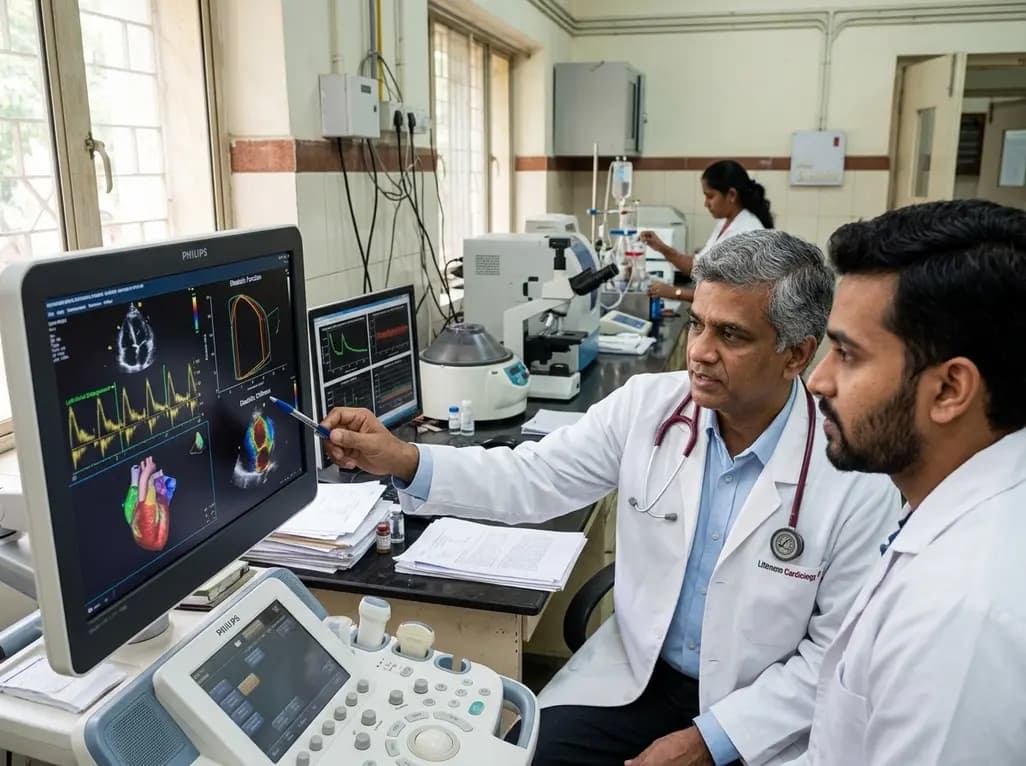
A study evaluates a cardiometabolic HFpEF model combining metabolic stress with chronic mineralocorticoid excess. The findings reveal profound diastolic stiffness, endothelial dysfunction, and pulmonary hypertension, illuminating key pathophysiological mechanisms for targeted cardiopulmonary therapies.
Today
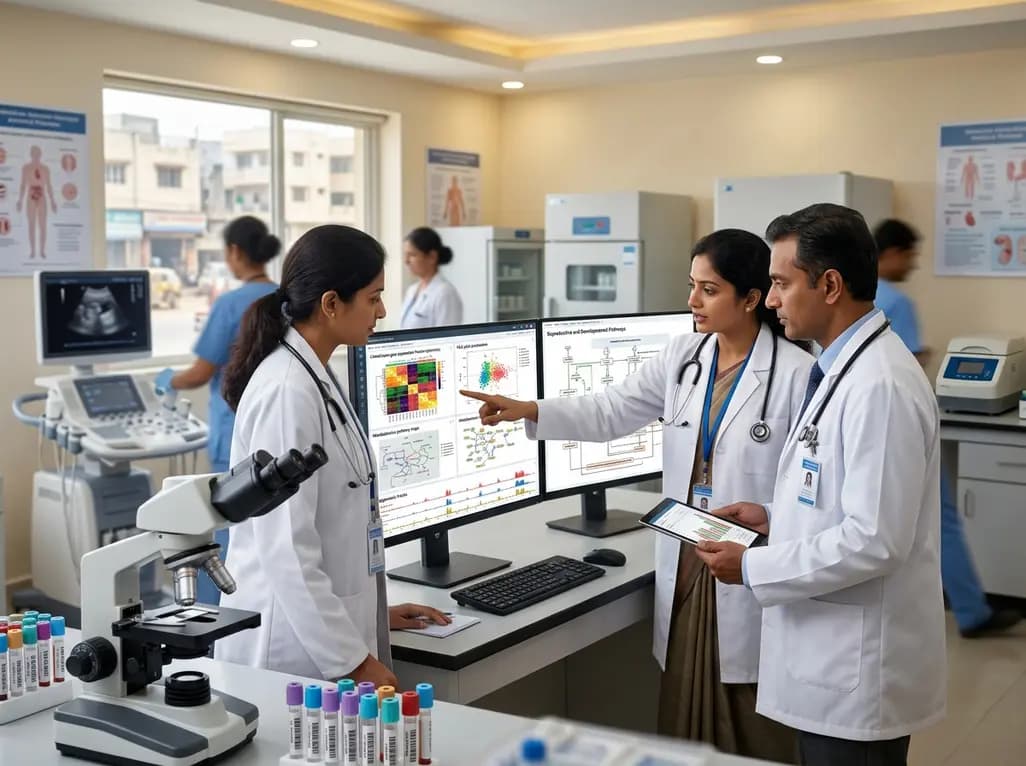
The Human Reproduction and Development Database (HRD) consolidates bulk and single-cell transcriptomics, epigenomics, metabolomics, proteomics, and clinical trial records into a unified platform to advance reproductive health research.
Today

Partial heart transplantation offers living, growth-capable cardiac valve replacements for children. While orthotopic heart transplantation faces severe logistical barriers in low-resource settings, partial transplantation presents lower graft ischemia sensitivity and simplified immunosuppression protocols.
Today

A single-cell transcriptomic atlas reveals how peripheral nerve injuries cause dorsal root ganglion remodeling. By evaluating proximal nerve crush and resection, researchers identify distinct glial and immune programs that resolve neuropathic pain and promote regeneration.
Today

A breakthrough study demonstrates that fullerol-primed extracellular vesicles generated in a 3D SECCS bioreactor attenuate ferroptosis and restore myogenic regeneration in diabetes via the FOXO3 pathway, offering a cell-free therapeutic strategy for diabetic musculoskeletal degeneration.
Today
