.webp&w=384&q=75)

Loading, please wait...
Loading, please wait...
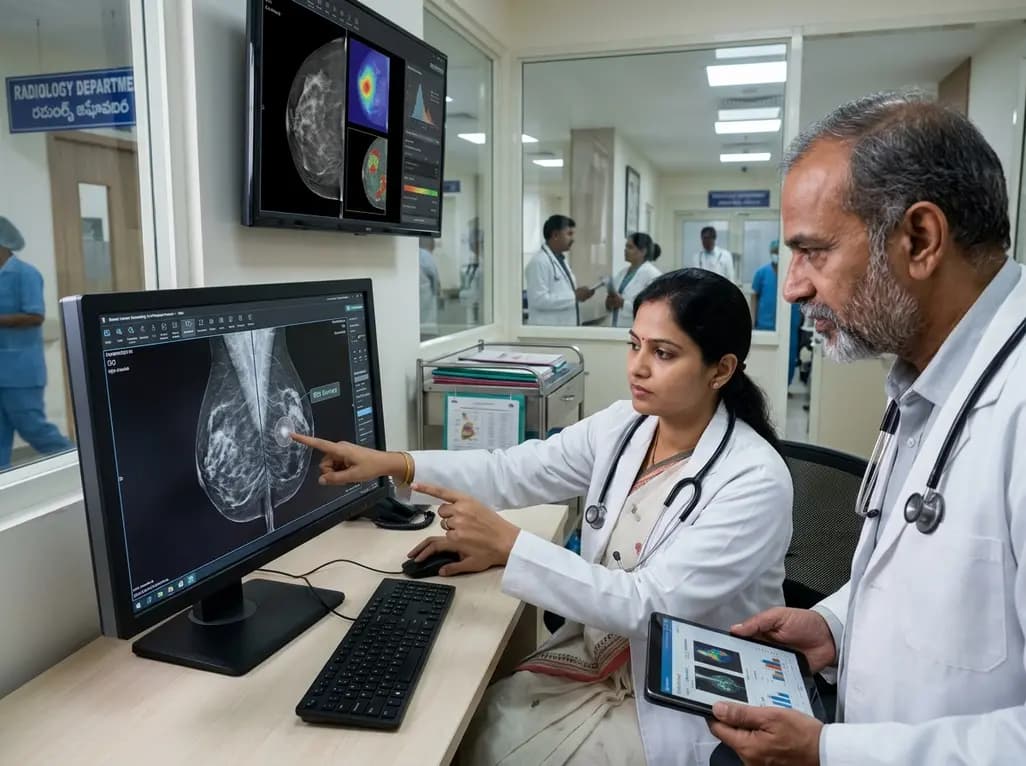
Breast cancer continues to represent one of the most pressing health challenges for women globally. Recent breakthroughs in artificial intelligence offer promising pathways to enhance screening accuracy and streamline radiological workflows. Specifically, advances in AI breast cancer detection are addressing major diagnostic hurdles by identifying suspicious microcalcifications and soft-tissue masses earlier than conventional assessment methods. In a major technological milestone, researchers from Hyderabad have introduced a lightweight neural framework named Fuzzy RS-Net. This innovative platform demonstrates that high-precision diagnostic software can operate successfully without prohibitive computational demands, making routine screening far more scalable.
According to epidemiological data from the World Health Organization, clinicians diagnosed more than 2.3 million women with breast malignancy in 2020 alone. Furthermore, the disease caused approximately 685,000 deaths worldwide during that same period. Early detection remains the most decisive factor in lowering mortality rates and achieving favorable therapeutic outcomes. However, manual radiological screening presents formidable operational challenges in heavily populated nations like India. Radiologists must often evaluate dozens of complex mammograms daily, which inevitably introduces reader fatigue and interpretive variability.
In addition, dense breast tissue frequently obscures subtle architectural distortions and tiny lesions. Consequently, early malignancies can blend into background fibroglandular parenchyma on standard two-dimensional mammography. By implementing automated computational intelligence, healthcare systems can establish robust secondary reading mechanisms. These digital systems assist radiologists by pre-filtering normal scans and highlighting ambiguous regions that demand closer scrutiny. Ultimately, scalable digital solutions improve diagnostic consistency while significantly decreasing overall institutional screening workloads.
The groundbreaking study, titled "Fuzzy based residual shufflenet based breast cancer detection using mammogram images," was published in Scientific Reports by Nature Portfolio. The investigation was conducted by researchers Kumari Jelli and Pavan Kumar Pagadala from the Department of Computer Science and Engineering at Koneru Lakshmaiah Education Foundation in Hyderabad. Together, the team engineered Fuzzy RS-Net to reconcile high analytical precision with low computational overhead.
Standard deep learning networks typically depend on extensive graphical processing units and massive memory allocations, making them impractical for standard hospital hardware. In contrast, the Hyderabad team combined residual learning principles with a ShuffleNet backbone to keep parameter counts minimal. First, the framework applies fuzzy logic preprocessing to reduce image noise and resolve spatial ambiguity around lesion margins. Next, channel shuffle operations allow efficient feature communication across network layers without ballooning processing latency. Therefore, the pipeline isolates suspect regions, extracts granular textural features, and classifies tissue states with remarkable computational frugality.
To confirm clinical efficacy, the investigators evaluated Fuzzy RS-Net on the Curated Breast Imaging Subset of the Digital Database for Screening Mammography. This benchmark dataset contains thousands of diverse screening examinations with verified histopathological outcomes. During rigorous multi-fold testing, the model achieved an impressive overall accuracy rate of 94.9%. Furthermore, the system registered a sensitivity of 95.8% alongside a specificity of 93.8%.
High sensitivity ensures that the algorithm rarely misses genuine malignancies, thereby protecting patients from false-negative delays in care. Meanwhile, high specificity prevents unnecessary follow-up imaging and invasive biopsies for benign conditions. The researchers also validated the model across distinct secondary mammography databases to test its generalization ability. Throughout comparative trials, Fuzzy RS-Net consistently outperformed competing classification models in runtime efficiency and memory utilization. Statistical analyses confirmed that these diagnostic improvements achieved statistical significance with p-values well below 0.05.
Although these computational findings are highly encouraging, the authors emphasize that algorithm training on retrospective public databases represents only the initial development phase. Real-world radiological environments involve diverse patient demographics, varying breast tissue densities, and differing imaging equipment specifications. Therefore, extensive prospective validation within hospital networks is essential before deploying the tool in routine practice.
Additionally, clinical adoption hinges on integrating explainable artificial intelligence methodologies into the user interface. Oncologists and radiologists must understand precisely why a neural network flags specific density variations as malignant. Providing visual heatmaps and transparent feature attribution maps builds clinician confidence and ensures defensible diagnostic oversight. Collaborative clinical trials will also help developers fine-tune thresholds across varying stages of breast cancer progression, establishing dependable diagnostic safety nets.
Deploying lightweight artificial intelligence solutions holds transformative potential for healthcare delivery across low- and middle-income regions. In many Indian tier-two and rural medical centers, dedicated breast imaging specialists remain scarce. Furthermore, budget constraints often prevent primary clinics from acquiring expensive supercomputing infrastructure. Because Fuzzy RS-Net functions efficiently on standard computing hardware, it can facilitate decentralized, community-level mammography programs.
Consequently, local healthcare providers could capture digital mammograms and receive immediate, reliable computer-aided triage assessments. Patients exhibiting high-risk signatures could then undergo rapid referral to tertiary oncology centers for definitive biopsy and management. As multidisciplinary teams continue refining lightweight neural networks, artificial intelligence will increasingly democratize cancer screening. These technological strides bring clinicians closer to closing diagnostic equity gaps and saving lives through early intervention.
Q1: What makes the Fuzzy RS-Net model unique compared to standard diagnostic networks?
Fuzzy RS-Net uniquely combines fuzzy logic processing with a ShuffleNet residual architecture. This integration enables the system to handle image noise and ambiguous tissue borders effectively while consuming substantially less memory and computing power than traditional deep learning models.
Q2: What diagnostic accuracy did the Hyderabad researchers achieve during benchmark testing?
When evaluated on the Curated Breast Imaging Subset database, the model achieved 94.9% diagnostic accuracy, 95.8% sensitivity, and 93.8% specificity. These robust metrics demonstrate reliable identification of malignant cases while maintaining low false-positive rates.
Q3: What critical steps are required before deploying this AI tool in active hospital environments?
Before clinical implementation, the system requires prospective multi-center validation across diverse patient cohorts and distinct mammography hardware. Additionally, developers must integrate explainable AI tools to provide transparent visual reasoning for attending radiologists.
Disclaimer: This content is for informational and educational purposes only. It does not constitute medical advice or replace professional judgment. Refer to the latest local and national guidelines for clinical practice.
References

Read summarized clinical updates, watch expert medical content, and earn CME certifications right from your smartphone.
Open your smartphone camera to scan and install.





Researchers at KL University in Hyderabad have developed Fuzzy RS-Net, an efficient deep learning model that detects breast cancer in mammograms with nearly 95% accuracy. The architecture handles diagnostic ambiguity with reduced computational overhead, paving the way for resource-efficient clinical screening.
last month

A systematic review of 41 preclinical studies reveals that baicalin dampens systemic inflammation, inhibits NF-κB and NLRP3 pathways, and improves organ preservation in sepsis models. However, substantial study heterogeneity and a complete lack of human clinical trials highlight the need for further translational research.
Today
Discover the crucial distinctions between mesonephric and mesonephric-like proliferations of the female genital tract. Learn the key histomorphologic, immunohistochemical, and molecular differences essential for accurate diagnosis and clinical management.
Today
A large UK Biobank study reveals that plasma proteomic signatures capture preclinical organ damage and improve multiorgan risk prediction across early CKM syndrome stages 0 to 2 beyond traditional PREVENT clinical models.
Today
A narrative review investigates whether the articularis genus muscle functions as an independent anatomical entity or blends with the vastus intermedius. We evaluate its morphology, role in retracting the suprapatellar bursa, and direct clinical significance in anterior knee pain and arthroplasty.
Today

A Bayesian multilevel meta-analysis reveals that aerobic training combined with moderate carbohydrate restriction modestly lowers HbA1c in type 2 diabetes. However, sparse data and very low certainty leave incremental benefits over exercise or diet alone unproven, highlighting the need for individualized care.
Today
