

Loading, please wait...
Loading, please wait...

Clinicians managing relapsing multiple sclerosis face critical therapeutic choices when standard therapies fail. Over the past decade, high-efficacy disease-modifying therapies have dramatically reshaped neuroimmunological management. Specifically, humanized monoclonal antibodies like alemtuzumab and ocrelizumab suppress focal central nervous system inflammation with substantial clinical success. However, several patients continue to demonstrate persistent inflammatory activity despite early initiation of high-potency biologics. Consequently, academic investigators have explored profound immune reconstitution strategies to induce durable disease-free survival.
Autologous hematopoietic stem cell transplantation represents an intensive therapeutic alternative for aggressive neuroinflammatory disease. The conditioning regimen eliminates aberrant autoreactive immune repertoires through immunoablative chemotherapy. Subsequently, infused autologous hematopoietic stem cells facilitate the regeneration of a self-tolerant lymphoid compartment. Although historical observational trials demonstrate robust clinical responses, head-to-head evidence comparing transplantation with modern high-potency pharmacological agents remains scarce. Clinicians practicing in neuroimmunology require robust observational evidence to guide therapeutic escalation. Therefore, rigorous cohort evaluations directly contrasting transplantation with targeted monoclonal antibodies provide vital clinical clarity. These comparative findings substantially assist physicians in balancing treatment efficacy against procedural risks.
To address clinical uncertainty, investigators evaluated a large observational cohort from a London hospital center. The study evaluated six hundred twenty-one patients with active relapsing-remitting multiple sclerosis who had experienced prior therapeutic failure. Among these participants, one hundred three individuals underwent autologous hematopoietic stem cell transplantation. Meanwhile, two hundred four patients received alemtuzumab, and three hundred fourteen patients initiated ocrelizumab infusions. The median post-baseline observation duration spanned forty-three months for transplantation and alemtuzumab cohorts, whereas the ocrelizumab cohort underwent thirty-two months of median follow-up.
Because observational studies inherently encounter baseline confounding, researchers implemented sophisticated methodological safeguards. The team applied propensity score overlap weighting to balance pre-treatment characteristics between groups. This robust analytical technique adjusted for demographic disparities, pre-baseline disease duration, previous therapy exposure, and baseline neurological impairment. Furthermore, investigators systematically documented annualized relapse rates, new magnetic resonance imaging lesions, and sustained disability progression using the Expanded Disability Status Scale. Consequently, the study design minimized confounding by indication while maintaining adequate statistical power across cohorts. This meticulous methodological framework provides robust comparative data for clinicians assessing high-efficacy therapeutic trajectories.
The comparative analysis revealed substantial differences in clinical relapse suppression among the three cohorts. Specifically, autologous hematopoietic stem cell transplantation demonstrated superior efficacy in lowering annualized relapse rates compared with both monoclonal antibody treatments. After five years of longitudinal follow-up, the transplantation cohort achieved a mean annualized relapse rate of 0.026. In contrast, patients receiving alemtuzumab exhibited a markedly higher rate of 0.087. Statistical testing confirmed this difference reached high clinical and statistical significance.
Furthermore, survival analyses reinforced the clear clinical advantage of cellular reconstitution over alemtuzumab. Patients undergoing transplantation experienced a seventy-one percent reduction in the overall hazard of relapses relative to alemtuzumab recipients. When researchers compared transplantation with ocrelizumab across a three-year observation period, transplantation retained a significant advantage. Specifically, the three-year annualized relapse rate measured 0.028 in the transplant cohort versus 0.073 in the ocrelizumab cohort. Although the hazard ratio trended toward reduced relapse risk without meeting traditional statistical significance, absolute relapse suppression favored cellular ablation. Therefore, the findings demonstrate that immune reconstitution provides unprecedented control over episodic clinical disease activity in active disease.
Neuroimaging outcomes provided critical objective confirmation of the superior anti-inflammatory control achieved through transplantation. Magnetic resonance imaging serves as an essential surrogate marker for subclinical blood-brain barrier disruption and new inflammatory lesion formation. Throughout the follow-up window, patients treated with autologous hematopoietic stem cell transplantation exhibited markedly lower rates of new radiological disease activity than those treated with alemtuzumab. Specifically, transplantation reduced the risk of developing new magnetic resonance imaging lesions by sixty-seven percent compared to alemtuzumab.
Conversely, comparative analyses between transplantation and ocrelizumab demonstrated equivalent radiological suppression between the two approaches. After three years of prospective imaging surveillance, new magnetic resonance imaging lesion activity remained exceptionally low in both treatment cohorts. In fact, fewer than six percent of patients in each group exhibited active inflammatory lesions. The statistical hazard ratio revealed no meaningful difference in radiological progression between transplantation and ocrelizumab. Consequently, while transplantation clearly outperformed alemtuzumab on imaging metrics, both transplantation and anti-CD20 therapy provided outstanding suppression of subclinical focal neuroinflammation. Neurologists can thus expect robust radiologic stability when deploying either advanced modality.
Evaluating long-term disability trajectories represents a primary objective when managing patients with relapsing neuroinflammatory disease. In this comparative cohort, researchers assessed confirmed disability progression using the Expanded Disability Status Scale. Interestingly, the hazard of disability accumulation did not differ significantly between treatment strategies. The risk of sustained functional decline proved comparable when comparing transplantation to alemtuzumab. Similarly, transplantation and ocrelizumab exhibited virtually identical hazard ratios for confirmed disability progression over the observed follow-up timeline.
However, analysis of disability reversal provided distinct therapeutic insights favoring cellular transplantation. Patients undergoing transplantation demonstrated higher rates of sustained neurological improvement on the disability scale compared to individuals receiving alemtuzumab. Many neuroimmunologists attribute this divergence to differences in neurodegenerative momentum versus inflammatory suppression. Because patients selected for transplantation often presented with higher baseline disability and aggressive inflammatory biology, arresting focal inflammation allowed meaningful functional recovery in selected individuals. Nevertheless, the lack of divergence in progressive disability accumulation underscores an essential reality. Modern high-efficacy therapies and transplantation primarily target inflammatory pathways rather than neurodegenerative progression. Therefore, early intervention remains crucial to prevent irreversible structural damage.
While autologous hematopoietic stem cell transplantation achieved superior inflammatory control, clinicians must balance these benefits against procedural toxicity. Immunoablative conditioning regimens induce profound cytopenias and transient immunodeficiency. In this study, adverse events occurred frequently following transplantation, primarily encompassing febrile neutropenia, opportunistic infections, and secondary autoimmunity. Moreover, investigators reported one treatment-related mortality, representing a 1.1 percent mortality rate within the transplant cohort. In contrast, monoclonal antibodies demonstrated predictable, manageable safety profiles without treatment-related deaths during follow-up.
Consequently, patient selection remains the defining factor when considering therapeutic escalation to stem cell transplantation. Young patients with highly active relapsing disease, rapid disability accumulation, and failure of first-line therapies derive the greatest relative benefit. Conversely, individuals with long-standing disease and dominant progressive neurodegeneration face elevated procedural hazards without proportional clinical reward. Clinicians must conduct exhaustive multidisciplinary evaluations involving both hematologists and neurologists before recommending transplantation. Additionally, practitioners in developing healthcare ecosystems must weigh specialized infrastructure requirements and institutional accreditation against readily available biologic infusions. Ultimately, these real-world data establish transplantation as an extraordinary therapeutic weapon that clinicians must deploy selectively and judiciously.
Autologous transplantation eliminates autoreactive inflammatory lymphocytes through high-dose conditioning chemotherapy. Following this ablation, reinfused hematopoietic stem cells regenerate a naive, self-tolerant immune repertoire. This comprehensive cellular reset halts inflammatory cell trafficking across the blood-brain barrier, providing profound and durable suppression of clinical relapses and radiological lesion formation.
Disability progression in multiple sclerosis involves both focal inflammatory damage and insidious neurodegenerative mechanisms. While transplantation and high-efficacy antibodies effectively arrest acute inflammatory activity, they exert less direct influence on preexisting axonal loss and compartmentalized neurodegeneration. Consequently, overall rates of sustained disability accumulation remained broadly comparable across the investigated cohorts.
Stem cell transplantation carries substantial procedural toxicities related to cytotoxic conditioning regimens. Patients face elevated short-term risks of febrile neutropenia, severe systemic infections, organ toxicity, and secondary autoimmune complications. Furthermore, treatment-related mortality remains a recognized hazard, necessitating careful candidate selection, specialized hematological infrastructure, and vigilant multidisciplinary post-transplant monitoring.
Disclaimer: This content is for informational and educational purposes only... Refer to the latest local and national guidelines for clinical practice.
References

Read summarized clinical updates, watch expert medical content, and earn CME certifications right from your smartphone.
Open your smartphone camera to scan and install.





A single-center cohort study demonstrates that autologous hematopoietic stem cell transplantation offers superior suppression of relapses and MRI activity compared to alemtuzumab and ocrelizumab in relapsing multiple sclerosis, while disability progression rates remain comparable across treatment arms.
Today

A multicenter study introduces BAT-AKI, a biomarker-aware transformer that achieves superior acute kidney injury prediction and post-onset prognostic modeling across diverse hospital electronic health record systems.
Today
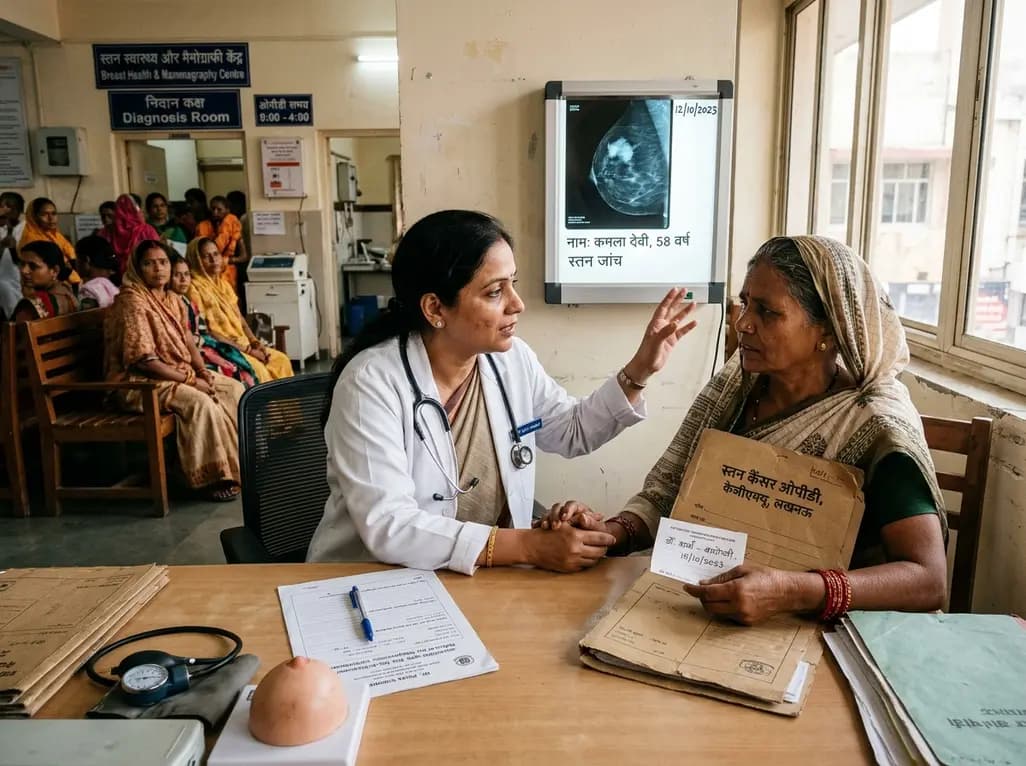
A KGMU study reveals over half of women with breast abnormalities fail to undergo diagnostic confirmation, leading to advanced-stage detection. Discover the socio-cultural barriers, clinical risks of incomplete resection, and community-level solutions needed to bridge the critical screening-to-diagnosis gap in India.
Today

A controlled evaluation reveals that AI raters in clinical LLM benchmarking disagree significantly due to divergent scoring models, challenging automated healthcare AI validation.
Today

Researchers have engineered a self-powered Zn/C micro-galvanic electrospun membrane that couples sustained zinc release with endogenous microcurrents. This bioelectric scaffold stimulates M2 macrophage polarization and accelerates bone deposition to achieve robust cranial defect regeneration.
Today

A meta-analysis of 18 studies reveals that bariatric surgery does not significantly alter circulating homocysteine levels, regardless of follow-up duration. Clinicians must maintain vigilance over post-surgical micronutrient supplementation to prevent hyperhomocysteinemia.
Today
