

Loading, please wait...
Loading, please wait...

Decades of epidemiological research establish that adverse childhood experiences exert enduring effects on physical and emotional health. Adverse childhood experiences encompass childhood abuse, physical neglect, emotional deprivation, and severe household dysfunction occurring before age eighteen. Historically, clinical investigators have identified robust dose-response relationships between early adversity and chronic medical conditions. These conditions include coronary artery disease, autoimmune illnesses, chronic depression, and substance use disorders. However, researchers have devoted less attention to how childhood adversity influences adult occupational performance. Occupational performance represents an individual's subjective capacity to execute daily activities, meet workplace obligations, and maintain social roles. Clinicians often observe that unresolved early stress compromises emotional regulation and sustained concentration. Consequently, affected individuals frequently report subtle difficulties when navigating demanding professional environments. Nevertheless, individuals frequently develop specialized adaptations that preserve baseline functioning across routine settings. Furthermore, exploring early life factors helps clinicians understand diverse adult behavioral patterns and coping styles. Therefore, comprehensive clinical evaluations must examine functional competencies alongside physical symptoms in adults exposed to early life trauma.
Recent military medicine research highlights how early adversity impacts personnel serving in high-stress operational environments. Service members encounter demanding physical and psychological stressors during active duty. Furthermore, demographic surveys consistently demonstrate that military personnel report higher baseline adversity scores than general civilian populations. To evaluate these dynamics, researchers conducted an institutional review board-approved cross-sectional study at a major military medical facility. The investigation evaluated seventy-six health-seeking service members using validated trauma screening tools and occupational assessment instruments. Participants systematically evaluated their performance and personal valuation across twenty-one distinct daily occupations and activities. In addition, the researchers gathered detailed demographic variables to assess potential predictive relationships with daily functioning. Statistical analyses utilized descriptive metrics and Spearman correlation coefficients to examine interactions between trauma exposure and functional performance. Notably, participants identified emotional expression, sustained cognitive concentration, and recreational relaxation as their most challenging occupational tasks. Conversely, service members reported minimal difficulty when managing interpersonal responsibilities and fulfilling duties for dependent individuals. Moreover, understanding these baseline operational profiles aids military leaders and medical staff in fostering targeted resilience.
The cross-sectional investigation revealed a mean adverse experience score of 3.82 among the evaluated cohort. This elevated score corroborates empirical literature demonstrating elevated developmental trauma rates within active-duty personnel. Surprisingly, overall occupational performance across most surveyed functional categories did not correlate significantly with adversity scores. Most daily operational duties showed stable execution regardless of the participant's developmental stress history. However, researchers identified one striking and statistically significant exception within the occupational assessment inventory. A weak positive correlation emerged between cumulative adversity scores and taking care of others. Specifically, service members with higher cumulative trauma histories reported significantly greater performance in caretaking responsibilities. Therefore, individuals who experienced extensive childhood stress perceived themselves as highly competent when supporting others. In contrast, standard demographic variables failed to demonstrate reliable predictive value regarding general occupational performance. These nuanced outcomes indicate that early life stress does not produce uniform functional impairment across all life domains. Instead, developmental adversity shapes functional capabilities through complex, non-linear psychological pathways. Consequently, clinicians should evaluate specific functional domains individually rather than presuming global occupational impairment.
The observed positive relationship between childhood adversity and caretaking ability highlights an intriguing psychological adaptation. In dysfunctional households, developing children frequently assume premature adult responsibilities to maintain stability. Psychologists term this phenomenon parentification, wherein children provide instrumental and emotional care to impaired family members. Consequently, these individuals cultivate heightened vigilance toward interpersonal needs and develop sophisticated caregiving habits. When entering adulthood, these individuals often gravitate toward service-oriented professions, including military service and healthcare. Furthermore, fulfilling caregiving duties may provide a stabilizing sense of control and profound purpose. However, prioritizing others often creates a paradoxical functional vulnerability in personal life domains. For example, participants reported substantial difficulty when expressing internal emotions, maintaining personal concentration, and allowing themselves to relax. Clinicians frequently observe that hyper-vigilant caretaking masks unresolved internal distress and emotional exhaustion. Thus, individuals may excel at external responsibilities while neglecting their own somatic and psychological wellness. Recognizing this compensatory coping style helps practitioners design interventions that address self-care deficits directly. Moreover, providing compassionate clinical guidance allows individuals to redirect caregiving empathy toward their own health needs. Consequently, targeted therapy helps patients establish healthy personal boundaries while sustaining their dedication to others.
These research observations carry practical implications for primary care physicians, psychiatrists, and allied health professionals. Occupational performance does not exist in isolation from biological, cognitive, and social systems. Rather, performance emerges from dynamic interactions between physical health, psychological resilience, and environmental factors. Therefore, relying exclusively on numerical trauma scores fails to capture the true complexity of patient functioning. Clinicians must adopt trauma-informed assessment paradigms that contextualize how early adversity shapes daily coping habits. For instance, asking patients how they manage daily responsibilities reveals crucial diagnostic information. In addition, healthcare providers should explore whether patients experience persistent cognitive fatigue or emotional suppression. Multidisciplinary care teams can introduce structured cognitive strategies that improve workplace concentration and task management. Similarly, clinicians can teach progressive relaxation techniques, mindfulness practices, and somatic grounding exercises. Furthermore, routine screening should always connect patients to tangible community and clinical resources. Consequently, moving beyond symptom reduction toward holistic functional restoration empowers individuals to thrive across their professional and personal roles. Ultimately, proactive functional support fosters long-term career longevity and protects emotional well-being across vulnerable patient populations.
Early trauma does not necessarily cause universal impairment across daily activities. While high adversity scores correlate with elevated risks for depression, chronic illness, and anxiety, overall occupational functioning often remains preserved due to compensatory coping strategies. However, individuals frequently experience discrete challenges with emotional expression, prolonged cognitive concentration, and relaxation. Clinicians therefore evaluate functional performance multidimensionally, examining personal strengths alongside specific task-related difficulties rather than assuming broad operational disability.
Children exposed to dysfunctional domestic environments frequently adopt adult responsibilities prematurely to stabilize household dynamics. This behavioral adaptation, known as parentification, trains individuals to anticipate others' needs, cultivate heightened empathy, and master caregiving skills. In adulthood, these individuals often channel these ingrained habits into professional caregiving, leadership, and community roles. Consequently, they perceive strong competence in caring for others, even while struggling to manage their own personal emotional needs and self-care routines.
Primary care providers should utilize standardized questionnaires within a compassionate, trauma-informed clinical framework. Rather than focusing solely on numerical scores, clinicians should discuss how early stressful experiences influence current somatic symptoms, health behaviors, and stress management. Furthermore, providers must ensure immediate access to behavioral health support and occupational therapy resources. By validating patient histories without judgment, clinicians build strong therapeutic trust, improve diagnostic accuracy, and foster effective patient engagement across long-term treatment plans.
Disclaimer: This content is for informational and educational purposes only... Refer to the latest local and national guidelines for clinical practice.
References

Read summarized clinical updates, watch expert medical content, and earn CME certifications right from your smartphone.
Open your smartphone camera to scan and install.





A cross-sectional study evaluates adverse childhood experiences and occupational performance in military service members, revealing unique caretaking adaptations and highlighting the value of trauma-informed care.
Today
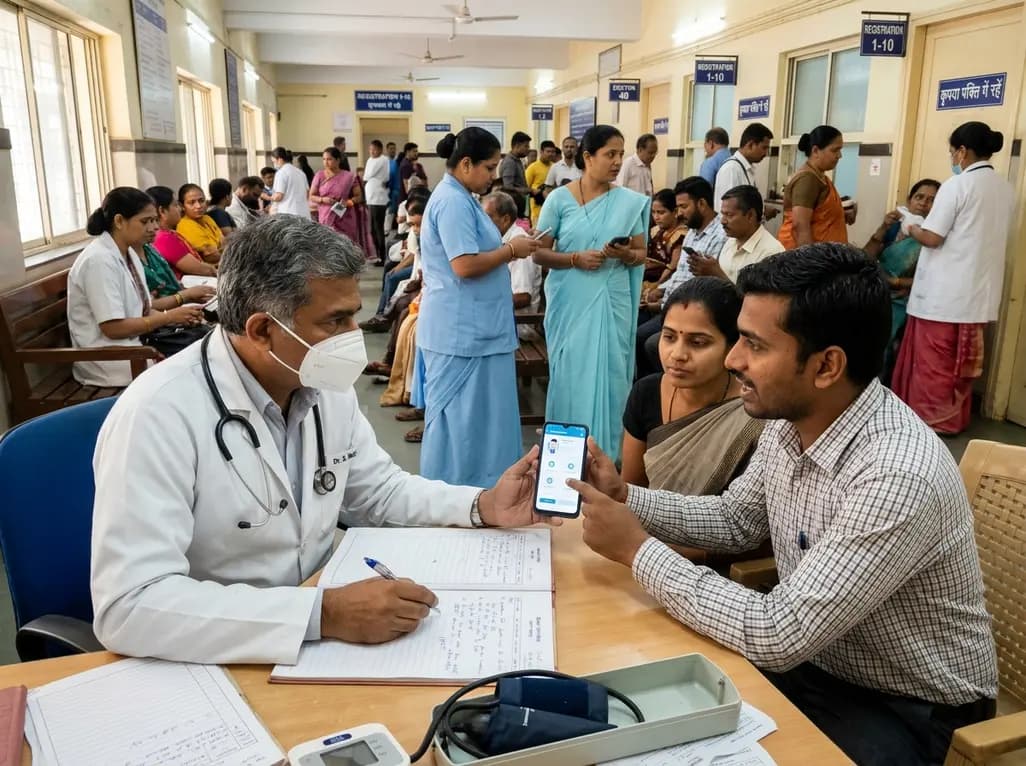
A recent Boston Consulting Group report shows 60 percent of Indian patients view digital sources as equivalent to doctor consultations. Clinicians must adapt to changing patient expectations regarding diagnostic clarity, price transparency, and rapid digital communication across clinical care pathways.
Today
Perimenopause brings erratic hormonal surges and metabolic shifts that significantly affect breast tissue. This comprehensive clinical review examines benign breast conditions, cancer risk stratification, mammographic density challenges, and endocrine therapy transitions in midlife women.
Today
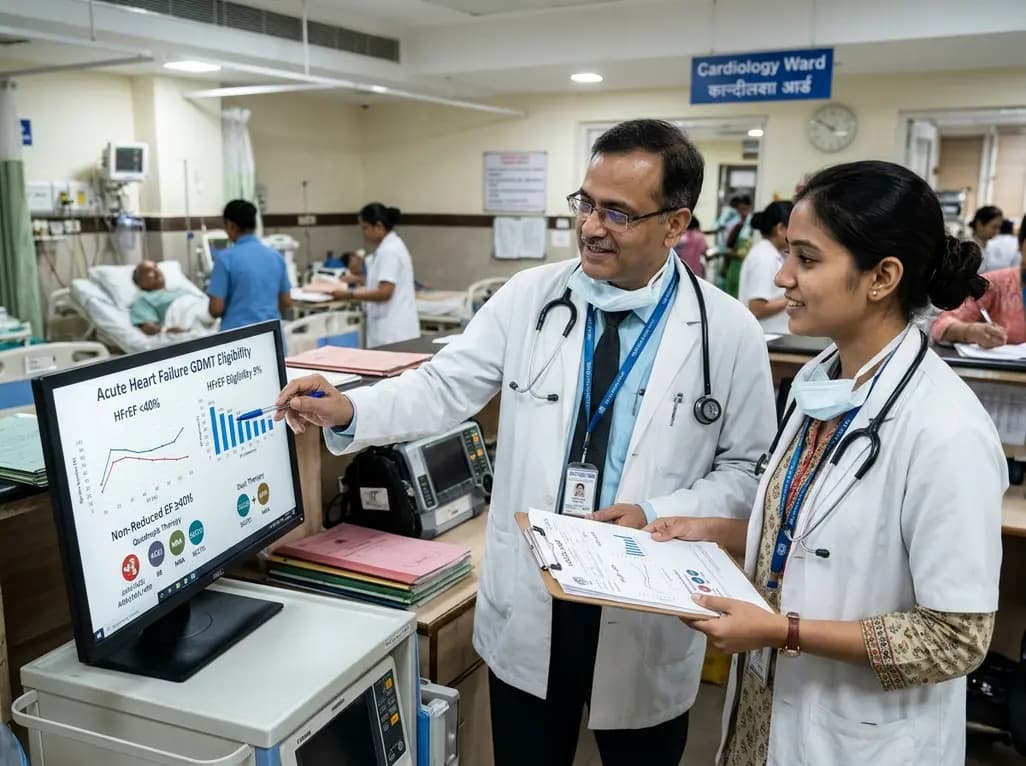
The VOCAL-AHF study reveals that most acute heart failure patients across reduced and non-reduced ejection fraction categories are eligible for in-hospital GDMT initiation. Notably, nearly two-thirds of HFrEF patients qualify for quadruple therapy, while non-reduced EF patients show high eligibility for dual therapy.
Today
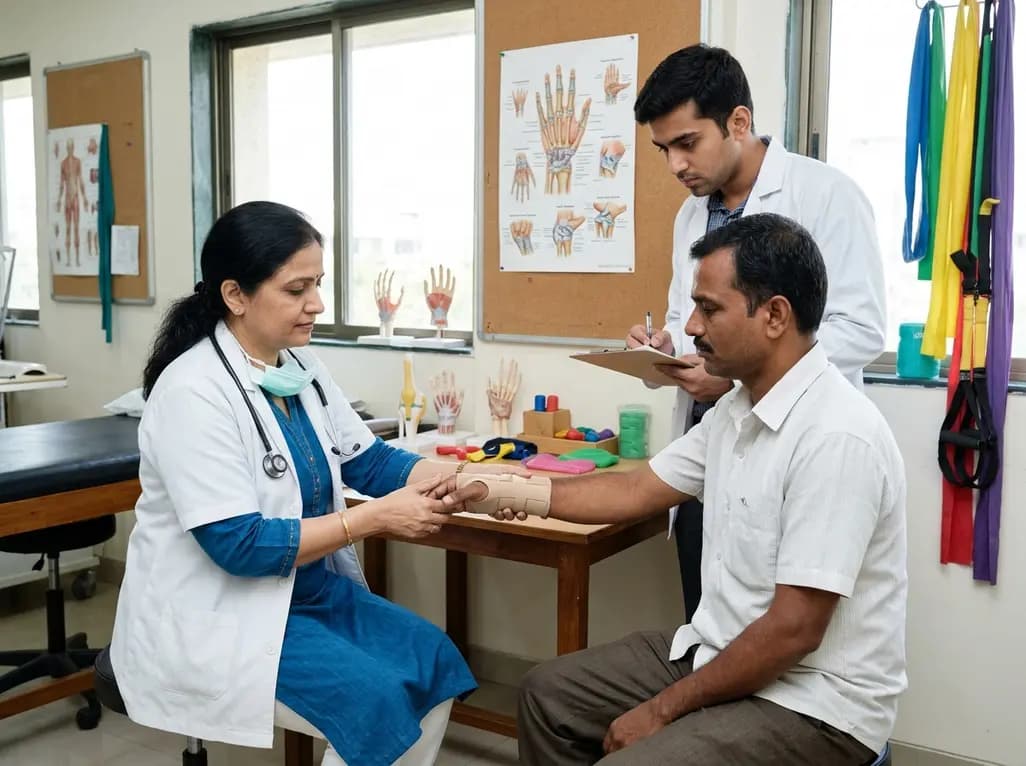
A comprehensive scoping review synthesizes conservative and postsurgical carpal instability rehabilitation strategies, highlighting immobilization, targeted muscle recruitment, and proprioception to restore wrist stability.
Today
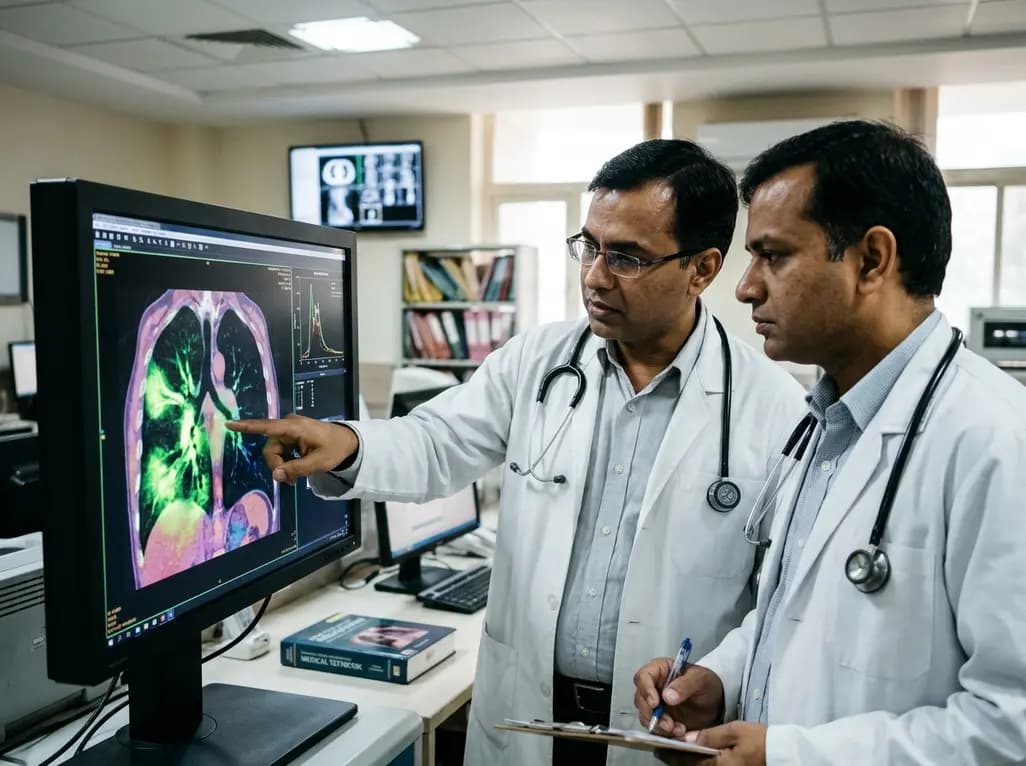
A novel fluorine-functionalized near-infrared copper fluorescent probe selectively illuminates lung tissue, revealing critical links between hyperglycemia, ER stress, and pulmonary malignancy for improved early diagnosis.
Today
