

Loading, please wait...
Loading, please wait...

Epidemiological research reveals that adverse childhood experiences cast long shadows across adult health, well-being, and interpersonal relationships. Consequently, healthcare providers frequently encounter young adults struggling with relational conflict. During emerging adulthood, individuals explore identity and establish romantic bonds. However, early traumatic exposures often disrupt relational safety. Clinicians must recognize how developmental trauma influences partner violence victimization.
Adverse childhood experiences encompass diverse forms of maltreatment, including physical abuse, emotional neglect, and household dysfunction. Therefore, these pervasive exposures fundamentally impair neurobiological development, stress reactivity, and emotional regulation. In addition, childhood adversity damages the foundational establishment of safe relational attachments. Emerging adulthood represents a pivotal developmental transition spanning ages 18 through 29. During this period, young individuals navigate intimate romantic relationships for the first time. Consequently, unresolved childhood distress frequently manifests as heightened vulnerability to relational exploitation and conflict. Traditional psychiatric paradigms frequently assumed that self-esteem universally buffered patients against adult trauma. Specifically, clinicians hypothesized that individuals with resilient self-worth could reject toxic partners and assert healthy boundaries. However, contemporary empirical investigations demonstrate that interpersonal violence dynamics operate through complex mechanisms. Early maltreatment types influence romantic interactions through subtype-specific pathways. For instance, physical abuse impairs threat appraisal systems, while emotional neglect alters relationship expectations. As a result, healthcare professionals must abandon simplistic assumptions regarding psychological resilience. Clinicians must carefully assess how specific trauma subtypes distort interpersonal expectations across diverse clinical settings.
To evaluate these intricate relational dynamics, Kim and colleagues conducted a rigorous cross-sectional investigation among South Korean emerging adults. Specifically, the study analyzed a well-defined cohort of 953 participants aged 18 to 29 who reported active dating experience. The researchers sought to examine whether personal self-esteem moderated the association between childhood adversity and subsequent intimate partner violence victimization. Furthermore, the investigators employed robust negative binomial regression models to accommodate the skewed distribution typical of interpersonal violence data. To clarify complex statistical interactions, the authors performed average marginal effects computations alongside Johnson-Neyman style floodlight analysis. This sophisticated analytical approach allowed the researchers to evaluate the continuous spectrum of self-esteem where trauma effects shifted. Rather than treating self-esteem as an arbitrary binary variable, this technique revealed nuanced inflection points across self-worth strata. Moreover, the analytical model differentiated between distinct forms of childhood maltreatment and corresponding victimization outcomes, such as physical violence and emotional abuse. Consequently, the investigation offers exceptionally granular insights into relationship outcomes during early adulthood. The findings challenge conventional clinical assumptions and provide vital epidemiological evidence regarding trauma-informed relational assessment.
The empirical findings demonstrated a pronounced interaction between physical childhood maltreatment and adult physical violence victimization. Specifically, the statistical models showed that physical adverse childhood experiences significantly increased physical victimization risk among individuals reporting lower levels of self-esteem. In contrast, emerging adults who maintained higher baseline self-worth demonstrated attenuated vulnerability to physical violence perpetration from romantic partners. Therefore, these results confirm that low self-esteem creates significant vulnerability following physical abuse. When children endure physical violence within primary caregiving environments, they often develop deeply compromised feelings of self-worth. In addition, these traumatized youths frequently internalize harmful beliefs that they deserve harsh interpersonal treatment. Consequently, when entering romantic unions during emerging adulthood, individuals with diminished self-worth often fail to recognize early warning signs of physical aggression. They may lack the assertiveness required to establish protective physical boundaries or leave dangerous environments promptly. Clinicians must recognize that self-esteem actively moderates this physical trauma pathway. When healthcare providers evaluate young adults presenting with relationship strife, they must assess childhood physical maltreatment histories. Furthermore, therapeutic interventions that cultivate genuine internal self-worth can provide essential protective barriers against recurring physical victimization.
While physical trauma followed expected protective patterns, childhood neglect revealed unexpected and startling empirical trends. In fact, the researchers observed two disjoint crossover patterns between childhood neglect and emotional intimate partner violence victimization. Specifically, childhood neglect exhibited a negative association with emotional victimization among individuals with lower self-esteem. However, neglect showed a significant positive association with emotional victimization among individuals with higher self-esteem. This surprising finding directly contradicts the conventional assumption that high self-esteem universally protects against relationship dysfunction. Why does elevated self-worth increase reported emotional victimization following childhood neglect? Several compelling clinical mechanisms explain this paradoxical outcome. First, young adults with high self-esteem cultivate clear relational expectations and assert personal needs actively. Consequently, when partners display dismissive or manipulative behaviors, these individuals promptly identify, confront, and report such psychological mistreatment. In contrast, neglected individuals with lower self-esteem often normalize emotional detachment and chronic unavailability. Because they expect little emotional warmth, they frequently overlook pervasive verbal degradation. Alternatively, individuals who survived severe neglect may develop defensive or fragile forms of high self-esteem. This defensive posture often provokes chronic interpersonal friction, triggering escalations in mutual emotional partner abuse.
These critical findings carry profound implications for contemporary clinical psychiatry, general practice, and family medicine. First, clinicians must discard the outdated belief that high self-esteem provides universal psychological immunity against relationship violence. Instead, practitioners must evaluate the structural quality and stability of a patient's self-concept alongside detailed trauma histories. When evaluating young adults in medical clinics, providers should implement structured, trauma-informed screening protocols that disaggregate specific adverse childhood experiences. For instance, identifying childhood neglect requires distinct therapeutic considerations compared to physical trauma interventions. Furthermore, physicians must recognize that patients presenting with high self-reported confidence may still experience severe emotional partner victimization. Clinicians should explore subtle communication patterns, relationship dynamics, and psychological stressors during routine clinical consultations. In addition, psychotherapeutic programs should address defensive coping mechanisms and relational boundaries rather than merely striving to inflate global self-esteem scores. By integrating trauma histories with nuanced self-esteem evaluations, healthcare professionals can design targeted, personalized violence prevention strategies. Ultimately, comprehensive trauma-informed care empowers clinicians to disrupt intergenerational violence cycles and support healthier relational functioning.
Adverse childhood experiences disrupt foundational neurobiological development and distort interpersonal attachment models. When children endure trauma, they often internalize maladaptive beliefs regarding safety, self-worth, and conflict resolution. Consequently, as emerging adults, these individuals frequently struggle to establish healthy relational boundaries or identify coercive partner behaviors. In addition, early chronic stress alters physiological threat detection systems, causing victims to normalize interpersonal aggression and tolerate repeated mistreatment within adult dating partnerships.
Although self-esteem buffers against physical violence, it demonstrates complex crossover effects regarding emotional abuse. Specifically, emerging adults who survived childhood neglect and possess higher self-esteem maintain heightened expectations for emotional reciprocity. Therefore, they more readily detect, confront, and report subtle psychological manipulation. Furthermore, some individuals develop defensive or fragile high self-esteem following neglect. This defensive posturing can provoke ongoing interpersonal friction, escalating emotional hostility and mutual verbal conflict within romantic relationships.
Clinicians should systematically screen young adults for distinct adverse childhood experiences rather than relying on generalized trauma assessments. In addition, healthcare providers must evaluate the quality and stability of patient self-esteem without assuming high self-regard guarantees safety. Clinicians can offer targeted psychoeducation on healthy boundaries, assertive communication, and emotional regulation. By recognizing subtype-specific trauma trajectories, practitioners can connect vulnerable patients with specialized therapeutic resources to prevent recurring victimization.
Disclaimer: This content is for informational and educational purposes only. It is not intended to provide medical advice, diagnosis, or treatment. Healthcare professionals should utilize their clinical judgment alongside individual patient presentations. Refer to the latest local and national guidelines for clinical practice.
References

Read summarized clinical updates, watch expert medical content, and earn CME certifications right from your smartphone.
Open your smartphone camera to scan and install.





A landmark study of emerging adults explores how adverse childhood experiences interact with self-esteem to influence intimate partner violence victimization. While self-esteem protects against physical abuse, it reveals unexpected crossover effects with childhood neglect and emotional victimization.
Today

Patients with cardiovascular conditions face heightened health risks during extreme heatwaves. Discover findings from the ESC Patient Forum on climate change impacts, medication dilemmas, and actionable strategies for proactive heatwave preparedness in clinical practice.
Today

A large cohort study demonstrates that fetal growth restriction in a first pregnancy raises maternal cardiovascular risk within five years postpartum, including elevated rates of heart failure, stroke, and myocardial infarction. Clinicians must initiate proactive postpartum screening and cardiovascular prevention.
Today

An NHANES analysis reveals that meeting 24-hour movement guidelines significantly lowers the odds of cardiovascular disease, obesity, hypertension, and diabetes among adults with disabilities, emphasizing the power of combined physical activity, sleep, and limited sedentary time.
Today

A paired cadaveric study compared triple and quintuple percutaneous Achilles tendon lengthening. While quintuple hemisection showed numerically greater elongation, differences were not statistically significant.
Yesterday
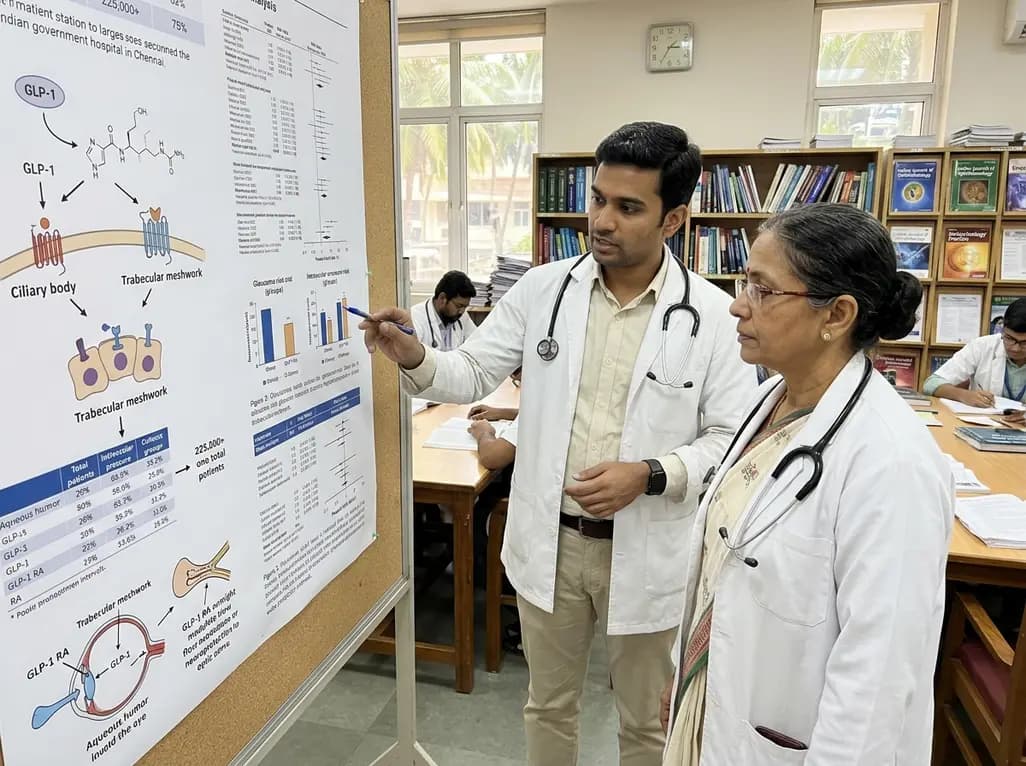
A systematic review and meta-analysis of over 225,000 patients explores whether GLP-1 receptor agonists reduce the risk of glaucoma and ocular hypertension. While pooled data show a 31% lower risk, low certainty and wide prediction intervals urge cautious optimism and further randomized trial evaluation.
Today
