

Loading, please wait...
Loading, please wait...
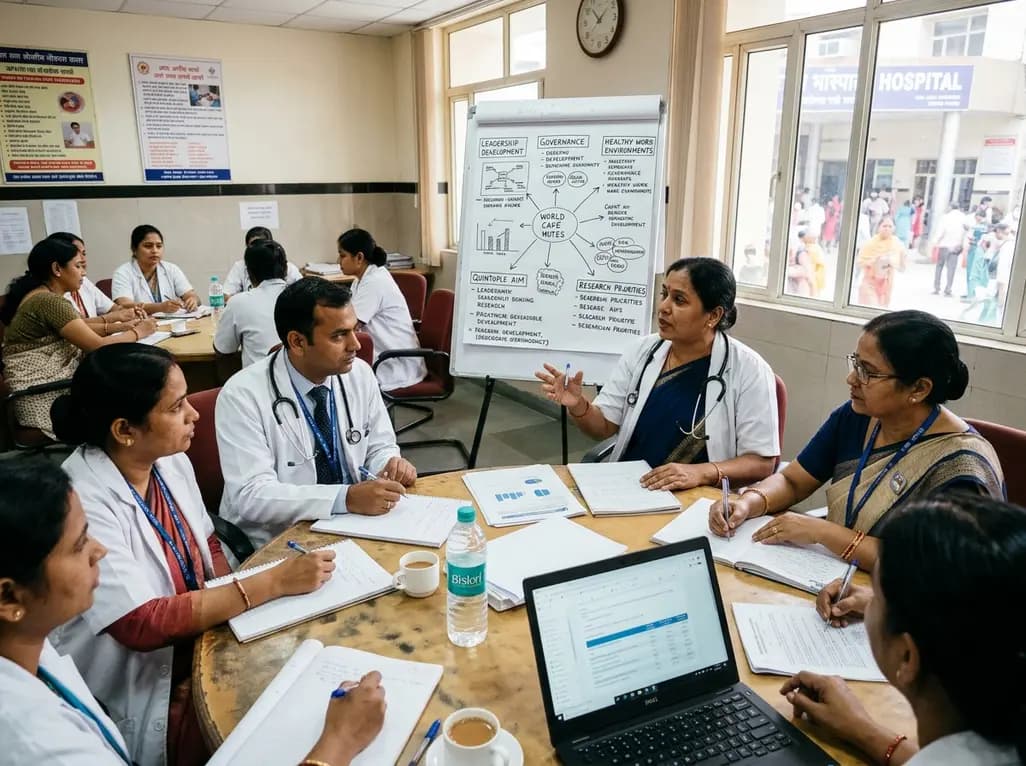
Healthcare systems worldwide face mounting operational complexities, workforce shortages, and clinical demands. To address these urgent challenges, multi-organization initiatives are actively advancing nursing leadership science. Recent national collaborative efforts brought diverse nurse leaders together to systematically establish shared research priorities. By aligning strategic initiatives with the Quintuple Aim, this collaborative model demonstrates how unified leadership drives meaningful health system transformation across clinical practice environments.
Modern healthcare delivery requires strong operational structures and robust strategic guidance. Consequently, nursing leadership science has evolved from basic administrative oversight into a rigorous discipline grounded in evidence-based management. Health leaders increasingly recognize that bedside clinical quality directly mirrors executive governance and institutional culture. Therefore, establishing shared research priorities serves as a vital step toward standardizing executive competencies across complex care delivery networks.
Furthermore, this multi-organization initiative explicitly aligned its strategic framework with the Quintuple Aim. This comprehensive model concurrently targets patient experience, population health, cost containment, clinician well-being, and health equity. Historically, hospital frameworks often neglected the emotional and physical burden placed on bedside providers. In contrast, modern leadership paradigms deliberately foster supportive, resilient workplace environments. When healthcare executives purposefully prioritize sustainable working conditions, staff retention improves significantly. As a direct result, multidisciplinary teams deliver safer, more coordinated clinical care. Ultimately, strengthening the evidence base for administrative leadership provides clinicians with dependable mechanisms to transform patient outcomes across healthcare ecosystems.
To structure their collaborative inquiries, nurse leaders identified three central research themes through extensive dialogue. First, they focused on leadership development and competency building. Clinical environments evolve rapidly due to ongoing technological disruption and shifting demographic profiles. Thus, emerging leaders require structured training in emotional intelligence, fiscal stewardship, and crisis management. Developing these competencies ensures that nurse managers navigate administrative and clinical turbulence successfully.
Second, the collaborative prioritized leadership in governance, organizational policy, and systemic institutional administration. Nurse executives frequently encounter institutional barriers that limit their formal decision-making authority. Therefore, targeted research must evaluate how direct nursing representation on executive boards enhances clinical safety metrics. Third, the investigators emphasized healthy communities, sustainable workforces, and resilient practice environments. Severe burnout continues to jeopardize clinical staffing across global healthcare systems. Consequently, administrative leaders must establish structural safeguards that protect frontline autonomy and job satisfaction. By concentrating on these three interrelated themes, the collaborative project created an actionable roadmap for contemporary health systems.
Transforming administrative theory into meaningful clinical practice requires sophisticated, modern investigative methodologies. Accordingly, the collaborative highlighted Design Thinking, Implementation Science, and positive deviance as foundational tools for leadership advancement. Design Thinking deliberately centers the problem-solving process on the lived experiences of frontline healthcare workers. By actively empathizing with bedside staff, leaders uncover subtle workflow barriers that standard institutional policies frequently overlook. This human-centered perspective fosters rapid prototyping of practical operational solutions.
Similarly, Implementation Science ensures that proven clinical interventions achieve sustainable integration within complex hospital routines. Healthcare facilities frequently struggle to translate clinical evidence into routine practice due to stubborn organizational inertia. However, Implementation Science systematically identifies institutional barriers, facilitating smooth, durable protocol adoption. Furthermore, investigators utilize positive deviance to examine exceptional units that achieve superior outcomes despite severe resource constraints. Analyzing these high-performing teams illuminates successful, organic tactics that other departments can easily replicate. Consequently, combining these methodologies empowers healthcare executives to replace rigid bureaucratic habits with responsive, evidence-based management systems.
A critical outcome of this multi-organization initiative involves bridging the persistent divide between academic institutions and clinical healthcare systems. Traditionally, nursing colleges and hospital administrations operated in distinct silos with misaligned strategic priorities. Academic researchers frequently investigated theoretical models that offered minimal immediate utility to bedside clinicians. Conversely, busy hospital administrators often lacked the methodological research expertise required to conduct rigorous operational studies. Strengthening academic-practice partnerships effectively eliminates this historic disconnect.
Furthermore, dynamic collaborative partnerships enable academic educators to align nursing curricula directly with evolving clinical realities. When nursing faculties collaborate closely with hospital executives, graduating nurses possess robust competencies tailored for high-acuity environments. Additionally, this cross-sector alignment elevates professional nursing perspectives in regional and national healthcare policy formulation. Regulatory agencies and legislative committees frequently establish healthcare directives without adequate bedside consultation. In contrast, unified nurse leaders possess the collective credibility to influence staffing guidelines and healthcare financing. Ultimately, integrating academic inquiry with operational practice builds a strong foundation for sustained policy improvement.
Although this research initiative focused on nursing leadership, its practical implications extend directly to physicians and multidisciplinary healthcare teams. High-quality patient care inherently relies on seamless communication between doctors, nurses, and allied health professionals. When nurse managers lack structured leadership training or administrative autonomy, interprofessional communication inevitably deteriorates. This communication breakdown increases avoidable clinical errors, delays critical diagnostic interventions, and jeopardizes overall patient safety.
Conversely, empowering nurse leaders fosters collaborative hospital hierarchies that support shared clinical decision-making. Physicians working in well-managed clinical units experience greater operational efficiency, reduced workplace friction, and superior patient care coordination. Moreover, contemporary hospital governance demands interdisciplinary cooperation to satisfy rigorous quality metrics and institutional accreditation standards. Healthcare institutions that actively cultivate collaborative leadership structures consistently achieve lower infection rates and reduced hospital lengths of stay. In addition, healthy practice environments mitigate professional burnout and emotional exhaustion across all clinical specialties. Therefore, advancing leadership science represents a shared clinical imperative that strengthens operational resilience throughout modern healthcare institutions.
Nursing leadership science directly influences patient care quality by establishing evidence-based administrative standards, improving staff retention, and optimizing clinical workflows. When nurse managers receive specialized leadership training, they foster supportive working environments that reduce nurse burnout and turnover. Consequently, experienced bedside nurses remain at the bedside, leading to lower rates of hospital-acquired complications, medication errors, and unexpected readmissions while enhancing overall patient satisfaction across clinical departments.
The World Café methodology facilitates structured, collaborative dialogue among diverse healthcare leaders to uncover shared priorities and innovative solutions. By rotating participants through small-group discussions, this technique flattens traditional administrative hierarchies and encourages candid feedback. Consequently, participants synthesize collective intelligence across multiple organizations, enabling nurse executives to identify persistent operational challenges, prioritize vital research agendas, and co-design practical strategies that transform clinical governance and hospital culture.
The Quintuple Aim is essential because it expands conventional healthcare goals to include clinician well-being and health equity alongside patient experience, population health, and cost reduction. Nursing research guided by this comprehensive framework ensures that operational changes do not compromise staff welfare or disadvantage vulnerable patient populations. As a result, healthcare organizations build sustainable care delivery models that prevent provider exhaustion while promoting equitable, high-value clinical outcomes.
Disclaimer: This content is for informational and educational purposes only... Refer to the latest local and national guidelines for clinical practice.
References

Read summarized clinical updates, watch expert medical content, and earn CME certifications right from your smartphone.
Open your smartphone camera to scan and install.





A national multi-organization initiative utilized an adapted World Café approach to advance nursing leadership science, identifying vital research priorities across leadership development, governance, and healthy work environments aligned with the Quintuple Aim.
Today

The randomized EARLY-RESYNC trial reveals that early left bundle branch pacing combined with guideline-directed medical therapy significantly improves LVEF and reduces LV end-systolic volume compared to medical therapy alone in patients with complete LBBB and mildly reduced ejection fraction (36%-50%).
Today

A comparative evaluation of INNO-LiPA, Cobas 4800, and Amplicor highlights significant assay-dependent variation in high-risk HPV detection, emphasizing the clinical distinction between analytical sensitivity and screening specificity.
Today

Recent data from PGIMER reveals that young adults diagnosed with type 2 diabetes face an aggressive disease trajectory. They encounter severe cardiovascular and microvascular damage within five years, occurring at higher rates than in type 1 diabetes despite lower mean blood glucose levels.
Today

Discover the six core principles of responsible AI in orthopaedics, emphasizing algorithmic fairness, transparency, clinical reliability, and specialist oversight to safeguard patient trust and outcomes.
Today
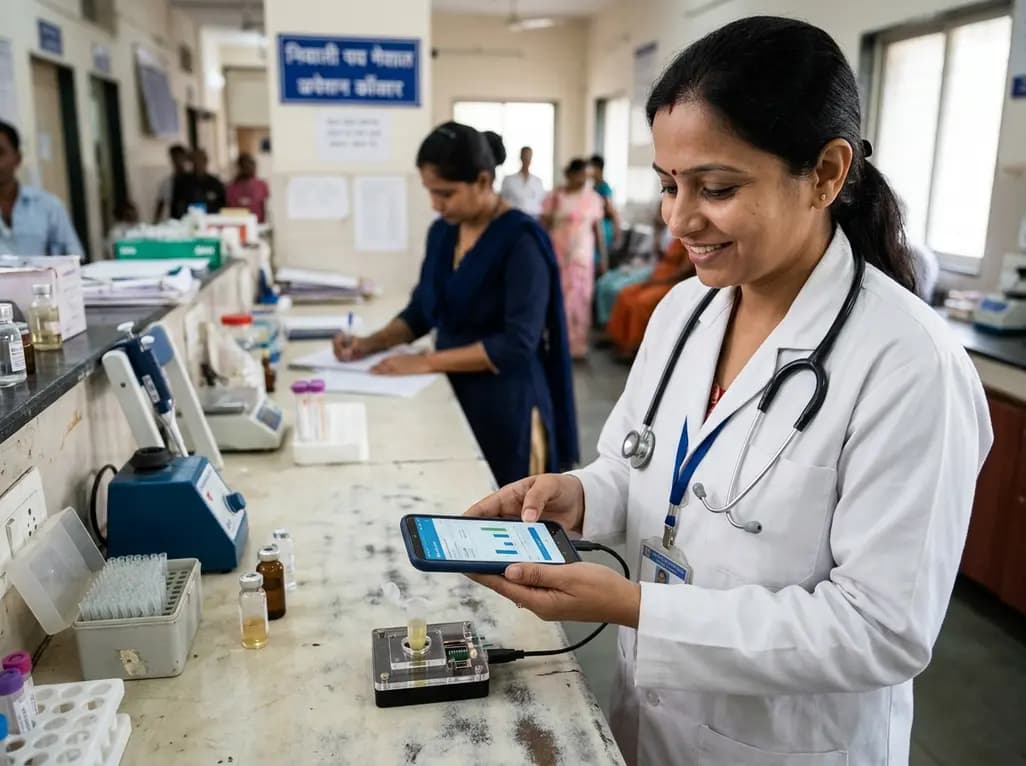
A novel smartphone-assisted biosensor utilizing molecularly imprinted polymers and catalytic nanozymes offers antibody-free, enzyme-free urinary microalbumin testing, enabling rapid, low-cost point-of-care screening for early chronic kidney disease.
Today
