.webp&w=384&q=75)

Loading, please wait...
Loading, please wait...

Adenomyosis is a chronic uterine disorder where endometrial tissue grows within the myometrium. Historically, clinicians identified this condition mostly in multiparous women over 40. However, recent imaging advances have expanded recognition to younger reproductive-aged patients. Effective adenomyosis management now necessitates a multi-faceted approach. Specifically, the pathogenesis involves sex steroid imbalances, inflammation, and stem cell-mediated mechanisms. Clinical presentations range from asymptomatic cases to severe pelvic pain and abnormal bleeding.
Accurate diagnosis once relied solely on post-hysterectomy histology. Fortunately, noninvasive imaging has transformed the diagnostic landscape. Transvaginal ultrasound (TVUS) and Magnetic Resonance Imaging (MRI) now offer high sensitivity. Moreover, 3D ultrasound provides detailed views of the junctional zone. These tools allow doctors to identify the disease earlier. Consequently, patients receive more personalized care without immediate surgical intervention. Furthermore, standardized imaging criteria help differentiate adenomyosis from leiomyomas.
Therapeutic options have moved beyond simple surgical removal. Medical therapies often include progestins and GnRH analogs to suppress symptoms. Furthermore, the levonorgestrel intrauterine system provides significant relief for many patients. Interventional options, like uterine artery embolization and high-intensity focused ultrasound, offer uterus-preserving alternatives. Therefore, clinicians can tailor adenomyosis management based on specific fertility goals. Additionally, emerging agents show promise in reducing inflammation and neuroangiogenesis. Successful treatment typically requires long-term follow-up and multi-disciplinary care.
Despite significant progress, several challenges remain in clinical practice. Specifically, the lack of universal histologic definitions complicates large-scale research. However, growing consensus regarding pathology is slowly reshaping modern management protocols. Prospective trials are essential for optimizing individualized care and improving fertility outcomes. Ultimately, these advances aim to reduce the heavy physical and socioeconomic burden on patients worldwide.
Yes, they are distinct conditions. While both involve ectopic endometrial tissue, adenomyosis occurs within the uterine muscle. In contrast, endometriosis involves tissue growth outside the uterus, such as on the ovaries or peritoneum.
Absolutely. Modern adenomyosis management includes various uterus-preserving options. Medical treatments like hormonal therapy and minimally invasive procedures like uterine artery embolization can effectively control symptoms while maintaining the uterus.
Disclaimer: This content is for informational and educational purposes only. It does not constitute professional medical advice, diagnosis, or treatment. Always seek the advice of your physician or other qualified healthcare provider with any questions you may have regarding a medical condition. Refer to the latest local and national guidelines for clinical practice.
References
Kho KA et al. Adenomyosis Pathophysiology, Diagnostic Advances, and Therapeutic Options. Obstet Gynecol. 2026 Apr 02. doi: 10.1097/AOG.0000000000006276. PMID: 41926770.
Gallo A et al. Advances in non-invasive diagnosis of uterine adenomyosis: a narrative review. Gynecol Pelvic Med. 2025;8:12.
Vannuccini S, Petraglia F. Recent advances in understanding and managing adenomyosis. F1000Res. 2019;8:F1000 Faculty Rev-283. doi: 10.12688/f1000research.15014.1.
"
Read summarized clinical updates, watch expert medical content, and earn CME certifications right from your smartphone.
Open your smartphone camera to scan and install.





Explore the evolving landscape of adenomyosis, covering diagnostic imaging, medical therapies, and fertility-preserving surgical interventions....
6 months ago

A breakthrough ultrathin multimodal sensor decouples physical hemodynamic monitoring from disposable electrochemical calibration, achieving long-term wearable glucose prediction with 81.36% accuracy and a 9.12% MARD. This offers a robust, drift-free solution for outpatient metabolic surveillance.
Today

A clinical review of menopause and neurology highlights the neurobiological impacts of midlife hormonal shifts on cognition, epilepsy, migraine, multiple sclerosis, and stroke, emphasizing safe hormone therapy prescribing.
Today

Co-administering antiseizure medications and DOACs frequently causes pharmacokinetic interactions, subtherapeutic drug levels, and thromboembolic failures. This review highlights enzyme induction risks, unpredictable outcomes with levetiracetam, and the vital role of therapeutic drug monitoring.
Today
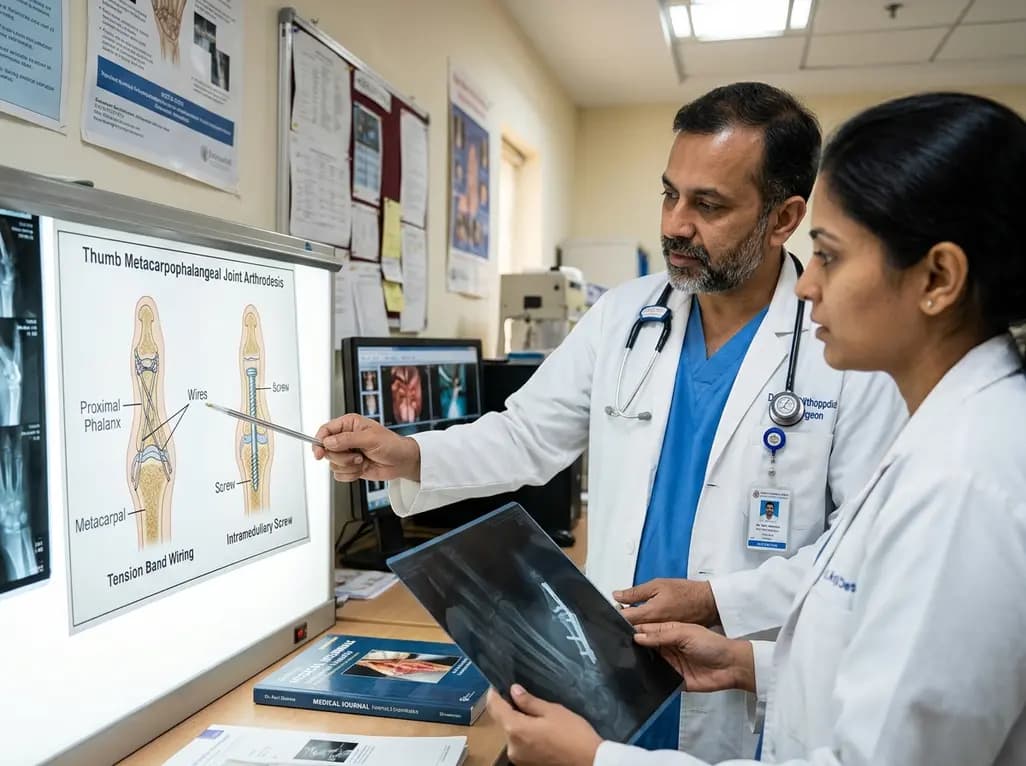
A comparative review of tension band wiring and intramedullary screw fixation in thumb metacarpophalangeal arthrodesis, evaluating union rates, hardware complications, and clinical outcomes.
Today

Following regulatory scrutiny from FSSAI regarding promotional representations and lean muscle preservation claims, Dr. Reddy's Laboratories and Nestlé Health Science are currently reviewing the branding and marketing strategy for their joint nutritional supplement Celevida GLP+.
Today
