.webp&w=384&q=75)

Loading, please wait...
Loading, please wait...
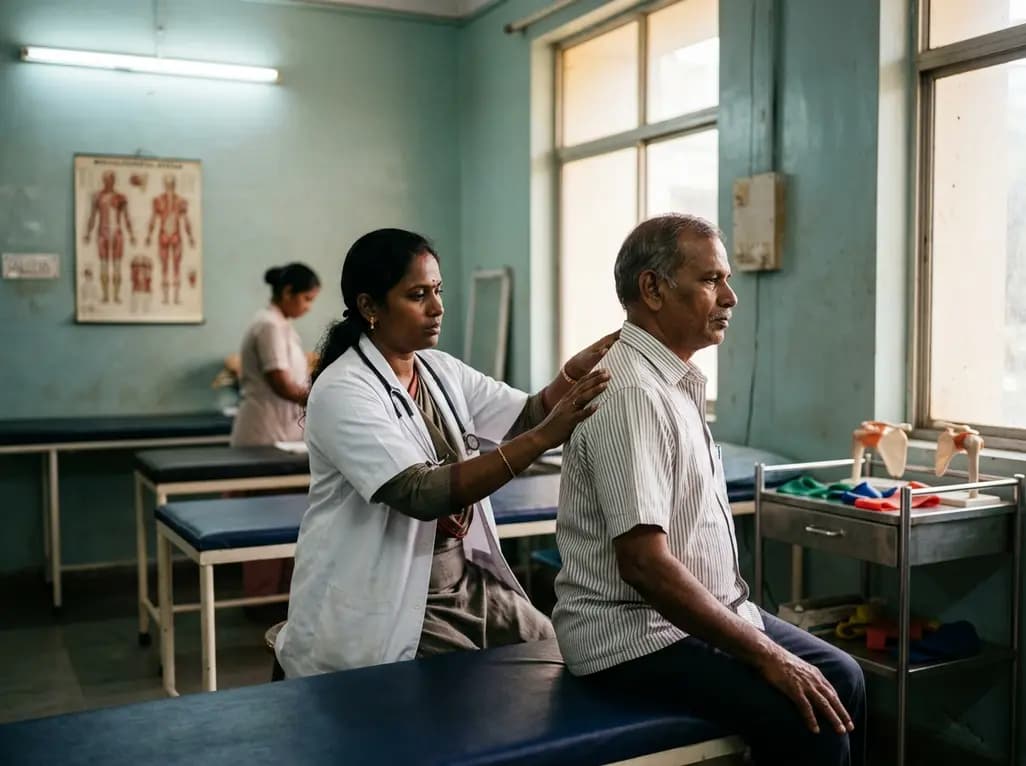
Chronic mechanical neck pain poses a major clinical challenge across modern healthcare settings. In routine practice, postural strain from prolonged computer work and sedentary habits heavily impacts the cervical region. Clinicians recognize that scapular dyskinesis frequently accompanies chronic neck pain, altering the biomechanical foundation of the neck. When the shoulder blades sit in downward rotation or protracted positions, they place excessive tensile stress on the levator scapulae and upper trapezius. Consequently, targeted scapular correction serves as a foundational intervention to restore scapulothoracic alignment and unload sensitive cervical structures. By adjusting the resting orientation of the shoulder blades, therapists can rapidly alter tension across the entire cervicothoracic junction. Furthermore, proper alignment alleviates excessive compressive loads on the cervical facet joints and neural tissues. Therefore, analyzing scapular resting alignment provides vital diagnostic clues regarding functional cervical impairment. Patients with abnormal scapular posture frequently display diminished neck mobility and heightened local tenderness. Accordingly, understanding how corrective positioning influences spinal kinematics offers key clinical insights for designing effective rehabilitation protocols.
A recent double-blind, randomized, sham-controlled clinical trial evaluated acute adaptations following specific scapular repositioning techniques. The investigators recruited seventy-eight adult participants presenting with chronic neck pain and concurrent scapular dysfunction. Subsequently, researchers randomly allocated participants into three distinct experimental cohorts: active correction, passive correction, or a sham control intervention. Each participant completed ten distinct repetitions of a ten-second intervention. Specifically, individuals in the active cohort performed guided voluntary scapular repositioning using their axioscapular musculature. In contrast, participants in the passive cohort received precise physical therapist-assisted manual repositioning without voluntary muscle activation. Meanwhile, the sham control cohort received gentle, neutral tactile contact over the shoulder region without corrective movement. The researchers rigorously measured primary clinical and sensorimotor parameters across three distinct intervals: baseline, immediately post-intervention, and at a 30-minute follow-up. These key endpoints included visual analogue scale pain scores, active cervical range of motion, cervical joint position error, and localized pressure pain thresholds. Notably, this standardized methodology permitted direct comparison between purely mechanical repositioning and active neuromuscular engagement.
The immediate post-intervention assessments demonstrated robust and statistically significant clinical benefits for both active and passive repositioning. Compared to the sham group, participants in both corrective cohorts experienced an immediate reduction in perceived neck pain intensity. Furthermore, both groups demonstrated immediate gains in active cervical range of motion across multiple planes, particularly in rotation and extension. Passive correction effectively offloaded hypertonic musculature, while active contraction stimulated periarticular mechanoreceptors to facilitate movement. In addition, both intervention groups showed elevated local pressure pain thresholds, indicating reduced mechanical hyperalgesia over irritated cervical segments. However, the magnitude of functional improvement showed important nuances between the groups. While passive manual adjustment provided swift mechanical decompression, active muscle activation stimulated active motor pathways. Consequently, patients in the active group achieved superior voluntary control during subsequent active cervical movement tests. Therefore, these acute findings confirm that adjusting scapular orientation promptly modulates nociceptive input and enhances cervical flexibility. Nevertheless, assessing whether these clinical adaptations persist beyond the immediate intervention window represents a critical question for musculoskeletal clinicians.
Evaluating patient outcomes at the 30-minute follow-up revealed crucial distinctions between active and passive corrective modalities. Although both interventions initially decreased subjective pain, the active correction group demonstrated markedly superior durability across sensorimotor parameters. Specifically, active scapular correction yielded sustained reductions in cervical joint position error at the 30-minute mark. In contrast, participants in the passive correction group showed a rapid attenuation of proprioceptive gains once manual therapist input ceased. Furthermore, the active cohort maintained higher pressure pain thresholds and broader cervical movement ranges than the passive cohort. Active neuromuscular contraction recruits muscle spindles and Golgi tendon organs, thereby reinforcing accurate proprioceptive feedback to the central nervous system. Consequently, the brain retains sensorimotor recalibration far more effectively when the patient voluntarily contracts the serratus anterior and lower trapezius. Conversely, passive alignment adjustments fail to induce lasting motor learning or afferent neuromuscular facilitation. These persistent benefits indicate that active patient participation is indispensable for maintaining sensory acuity and segmental stability in the cervical spine.
These clinical findings provide clear, practical guidance for orthopedists, physiotherapists, and primary care physicians managing neck pain. Firstly, clinicians should systematically screen for scapular dyskinesis in every patient presenting with non-specific cervical discomfort. If passive scapular repositioning during examination immediately relieves neck symptoms, therapists should prioritize scapular-focused interventions. However, instead of relying exclusively on passive manual adjustments, rehabilitation specialists must promptly transition patients to active corrective exercises. For example, clinicians can prescribe targeted sets of active scapular retractions and posterior tilts during daily desk routines. These repeated ten-second active holds retrain axioscapular stabilizers, reduce chronic trapezius overactivation, and maintain cervical joint position sense. Additionally, clinicians in outpatient settings can use active scapular positioning as an empowering self-management tool for patients. By actively controlling their scapular posture, patients reduce their dependence on passive clinic treatments and prevent recurrent microtrauma. Ultimately, integrating active motor control exercises into standard conservative care pathways delivers superior, lasting relief for cervical spine disorders.
Scapular correction restores optimal shoulder girdle kinematics, which immediately reduces mechanical tension on the cervical spine. Specifically, realigning the scapula offloads overstretched cervicoscapular muscles, such as the levator scapulae and upper trapezius. In addition, this realignment enhances cervical facet joint mechanics and reduces nociceptive input from periarticular cervical tissues. Consequently, patients experience immediate pain relief, decreased peripheral mechanosensitivity, and expanded pain-free cervical range of motion during functional neck movements.
Active correction uniquely stimulates conscious sensorimotor pathways and recruits deep postural stabilizers, including the serratus anterior and lower trapezius. Although passive positioning temporarily relieves soft-tissue strain, it cannot drive neuroplastic motor learning. Therefore, active motor recruitment stimulates muscle spindle afferents and reinforces cortical motor maps. This active stabilization improves cervical joint position sense and sustains elevated pressure pain thresholds longer than passive manual holding by a therapist.
Clinicians should implement active scapular correction during the initial evaluation to confirm directional mechanical sensitivity. Furthermore, practitioners can prescribe these targeted postural corrections as high-frequency, low-load home exercises. Patients perform sets of sustained ten-second holds throughout the workday to disrupt sustained postural loading. Subsequently, therapists progress patients toward resistance training for the axioscapular musculature, establishing durable motor patterns that safeguard cervical spine health over time.
Disclaimer: This content is for informational and educational purposes only, and does not substitute professional medical advice, diagnosis, or treatment. Always seek the advice of a qualified healthcare provider with any questions regarding a medical condition. Refer to the latest local and national guidelines for clinical practice.
References

Read summarized clinical updates, watch expert medical content, and earn CME certifications right from your smartphone.
Open your smartphone camera to scan and install.





A randomized controlled trial demonstrates that active scapular correction provides superior, sustained improvements in joint position error, cervical mobility, and pressure pain thresholds compared to passive correction in individuals with chronic neck pain and scapular dysfunction.
Today

A five-week pilot study demonstrates that app-guided workplace activity breaks significantly improve self-perceived work ability and physical activity among sedentary administrative employees, cutting poor work ability ratings from 27% to 6% and offering a feasible occupational health solution.
Today
India faces a significant breast cancer survival gap, with five-year survival at 65.7% compared to 87% in high-income nations. Late clinical presentation, dismissal of painless lumps, and inadequate organized screening drive poor outcomes. Addressing systemic delays is crucial to transforming cancer prognosis.
Today

A landmark Lancet Commission analysis reveals that obesity will cause over 23 billion avoidable DALYs by 2100. For healthcare providers, especially in India, combating this crisis demands moving beyond basic BMI metrics to prioritize visceral fat assessment, muscle preservation, and early metabolic intervention.
Today
A novel metronidazole-functionalized Type I photosensitizer transforms intra-articular hypoxia into a therapeutic asset, effectively eliminating MRSA biofilms and resolving septic arthritis without promoting drug resistance.
Today

A longitudinal study reveals that an escalating cardiometabolic disease burden significantly accelerates health-related work cessation among middle-aged adults, highlighting an urgent need for proactive multimorbidity screening and tailored workplace health interventions.
Today
