.webp&w=384&q=75)

Loading, please wait...
Loading, please wait...
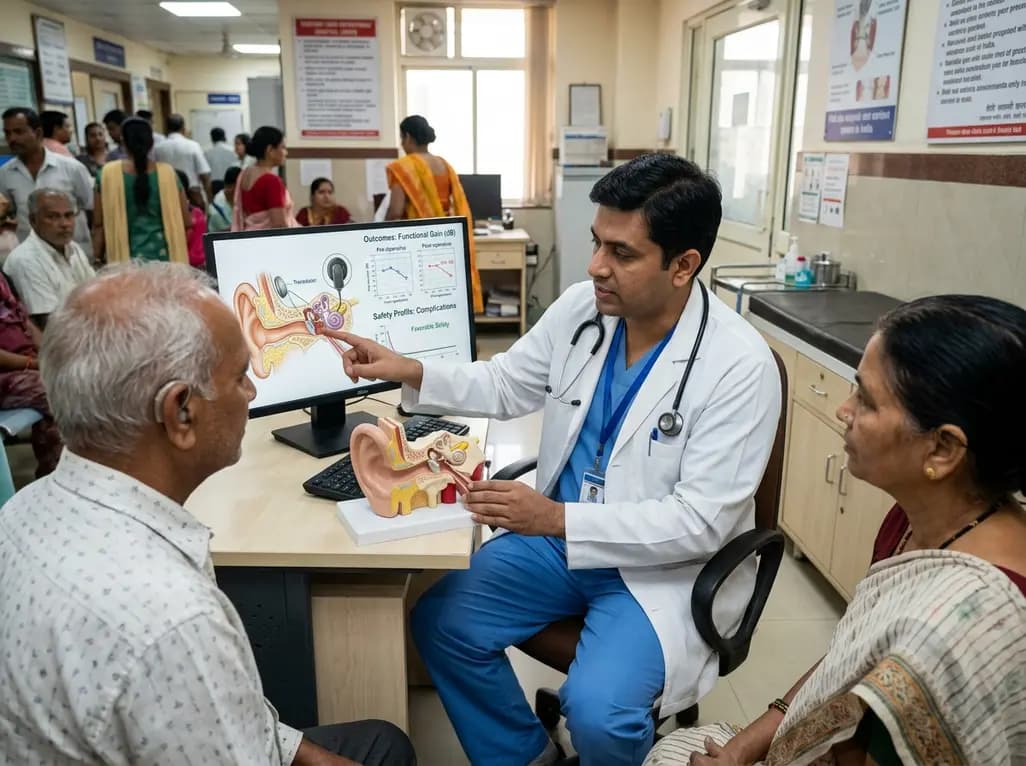
Many patients with moderate-to-severe sensorineural hearing loss encounter significant limitations with traditional external hearing aids. Consequently, otolaryngologists frequently seek alternative reconstructive interventions. An active middle ear implant offers an effective mechanical solution by directly driving ossicular structures. Recent meta-analytic evidence systematically synthesizes data from worldwide cohorts receiving the Vibrant Soundbridge system. This rigorous evaluation clarifies postoperative functional hearing gain and adverse event rates. Therefore, surgeons gain clear empirical guidance regarding clinical efficacy, patient selection, and overall long-term safety.
Conventional acoustic hearing aids amplify sound waves across the external auditory canal. However, this amplification frequently causes uncomfortable acoustic feedback, canal occlusion, and cutaneous irritation. In addition, patients suffering from chronic external otitis or ear canal stenosis cannot tolerate occlusive earmolds. The active middle ear implant bypasses these external ear canal difficulties entirely. Instead of amplifying airborne acoustic waves, the device delivers direct mechanical vibrations to the ossicular chain. Specifically, a tiny floating mass transducer attaches directly to the long process of the incus or alternative middle ear structures. As a result, the device stimulates the cochlear perilymph without causing canal occlusion. Furthermore, direct ossicular stimulation delivers superior high-frequency clarity. Many patients with sloping high-frequency hearing loss struggle significantly with speech comprehension in background noise. Conventional aids often distort high-frequency acoustic cues or cause persistent whistling. In contrast, electromagnetic middle ear transducers provide pristine mechanical input without secondary acoustic interference. Consequently, patients achieve reliable functional sound amplification and enhanced acoustic comfort across complex everyday listening environments.
Recent comprehensive systematic reviews offer robust quantitative evidence regarding postoperative auditory outcomes. Across pooled meta-analyses encompassing hundreds of implanted ears, recipients demonstrated substantial functional improvements. Specifically, the pooled mean functional gain reached approximately 24.29 dB across pure-tone frequencies. Moreover, patients experienced marked improvements in speech recognition thresholds and word discrimination scores under challenging acoustic conditions. Preoperative evaluation revealed baseline pure-tone averages hovering around moderate-to-severe levels of hearing impairment. Following surgical intervention, aided thresholds improved consistently across both mid and high frequencies. Consequently, patients reported noticeable relief from communication fatigue during routine conversational tasks. In addition, clinical researchers observed minimal deterioration in baseline residual bone conduction thresholds. This critical stability confirms that the surgical placement does not cause substantial inner ear acoustic trauma. Furthermore, comparative evaluations show that functional hearing gains equal or surpass those achieved with optimized external hearing devices. Therefore, the physiological transfer of mechanical energy preserves cochlear integrity while restoring adequate speech perception. Ultimately, these quantitative metrics confirm robust audiological effectiveness for appropriately selected adult recipients.
Surgical safety remains a critical consideration when recommending any invasive otological intervention. Fortunately, published meta-analytic syntheses document a remarkably favorable safety profile for middle ear vibroplasty. Most patients undergo standard transmastoid facial recess surgery without severe intraoperative surgical misadventures. In addition, major complications such as persistent facial nerve paresis, permanent taste disturbance, or profound sensorineural hearing loss remain rare. However, otologic surgeons must remain vigilant regarding potential hardware displacement and wound healing complications. For instance, partial detachment or migration of the floating mass transducer can lead to diminished functional amplification. Consequently, revision surgery may become necessary to reposition or tighten the transducer coupler. Furthermore, minor postoperative adverse events occasionally include transient seroma formation, localized incisional discomfort, or altered canal sensation. Nevertheless, contemporary surgical techniques and refined third-generation couplers significantly minimize these mechanical risks. Clinicians must monitor wound stability and device coupling during routine long-term follow-up visits. Therefore, careful surgical dissection coupled with precise transducer placement ensures high rates of procedural success and device retention.
Optimal surgical outcomes require meticulous patient selection and detailed preoperative anatomic evaluation. Candidates typically present with bilateral or unilateral moderate-to-severe sensorineural hearing loss. Furthermore, they demonstrate an inability to benefit from conventional amplification due to anatomical, dermatological, or perceptual constraints. Surgeons must perform thin-slice high-resolution temporal bone computed tomography prior to surgery. This radiological assessment verifies mastoid pneumatization, facial nerve course, and adequate middle ear space. Moreover, the surgeon must confirm intact and mobile ossicular chain dynamics before attempting incus vibroplasty. If ossicular erosion exists, the surgeon must adapt by using customized round window or oval window vibroplasty couplers. In addition, audiologists must administer standardized speech discrimination tests to verify adequate cochlear reserve. Patients with severe progressive cochlear decline may eventually require cochlear implantation rather than middle ear reconstruction. Consequently, thorough preoperative counseling must delineate realistic expectations regarding sound quality and device maintenance. When clinicians adhere strictly to these diagnostic criteria, surgical outcomes remain predictable, stable, and highly rewarding.
Integrating active middle ear implants into clinical otology expands the therapeutic spectrum for complex hearing loss. Many patients present with chronic external ear conditions that preclude the use of standard acoustic hearing devices. For example, recurring otitis externa and canal eczema frequently worsen with sealed silicone earplugs. In these challenging cases, implantable middle ear transducers offer a life-changing open-canal alternative. Consequently, the patient maintains a clean, ventilated external auditory canal while enjoying clear auditory rehabilitation. Furthermore, surgeons in specialized tertiary centers can establish dedicated hearing implant multidisciplinary teams. These collaborative teams unite otologists, audiologists, and speech-language specialists to optimize individual device fitting. In addition, regular postoperative audiological programming ensures that acoustic gain matches progressive hearing changes over time. Otolaryngologists should therefore educate general practitioners and community audiologists about implantable middle ear solutions. As technological advancements continue to improve transducer coupling efficiency, clinical adoption will steadily expand. Ultimately, active middle ear vibroplasty bridges the crucial clinical gap between conventional hearing aids and cochlear implants.
An active middle ear implant delivers direct mechanical vibrations to the ossicular chain rather than amplifying sound waves acoustically. Conventional hearing aids direct amplified acoustic sound through the external ear canal, which can create feedback, distortion, and canal occlusion. In contrast, the implant leaves the canal open and transfers mechanical energy directly to the middle ear bones, thereby providing clearer high-frequency sound perception.
Ideal candidates are adults with moderate-to-severe sensorineural hearing loss who cannot use conventional hearing aids due to chronic otitis externa, ear canal atresia, or severe acoustic feedback. Additionally, candidates must possess stable bone conduction thresholds, intact ossicular mobility, and realistic expectations. Preoperative high-resolution imaging and audiological testing confirm that middle ear anatomy can safely accommodate the floating mass transducer.
Although the procedure has a favorable safety profile, potential surgical risks include transducer displacement, wound infection, and temporary taste disturbance from chorda tympani manipulation. Rarely, patients may experience facial nerve irritation or a decline in residual bone conduction hearing. Fortunately, meticulous surgical technique, careful facial recess dissection, and modern secure couplers substantially reduce these complications during routine long-term follow-up.
Disclaimer: This content is for informational and educational purposes only... Refer to the latest local and national guidelines for clinical practice.
References

Read summarized clinical updates, watch expert medical content, and earn CME certifications right from your smartphone.
Open your smartphone camera to scan and install.





A systematic review and meta-analysis of 23 studies evaluates the Vibrant Soundbridge active middle ear implant for sensorineural hearing loss, demonstrating a pooled functional gain of 24.29 dB and a favorable safety profile.
Today

Pancreatic cancer cachexia affects over 80% of patients, driving severe muscle wasting, systemic inflammation, and treatment intolerance. This review highlights key pathophysiological drivers, exocrine insufficiency, objective CT imaging, and emerging therapies like GDF-15 inhibitors to improve clinical outcomes.
Today

A scoping review reveals how pregnancy affects phonation through laryngeal edema and reduced phonation time rather than major acoustic pitch alterations. Learn how to identify, evaluate, and manage vocal symptoms in expectant mothers.
Today

According to WHO data, average lifespan reached 73.3 years in 2023, recovering from pandemic lows. However, healthy life expectancy lags at 62.8 years due to surging noncommunicable conditions like cardiovascular disease and dementia, demanding proactive primary screening and sustained chronic care.
Today
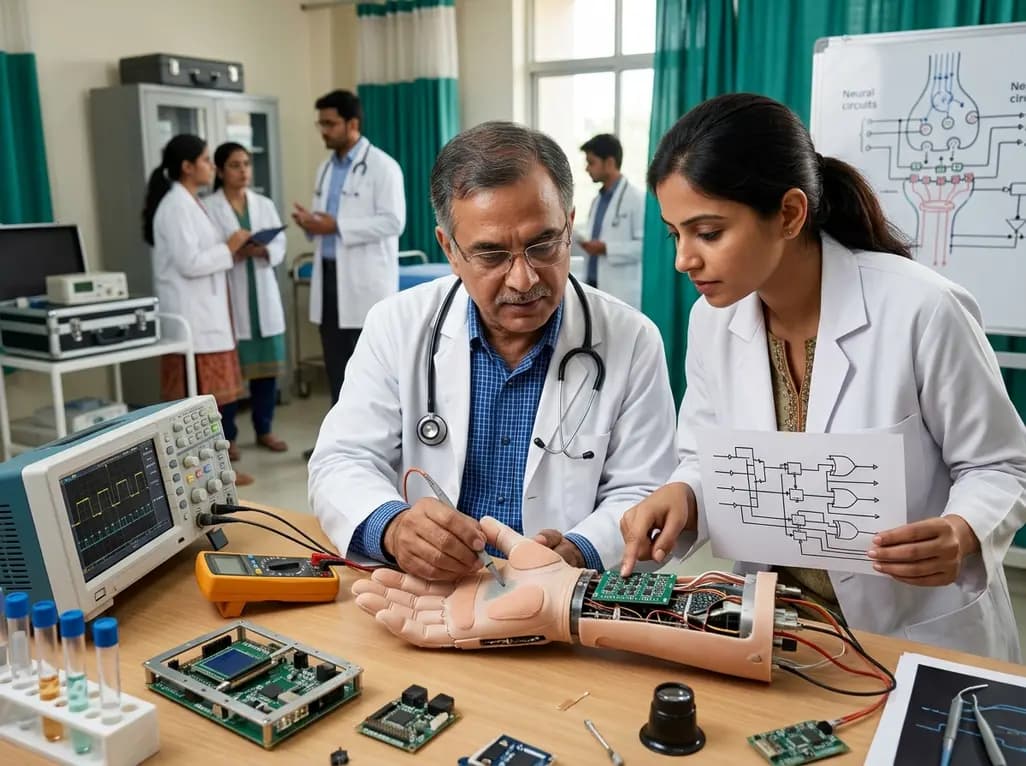
Researchers have engineered an artificial sensory-pain integrated receptor using a multi-threshold organic synaptic transistor. The system distinguishes benign touch from noxious stimuli, enabling safer, more responsive prosthetic limbs with built-in memory and simplified hardware architecture.
Today
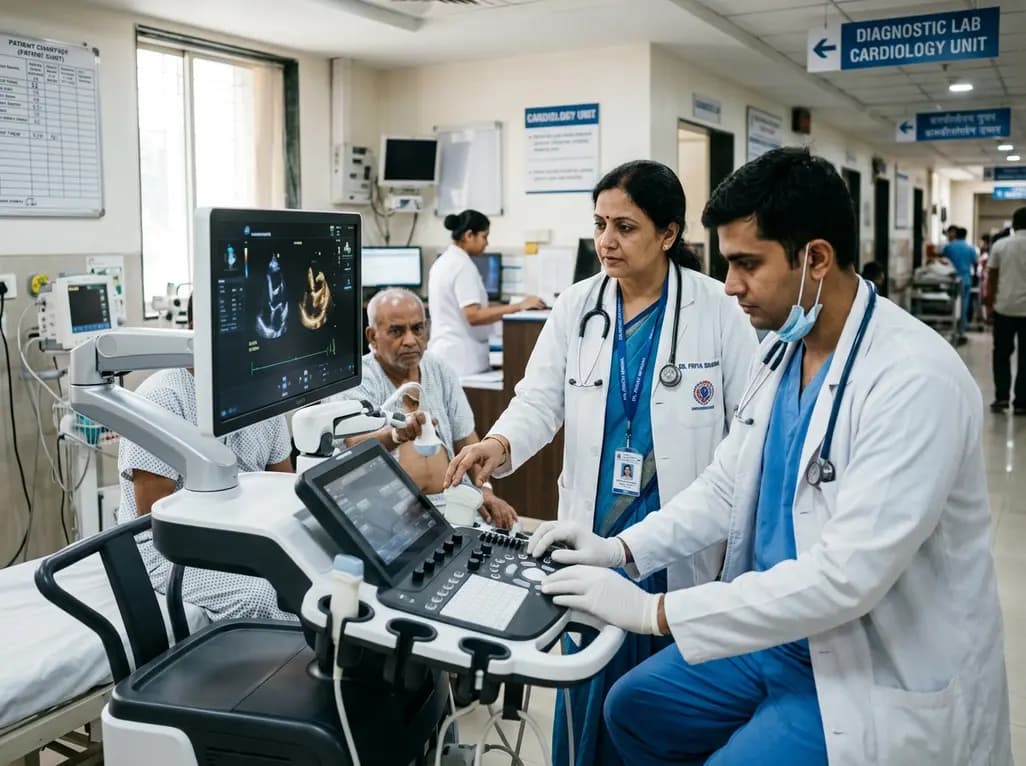
Medical robotics is transitioning beyond operative suites into diagnostics, cardiology, and endocrinology. Explore how innovations in tele-robotics, AI integration, and nanomedicine are overcoming geographical barriers and transforming precision healthcare delivery across India's evolving disease landscape.
Today
