.webp&w=384&q=75)

Loading, please wait...
Loading, please wait...

Precise molecular imaging in preclinical studies hinges on high-resolution system performance. Consequently, researchers have focused on improving SPECT system matrix acquisition through advanced calibration techniques. Traditionally, Technetium-99m serves as the primary radionuclide for these measurements. However, its six-hour half-life often limits the duration of data collection. This restriction complicates the long acquisitions required for sub-millimeter animal SPECT systems. Therefore, a more stable source is essential for accurate reconstruction.
In a recent breakthrough, a research team proposed a generator-producible hybrid ⁹⁹Mo/⁹⁹ᵐTc point source. They achieved this by adsorbing Molybdenum-99 onto AG1-X8 resin microspheres. These spheres, measuring 0.37 mm in diameter, reached activities exceeding 10 mCi per bead. Because this high activity provides an effectively longer usable half-life, it allows for extended system-matrix sampling without the usual time constraints.
The team evaluated potential contamination from high-energy Molybdenum-99 emissions using Monte Carlo simulations. They specifically tested two sub-millimeter platforms: a multi-pinhole system and a novel self-collimating SPECT. Interestingly, the comparative analyses revealed a negligible impact from high-energy photons on the ⁹⁹ᵐTc measurements. Furthermore, the source strength proved sufficient for a 100×100×100 system-matrix acquisition. As a result, this practical method offers a reproducible solution for high-quality image reconstruction in state-of-the-art systems.
The short half-life of ⁹⁹ᵐTc (6.02 hours) restricts the measurement window. This makes it difficult to complete the extensive sampling required for high-resolution system matrices in preclinical studies.
No, recent simulations indicate that ⁹⁹Mo-derived high-energy photons have a negligible impact on ⁹⁹ᵐTc system-matrix measurements, ensuring accurate calibration without significant contamination.
Disclaimer: This content is for informational and educational purposes only. It does not constitute medical advice or establish a doctor-patient relationship. Always seek the advice of a qualified healthcare provider regarding any medical condition. Refer to the latest local and national guidelines for clinical practice.
References
Dai T et al. High-activity ⁹⁹Mo microresin fabrication for submillimeter SPECT system matrix acquisition. Phys Med Biol. 2026 Feb 13. doi: 10.1088/1361-6560/ae45e5. PMID: 41687131.
Meikle SR, et al. Molecular imaging with SPECT. Phys Med Biol. 2005;50(22):R447-R461.
Van Audenhaege K, et al. Review of SPECT collimator selection, optimization, and fabrication for clinical and preclinical imaging. Med Phys. 2015;42(4):1456-1462.

Read summarized clinical updates, watch expert medical content, and earn CME certifications right from your smartphone.
Open your smartphone camera to scan and install.





Researchers developed high-activity ⁹⁹Mo microresin point sources to overcome ⁹⁹ᵐTc half-life limits, enabling accurate submillimeter SPECT matrix acquisiti...
8 months ago
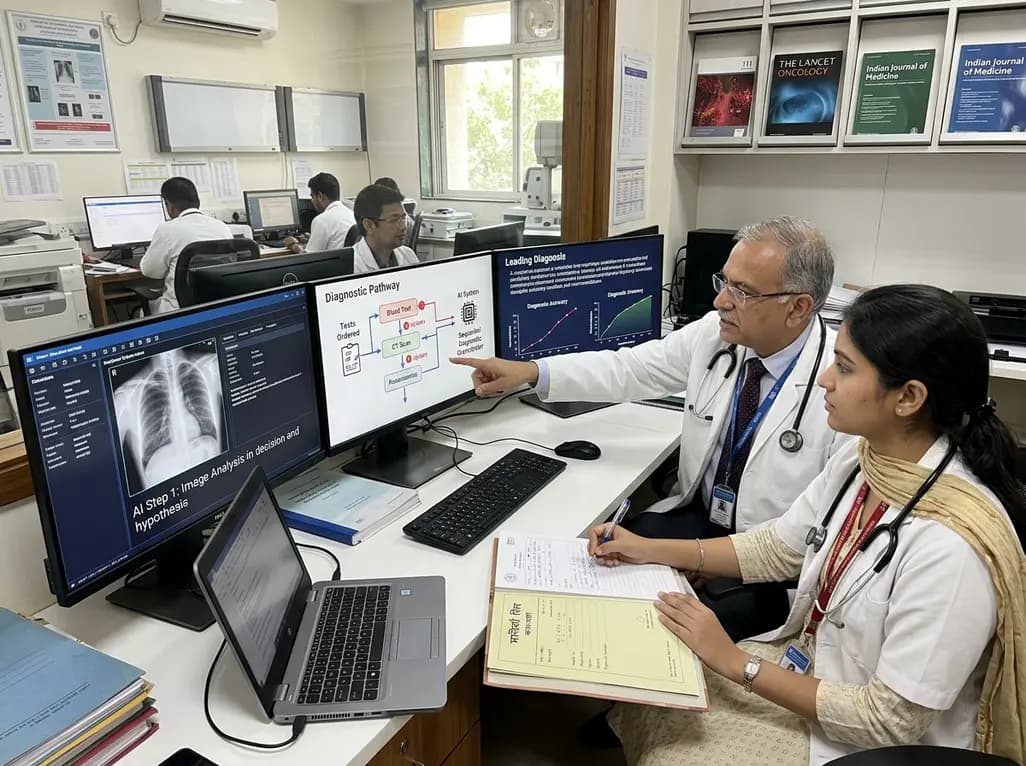
A breakthrough peer-reviewed study demonstrates that a sequential AI diagnosis system can mirror real-world clinical reasoning. By ordering stepwise tests and updating hypotheses dynamically, this multi-agent orchestrator achieved superior diagnostic accuracy while reducing investigative costs.
Today

A prenatal case highlights severe glutaric acidemia type II presenting as bilateral hyperechoic cystic kidneys at 18 weeks. Whole-exome sequencing revealed a novel homozygous ETFDH frameshift variant, demonstrating the power of rapid genetic testing in fetal renal anomalies.
Today

Review how tailored exercise programs benefit frail older patients with heart failure. Explore pathophysiological mechanisms, individualized training prescriptions, and strategies to overcome adherence barriers in clinical practice.
Yesterday

This comparative study evaluates posterior labral tears with and without glenohumeral instability, highlighting distinct demographic patterns, MRI underestimation in stable shoulders, and successful arthroscopic repair outcomes.
Yesterday

A clinical study demonstrates that early intervention with tocilizumab, either as monotherapy or bridged with corticosteroids, achieves significant proptosis reduction and resolves active inflammation in treatment-naive thyroid eye disease.
Yesterday
