.webp&w=384&q=75)

Loading, please wait...
Loading, please wait...

Evaluation of glaucomatous optic neuropathy traditionally relies on standard automated perimetry to measure peripheral functional loss. However, recent evidence underscores that glaucomatous damage frequently threatens the central macula early in the disease trajectory. The innovative 24-2C visual field grid directly addresses this clinical blind spot. It incorporates ten strategically selected test points within the central 10 degrees into the conventional 24-2 arrangement. Consequently, clinicians can evaluate peripheral visual loss alongside vulnerable macular locations during a single session.
Furthermore, this combined testing layout uses the Swedish Interactive Threshold Algorithm Faster strategy. Therefore, the examination significantly accelerates testing duration and reduces patient fatigue. In routine clinical settings, classic 24-2 patterns often fail to sample the macular region with sufficient density. As a result, early paracentral scotomas might escape prompt clinical detection. The 24-2C visual field protocol bridges this gap by targeting areas where retinal ganglion cells suffer early structural injury. Moreover, this approach provides actionable baseline information without imposing excessive perimetric burdens on elderly individuals. Practitioners can thus detect subtle central changes earlier and refine their therapeutic plans accordingly.
Fundus-tracked microperimetry, such as the Macular Integrity Assessment platform, represents a high-precision modality for evaluating macular functional integrity. Specifically, this technology couples real-time fundus tracking with localized light sensitivity thresholds. Consequently, it delivers accurate pointwise psychophysical measurements directly onto mapped retinal locations. In comparative trials, investigators assessed microperimetry outcomes against automated perimetric test algorithms across diverse clinical cohorts. The recent study of 214 eyes evaluated both glaucomatous and healthy eyes to determine functional alignment.
Remarkably, the global mean deviation obtained from the 24-2C grid demonstrated strong statistical correlation with microperimetry indices. In addition, the central threshold sensitivities matched closely across both modalities. Because microperimetry tracks real-time fixation stability, it reliably distinguishes genuine scotomas from motion artifacts. However, microperimetric testing demands specialized instrumentation and substantial chair time, which limits wide clinical adoption. In contrast, standard automated perimeters feature broad availability across ophthalmology departments. Therefore, establishing that 24-2C metrics correlate robustly with microperimetry reinforces the practical reliability of the newer perimetric test grid. Eye care providers can confidently capture vital paracentral deficits on standard perimetric devices during routine outpatient assessments.
Clinicians frequently reserve the 10-2 visual field pattern for confirming central depression and monitoring end-stage disease. While the 10-2 program features high stimulus density, scheduling two separate visual field exams remains impractical. Fortunately, comparative analyses show that 24-2C mean deviation strongly correlates with 10-2 global parameters. In particular, both testing modalities exhibit tight concordance across early and moderate glaucoma stages. The specialized central points of the 24-2C grid detect localized defects that standard 24-2 testing typically misses.
Nevertheless, clinicians should recognize specific performance differences between these grids. Although the 24-2C grid identifies central depression reliably, the dense 10-2 grid still provides superior spatial resolution. High point density proves vital when mapping steep scotoma borders adjacent to the fovea. Thus, the 24-2C test functions primarily as an opportunistic screening protocol rather than a complete replacement for 10-2 testing. When patients show borderline central depression on 24-2C grids, follow-up 10-2 testing provides comprehensive topographical clarification. Hence, combining both testing modalities appropriately allows clinicians to balance diagnostic speed with rigorous functional assessment in busy glaucoma services.
Accurate glaucoma management requires robust agreement between objective tissue loss and subjective perimetric responses. Optical coherence tomography measures retinal ganglion cell-inner plexiform layer thickness across the macular region with remarkable reproducibility. Consequently, matching perimetric points with ganglion cell maps validates the biological relevance of visual field findings. Research demonstrates that central clusters on the 24-2C grid correlate strongly with macular ganglion cell thinning on spectral-domain optical coherence tomography.
Moreover, structural loss in the inferotemporal macular quadrant corresponds precisely to superior paracentral visual defects. Because retinal ganglion cell bodies displace laterally around the fovea, anatomically customized test points improve structure-function concordance. The 24-2C pattern places extra points precisely where early glaucomatous nerve fiber bundle defects manifest. Therefore, clinicians can confirm genuine functional losses when macular optical coherence tomography shows corresponding structural thinning. In addition, this tight structure-function alignment helps practitioners identify early disease progression before global visual field indices drop dramatically. By validating psychophysical results against anatomical scans, ophthalmologists avoid treatment delays and protect patient quality of life.
Clinical efficiency plays a vital role in patient adherence and visual field reliability. Traditional threshold strategies often demand five to seven minutes per eye, causing significant cognitive exhaustion. In contrast, the 24-2C strategy operating under Swedish Interactive Threshold Algorithm Faster reduces examination time to approximately two minutes. Consequently, testing both eyes requires less than five minutes total. This remarkable speed limits fixation losses and minimizes false-negative responses associated with fatigue.
Furthermore, implementing 24-2C testing optimizes clinic throughput without compromising diagnostic depth. In busy tertiary and community centers, technicians can easily screen both peripheral and central fields in one sitting. However, clinicians must remember that faster test strategies show slightly higher test-retest variability near defect borders. Therefore, clinicians must confirm borderline defects through repeatable consecutive tests before escalating medical or surgical therapy. Nevertheless, the efficiency gains permit more frequent visual field assessments across consecutive visits. Increasing testing frequency ultimately accelerates rate-of-progression calculations, enabling prompt interventions when glaucoma worsens. Eye clinics can thus elevate their diagnostic standard of care while improving overall patient comfort.
The 24-2C visual field grid incorporates ten additional test points within the central 10 degrees while retaining the original 54 peripheral points of the 24-2 layout. Consequently, it samples the macula with greater spatial density. Furthermore, these extra points align specifically with vulnerable retinal ganglion cell bundles. This enhancement enables earlier detection of paracentral scotomas without requiring a separate 10-2 perimetric test, saving valuable time during routine clinical glaucoma assessments.
The 24-2C test functions primarily as a rapid screening tool rather than an absolute replacement for the 10-2 protocol. Although 24-2C global indices correlate strongly with 10-2 results, the 10-2 grid features 68 points within the central ten degrees. Therefore, the 10-2 grid offers superior spatial resolution for characterizing complex foveal scotomas. Clinicians should still order dedicated 10-2 testing when confirming borderline defects or monitoring advanced central visual loss.
Microperimetry integrates real-time fundus tracking with localized perimetry, ensuring exact stimulus positioning despite fixation instability. Consequently, it measures macular function with exceptional anatomical precision. In contrast, standard automated perimetry uses fixed projection systems that remain vulnerable to minor fixation shifts. However, standard automated perimetry remains significantly faster and far more widely accessible. Because 24-2C metrics correlate closely with microperimetry, clinicians obtain dependable central functional data during routine standard perimetric examinations.
Disclaimer: This content is for informational and educational purposes only... Refer to the latest local and national guidelines for clinical practice.
References
Bounetta S et al. Performance of 24-2C Visual Field Grid in Detecting Central Glaucomatous Defects: A Comparative Study with Microperimetry. J Glaucoma. 2026 Oct 07. doi: 10.1097/IJG.0000000000002789. PMID: 42842871.
Phu J, Khuu SK, Yapp M, et al. Comparison of 10-2 and 24-2C Test Grids for Identifying Central Visual Field Defects in Glaucoma and Suspect Patients. Ophthalmology. 2021;128(10):1405-1416. doi:10.1016/j.ophtha.2021.03.014.
Torun IM, Baysal T, Comerter D, Duzgun E, Sonmez M. Advancements in Visual Field Testing: A Systematic Review of the 24-2C Test Grid. Bioengineering. 2025;12(7):711. doi:10.3390/bioengineering12070711.

Read summarized clinical updates, watch expert medical content, and earn CME certifications right from your smartphone.
Open your smartphone camera to scan and install.





A comparative study reveals that the 24-2C visual field grid reliably identifies central glaucomatous defects, showing high agreement with microperimetry and 10-2 tests alongside shorter testing times and robust macular OCT structure-function correlation.
Today
Pulmonary complications are a leading cause of non-relapse mortality following allogeneic hematopoietic cell transplantation. Routine surveillance using pulmonary function tests detects subclinical airflow obstruction and enables timely therapeutic intervention before irreversible lung damage occurs.
Today

A large UK cohort study of 1.4 million women shows that pregnancy complications, including gestational diabetes, hypertension, and preterm birth, substantially raise long-term risks for hypertension, chronic kidney disease, type 2 diabetes, and cardiovascular events, highlighting early postpartum intervention needs.
Today

Small interfering RNA (siRNA) therapeutics harness RNA interference to degrade disease-causing messenger RNA. By delivering hepatocyte-targeted, durable gene silencing, agents targeting PCSK9, LPA, and angiotensinogen offer potent cardiovascular risk reduction with infrequent, biannual dosing schedules.
Today
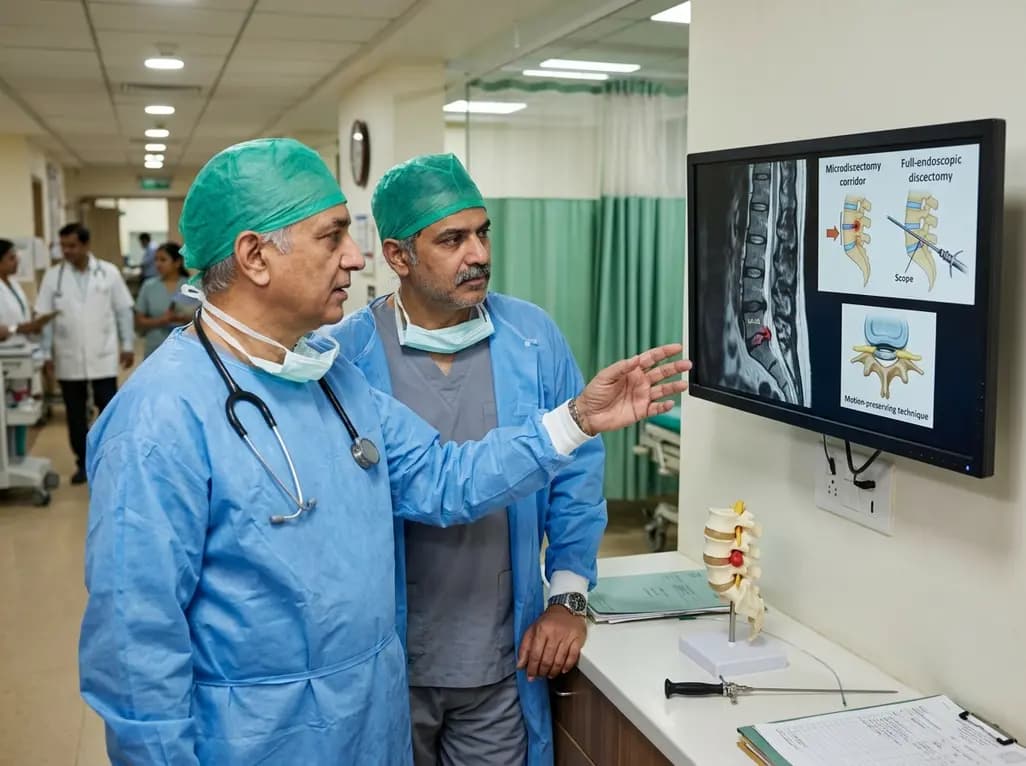
This clinical overview examines recent advancements in lumbar disc herniation surgery, comparing microscopic and full-endoscopic discectomy while highlighting biportal techniques and emerging motion-preserving innovations for spine specialists.
Today

The World Health Organization has issued its first global guidelines for managing child and adolescent obesity. The recommendations strongly endorse family-based dietary interventions, regular physical activity, and behavioral support as frontline therapy, reserving GLP-1 therapies and surgery for select cases.
Today
