.webp&w=384&q=75)

Loading, please wait...
Loading, please wait...

Adult-type diffuse gliomas represent a heterogeneous group of primary central nervous system malignancies where molecular classification dictates clinical management and prognostic outcomes. The non-invasive characterization of these neoplasms has advanced substantially through proton magnetic resonance spectroscopy. In particular, 1H-MRS 2HG detection offers an exceptional non-invasive avenue to confirm isocitrate dehydrogenase (IDH) mutation status prior to neurosurgical intervention. By tracking the distinctive accumulation of 2-hydroxyglutarate, clinicians can deduce essential molecular markers before tissue histopathology becomes available.
Accurate molecular classification serves as the cornerstone of contemporary neuro-oncology. Mutations in the IDH1 or IDH2 genes remodel cellular metabolism and produce excessive quantities of the oncometabolite 2-hydroxyglutarate. Consequently, identifying this metabolic signature non-invasively provides transformative clinical benefits. Patients harboring IDH mutations generally demonstrate superior overall survival and improved responsiveness to specific therapeutic regimens compared to individuals with IDH-wild-type disease. Therefore, integrating preoperative metabolic mapping streamlines surgical planning and patient counseling. Surgeons can tailor resection margins more effectively when molecular phenotypes are known ahead of time. Moreover, timely identification prevents unwarranted delays in scheduling adjuvant chemoradiotherapy or targeted enzymatic inhibitor therapies. While conventional structural neuroimaging reveals anatomical deformation, it fails to capture the underlying metabolic heterogeneity of infiltrating tumor borders. Hence, non-invasive spectroscopy bridges a vital gap between macroscopic anatomy and genomic profiling.
Standard point resolved spectroscopy (PRESS) protocols employ varying echo times to balance signal attenuation and spectral resolution. A short echo time (TE 30 ms) sequence captures robust overall signal intensity and achieves high sensitivity. Specifically, recent clinical evaluations demonstrate that a TE of 30 ms delivers an impressive 88.9% sensitivity alongside 97% specificity for oncometabolite identification. However, short echo spectra suffer from substantial spectral overlap caused by nearby resonances of glutamate, glutamine, and gamma-aminobutyric acid. In contrast, an intermediate echo time (TE 97 ms) sequence exploits J-coupling modulation to yield cleaner resonance profiles. This intermediate interval drastically diminishes overlapping macromolecular signals, yielding an outstanding 100% specificity. Nevertheless, the intermediate TE sequence achieves only 51.2% sensitivity because significant T2 relaxation decreases the detectable metabolite peak. Thus, each sequence displays distinctive diagnostic trade-offs that influence solitary clinical deployment.
Spectral editing through MEshcher-GArwood point resolved spectroscopy (MEGA-PRESS) has long been regarded as an elegant method to isolate congested resonance peaks. By applying frequency-selective editing pulses, MEGA-PRESS subtracts uncoupled background signals to highlight the 2.25 ppm multiplet of 2-hydroxyglutarate. However, clinical investigations reveal that this method suffers from noticeable real-world vulnerabilities. In diagnostic cohort analyses, MEGA-PRESS achieved only 72.2% sensitivity and 86.7% specificity, which underperformed conventional approaches. Furthermore, the technique exhibited a concerning non-diagnostic rate of 17.5% due to severe artifact susceptibility. Small patient movements, baseline frequency drifts, and localized magnetic field inhomogeneities disrupt the delicate subtraction process required for edited spectra. Consequently, corrupted difference spectra frequently obscure authentic metabolic signals. Therefore, despite its theoretical elegance, MEGA-PRESS presents significant operational hurdles that frequently compromise routine clinical neuroimaging workflows.
Because solitary spectroscopic acquisitions exhibit inherent technical limitations, combining complementary acquisition strategies establishes a highly reliable diagnostic paradigm. Merging the high-sensitivity short echo acquisition (TE 30 ms) with the ultra-specific intermediate echo sequence (TE 97 ms) creates remarkable diagnostic synergy. When clinicians analyze these conventional PRESS sequences together, overall diagnostic performance rises substantially. Recent trial data prove that collective evaluation achieves a perfect 100% sensitivity, an 85.7% specificity, and an overall diagnostic accuracy of 93.7%. The short echo sequence prevents false-negative interpretations by capturing low metabolite concentrations in sparse tumor zones. Simultaneously, the intermediate echo sequence rules out false positives by verifying spectral purity without macromolecular interference. Importantly, both PRESS sequences operate seamlessly on standard 3T clinical scanners without specialized editing software. Consequently, this combined strategy offers exceptional diagnostic reliability across diverse clinical settings.
Establishing IDH mutation status non-invasively before surgery transforms operative strategy and postsurgical monitoring. When neurosurgeons detect 2-hydroxyglutarate preoperatively, they can pursue maximal safe cytoreductive resection with heightened confidence. IDH-mutant diffuse gliomas frequently benefit from aggressive supramarginal resections that extend beyond visible contrast enhancement. Furthermore, non-invasive metabolic profiling aids the administration of novel IDH-targeted therapies. Brain-penetrant allosteric inhibitors of mutant IDH enzymes demonstrate notable success in delaying progression in lower-grade disease. Serial spectroscopy allows teams to monitor therapeutic efficacy dynamically by quantifying changes in oncometabolite concentrations over time. A reduction in the spectral peak confirms target engagement, whereas re-emergence signals disease progression. Hence, utilizing reliable conventional spectroscopy protocols empowers clinical teams to make proactive therapeutic choices without relying exclusively on repeated invasive biopsies.
Mutations in IDH1 or IDH2 enzymes cause abnormal intracellular production of 2-hydroxyglutarate (2HG). This oncometabolite remodels the cellular epigenome, promotes oncogenesis, and correlates directly with distinct biological behaviors. Detecting 2HG confirms an IDH-mutant genotype, providing critical guidance for tumor grading, long-term prognosis, and tailored neuro-oncological management strategies.
Although MEGA-PRESS isolates edited metabolite peaks, it remains highly sensitive to patient motion and magnetic field drift. These technical vulnerabilities produced a 17.5% non-diagnostic rate in clinical testing. In contrast, standard PRESS sequences demonstrated superior acquisition robustness, minimal artifact distortion, and significantly higher diagnostic sensitivity and specificity.
The short echo (TE 30 ms) sequence provides exceptional sensitivity by preserving high signal-to-noise ratios. Meanwhile, the intermediate echo (TE 97 ms) sequence provides 100% specificity by eliminating confounding background macromolecules. Analyzing both sequences together balances these complementary strengths, resulting in 100% sensitivity and 93.7% overall diagnostic accuracy.
Disclaimer: This content is for informational and educational purposes only. It is not intended to replace professional medical advice, diagnosis, or treatment. Always seek the advice of your physician or other qualified healthcare provider with any questions you may have regarding a medical condition. While we strive to ensure the accuracy and reliability of the information presented, medical science and clinical guidelines evolve rapidly; therefore, we make no guarantees about the completeness, timeliness, or accuracy of the material. Clinicians should exercise their independent judgment and verify all information against current official medical literature before making any healthcare decisions. In no event shall the author or publisher be liable for any damages arising out of the use or misuse of this information. Refer to the latest local and national guidelines for clinical practice.
References

Read summarized clinical updates, watch expert medical content, and earn CME certifications right from your smartphone.
Open your smartphone camera to scan and install.





Proton magnetic resonance spectroscopy (1H-MRS) provides non-invasive detection of 2-hydroxyglutarate (2HG) to identify IDH mutations in adult diffuse gliomas. Combining conventional PRESS sequences delivers 100% sensitivity and 93.7% accuracy, outperforming MEGA-PRESS in routine neuro-oncology workflows.
Today

A feasibility study evaluates remote vital sign monitoring in acute hospital at home patients. Continuous wearable patches captured heart rate and respiratory rate with high adherence (89% and 75%), significantly exceeding manual spot checks for blood pressure, oxygen saturation, and temperature.
Today

A scoping review evaluates 116 studies on AI in women's reproductive health, finding that 83.6% carry high risk of bias. While ensemble models show promise, disparities and lack of validation hinder LMIC deployment.
Today
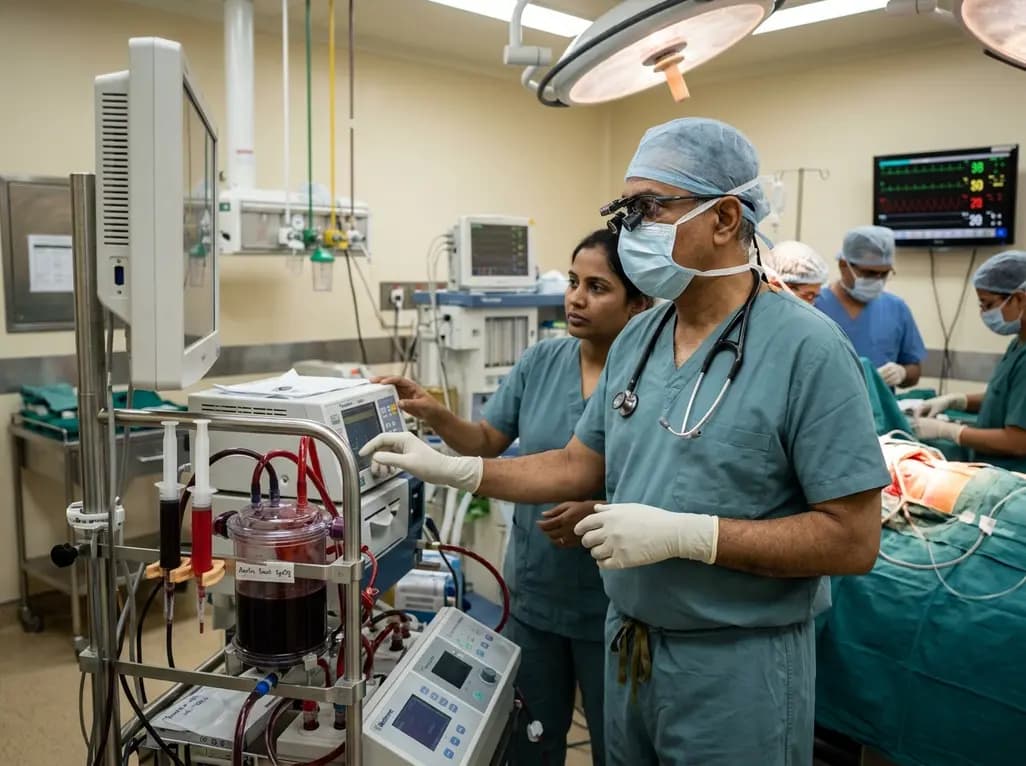
Differential oxygenation during peripheral TA-NRP can cause undetected coronary hypoxemia due to arch vessel clamping. A novel circuit with continuous aortic root monitoring detects desaturation early, facilitating left ventricular unloading and preventing allograft dysfunction and unnecessary heart discard.
Today

A longitudinal study reveals that patients undergoing staged bilateral hip arthroscopy experience progressive contralateral labral deterioration during surgical intervals. However, structural degradation does not compromise 2-year postoperative clinical outcomes or patient-reported satisfaction scores.
Today

A post hoc analysis of the PARM-T2D study shows pemafibrate exerts baseline-dependent effects on LDL-C and particle size in type 2 diabetes and hypertriglyceridemia. It lowers triglycerides and remnants while favorably remodeling atherogenic LDL particles based on initial lipid control status.
Today
