

Loading, please wait...
Loading, please wait...

Electronic health records store massive volumes of unstructured clinical information that researchers rarely utilize fully. In pediatric mental health, narrative progress notes capture essential diagnostic subtleties, familial contexts, and individualized therapy plans. Implementing natural language processing CAMHS workflows provides an automated method to transform these descriptive narratives into structured research variables. However, integrating computational algorithms within secure psychiatric services demands rigorous data governance, strong patient privacy protections, and reliable model calibration. Recently, an implementation study from Oxford Health NHS Foundation Trust evaluated an automated extraction pipeline within child mental health research settings. The multidisciplinary team extracted documented anxiety treatments and clinical outcomes from records of autistic youth and those diagnosed with ADHD. By utilizing structured implementation science, the researchers successfully integrated text mining tools into routine healthcare research. Ultimately, this approach demonstrates that psychiatric services can responsibly harness clinical language processing.
Children and adolescents with neurodevelopmental conditions experience disproportionately high rates of debilitating anxiety disorders. Autistic youth and children with attention-deficit/hyperactivity disorder frequently present with idiosyncratic anxiety symptoms that confound standard rating scales. Consequently, clinicians tailor pharmacological regimens, psychoeducation, and behavioral interventions to each young patient's specific presentation. Unfortunately, conventional structured electronic medical record fields rarely capture these personalized psychiatric care plans. Clinicians primarily document therapy adjustments, medication changes, and qualitative treatment responses within narrative free-text notes. Conducting manual chart reviews across thousands of psychiatric records demands prohibitive time and clinical resources. In addition, retrospective clinical audits introduce human extraction errors and subjective bias. Healthcare systems urgently require automated information extraction tools to evaluate real-world clinical effectiveness across pediatric cohorts. Therefore, developing validated clinical language pipelines represents an indispensable step toward optimizing evidence-based pediatric psychiatry.
To establish a dependable clinical pipeline, the research team developed a structured seven-phase engineering roadmap. First, investigators formulated precise research questions focusing on pediatric anxiety management in neurodivergent populations. Second, the clinical team defined core constructs, including anxiety symptoms, pharmacotherapies, psychological modalities, and documented outcomes. Third, child psychiatrists and data scientists collaboratively built a specialized annotation schema reflecting nuanced clinical language. Fourth, human annotators received extensive training to ensure consistent note tagging. Fifth, multidisciplinary experts systematically resolved annotation discrepancies through structured consensus conferences. Sixth, the trained annotators processed 697 randomly selected clinical notes from 454,127 records. Seventh, engineers developed and evaluated deep learning models on held-out test datasets. Furthermore, detailed operational protocols ensured high data integrity across every stage. Consequently, this roadmap establishes a robust paradigm for healthcare organizations developing clinical machine learning applications.
The study comprehensively assessed inter-annotator agreement and computational model precision across distinct clinical entities. Notably, human annotators achieved substantial agreement when evaluating pharmacological text spans. Position-based Krippendorff alpha values for medication attributes ranged impressively from 0.665 to 0.967, showing highest consistency for drug names, dosages, and administration frequencies. In sharp contrast, agreement remained lower for psychological therapy labels, cognitive problems, and clinical treatment outcomes, exhibiting alpha scores between 0.325 and 0.579. Similarly, the deployed natural language processing model achieved a high macroaveraged F1-score of 0.87 across medication entities on held-out evaluation notes. However, the algorithm achieved a more modest macroaveraged F1-score of 0.71 across complex behavioral symptoms and psychotherapy labels. Standardized pharmacological terms follow predictable linguistic syntax, whereas subjective therapeutic interactions display marked descriptive variability. Therefore, clinical developers must implement targeted retraining strategies when extracting nuanced behavioral outcomes.
To evaluate organizational integration, the researchers applied Normalization Process Theory throughout the project lifecycle. NPT assesses four fundamental mechanisms of implementation: coherence, cognitive participation, collective action, and reflexive monitoring. Qualitative feedback revealed that collaborative schema development established strong shared coherence between clinicians and technical computer scientists. Moreover, ongoing clinical participation ensured that automated extraction remained clinically meaningful. Nevertheless, significant institutional barriers impeded rapid operational deployment. Manual text annotation imposed a substantial cognitive burden on clinical staff, creating friction with demanding patient care schedules. Additionally, computational infrastructure limitations, strict data security protocols, and documentation variability slowed workflow velocity. By applying the NPT framework, investigators proactively documented these operational friction points rather than treating them as unforeseen failures. Thus, successful healthcare artificial intelligence adoption depends fundamentally on institutional readiness, interprofessional alignment, and sustainable operational support.
The findings from this implementation report offer invaluable guidance for digital psychiatric transformation globally, including within India. As Indian healthcare systems implement the Ayushman Bharat Digital Mission and Tele-MANAS, psychiatric centers generate unprecedented volumes of narrative electronic documentation. Indian pediatricians and child psychiatrists manage large patient populations with autism, ADHD, and co-occurring anxiety under severe time constraints. Unfortunately, clinical researchers face significant hurdles when attempting to conduct large-scale observational studies from hospital records. Implementing locally adapted natural language processing tools could enable academic centers to evaluate real-world pediatric psychopharmacology and therapy outcomes efficiently. Furthermore, utilizing implementation science models like Normalization Process Theory guarantees that institutions address infrastructural bottlenecks, workforce training, and ethical governance before deploying artificial intelligence. Ultimately, integrating responsible clinical language processing will accelerate psychiatric discovery and improve evidence-based care for vulnerable children worldwide.
Natural language processing CAMHS pipelines automatically extract vital clinical variables from unstructured electronic health records. Clinicians frequently document symptom nuances, psychological therapies, and medication adjustments within narrative progress notes rather than standardized forms. By converting these complex free-text descriptions into structured datasets, NLP empowers researchers to analyze large patient cohorts rapidly. Consequently, health systems can evaluate real-world treatment responses and refine clinical pathways without requiring unsustainable manual chart review by clinicians.
Medication descriptions in clinical notes follow standard naming conventions, structured dosages, and recurring administration frequencies. Therefore, algorithms recognize these predictable syntactic patterns with high statistical reliability. In contrast, clinicians describe psychological therapies, cognitive difficulties, and patient outcomes using diverse narrative phrases and subjective clinical judgments. This linguistic variability creates discrepancies among human annotators during training. Consequently, natural language processing models achieve lower consistency when identifying subtle therapeutic modalities and qualitative clinical improvements.
Normalization Process Theory provides a systematic framework to understand how healthcare teams embed new technological interventions into standard clinical workflows. Rather than assessing only computational performance, NPT evaluates how multidisciplinary professionals conceptualize the tool, commit to its integration, operationalize collaborative tasks, and appraise ongoing clinical utility. Thus, using NPT helps clinical administrators identify organizational barriers early, address documentation variations effectively, and foster sustainable digital health adoption across complex psychiatric healthcare environments.
Disclaimer: This content is for informational and educational purposes only. It is not intended to be a substitute for professional medical advice, diagnosis, or treatment. Always seek the advice of your physician or other qualified health provider with any questions you may have regarding a medical condition. Never disregard professional medical advice or delay in seeking it because of something you have read here. Refer to the latest local and national guidelines for clinical practice.
References

Read summarized clinical updates, watch expert medical content, and earn CME certifications right from your smartphone.
Open your smartphone camera to scan and install.





A recent implementation study evaluated natural language processing in child mental health services using Normalization Process Theory. The pipeline extracted anxiety treatments from electronic records of autistic youth and those with ADHD, achieving high accuracy for medication attributes.
4 days back

A Canadian multicenter study reveals that older adults who survive past age 65 with HIV have similar burdens of cardiovascular, renal, and pulmonary comorbidities regardless of duration since diagnosis, highlighting the decisive impact of lifestyle factors, routine screening, and metabolic health.
Today

Large genomic databases like gnomAD and All of Us offer crucial insights into the population prevalence of partial RHD genotypes. Identifying these variants helps clinicians mitigate anti-D alloimmunization risks in transfusion medicine and obstetric care across diverse ancestral populations.
Today

A novel magnetoactive hydrogel platform demonstrates that vascular curvature independently guides endothelial mechanosensing. Elevated curvature triggers nuclear YAP translocation, VE-cadherin junction thinning, and eNOS membrane shifts, offering critical insights into arterial tortuosity and aneurysm pathology.
Today
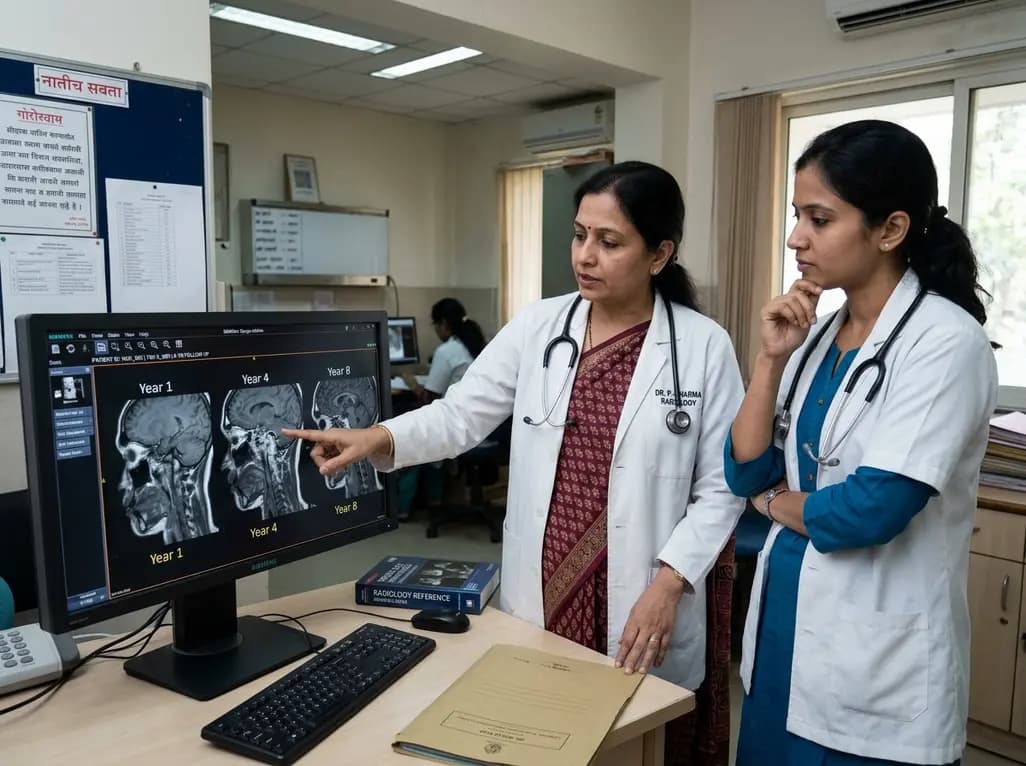
An eight-year longitudinal imaging follow-up reveals severe temporomandibular joint remodeling in nodulosis-arthropathy-osteolysis (NAO) syndrome. Despite extensive osseous destruction, the patient maintained functional jaw opening without TMJ interventions, highlighting the role of conservative management.
Today

Discover essential clinical insights into AGLP1-type amyloidosis, a rare localized complication of glucagon-like peptide-1 analog injections. Learn how histopathology and mass spectrometry differentiate benign iatrogenic amyloidomas from systemic disease, preventing misdiagnosis and unwarranted therapies.
Yesterday
