.webp&w=384&q=75)

Loading, please wait...
Loading, please wait...

Digital health tools increasingly support chronic disease prevention by guiding lifestyle change across primary care populations. A recent quasi-experimental investigation published in JMIR mHealth and uHealth evaluated how a real-world web application drives healthy habit formation among community-dwelling adults. The researchers examined whether frequent digital engagement translates into measurable gains in physical activity and nutrition quality. Moreover, they explored specific patient-level modifiers that influence adherence and behavioral outcomes. Understanding these real-world dynamics offers vital guidance for physicians seeking scalable lifestyle medicine solutions for metabolic and cardiovascular health.
Clinicians frequently advise patients to adopt nutritious diets and increase physical activity to manage cardiometabolic risks. However, traditional health advice often fails because patients struggle to maintain complex lifestyle modifications over extended periods. Habit theory suggests that breaking broad recommendations into bite-sized, contextual actions yields superior long-term adherence. When patients link simple actions to stable environmental cues, the behaviors gradually become automatic responses. Consequently, digital habit-based interventions provide structured micro-actions that minimize cognitive burden and decision fatigue. Scalable web applications deliver personalized behavioral prompts directly to smartphones, enabling individuals to practice self-directed wellness routines at home. In routine outpatient consultations, family physicians and internists need pragmatic tools that bridge the gap between clinical guidance and daily implementation. Therefore, evaluating digital platforms that emphasize habit automaticity rather than passive education represents an essential evolution in preventive medicine.
The Healthy Finland survey subsample trial enrolled adults aged twenty to seventy-four years to assess a self-directed wellness platform over ninety days. Initially, investigators invited nearly seven thousand individuals, but only eighteen percent accepted the invitation. Furthermore, five and a half percent completed the full ninety-day evaluation protocol. This modest uptake illustrates the pervasive challenge of digital attrition in real-world health interventions. Participants who remained active logged into the application on a median of roughly six percent of follow-up days. During this period, engaged individuals recorded a median of twenty-two discrete habit performances. While high drop-off rates demand caution, these utilization patterns mirror typical consumer behavior in digital therapeutics. Clinicians must recognize that digital health interventions face distinct engagement hurdles outside randomized trials. Therefore, understanding dose-response relationships between app interactions and behavioral metrics provides realistic benchmarks for future digital lifestyle prescriptions.
The investigation revealed clear dose-dependent associations between objective digital engagement and behavioral improvements. Specifically, every ten percentage point increase in application usage days correlated with an additional three metabolic equivalent of task hours per week of physical activity. This substantial increase corresponds to brisk walking for approximately forty-five to sixty minutes each week. Similarly, individuals who logged more habit completions achieved meaningful improvements in their overall dietary patterns. For each one-unit increase in log-transformed habit performances, participants gained half a point on the Healthy Diet Index. In contrast, short-term application usage did not produce statistically significant changes in body mass index over ninety days. Weight loss typically requires prolonged caloric deficits and sustained behavioral maintenance beyond three months. Nevertheless, the simultaneous enhancements in physical activity and diet quality demonstrate that structured self-monitoring successfully stimulates meaningful lifestyle adjustments.
The trial uncovered intriguing baseline characteristics that modulated the intervention's clinical effectiveness. Notably, individuals with higher baseline physical activity and favorable attitudes toward digital services achieved significantly greater physical activity gains through app usage. Conversely, individuals unfamiliar with digital interfaces or those starting from severe physical inactivity experienced diminished benefits from the standalone app. These findings indicate that digital health tools do not distribute benefits uniformly across all patient cohorts. Instead, digital literacy and pre-existing behavioral momentum substantially govern patient responsiveness to automated platforms. Physicians should therefore assess patient readiness and technological comfort before recommending digital health platforms. Moreover, healthcare providers must avoid assuming that mobile applications alone can eliminate deep-seated barriers to physical activity among sedentary individuals. Blending automated digital tools with clinical coaching may overcome these disparities.
For physicians managing metabolic syndrome, prediabetes, and hypertension, digital habit tools provide a practical adjunct to standard medical therapy. Clinicians cannot realistically provide daily dietary reminders or continuous exercise encouragement during brief outpatient visits. Therefore, recommending evidence-based applications empowers motivated patients to track micro-habits between clinic appointments. To maximize clinical efficacy, doctors should guide patients toward specific, repeatable micro-behaviors rather than vague lifestyle goals. For instance, advising a patient to walk for ten minutes after lunch creates a concrete behavioral loop. Furthermore, clinicians must identify patients with low digital literacy who require structured human support rather than standalone apps. Integrating digital habit tracking into routine reviews reinforces patient accountability and validates their daily efforts. Ultimately, combining compassionate clinical counseling with scalable digital solutions can substantially elevate chronic disease prevention across diverse patient populations.
Sustaining long-term adherence remains the central hurdle for mobile lifestyle interventions across all demographic groups. The dramatic drop in participation observed in this real-world study highlights why standalone applications often lose efficacy over time. Users frequently experience notification fatigue or abandon platforms once novelty fades. Consequently, developers must integrate behavioral economics principles, such as tailored micro-rewards, peer support, and adaptive difficulty levels. In addition, primary care teams can anchor digital tools within regular outpatient workflows to prevent disengagement. When doctors ask about application data during follow-up visits, patients demonstrate substantially higher adherence. Future digital health initiatives must also address health equity by designing intuitive interfaces for individuals with limited health literacy. By pairing technological convenience with professional clinical reinforcement, healthcare systems can transform transient digital interactions into permanent lifestyle improvements.
Conventional lifestyle advice often delivers broad goals, such as exercising thirty minutes daily or reducing dietary sugar. In contrast, habit-based applications break these complex objectives into tiny, repeatable micro-actions tied to consistent situational cues. By prompting users to repeat specific actions in familiar contexts, the application fosters automatic behavioral routines. This structured cue-routine-reward cycle reduces cognitive effort, helping patients maintain healthy behaviors without relying solely on fluctuating conscious motivation.
A ninety-day intervention window is generally too brief to yield statistically significant changes in body mass index through self-directed habit tracking alone. Although participants demonstrated measurable improvements in dietary quality and physical activity, cumulative energy deficits require extended periods to manifest as substantial weight loss. Furthermore, early physical activity increases can alter body composition by preserving lean muscle mass, which often masks short-term fat loss on standard weight scales during initial lifestyle interventions.
Patients who possess basic digital literacy and maintain receptive attitudes toward e-health services experience the greatest gains from standalone applications. Furthermore, individuals with moderate baseline motivation utilize self-monitoring features more consistently over time. Conversely, patients presenting with severe physical inactivity or limited technological familiarity often require human-guided lifestyle coaching alongside digital tools. Clinicians should evaluate patient comfort with technology before recommending mobile applications to ensure successful adoption and sustained behavioral compliance.
Disclaimer: This content is for informational and educational purposes only and does not constitute medical advice, diagnosis, or treatment. Always consult qualified healthcare professionals before adopting new clinical practices or altering patient management strategies. Refer to the latest local and national guidelines for clinical practice.
References

Read summarized clinical updates, watch expert medical content, and earn CME certifications right from your smartphone.
Open your smartphone camera to scan and install.





A real-world quasi-experimental study reveals that web-based apps fostering healthy habit formation significantly boost physical activity and dietary quality in adults. Discover key clinical insights on digital adherence, dose-response effects, and patient-specific modifiers in preventive medicine.
Yesterday

A retrospective cohort study demonstrates that comprehensive pharmacy transitions of care—including admission medication history, discharge review, and 72-hour telephone follow-up—significantly reduced 30-day readmission rates in acute care patients, highlighting the value of pharmacist-led clinical interventions.
Today

Meghalaya recorded a historic 55% reduction in maternal deaths, dropping from 244 to 107 over five years. Through the MOTHER app, dedicated transit homes, and expanded infrastructure like the 150-bed Tura Maternity Hospital with its first public NICU, the state demonstrates an effective public health model.
Today

Explore modern perioperative management protocols for clinical xenotransplantation. Learn how costimulation blockade, anti-inflammatory perfusion, and coagulopathy rescue overcome interspecies hurdles.
Yesterday

A cross-sectional study reveals that sarcopenic obesity independently increases functional impairment and severe disc degeneration in patients with degenerative lumbar spinal stenosis, highlighting the need for body composition assessment.
Today
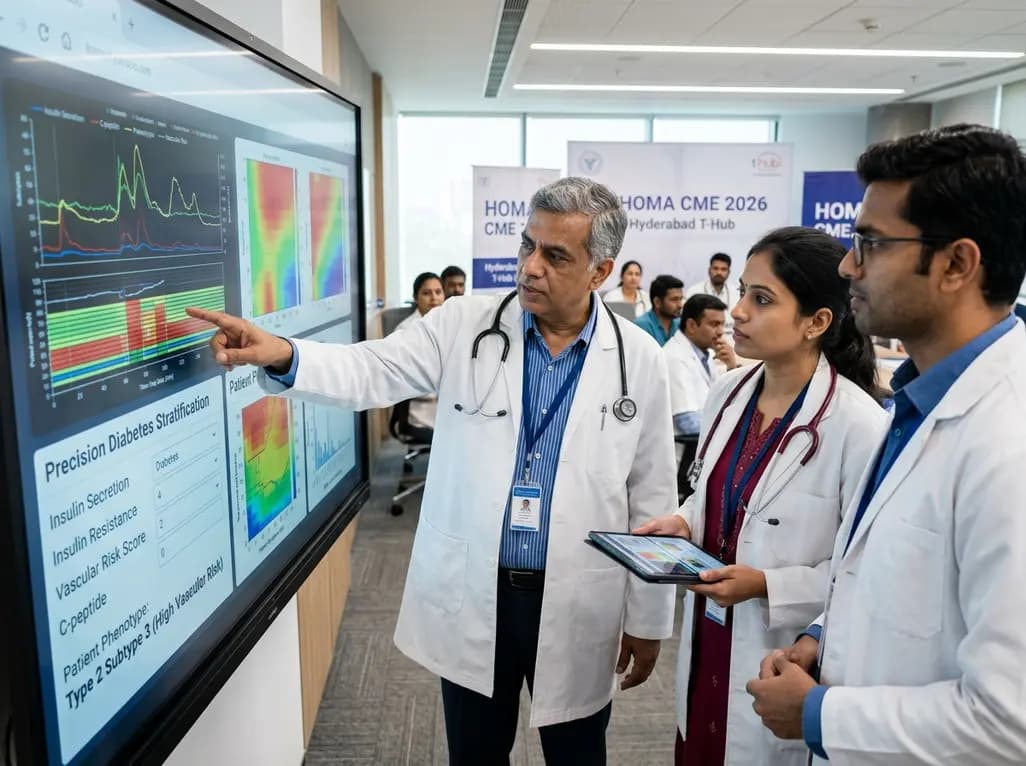
At Homa CME 2026 at Hyderabad's T-Hub, healthcare leaders emphasized moving beyond routine metrics through digital calculators and precision stratification. Discover why characterizing individual insulin secretion, resistance patterns, and vascular risks transforms chronic metabolic care in India.
Today
