.webp&w=384&q=75)

Loading, please wait...
Loading, please wait...
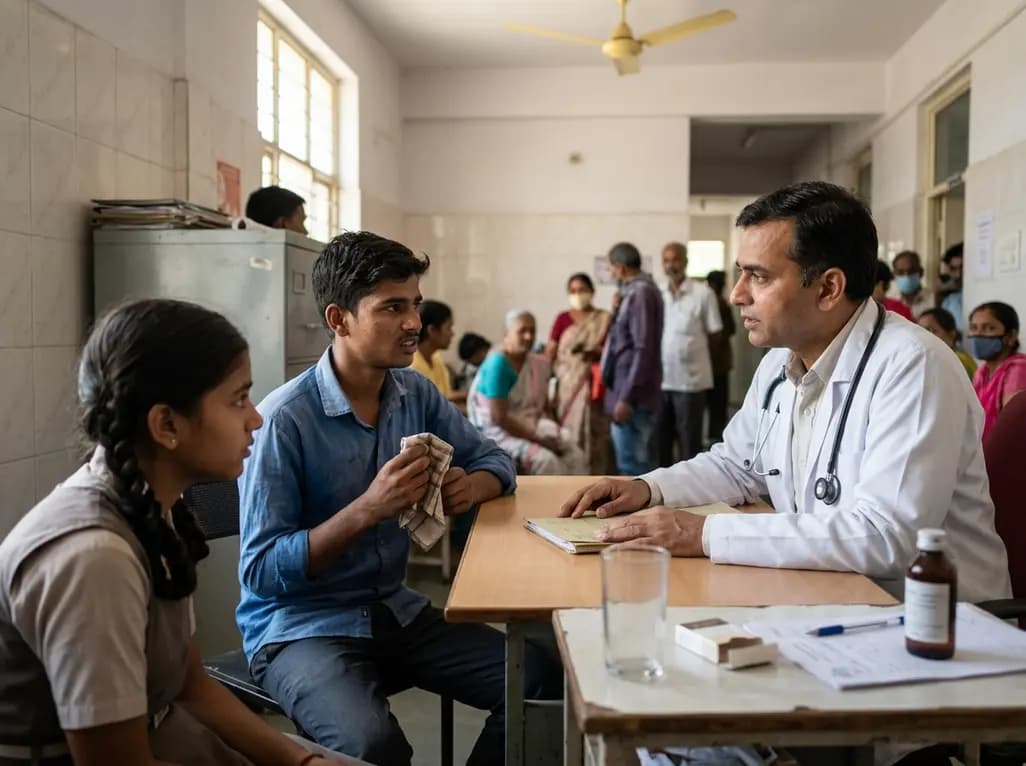
Understanding Mycobacterium tuberculosis exposure patterns is essential for reducing global disease transmission. Epidemiological investigations highlight how tuberculosis immunoreactivity sex differences emerge during the transition from adolescence to young adulthood. While childhood infection risks appear similar between sexes, distinct male-female divergence becomes evident in early adulthood. A community survey in Blantyre, Malawi, investigated age- and sex-specific immunoreactivity patterns using interferon-gamma release assays. The study aimed to identify when and why infection disparities develop between males and females. Tuberculosis remains a severe public health challenge globally and across endemic regions like India. Identifying early drivers of exposure disparity helps clinicians and epidemiologists target preventive interventions effectively. The study provides important insights into community transmission dynamics, highlighting adolescence as a critical window of vulnerability. By characterizing age-specific exposure risks, healthcare systems can design targeted screening strategies and improve contact tracing beyond traditional household boundaries. This clinical review examines the study methodology, age-stratified findings, behavioral drivers, and health policy implications.
Epidemiological studies demonstrate that adult men bear a disproportionate burden of active tuberculosis globally. However, whether male predominance stems from increased clinical susceptibility or greater primary exposure has long been debated. The cross-sectional study in Blantyre City, Malawi, addressed this question by evaluating population-level immunoreactivity prevalence across distinct age and sex strata. Using Open Buildings satellite datasets, researchers established a probabilistic household sampling frame across thirty-three peri-urban neighborhoods. They enrolled 2833 participants aged ten to forty years to capture transitions from adolescence into adulthood. Venous blood was tested using the QuantiFERON-TB Gold Plus assay to detect latent immune sensitization. Bayesian multilevel logistic regression models estimated infection probabilities while controlling for socioeconomic variables. Overall immunoreactivity prevalence reached 17.8%, reflecting an annual infection risk of 0.88%. While prevalence was similar between sexes among adolescents aged ten to nineteen, a pronounced divergence emerged among adults aged twenty to twenty-nine, where male immunoreactivity reached 26.3% compared to 17.7% in females.
Conducting population-representative surveys in peri-urban environments requires rigorous sampling methods. The study team used high-resolution satellite imagery to randomly select residential households across Blantyre. Field workers collected demographic data, HIV status, smoking history, and alcohol use from consenting individuals aged ten to forty years. Laboratory testing employed the QuantiFERON-TB Gold Plus assay, measuring CD4 and CD8 T-cell responses to Mycobacterium tuberculosis antigens. Of 2833 participants, 40.0% were male, with a median overall age of twenty-one years. Self-reported HIV prevalence was 8.7%. Bayesian statistical modeling evaluated age-dependent immunoreactivity trajectories continuously, avoiding arbitrary age group cutoffs. By modeling conversion rates as a continuous age function, researchers identified precise ages where infection acquisition accelerated differentially by sex. This analytical framework minimized confounding from geographical clustering and socioeconomic status, yielding highly reliable estimates of community exposure dynamics in high-incidence urban environments.
The modeled risk trajectory revealed crucial developmental timing regarding sex disparities. Annual immunoreactivity conversion risk increased at a faster rate among males starting from age ten. This disparity accelerated through adolescence, peaking at age twenty-one, where young adult males exhibited a conversion risk 1.58 times higher than females. Beyond age thirty, immunoreactivity prevalence equalized between sexes, although cumulative exposure remained elevated in adult males. These projections show that sex-based divergence concentrates during late adolescence and early adulthood. Identifying this vulnerability window provides actionable intelligence for public health planners. Rather than viewing sex disparities as static biological traits, clinicians must evaluate how evolving social networks, community mobility, and occupational patterns in early adulthood modify individual exposure. Transitioning into the workforce or informal social spaces increases community contact frequency for young men, elevating airborne exposure to undiagnosed tuberculosis cases outside household settings.
Multivariable regression analysis identified several modifiable behavioral factors associated with increased immunoreactivity. Tobacco smoking and alcohol consumption were significantly more prevalent among males and independently predicted higher odds of immunoreactivity positivity. Substance use likely operates through combined social and physiological mechanisms. Alcohol consumption frequently occurs in poorly ventilated social venues where prolonged face-to-face contact with infectious cases occurs. Simultaneously, tobacco smoke exposure impairs mucociliary clearance and macrophage phagocytosis within lung tissue, facilitating bacterial colonization upon aerosol inhalation. While biological sex factors like hormonal modulation of immunity may contribute, social mixing patterns and substance use behaviors represent primary drivers of differential exposure risk. Addressing these modifiable risk factors through targeted health communication could reduce transmission. Integrating substance use interventions, harm reduction, and targeted screening within social venues frequented by young men offers a promising approach to interrupting community transmission chains.
These findings offer practical lessons for tuberculosis control strategies in high-burden countries like India. Traditional screening heavily emphasizes household contact tracing around index cases. However, early male immunoreactivity divergence underscores the major contribution of community transmission. Young adult males frequently acquire infection outside their homes through workplace and social encounters. Consequently, expanding active case-finding beyond households into occupational and recreational settings is essential for interrupting transmission. Furthermore, targeting adolescents with proactive preventive interventions can protect cohorts before peak exposure periods occur. Clinicians evaluating respiratory symptoms in young men should maintain a high clinical suspicion for active disease. Implementing male-friendly healthcare services and mobile diagnostic units can reduce diagnostic delays among young adults who infrequently visit primary clinics. Combining community-based active screening with integrated tobacco and alcohol interventions reinforces holistic disease prevention and accelerates progress toward global elimination targets.
Sex differences in tuberculosis immunoreactivity emerge primarily in early adulthood because social mixing patterns, occupational exposures, and mobility change significantly during this transitional life stage. Young adult males frequently engage in higher-frequency social contacts in enclosed public places and exhibit higher rates of tobacco smoking and alcohol consumption. These behavioral factors drastically increase airborne exposure to undiagnosed infectious cases relative to females of similar age.
The QuantiFERON-TB Gold Plus assay is an in vitro interferon-gamma release assay that detects cell-mediated immune responses to specific Mycobacterium tuberculosis antigens. The test utilizes specialized blood tubes containing TB1 and TB2 peptides designed to stimulate both CD4 and CD8 T-lymphocytes. Elevated interferon-gamma production in response to these antigens indicates latent tuberculosis infection or prior immune sensitization without distinguishing active disease.
Higher male exposure rates highlight the necessity of expanding active case-finding strategies beyond household contact tracing into community settings, workplaces, and social venues frequented by men. Public health programs must combine community-based active screening with targeted preventive treatment and integrated tobacco and alcohol cessation services. Reaching young men early reduces transmission cycles and lowers overall tuberculosis burden across high-incidence populations.
Disclaimer: This content is for informational and educational purposes only, and does not constitute medical advice, diagnosis, or treatment. Healthcare professionals should rely on their clinical judgment and refer to the latest local and national guidelines for clinical practice.
References

Read summarized clinical updates, watch expert medical content, and earn CME certifications right from your smartphone.
Open your smartphone camera to scan and install.





A community survey in Blantyre, Malawi, shows that sex differences in tuberculosis immunoreactivity emerge during early adulthood, peaking at age 21 with 1.58-fold higher conversion risk in males. Tobacco and alcohol use drive community transmission, highlighting the need for targeted active case finding.
2 months ago

The Food Safety and Standards Authority of India has issued draft regulations prohibiting the sale and manufacture of non-dairy imitation substitutes as paneer. This nationwide regulatory action aims to eliminate consumer deception, protect dietary protein quality, and curtail lipid-related metabolic risks.
Today

A landmark Lancet Oncology Commission reveals profound global disparities in cancer genetic testing and precision medicine. While molecular therapies expand rapidly, access remains heavily concentrated in high-income nations, leaving millions of eligible cancer patients in developing regions without care.
Today

Managing refractory hypoxemia after cardiothoracic surgery becomes perilous when prolonged air leak limits positive-pressure ventilation. This case-based review details how high-flow nasal cannula, paired with awake rehabilitation, enabled successful extubation and avoided invasive re-intubation.
Today
Idiopathic axillary web syndrome (IAWS) is a rare cause of shoulder pain and mobility restriction characterized by palpable axillary cording without prior surgery or trauma. Early diagnosis, nonsteroidal anti-inflammatory therapy, and physical rehabilitation lead to complete resolution of symptoms.
Today

SWEDEPAD-1 trial insights show paclitaxel-coated devices do not improve long-term limb salvage in patients with chronic limb-threatening ischemia and tissue loss. While one-year reinterventions decreased, the devices were linked to a higher risk of major amputation at three months.
Today
