.webp&w=384&q=75)

Loading, please wait...
Loading, please wait...

Papillary thyroid carcinoma (PTC) represents the most frequent endocrine malignancy globally, and its incidence has risen significantly over recent decades. Within this diagnostic spectrum, intermediate-risk thyroid cancer accounts for approximately 40% to 60% of all cases. This specific category is notoriously heterogeneous, encompassing a wide variety of pathological features. Historically, clinicians viewed this group as a monolith that necessitated postoperative radioactive iodine (RAI) therapy. However, the paradigm is shifting toward more personalized medicine. Experts now recognize that many patients within this risk tier exhibit a very low likelihood of recurrence. Consequently, the automatic administration of RAI is being re-evaluated to prevent overtreatment. This transition is particularly relevant in the modern era of precision oncology, where the goal is to balance effective cancer control with the minimization of therapy-related morbidity. Therefore, understanding the nuances of recurrence risk is essential for any clinician managing differentiated thyroid cancer today. By focusing on individual patient characteristics rather than broad risk categories, we can optimize outcomes and improve the quality of life for thousands of patients.
The decision to omit radioactive iodine in cases of intermediate-risk thyroid cancer relies on a comprehensive postoperative assessment. Specifically, clinicians must evaluate four critical pillars: histopathology, cervical ultrasound findings, serum thyroglobulin (Tg) levels, and anti-thyroglobulin antibodies (TgAb). These markers should ideally be measured within six months following the initial surgery. For patients who undergo a total thyroidectomy, a negative cervical ultrasound combined with low or undetectable serum Tg levels often indicates a minimal residual disease burden. Similarly, patients who have undergone a thyroid lobectomy require a negative ultrasound to ensure no suspicious nodes remain in the contralateral or central neck. Notably, the presence of microscopic extrathyroidal extension or small-volume lymph node metastases no longer mandates RAI if the postoperative markers are favorable. Furthermore, the stability of Tg levels over time serves as a reassuring indicator of a successful surgical outcome. Thus, by integrating these diagnostic tools, physicians can confidently identify candidates for a "watch-and-wait" strategy. This approach reduces the patient's exposure to radiation while maintaining a high standard of oncological vigilance through rigorous surveillance protocols.
Recent retrospective cohort studies have provided encouraging data regarding the safety of omitting RAI in selected intermediate-risk patients. When clinicians use strict postoperative criteria to select patients for RAI omission, the rates of structural recurrence remain remarkably low. In many cohorts, the majority of patients achieve an "excellent response" to therapy, characterized by negative imaging and suppressed Tg levels. Specifically, the risk of disease persistence or recurrence in these well-selected individuals is often less than 5%, which is comparable to low-risk PTC. Moreover, when recurrences do occur, they are typically small, localized nodal involvements that can be managed effectively with surgery. This suggests that the initial omission of RAI does not compromise the ultimate success of cancer management. Furthermore, avoiding RAI eliminates the risks of salivary gland damage, secondary malignancies, and the temporary lifestyle restrictions associated with radiation. Therefore, the evidence supports a more conservative initial approach for patients who meet the negative ultrasound and low-Tg criteria. These findings empower clinicians to offer a more nuanced therapeutic plan that prioritizes patient safety without sacrificing long-term survival rates.
The upcoming American Thyroid Association (ATA) 2025 guidelines introduce a critical refinement in how we categorize intermediate-risk thyroid cancer. Moving away from the traditional three-tier system, the new model utilizes a four-tier classification. This system divides the intermediate group into "low-intermediate" and "intermediate-high" risk categories. For instance, the low-intermediate group includes patients with a predicted recurrence risk of 10% to 15%, while the intermediate-high group faces a 16% to 30% risk. This redistribution is highly significant because it allows for even more granular decision-making. Patients falling into the low-intermediate tier are prime candidates for RAI omission, especially if they show a rapid decline in postoperative Tg. On the other hand, those in the intermediate-high tier, such as those with larger nodal burdens or aggressive histological variants, may still derive substantial benefit from adjuvant therapy. Consequently, this new framework provides a clearer roadmap for clinicians to tailor their recommendations. By applying these updated risk thresholds, the medical community can standardize the selective use of RAI. This ensure that therapy is reserved for those who truly need it, while sparing others from unnecessary medical intervention.
The choice between total thyroidectomy and thyroid lobectomy plays a pivotal role in the management of intermediate-risk thyroid cancer. While total thyroidectomy allows for easier monitoring via serum Tg, modern ultrasound technology has made lobectomy a viable and safe option for many. If RAI is omitted, the surveillance strategy must be robust and consistent. This typically involves serial neck ultrasounds and Tg measurements every 6 to 12 months for the first few years. Furthermore, clinicians must be diligent in monitoring the trend of Tg levels rather than a single absolute value. A rising trend often prompts further imaging, such as a CT scan or a PET/CT, to identify potential recurrence sites. Additionally, the presence of Tg antibodies must always be considered, as they can interfere with the accuracy of Tg assays. If antibodies are present, ultrasound becomes the primary tool for monitoring. Therefore, the shift toward omitting RAI necessitates a long-term commitment to active surveillance. This strategy ensures that any potential recurrence is detected early, allowing for timely and effective intervention. Ultimately, this proactive approach maintains oncological safety while allowing patients to avoid the systemic side effects of radiation therapy.
In the Indian healthcare landscape, the selective use of RAI for intermediate-risk thyroid cancer carries significant practical implications. Overtreatment not only leads to unnecessary physiological side effects but also imposes a substantial financial burden on patients and the healthcare system. Given the high volume of thyroid cases in India, adopting a risk-adapted approach can optimize the allocation of resources. Many patients travel long distances to specialized centers for RAI, often facing long wait times and isolation protocols. Therefore, the ability to safely omit RAI based on postoperative markers can greatly simplify the treatment journey for many individuals. However, this approach requires access to high-quality pathology and standardized Tg assays across laboratories. It also necessitates thorough patient counseling to ensure they understand the importance of long-term follow-up. Consequently, Indian clinicians must balance global guidelines with local infrastructure and patient preferences. By integrating the latest evidence from the ATA 2025 redistribution, physicians can provide world-class care that is both effective and patient-centric. This evolution in practice reflects a broader commitment to reducing the global burden of cancer while improving the lives of those affected by it.
Patients are typically eligible for RAI omission if they have favorable postoperative findings. This includes a negative cervical ultrasound and low or undetectable serum thyroglobulin levels within six months of surgery. Additionally, the absence of high-risk features like macro-extrathyroidal extension or large-volume lymph node metastases is crucial. Clinical judgment remains paramount, as physicians must weigh individual risk factors and the patient's willingness to comply with long-term active surveillance protocols.
The ATA 2025 guidelines transition from a three-tier risk model to a more precise four-tier system. This new model splits the previous intermediate-risk category into low-intermediate and intermediate-high groups. This change allows clinicians to better identify patients with a lower probability of recurrence (10-15%) who can safely avoid adjuvant radioactive iodine. This granular approach helps in personalizing treatment plans and reducing unnecessary radiation exposure for many patients with differentiated thyroid cancer.
Follow-up for these patients involves rigorous surveillance using serial neck ultrasounds and serum thyroglobulin (Tg) measurements. These assessments are usually performed every 6 to 12 months during the initial years following surgery. Clinicians closely monitor the trend of Tg levels to detect any signs of recurrence early. If a patient had a lobectomy, ultrasound is the primary monitoring tool. Consistent follow-up ensures that any structural disease is identified quickly, maintaining high safety standards without RAI.
Disclaimer: This content is for informational and educational purposes only and does not constitute medical advice. Always seek the advice of a qualified healthcare provider regarding a medical condition. The information provided is based on current clinical research and the latest guidelines, which may evolve. Refer to the latest local and national guidelines for clinical practice.
References
Fuentes I et al. Intermediate-Risk Papillary Thyroid Cancer: Not Everyone Needs Radioactive Iodine. Clin Endocrinol (Oxf). 2026 Jul 19. doi: 10.1111/cen.70180. PMID: 42473022.
Ringel MD et al. 2025 American Thyroid Association management guidelines for adult patients with differentiated thyroid cancer. Thyroid. 2025;35(8):841-985.
Haugen BR et al. 2015 American Thyroid Association Management Guidelines for Adult Patients with Thyroid Nodules and Differentiated Thyroid Cancer. Thyroid. 2016;26(1):1-133.

Read summarized clinical updates, watch expert medical content, and earn CME certifications right from your smartphone.
Open your smartphone camera to scan and install.





For years, radioactive iodine (RAI) was standard for intermediate-risk papillary thyroid cancer. New research and the ATA 2025 guidelines now support a more selective approach, allowing many patients to avoid RAI based on postoperative markers and imaging without increasing recurrence risk.
2 months ago

The Food Safety and Standards Authority of India has issued draft regulations prohibiting the sale and manufacture of non-dairy imitation substitutes as paneer. This nationwide regulatory action aims to eliminate consumer deception, protect dietary protein quality, and curtail lipid-related metabolic risks.
Today

A landmark Lancet Oncology Commission reveals profound global disparities in cancer genetic testing and precision medicine. While molecular therapies expand rapidly, access remains heavily concentrated in high-income nations, leaving millions of eligible cancer patients in developing regions without care.
Today

Managing refractory hypoxemia after cardiothoracic surgery becomes perilous when prolonged air leak limits positive-pressure ventilation. This case-based review details how high-flow nasal cannula, paired with awake rehabilitation, enabled successful extubation and avoided invasive re-intubation.
Today

Idiopathic axillary web syndrome (IAWS) is a rare cause of shoulder pain and mobility restriction characterized by palpable axillary cording without prior surgery or trauma. Early diagnosis, nonsteroidal anti-inflammatory therapy, and physical rehabilitation lead to complete resolution of symptoms.
Today
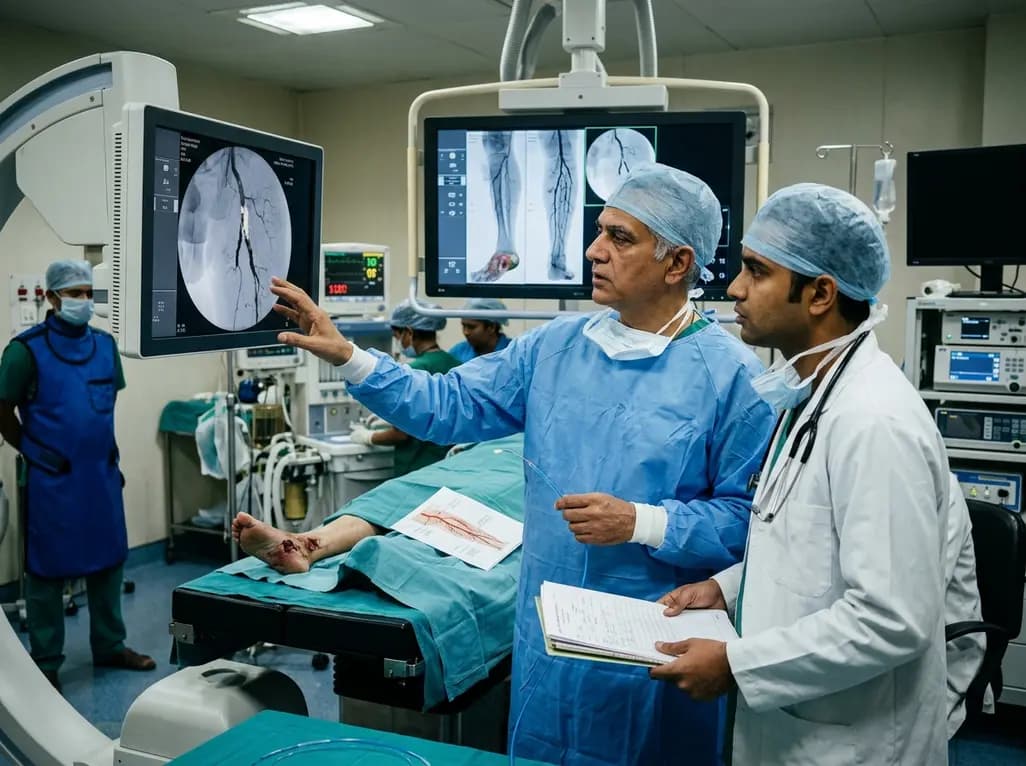
SWEDEPAD-1 trial insights show paclitaxel-coated devices do not improve long-term limb salvage in patients with chronic limb-threatening ischemia and tissue loss. While one-year reinterventions decreased, the devices were linked to a higher risk of major amputation at three months.
Today
