.webp&w=384&q=75)

Loading, please wait...
Loading, please wait...
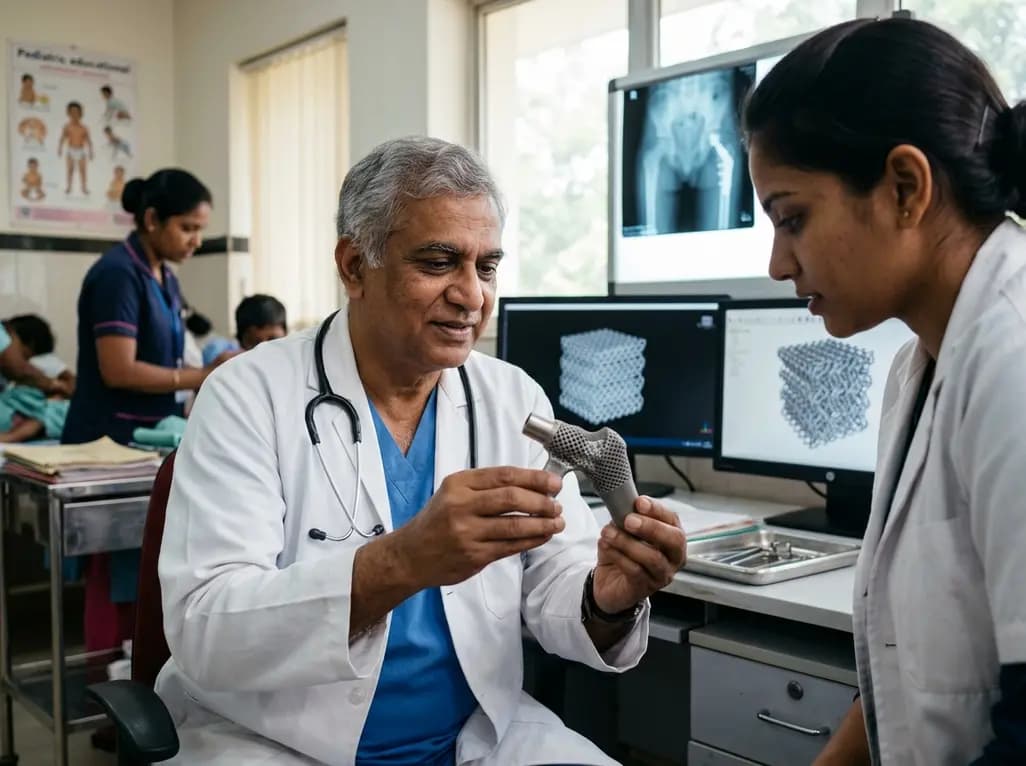
Surgeons frequently use Paediatric Orthopaedic Implants to correct complex hip deformities through proximal femoral osteotomy (PFO). While conventional solid implants provide essential stability, their high stiffness often causes stress shielding. This phenomenon reduces the mechanical load transferred to the growing bone, potentially leading to bone resorption. Consequently, researchers are exploring additively manufactured cellular architectures to optimize implant design. Triply periodic minimal surface (TPMS) lattices have emerged as a promising solution due to their favorable strength-to-stiffness ratios.
A recent study utilized a patient-specific digital-twin workflow to evaluate a novel TPMS-integrated Ti-6Al-4V implant. The research team coupled neuromusculoskeletal (NMSK) simulations with finite element analysis (FEA) to assess bone-implant mechanics. They applied NMSK-derived joint and muscle forces to measure von Mises stresses and micromotion. Furthermore, they analyzed cortical mechanical stimulus using strain energy density. Therefore, this comprehensive approach ensured a realistic assessment of how these Paediatric Orthopaedic Implants interact with living tissue during daily activities like walking.
The results showed that all evaluated implants remained well below the material yield-strength threshold. Both conventional and TPMS designs exhibited bone-implant micromotion within acceptable limits for stable fixation. However, the TPMS-integrated design demonstrated significant advantages in load sharing. Specifically, it increased distal cortical strain energy density by 25% compared to standard solid plates. Moreover, the TPMS implant reduced the cortical volume falling below the disuse threshold. This indicates a more natural mechanical stimulus for the growing femur. Additionally, the lattice design generated a more uniform strain distribution near screw interfaces, which may improve long-term stability.
These engineering metrics suggest that TPMS designs meet initial mechanical requirements while enhancing compatibility with growing bone. Nevertheless, the study marks only a proof-of-concept. Future research must focus on experimental validation and fatigue characterization. Multi-subject studies will also be necessary to confirm these benefits across diverse patient populations. As additive manufacturing evolves, these Paediatric Orthopaedic Implants could revolutionize how surgeons treat hip deformities in children.
Stress shielding occurs when a metal implant carries the majority of the mechanical load, "shielding" the underlying bone from natural stress. In children, this can interfere with healthy bone growth and remodeling.
TPMS lattices are 3D-printed structures that allow engineers to fine-tune the stiffness of an implant. By matching the mechanical properties of the bone more closely, they ensure better load sharing and reduce the risk of bone loss.
While this study shows structural feasibility and safety in computer simulations, these implants require further fatigue testing and clinical trials before they become standard in surgical practice.
Disclaimer: This content is for informational and educational purposes only. It does not constitute medical advice or replace professional judgment. Refer to the latest local and national guidelines for clinical practice.
References
Ebrahimzadeh Dehaghani A et al. A TPMS-integrated paediatric proximal femoral osteotomy implant demonstrates structural feasibility and improved load sharing: An in silico proof-of-concept study. Comput Biol Med. 2026 Jun 17. doi: undefined. PMID: 42308584.
Facco G et al. The use of 3D printed models for the pre-operative planning of surgical correction of pediatric hip deformities: a case series and concise review of the literature. Acta Biomed. 2021;92(6):e2021221.
Ziegler C, Endres F. Osteotomies of the pediatric hip joint. Oper Orthop Traumatol. 2026. doi: 10.1007/s00064-026-00812-w.
"
Read summarized clinical updates, watch expert medical content, and earn CME certifications right from your smartphone.
Open your smartphone camera to scan and install.





A new in silico study demonstrates that TPMS-integrated Ti-6Al-4V implants for paediatric proximal femoral osteotomy can reduce stress shielding by 25% and improve bone-implant compatibility compared to conventional solid designs.
4 months ago

Depemokimab offers twice-yearly dosing for severe eosinophilic asthma and chronic rhinosinusitis with nasal polyps, significantly cutting exacerbations and hospital admissions.
3 days back

A novel copper metal-organic framework hydrogel remodels the uterine microenvironment to stimulate robust endometrial regeneration, reduce intrauterine fibrosis, and restore reproductive fertility, offering a groundbreaking strategy for managing refractory endometrial damage and Asherman syndrome.
4 days back
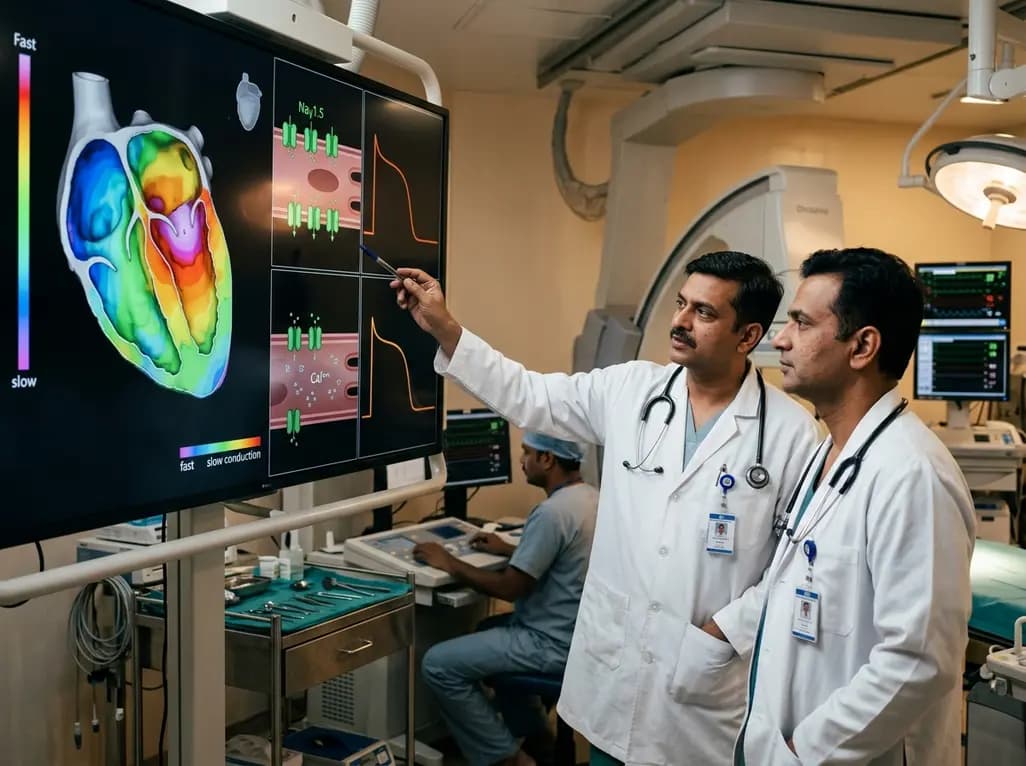
New research reveals that non-ablative radiotherapy suppresses ventricular tachycardia by increasing conduction velocity via NaV1.5 upregulation and action potential prolongation. However, sustained sodium current elevation and depressed calcium handling highlight the need for careful clinical translation.
6 days back

A single-cell transcriptomic atlas reveals how peripheral nerve injuries cause dorsal root ganglion remodeling. By evaluating proximal nerve crush and resection, researchers identify distinct glial and immune programs that resolve neuropathic pain and promote regeneration.
4 days back

A breakthrough study demonstrates that fullerol-primed extracellular vesicles generated in a 3D SECCS bioreactor attenuate ferroptosis and restore myogenic regeneration in diabetes via the FOXO3 pathway, offering a cell-free therapeutic strategy for diabetic musculoskeletal degeneration.
4 days back
