.webp&w=384&q=75)

Loading, please wait...
Loading, please wait...
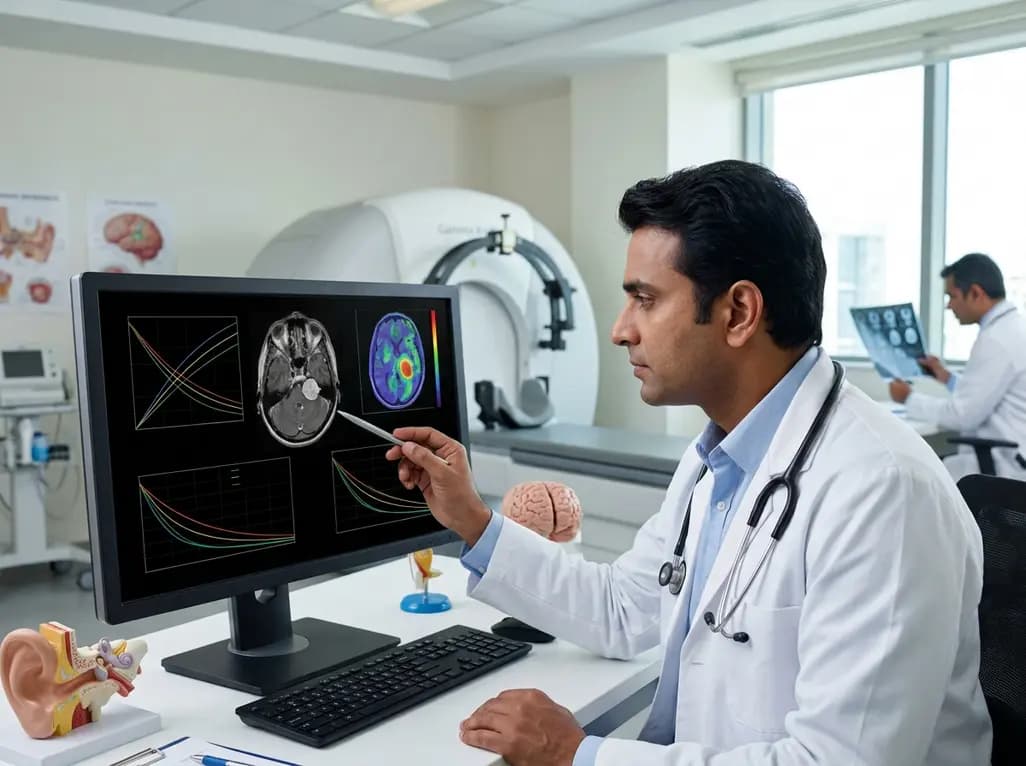
Gamma Knife radiosurgery serves as a primary non-invasive intervention for benign acoustic neuromas, yet personalized outcome forecasting remains a clinical challenge. Historically, neurosurgeons and radiation oncologists relied on population-level metrics, such as baseline tumor volume, Koos grade classification, baseline auditory thresholds, and static cochlear dose constraints. Although these parameters provide basic guidance, they fail to capture complex non-linear interactions among patient characteristics and radiosurgical parameters. Consequently, clinicians struggle to predict individual tumor control trajectories and functional toxicities prior to treatment initiation. To address this therapeutic gap, medical researchers developed THINKERS-VS, an innovative Gamma Knife radiosurgery AI model designed to deliver individualized prognosis. Specifically, this artificial intelligence framework combines deep neural network architectures with discrete-time survival modeling to evaluate longitudinal outcomes. By integrating pre-treatment clinical, demographic, and radiosurgical variables, the model offers unprecedented granularity in predicting post-radiosurgical responses. Consequently, healthcare providers can move beyond rigid cohort averages toward precision neuro-oncology. Ultimately, this approach enhances patient counseling and treatment personalization in stereotactic radiosurgery.
The technical design of THINKERS-VS relies on a mixture-of-experts architecture paired with discrete-time survival modeling. Unlike traditional single-network algorithms, mixture-of-experts systems divide complex predictive tasks into smaller domain-specific sub-tasks handled by specialized neural subnetworks. A gating network dynamically routes patient data to the most relevant expert subnetwork based on unique input feature patterns. In this model, the clinical input layer incorporates complete pre-treatment patient profiles, including demographic factors, baseline clinical presentation, volumetric imaging measurements, and detailed stereotactic dosimetric plans. Furthermore, discrete-time survival analysis allows the neural framework to account for interval-censored data across multiple post-treatment follow-up intervals. Consequently, the model generates time-resolved probability distributions for tumor behavior rather than simple binary control metrics. In addition, knowledge-based expert reasoning constraints prevent biologically implausible predictions by embedding known radiation physics parameters. Therefore, the system maintains high clinical reliability across diverse patient presentations and tumor morphologies. This hybrid intelligence design effectively bridges raw data-driven machine learning with established radiobiological principles, offering clinicians robust diagnostic transparency.
To rigorously validate THINKERS-VS, investigators conducted a single-center retrospective study evaluating a large cohort of 686 patients undergoing stereotactic radiosurgery for vestibular schwannoma. Within this diverse cohort, the median age of patients was 59.5 years, and the median baseline tumor volume was 0.746 cubic centimeters. Furthermore, treated tumors received a median prescription radiation dose of 12.0 Gy, with a median post-treatment follow-up duration of 52.3 months. Primary model performance evaluation focused on discriminating tumor progression across discrete time intervals at 3, 6, 12, 18, 24, 32, 48, and 60 months post-procedure. Researchers utilized grouped 5-fold cross-validation alongside a dedicated holdout test dataset to prevent data leakage and overestimation. Remarkably, THINKERS-VS demonstrated superior discrimination capability across all evaluated time points, achieving area under the curve values between 0.807 and 0.859. At the primary 60-month milestone, the framework maintained an impressive area under the curve of 0.807 alongside a remarkably low Brier score of 0.012. Consequently, these metrics confirm that the model achieves outstanding calibration and discrimination for long-term tumor control prediction.
Beyond tumor volume control, managing functional neurological symptoms remains a paramount goal in vestibular schwannoma care. Therefore, THINKERS-VS incorporated secondary predictive endpoints to forecast new or worsening cranial nerve toxicities. The model evaluated key post-radiosurgical functional parameters, including sensorineural hearing loss, gait imbalance, vertigo, general dizziness, and tinnitus. During rigorous holdout testing, the framework achieved exemplary predictive accuracy across all functional domain transitions. Specifically, the model yielded holdout area under the curve values of 0.875 for hearing loss, 0.844 for gait imbalance, 0.813 for vertigo, 0.884 for dizziness, and 0.839 for tinnitus. Additionally, the platform integrates an automated dose recommendation module that calculates the optimal tumor margin dose. By balancing predicted local tumor control against potential functional toxicity risks, the system recommends personalized margin prescription doses tailored to individual patient profiles. Consequently, neurosurgeons can customize radiation delivery to maximize local control while minimizing the risk of adverse neurological deficits. Overall, this dual focus on tumor control and functional preservation transforms clinical decision-making.
The introduction of validated mixture-of-experts modeling signifies a substantial paradigm shift in neuro-oncological care delivery. Traditionally, clinicians relied on standardized institutional protocols that applied uniform prescription doses across diverse tumor sizes and anatomical locations. However, standard dosing schedules can lead to suboptimal local control in aggressive tumors or unneeded toxicity in delicate anatomical configurations. By providing individualized probability trajectories, THINKERS-VS empowers clinicians to conduct nuanced pre-treatment risk-benefit assessments. Furthermore, multidisciplinary tumor boards can utilize these predictive outputs during multi-expert discussions to optimize patient selection and treatment planning. Patients also benefit directly from clearer communication, as healthcare providers can present individualized, data-driven estimates regarding long-term hearing retention and symptom progression. Consequently, patient autonomy and informed consent improve significantly prior to undergoing radiosurgery. Additionally, the model's ability to recommend targeted margin doses helps bridge variations in clinician experience across different treatment centers. Thus, integrating predictive artificial intelligence elevates standard clinical workflows toward individualized, value-based radiosurgery care.
While THINKERS-VS demonstrates impressive internal validation metrics, several considerations guide its future clinical implementation. First, external validation across multi-center international registries remains essential to confirm algorithm generalizability across diverse linear accelerator platforms, planning software, and varied patient demographics. Second, prospective clinical trials will help measure whether model-guided prescription dosing improves objective patient outcomes compared to standard clinical practice. Moreover, future iterations of the platform could incorporate longitudinal radiomic features, genomic profiles, and advanced diffusion magnetic resonance tractography to refine functional risk estimates further. In addition, seamless integration into commercial radiosurgery treatment planning software will facilitate real-time clinical decision support without disrupting surgical workflows. Clinicians must also continue exercising independent medical judgment, treating model predictions as decision support tools rather than autonomous clinical directors. Ultimately, hybrid intelligence models like THINKERS-VS represent a major leap forward in precision radiation oncology, combining human expert insight with advanced machine learning capabilities to optimize acoustic neuroma outcomes globally.
THINKERS-VS is an artificial intelligence framework utilizing a mixture-of-experts model to predict tumor progression and symptom transitions after Gamma Knife radiosurgery. By analyzing patient demographics, tumor features, and radiation dosimetry, it provides individualized probability estimates for tumor control and functional outcomes, helping clinicians tailor prescription doses for optimal therapeutic results.
In internal validation trials involving 686 patients, THINKERS-VS achieved strong discrimination for tumor progression, with area under the curve values ranging from 0.807 to 0.859 over 60 months. Furthermore, holdout test predictions for functional symptom transitions yielded high accuracy, including area under the curve values of 0.875 for hearing loss and 0.884 for dizziness.
Yes, the framework incorporates a specialized optimization module that recommends tumor margin prescription doses tailored to individual patient risk profiles. By balancing predicted tumor control rates against potential neurological complications, such as hearing loss or imbalance, the system helps clinicians select prescription doses that maximize efficacy while minimizing functional toxicity risks.
Disclaimer: This content is for informational and educational purposes only and does not constitute medical advice, diagnosis, or treatment. Always seek the advice of a qualified healthcare provider with any questions regarding a medical condition. Refer to the latest local and national guidelines for clinical practice.
References
1. Reyes JS et al. Therapeutic Hybrid Intelligence with Neural and Knowledge-based Expert Reasoning for SRS (THINKERS): a mixture-of-experts AI model for vestibular schwannoma. J Neurooncol. 2026 Jun 18. doi: 10.1007/s11060-026-05679-0. PMID: 42313294.
2. Niranjan A, Lunsford LD. Radiosurgery for vestibular schwannomas: evaluating long-term control and functional preservation. Neurosurg Clin N Am. 2023;34(2):215-227.
3. Reyes JS, Hadjipanayis CG, Niranjan A. Beyond tumor control: symptom trajectories and hearing outcomes after contemporary Gamma Knife radiosurgery for vestibular schwannoma. J Neurooncol. 2026 Jun 23. doi: 10.1007/s11060-026-05682-5.

Read summarized clinical updates, watch expert medical content, and earn CME certifications right from your smartphone.
Open your smartphone camera to scan and install.





THINKERS-VS is an AI mixture-of-experts model designed to predict long-term tumor progression and functional symptom transitions after Gamma Knife radiosurgery for vestibular schwannoma, enabling personalized prescription dose optimization.
2 months ago

Depemokimab offers twice-yearly dosing for severe eosinophilic asthma and chronic rhinosinusitis with nasal polyps, significantly cutting exacerbations and hospital admissions.
3 days back

A novel copper metal-organic framework hydrogel remodels the uterine microenvironment to stimulate robust endometrial regeneration, reduce intrauterine fibrosis, and restore reproductive fertility, offering a groundbreaking strategy for managing refractory endometrial damage and Asherman syndrome.
3 days back
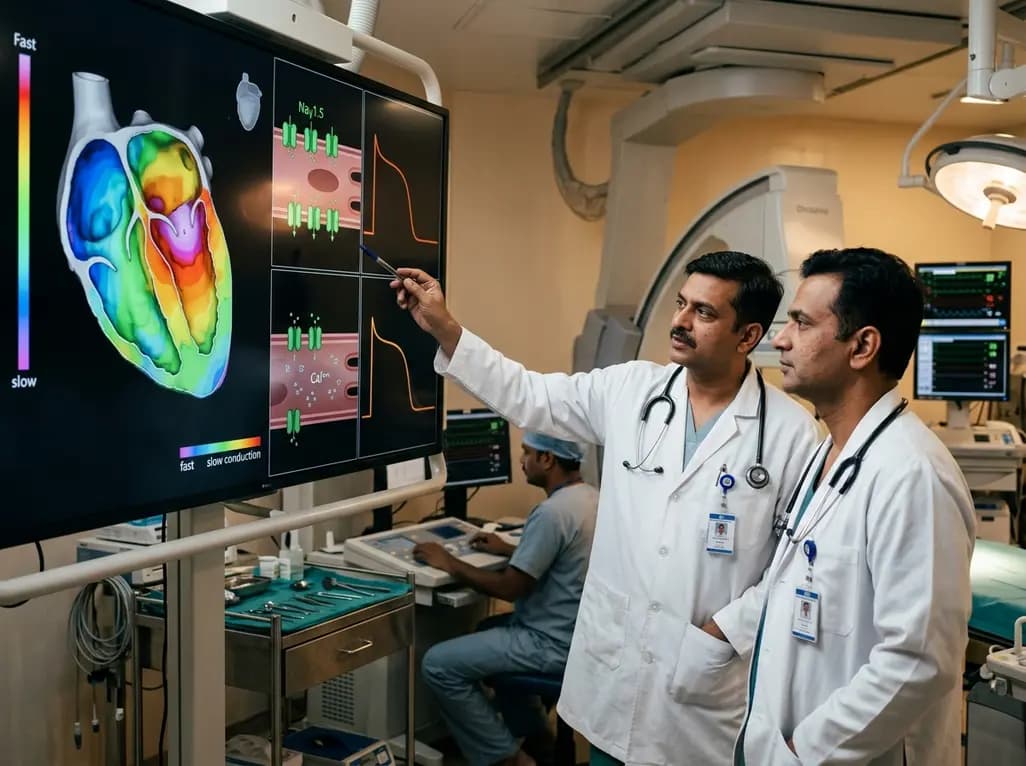
New research reveals that non-ablative radiotherapy suppresses ventricular tachycardia by increasing conduction velocity via NaV1.5 upregulation and action potential prolongation. However, sustained sodium current elevation and depressed calcium handling highlight the need for careful clinical translation.
5 days back

A single-cell transcriptomic atlas reveals how peripheral nerve injuries cause dorsal root ganglion remodeling. By evaluating proximal nerve crush and resection, researchers identify distinct glial and immune programs that resolve neuropathic pain and promote regeneration.
3 days back
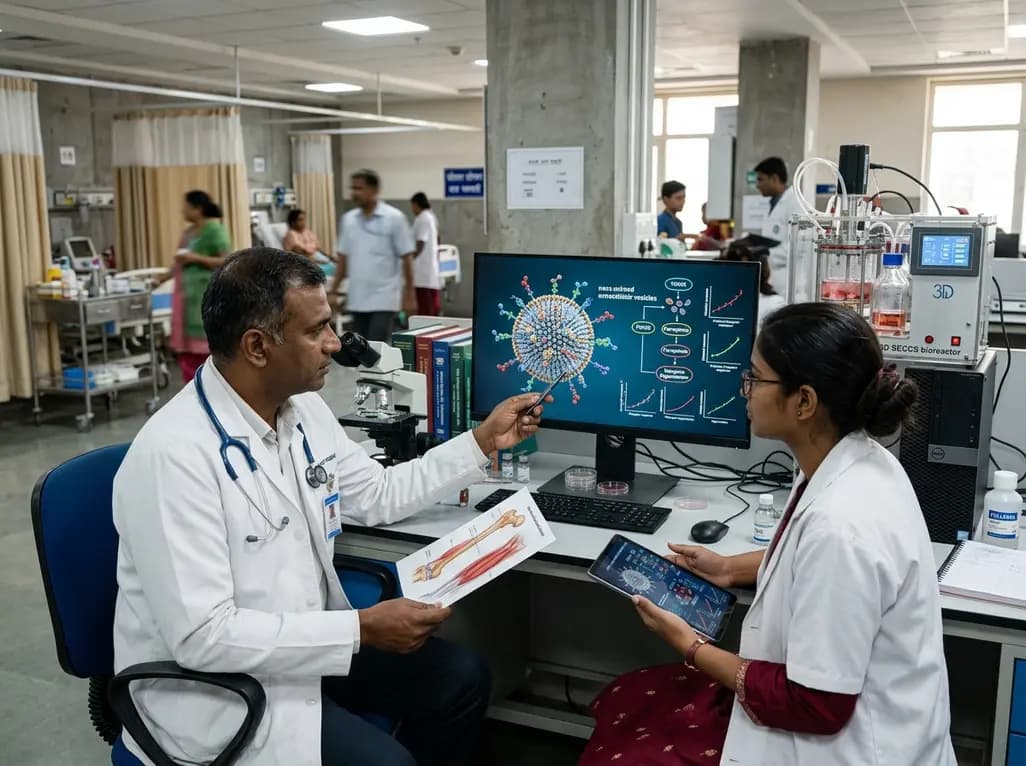
A breakthrough study demonstrates that fullerol-primed extracellular vesicles generated in a 3D SECCS bioreactor attenuate ferroptosis and restore myogenic regeneration in diabetes via the FOXO3 pathway, offering a cell-free therapeutic strategy for diabetic musculoskeletal degeneration.
3 days back
