.webp&w=384&q=75)

Loading, please wait...
Loading, please wait...
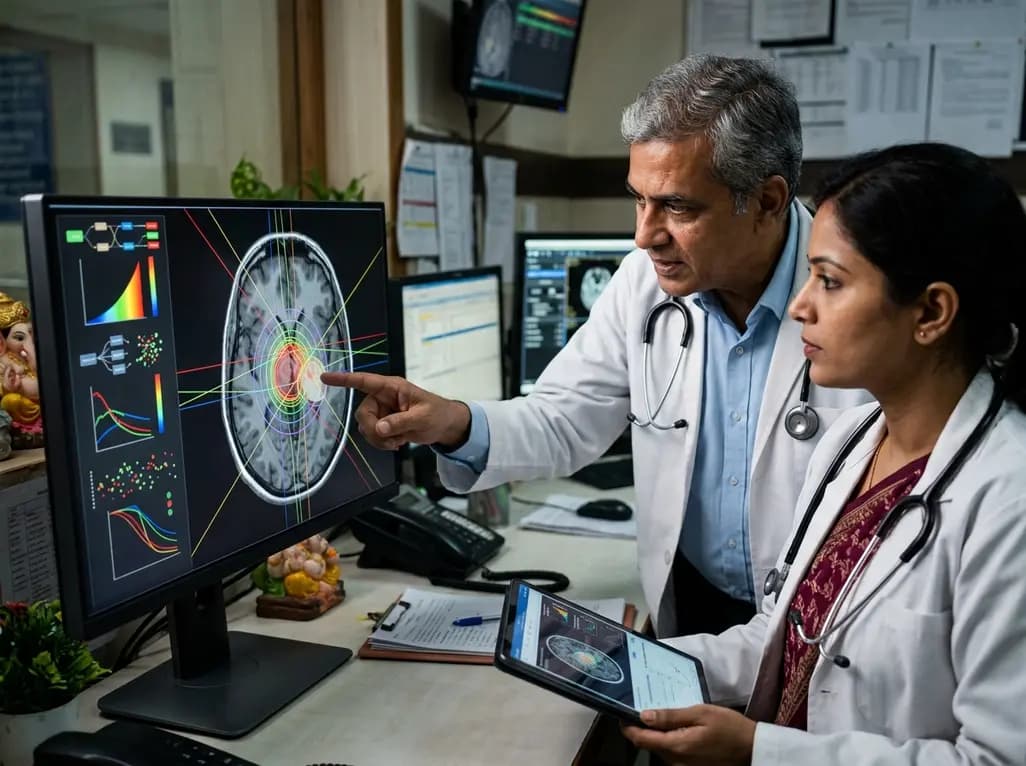
Glioblastoma multiforme (GBM) remains one of the most formidable challenges in modern neuro-oncology, characterized by its aggressive nature and a nearly universal rate of recurrence. Despite initial surgical resection and standard chemoradiotherapy, clinicians frequently face the daunting task of managing recurrent disease. Salvage therapies often include Gamma Knife radiosurgery (GKRS), which delivers highly focused radiation to the tumor bed. However, the determination of the optimal prescription dose for these patients is notoriously complex and historically subjective. The emergence of the THINKERS-GBM AI model represents a significant leap toward addressing this clinical gap. By integrating neural networks with knowledge-based reasoning, this framework aims to provide individualized estimates of second progression risk, moving beyond the traditional one-size-fits-all approach.
Furthermore, the complexity of the brain\'s anatomy means that every dose decision must balance tumor control against the risk of radiation-induced necrosis. Traditionally, neurosurgeons and radiation oncologists have relied on tumor volume, anatomical constraints, and their own clinical experience to guide these decisions. While this individualized approach is standard, it often lacks a quantifiable, patient-specific estimate of the risk of future progression. Consequently, there is a clear need for objective tools that can assist clinicians in navigating these high-stakes therapeutic choices. The THINKERS-GBM AI model offers a data-driven solution by analyzing variables available prior to treatment to predict outcomes with remarkable precision.
Recurrent glioblastoma presents a unique set of challenges compared to the primary diagnosis. Most patients have already received a significant cumulative dose of radiation, which limits the safety margins for subsequent treatments. In India, where the burden of neuro-oncological disease is substantial, neurosurgeons must carefully weigh the benefits of aggressive salvage therapy against the potential for severe cognitive decline or physical morbidity. Because GBM is a diffuse disease, local control is often fleeting, and the risk of a second progression is a constant concern for both the medical team and the patient\'s family.
Moreover, the absence of standardized guidelines for radiosurgery dosing in the recurrent setting has led to significant variability in clinical practice. Some centers may prefer conservative dosing to avoid toxicity, while others might opt for higher doses to achieve better local control. This inconsistency highlights the limitations of purely subjective decision-making. Therefore, the introduction of a queryable AI framework like the THINKERS-GBM AI model is timely. It allows clinicians to simulate different dose scenarios and observe the predicted impact on the patient\'s progression-free survival. This level of personalized foresight could potentially transform how salvage radiosurgery is planned in advanced neuro-oncology centers across the globe.
The technical sophistication of the THINKERS-GBM framework lies in its mixture-of-experts (MoE) architecture. Unlike conventional artificial intelligence models that rely on a single, monolithic neural network, an MoE framework utilizes multiple specialized \"experts.\" Each of these experts is trained to handle specific subsets of clinical data, while a gating network determines which expert\'s input is most relevant for a particular patient. This approach is particularly effective in oncology because it can better account for the high degree of patient heterogeneity seen in glioblastoma cases. By combining these specialized neural pathways, the model can synthesize complex patterns that simpler algorithms might miss.
In addition to the MoE structure, the framework incorporates knowledge-based expert reasoning. This means the AI does not operate in a vacuum; instead, it is designed to align with established clinical principles while leveraging the power of deep learning. Specifically, the model utilizes discrete-time survival modeling to estimate the probability of progression over various intervals. By treating the prescription dose as a queryable input, the framework enables what researchers call \"dose-sweeping.\" This feature allows the physician to input a range of possible doses and view a corresponding risk profile for each. Such a tool acts as a powerful decision-support system, enhancing the physician\'s judgment rather than replacing it.
The development of the THINKERS-GBM framework involved a retrospective study of 200 patients treated for recurrent glioblastoma at a single high-volume center. The research team extracted various clinical and dosimetric variables available at the time of treatment to train the neural network. To ensure the model\'s reliability, they employed grouped 5-fold cross-validation and a separate grouped holdout test split. This rigorous validation process is essential for ensuring that the AI\'s predictions remain accurate when applied to new, unseen patient data. The primary performance metrics included the area under the receiver operating characteristic curve (AUC), the Brier score, and the mean absolute error (MAE) for expected time to progression.
The results of this internal validation were highly encouraging. In the grouped cross-validation, the model achieved a calibrated mean AUC of 0.839 for 12-month second progression. Furthermore, in the holdout set, the calibrated AUC reached an impressive 0.870. A high AUC indicates that the model is exceptionally good at distinguishing between patients who will progress within a year and those who will not. Additionally, the mean absolute error for the expected time to progression was only 1.03 months, suggesting that the model\'s temporal predictions are remarkably close to clinical reality. These metrics provide a strong statistical foundation for the model\'s potential utility in a clinical setting.
One of the most innovative aspects of the THINKERS-GBM model is the generation of individualized dose-response profiles through dose-sweeping. In standard practice, a clinician might choose a dose based on a tumor\'s diameter or its proximity to critical structures like the brainstem. However, the AI model allows the clinician to ask, \"What happens to this specific patient\'s risk if I prescribe 15 Gy versus 18 Gy?\" The model then generates a curve showing how the risk of a second progression changes across that dose range. This capability provides a level of granularity that was previously unattainable in neuro-radiosurgery.
Consequently, this tool could facilitate a more nuanced discussion between the clinician and the patient. For instance, if the model predicts that increasing the dose by 3 Gy only offers a marginal improvement in progression-free survival but significantly increases the risk of radiation necrosis, the team might opt for a more conservative approach. Conversely, for a patient with a high predicted benefit from a higher dose, the clinician might feel more confident in pushing the limits of the treatment. This shift toward individualized dose-policy evaluation represents a major step forward in the quest for precision medicine. By providing quantitative data to support clinical intuition, the THINKERS-GBM AI model empowers doctors to tailor treatments more effectively to the unique biological and anatomical profile of each patient.
While the internal validation results are promising, the researchers emphasized that external validation is a mandatory next step before the framework can be deployed in routine clinical practice. External validation involves testing the model on data from different medical centers to ensure its findings are not limited to the specific patient population of the original study. This is particularly important for healthcare in India, where genetic factors, treatment protocols, and access to healthcare can vary significantly from Western cohorts. Establishing the model\'s accuracy across diverse global populations will be crucial for its widespread adoption.
In conclusion, the THINKERS-GBM framework marks the beginning of a new era in neuro-oncology where \"hybrid intelligence\"—the combination of human expertise and advanced AI—becomes the standard of care. As we continue to refine these models, they will likely incorporate even more data types, such as genomic markers and radiomic features, to further enhance their predictive power. For now, this study provides a robust proof-of-concept that AI can indeed assist in the complex task of radiosurgery dose selection. By reducing the uncertainty inherent in managing recurrent glioblastoma, tools like THINKERS-GBM offer a glimmer of hope for improved patient outcomes and a more rational approach to salvage therapy.
The THINKERS-GBM model is a mixture-of-experts artificial intelligence framework designed to assist clinicians in selecting the optimal radiation dose for patients with recurrent glioblastoma. It analyzes patient-specific variables to provide an accurate estimate of the risk of a second disease progression following Gamma Knife radiosurgery treatment.
Dose-sweeping allows physicians to query the AI model with various candidate radiation doses for a specific patient. The model then generates a personalized dose-response profile, showing how different doses impact the predicted risk of progression. This helps clinicians balance treatment efficacy against potential side effects with data-driven precision.
While the model showed high accuracy in internal validation, it is currently in the research phase. The authors state that external validation at multiple centers is required before clinical deployment. Clinicians in India should wait for these further studies to ensure the model\'s performance is consistent across diverse patient populations.
Disclaimer: This content is for informational and educational purposes only and does not constitute medical advice, diagnosis, or treatment. Always seek the advice of a qualified healthcare provider with any questions regarding a medical condition. The use of AI in clinical practice is an evolving field; clinicians should rely on their professional judgment and refer to the latest local and national guidelines for clinical practice.
References
Reyes JS et al. Therapeutic Hybrid Intelligence with Neural and Knowledge-based Expert Reasoning for SRS (THINKERS): an AI model for GBM. J Neurooncol. 2026 Jul 09. doi: 10.1007/s11060-026-05702-4. PMID: 42423808.

Read summarized clinical updates, watch expert medical content, and earn CME certifications right from your smartphone.
Open your smartphone camera to scan and install.





The THINKERS-GBM AI model uses a mixture-of-experts framework to personalize Gamma Knife radiosurgery doses for recurrent glioblastoma. This study demonstrates high predictive accuracy for second progression risk, potentially shifting clinical practice from subjective dosing to data-driven precision.
3 months ago
Depemokimab offers twice-yearly dosing for severe eosinophilic asthma and chronic rhinosinusitis with nasal polyps, significantly cutting exacerbations and hospital admissions.
3 days back

A novel copper metal-organic framework hydrogel remodels the uterine microenvironment to stimulate robust endometrial regeneration, reduce intrauterine fibrosis, and restore reproductive fertility, offering a groundbreaking strategy for managing refractory endometrial damage and Asherman syndrome.
3 days back
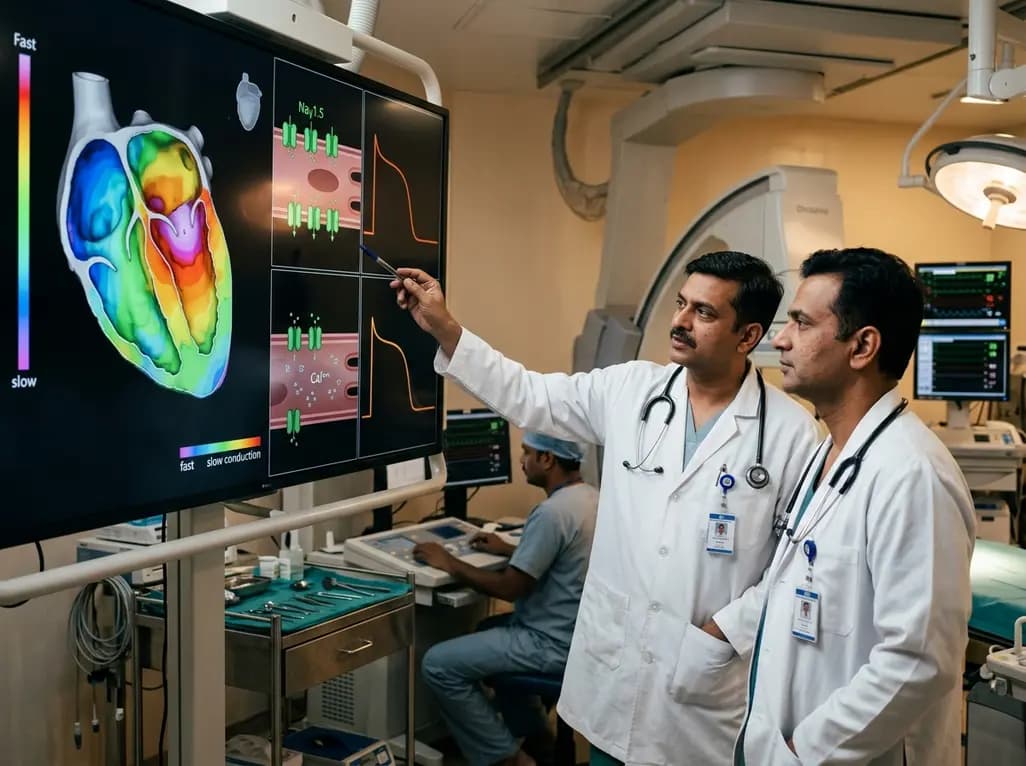
New research reveals that non-ablative radiotherapy suppresses ventricular tachycardia by increasing conduction velocity via NaV1.5 upregulation and action potential prolongation. However, sustained sodium current elevation and depressed calcium handling highlight the need for careful clinical translation.
5 days back
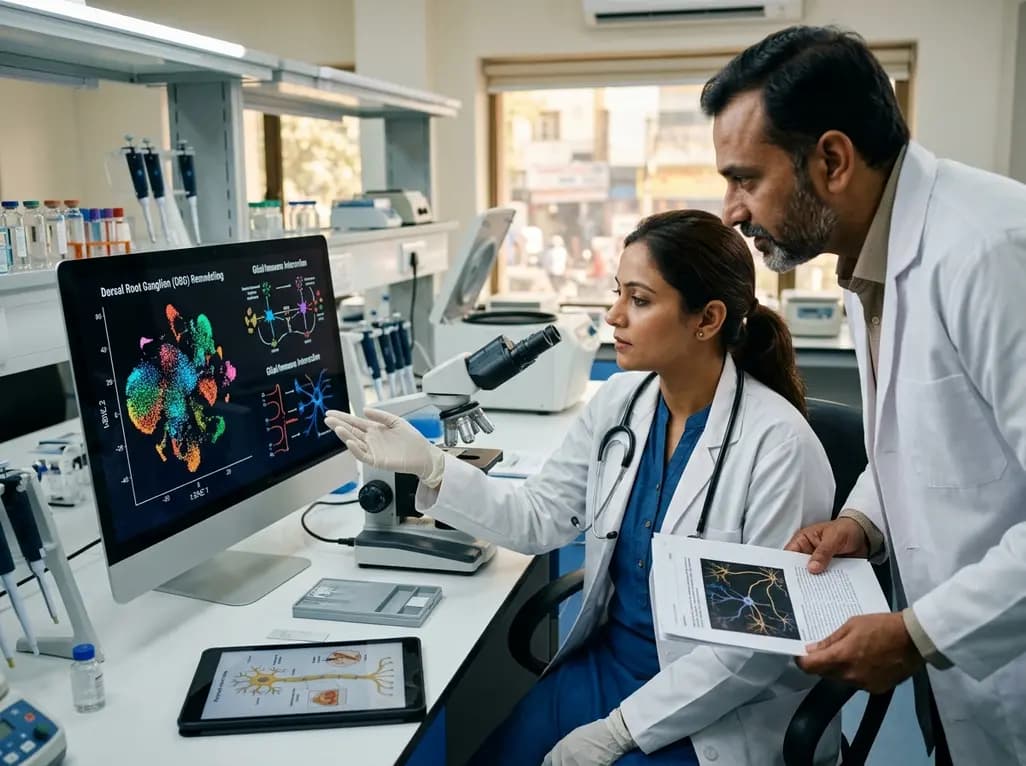
A single-cell transcriptomic atlas reveals how peripheral nerve injuries cause dorsal root ganglion remodeling. By evaluating proximal nerve crush and resection, researchers identify distinct glial and immune programs that resolve neuropathic pain and promote regeneration.
3 days back
A breakthrough study demonstrates that fullerol-primed extracellular vesicles generated in a 3D SECCS bioreactor attenuate ferroptosis and restore myogenic regeneration in diabetes via the FOXO3 pathway, offering a cell-free therapeutic strategy for diabetic musculoskeletal degeneration.
3 days back
