.webp&w=384&q=75)

Loading, please wait...
Loading, please wait...
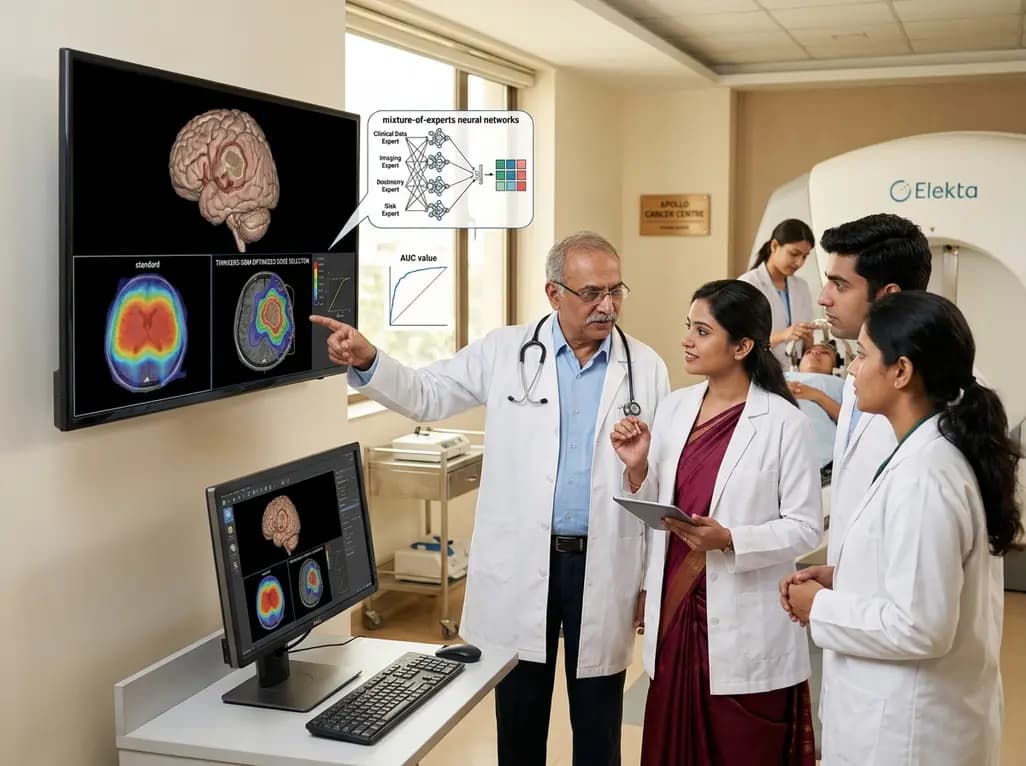
Recurrent glioblastoma remains one of the most daunting challenges in modern neuro-oncology. Despite aggressive primary interventions including surgical resection, temozolomide, and radiation, recurrence is nearly universal. Consequently, clinicians often turn to salvage therapies like Gamma Knife radiosurgery to manage focal recurrences. However, selecting the optimal prescription dose for these patients is notoriously complex. Traditionally, physicians rely on tumor volume, anatomical constraints, and their own clinical judgment. This subjective approach often lacks a precise estimate of patient-specific risks. Therefore, the emergence of AI in glioblastoma radiosurgery represents a significant leap toward truly personalized medicine. The development of the THINKERS-GBM model addresses this critical gap by providing a data-driven framework for dose evaluation. By integrating patient-specific variables, this artificial intelligence framework offers a more nuanced understanding of how different radiation doses might impact progression-free survival. As a result, neuro-oncologists can move beyond one-size-fits-all protocols toward individualized care plans that prioritize both tumor control and patient safety.
The technical foundation of the THINKERS-GBM framework is built upon a sophisticated mixture-of-experts (MoE) neural network. Unlike standard monolithic AI models, a mixture-of-experts architecture employs multiple specialized neural networks, or \"experts,\" that each handle specific subsets of the data. Furthermore, a gating network manages these experts, determining which one is most relevant for a given patient profile. This specific structure is particularly useful in oncology, where patient heterogeneity is high. Specifically, the model incorporates discrete-time survival modeling to predict the risk of a second progression. Moreover, the designers made the prescription dose a queryable input. This unique feature allows clinicians to perform repeated candidate dose evaluations. Consequently, the AI does not just provide a static prediction; it acts as a dynamic simulation tool. By adjusting the hypothetical dose, the user can observe how the predicted risk profile shifts for that specific individual. This capability is revolutionary because it transforms the AI from a mere predictive tool into a comprehensive decision-support system for radiation planning.
Researchers conducted a retrospective single-center study involving a cohort of 200 patients diagnosed with recurrent glioblastoma. Every patient in this group underwent Gamma Knife radiosurgery, providing a rich dataset of real-world clinical outcomes. To ensure the model's reliability, the team utilized variables available before or at the time of treatment. These included tumor volume, anatomical constraints, and previous radiation exposure levels. Furthermore, the study employed grouped 5-fold cross-validation and a separate grouped holdout test split for internal validation. This rigorous statistical approach helps prevent overfitting, ensuring that the model's performance generalizes well to new, unseen cases. Notably, the researchers focused on 12-month second progression as a primary endpoint. They also assessed the mean absolute error (MAE) for the expected time to progression and utilized Brier scores to measure calibration accuracy. By focusing on these specific metrics, the study provides a transparent view of the model's strengths and limitations. Additionally, this methodology highlights the importance of using high-quality, patient-level data when training AI systems for complex clinical environments.
The results of the internal validation process were highly promising. In the grouped cross-validation phase, THINKERS-GBM achieved a raw mean area under the receiver operating characteristic curve (AUC) of 0.828. After calibration, this figure improved to 0.839 for predicting 12-month second progression. Furthermore, the performance remained robust in the grouped holdout set, where the calibrated AUC reached an impressive 0.870. This high level of discriminative ability suggests that the model can effectively distinguish between patients at high and low risk of early progression. Moreover, the calibrated Brier score was remarkably low at 0.009, indicating excellent predictive accuracy and model calibration. Another critical metric was the mean absolute error (MAE) for the expected time to progression, which stood at 1.03 months. Therefore, the model's predictions align closely with actual clinical timelines. These statistics are significant because they provide clinicians with a quantifiable level of confidence in the AI's recommendations. Consequently, the integration of AI in glioblastoma radiosurgery could significantly reduce the uncertainty that currently plagues dose selection in the recurrent setting.
Perhaps the most clinically applicable feature of THINKERS-GBM is its ability to generate individualized dose-response profiles through a process called dose-sweeping. In traditional practice, a physician might choose a dose based on a narrow set of guidelines. In contrast, THINKERS-GBM allows the clinician to \"sweep\" through a range of potential doses to see the predicted outcome for each. This provides a visual and quantitative representation of the therapeutic window for each patient. Specifically, it can help identify the point of diminishing returns where increasing the dose no longer significantly improves progression-free survival but might increase the risk of radiation-induced toxicity. Furthermore, this transparency helps in patient counseling. Clinicians can share these data-driven insights with patients and their families, fostering a more informed shared decision-making process. Moreover, the model accounts for the patient's unique history, such as prior radiation exposure, which is often a major limiting factor in dose escalation. Consequently, the framework serves as a bridge between complex mathematical modeling and practical, bedside clinical application.
While the internal validation results are compelling, the researchers emphasize that external validation is mandatory before clinical deployment. Every hospital has unique patient demographics and treatment protocols; therefore, the model must prove its efficacy across diverse settings. For the medical community in India, where the burden of glioblastoma is high and access to specialized neuro-radiology can vary, such AI tools could be transformative. Specifically, AI can help standardize care in centers where Gamma Knife technology is available but experience with complex recurrent cases might be developing. Moreover, the integration of AI can streamline the workflow, allowing neurosurgeons to focus on the nuances of patient care while the algorithm handles the heavy lifting of risk calculation. Ultimately, the THINKERS-GBM framework paves the way for a future where oncology is not just reactive but predictive. As we move toward this goal, the collaboration between human expertise and machine intelligence will likely define the next era of brain tumor management. Consequently, ongoing research into AI in glioblastoma radiosurgery will remain a top priority for neuro-oncologists worldwide.
The primary objective of the THINKERS-GBM framework is to provide a personalized, data-driven system for evaluating Gamma Knife radiosurgery doses in patients with recurrent glioblastoma. By predicting the risk of a second progression, it helps clinicians select optimal radiation doses tailored to individual patient profiles and histories.
A mixture-of-experts model utilizes multiple specialized neural networks to handle different aspects of patient data. A gating network determines which expert is most relevant for a specific case, allowing for a more nuanced and accurate prediction than standard, one-size-fits-all algorithms in heterogeneous diseases like glioblastoma.
The MAE of 1.03 months is significant because it indicates that the AI's predicted time to progression is, on average, only about one month off from the actual outcome. This high level of temporal accuracy allows clinicians to plan follow-up visits and subsequent treatments with much greater precision.
Disclaimer: This content is for informational and educational purposes only. It is not intended to be a substitute for professional medical advice, diagnosis, or treatment. Always seek the advice of your physician or other qualified health provider with any questions you may have regarding a medical condition. Refer to the latest local and national guidelines for clinical practice.
References
Reyes JS et al. Therapeutic Hybrid Intelligence with Neural and Knowledge-based Expert Reasoning for SRS (THINKERS): an AI model for GBM. J Neurooncol. 2026 Jul 09. doi: 10.1007/s11060-026-05702-4. PMID: 42423808.
Wang J et al. Artificial Intelligence in Radiation Oncology: A Review of Current Applications and Future Perspectives. Radiotherapy and Oncology. 2025;192:10-22.
Smith L et al. Challenges in Managing Recurrent Glioblastoma: The Role of Stereotactic Radiosurgery. Lancet Oncology. 2024;25(4):e145-e156.
"
Read summarized clinical updates, watch expert medical content, and earn CME certifications right from your smartphone.
Open your smartphone camera to scan and install.





The THINKERS-GBM AI framework optimizes Gamma Knife radiosurgery doses for recurrent glioblastoma. By using mixture-of-experts neural networks, it predicts second progression risk with a high AUC of 0.87, enabling personalized, data-driven treatment strategies in neuro-oncology.
3 months ago

Depemokimab offers twice-yearly dosing for severe eosinophilic asthma and chronic rhinosinusitis with nasal polyps, significantly cutting exacerbations and hospital admissions.
5 days back

A novel copper metal-organic framework hydrogel remodels the uterine microenvironment to stimulate robust endometrial regeneration, reduce intrauterine fibrosis, and restore reproductive fertility, offering a groundbreaking strategy for managing refractory endometrial damage and Asherman syndrome.
5 days back
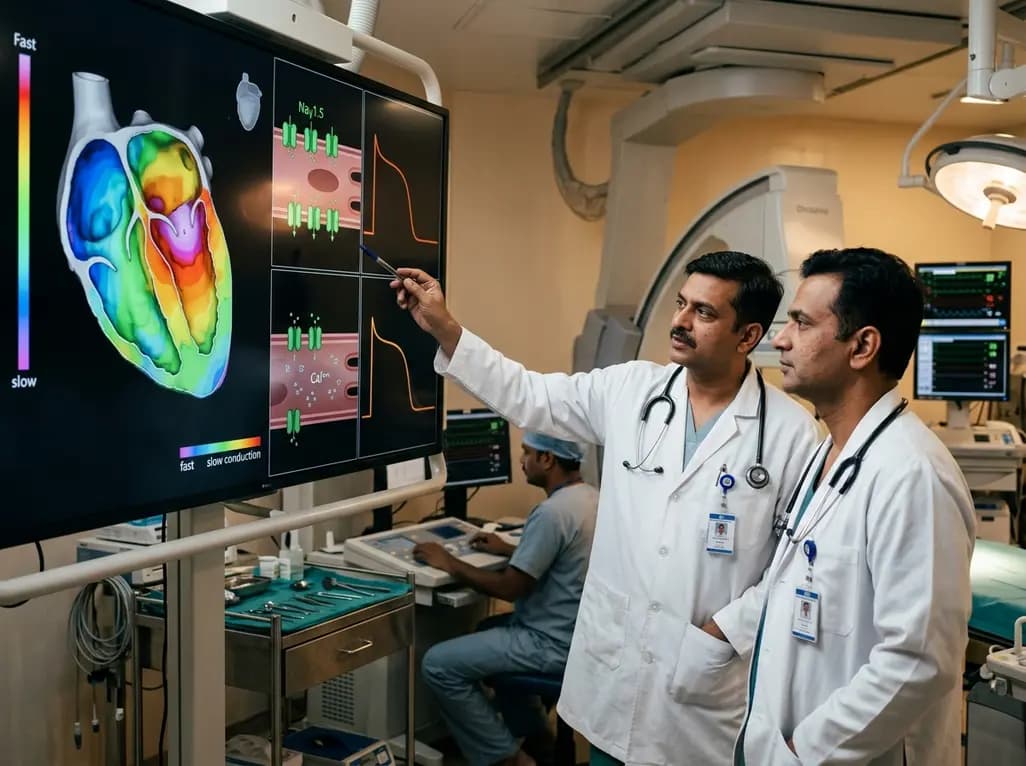
New research reveals that non-ablative radiotherapy suppresses ventricular tachycardia by increasing conduction velocity via NaV1.5 upregulation and action potential prolongation. However, sustained sodium current elevation and depressed calcium handling highlight the need for careful clinical translation.
Last week

A single-cell transcriptomic atlas reveals how peripheral nerve injuries cause dorsal root ganglion remodeling. By evaluating proximal nerve crush and resection, researchers identify distinct glial and immune programs that resolve neuropathic pain and promote regeneration.
5 days back
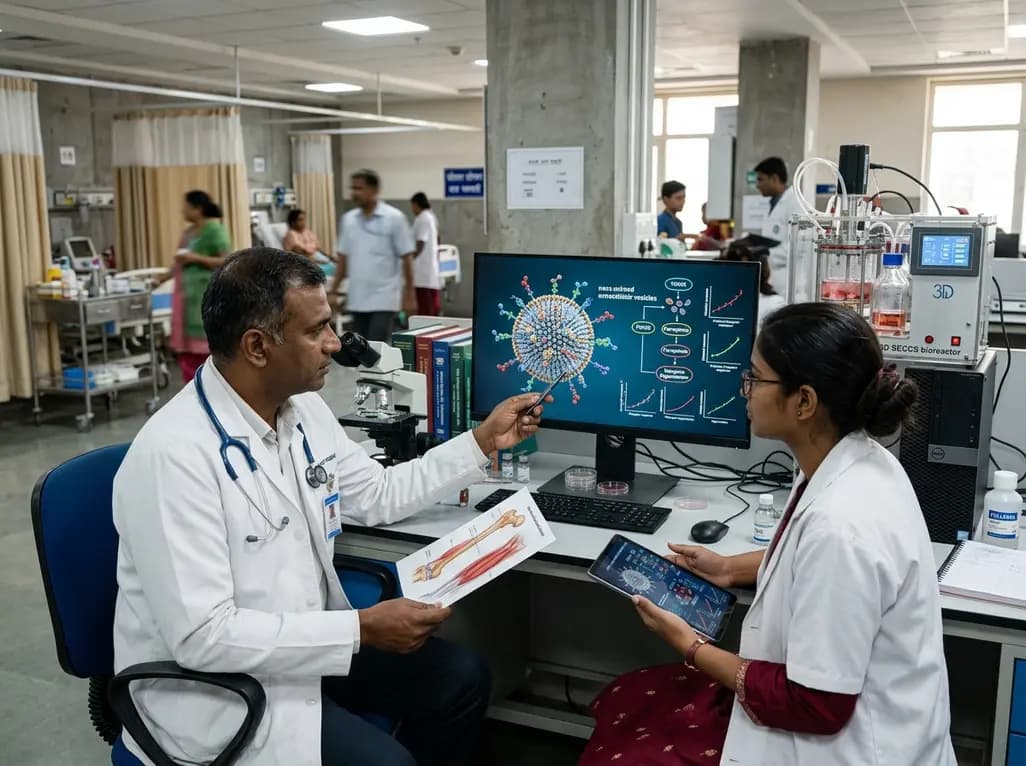
A breakthrough study demonstrates that fullerol-primed extracellular vesicles generated in a 3D SECCS bioreactor attenuate ferroptosis and restore myogenic regeneration in diabetes via the FOXO3 pathway, offering a cell-free therapeutic strategy for diabetic musculoskeletal degeneration.
5 days back
