.webp&w=384&q=75)

Loading, please wait...
Loading, please wait...
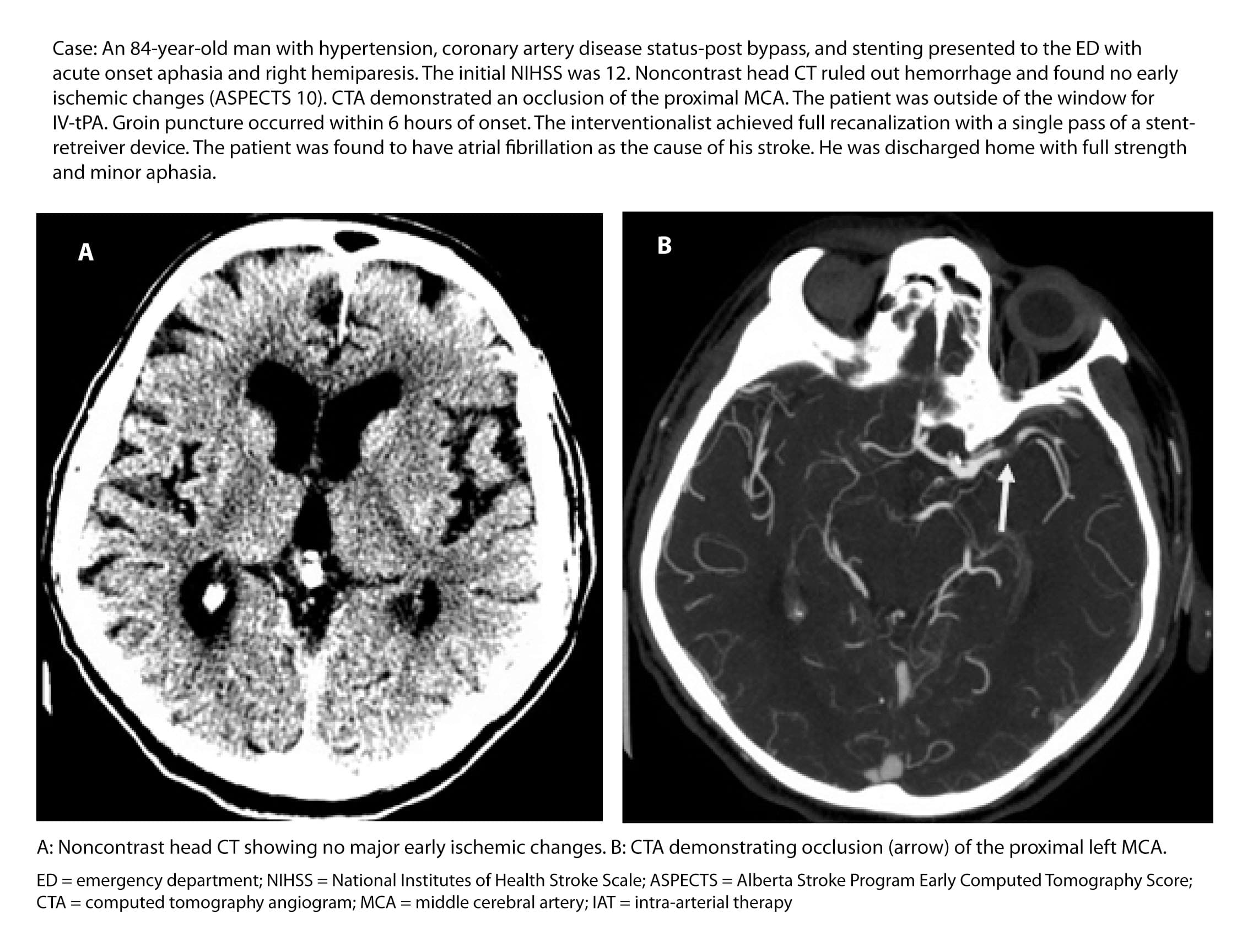
Minor ischemic stroke can be deceptive: a low NIHSS score does not always mean a low risk of disability, particularly when a visible intracranial occlusion is present. TEMPO-2 was a randomized phase 3 trial testing whether tenecteplase was superior to standard care in patients with minor ischemic stroke and proven occlusion or focal perfusion abnormality. The study did not demonstrate the expected clinical benefit from tenecteplase in this population and raised safety concerns. The result is important because it cautions against automatically extrapolating the benefits of thrombolysis established in more typical acute ischemic stroke populations to patients with minor deficits. For HCPs, the practical lesson is that treatment decisions should incorporate both neurological severity and vascular/imaging findings, but an apparent mismatch does not automatically justify thrombolysis. Patients with minor stroke may still require careful observation and secondary prevention because early deterioration remains possible. The trial is highly relevant to IANCON's discussion of grey zones in thrombolysis and reinforces the need for evidence specific to challenging stroke phenotypes.

Read summarized clinical updates, watch expert medical content, and earn CME certifications right from your smartphone.
Open your smartphone camera to scan and install.





Minor ischemic stroke can be deceptive: a low NIHSS score does not always mean a low risk of disability, particularly when a visible intracranial occlusion is present. TEMPO-2 was a randomized phase 3 trial testing whether tenecteplase was superior to standard care in patients with minor ischemic stroke and proven occlusion or focal perfusion abnormality. The study did not demonstrate the expected clinical benefit from tenecteplase in this population and raised safety concerns. The result is important because it cautions against automatically extrapolating the benefits of thrombolysis established in more typical acute ischemic stroke populations to patients with minor deficits. For HCPs, the practical lesson is that treatment decisions should incorporate both neurological severity and vascular/imaging findings, but an apparent mismatch does not automatically justify thrombolysis. Patients with minor stroke may still require careful observation and secondary prevention because early deterioration remains possible. The trial is highly relevant to IANCON's discussion of grey zones in thrombolysis and reinforces the need for evidence specific to challenging stroke phenotypes.
4 weeks back

Discover how catalytic nanozymes redefine autoimmune disease therapy by establishing a physiological redox set-point to restore immune tolerance without broad immunosuppression.
Last week

Recent research reveals that downregulating YAP1/TAZ-TEAD via Hippo signaling triggers spontaneous human trophoblast syncytialization in 3D cultures, illuminating placental biology and preeclampsia.
3 weeks back

A landmark comparative study evaluates atrial electrophysiology across humans, swine, and rodents. By linking cellular recordings with transcriptomics and in silico modeling, researchers resolve cross-species gaps, explaining translational failures to advance targeted therapies for atrial arrhythmias.
3 weeks back

A novel pathology-adaptive surface engineering strategy uses functionalized plasma polymer coatings to selectively modulate AGE adsorption, reducing oxidative stress and restoring bone formation in diabetic and aging microenvironments.
last month

Researchers have developed an innovative ultrasound-responsive nano-contrast agent that co-delivers CIITA-siRNA and rapamycin directly to inflamed thyroid tissue, significantly reducing autoimmune injury and thyroid autoantibodies in preclinical models of Hashimoto thyroiditis.
3 weeks back
