.webp&w=384&q=75)

Loading, please wait...
Loading, please wait...
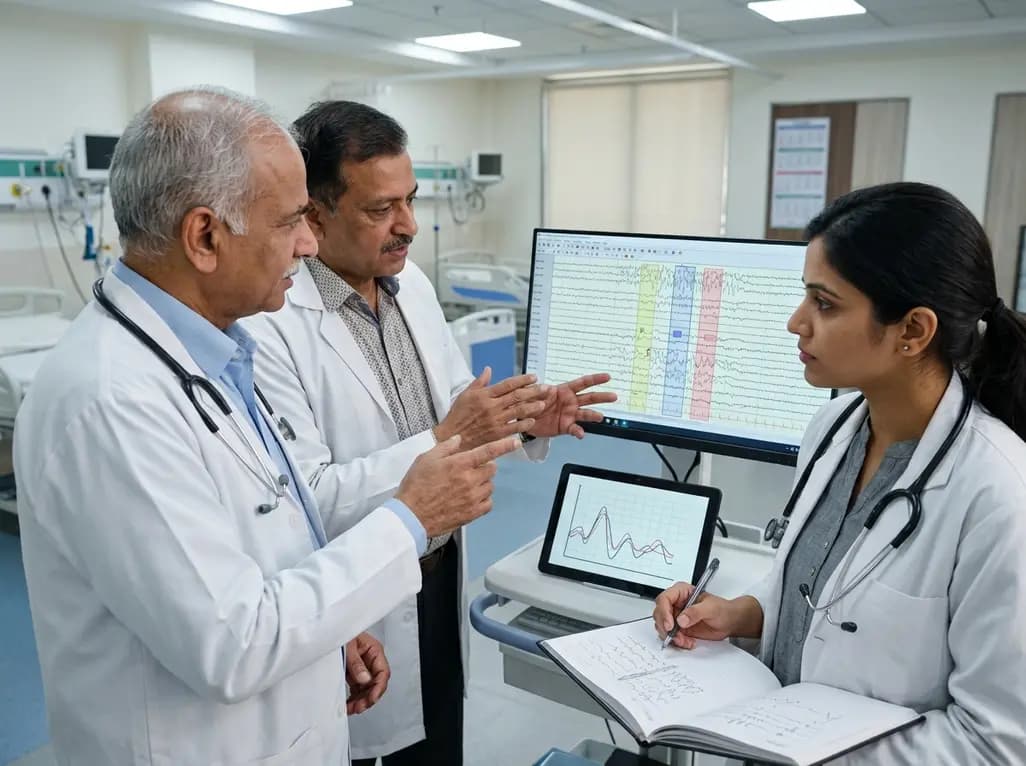
Electroencephalography (EEG) remains the cornerstone diagnostic tool for evaluating epilepsy, assisting clinicians in classifying seizure types and localizing epileptogenic zones. Long-term EEG monitoring has expanded rapidly across outpatient clinics, intensive care units, and ambulatory settings. Continuous recording generates vast electrophysiological datasets demanding painstaking visual analysis by expert neurophysiologists. Manual review is time-consuming, expensive, and susceptible to observer fatigue and inter-reviewer variability. Consequently, reliable automated seizure detection algorithms are essential for modern clinical neurophysiology. These computerized systems continuously analyze brain activity to identify ictal events in real time, alerting care teams or flagging segments for retrospective review. However, translating automated detection tools into routine clinical practice has faced persistent obstacles. Most published algorithms report high performance in controlled research environments, yet accuracy drops significantly when deployed in clinical practice. This discrepancy highlights a critical gap between laboratory validation and real-world clinical utility. Standardized, transparent evaluation frameworks are necessary to bridge this gap and ensure reliable performance across diverse patient populations.
A primary barrier to adopting computer-assisted EEG interpretation is the marked heterogeneity among validation methodologies. Researchers historically evaluated machine learning models using proprietary datasets with varying electrode montages, sampling rates, and recording durations. Furthermore, expert annotations—the gold standard for algorithm training—suffer from subjective variability among epileptologists. Validation studies also differ in evaluation units, reporting performance on epoch-based or event-based criteria, producing non-comparable results for identical algorithms. Cross-validation strategies vary significantly across literature. Many studies utilize patient-dependent data splitting, where recordings from the same individual exist in both training and testing sets. While this inflates accuracy metrics, it fails to predict performance on new patients in clinical practice. Patient-independent cross-validation offers a more realistic assessment of generalizability but remains inconsistently applied. Additionally, false alarm rates are reported using inconsistent units, complicating direct performance comparisons. Without unified validation standards, clinicians cannot reliably identify which automated tools offer clinical safety and efficacy for patient care.
To address these methodological inconsistencies, the Seizure Community Open-Source Research Evaluation (SzCORE) framework introduces a unified standard for algorithm validation. Developed through international consensus, SzCORE establishes rigorous recommendations governing dataset selection, input formatting, annotation standardization, and cross-validation execution. The framework mandates converting raw EEG data into standardized formats, such as the Brain Imaging Data Structure (BIDS), ensuring uniform data organization across institutions. Standardized seizure annotation formats clearly define start times, end times, and confidence levels for annotated ictal events, eliminating dataset-specific formatting biases that previously hindered research reproducibility. Crucially, SzCORE enforces patient-independent cross-validation protocols, ensuring test sets consist exclusively of unseen patient recordings. This separation mimics real-world clinical deployment, where algorithms must process signals from unfamiliar individuals without custom calibration. Consequently, SzCORE provides a transparent, reproducible benchmark for objective evaluation of algorithmic reliability, facilitating seamless integration into ambulatory monitoring systems and hospital-based epilepsy monitoring units.
Central to the SzCORE initiative is the EEG 10-20 seizure detection benchmark, a standardized testing environment created from curated public datasets. Utilizing the standard international 10-20 electrode placement system, this benchmark harmonizes diverse clinical recordings into a uniform format accessible to global researchers. The benchmark encompasses thousands of hours of continuous EEG data containing thousands of expert-annotated seizures across varied patient demographics. By establishing a fixed, open-access benchmark dataset, SzCORE eliminates ambiguity surrounding data selection and preprocessing. Machine learning models can be evaluated on identical data inputs, creating an objective baseline for algorithm comparison. Furthermore, the benchmark defines specific operational tasks, distinguishing between real-time online detection for immediate alerts and offline retrospective detection for rapid record review. Evaluating algorithms on this benchmark enables developers to demonstrate performance strengths, such as low computational latency or high sensitivity during focal seizures. This standardized benchmark offers clinicians clarity regarding algorithm capabilities prior to clinical implementation.
Evaluating automated seizure detection systems requires metrics reflecting clinical priorities rather than simple mathematical accuracy. SzCORE introduces a standardized metric suite capturing diagnostic sensitivity and practical workflow integration. Traditional epoch-based accuracy metrics often mask clinically relevant errors, such as missing brief focal seizures or generating high false alarm frequencies. SzCORE prioritizes event-based evaluation metrics, determining whether algorithms detect discrete seizure episodes within acceptable latency windows. Furthermore, the framework standardizes false alarm quantification, expressing events as false positives per hour of recording. Excessive false alarms cause severe alarm fatigue among clinical staff and create unnecessary manual review workloads. Reporting standardized false alarm frequencies alongside sensitivity curves allows clinicians to evaluate operational trade-offs between missing seizures and managing false alerts. The accompanying open-source software library automates metric calculation, eliminating custom calculation errors and ensuring complete transparency across all evaluated detection systems.
Adopting standardized evaluation frameworks like SzCORE represents a vital advancement in clinical neurophysiology and digital health. By supporting an open-source research ecosystem, SzCORE accelerates the translation of artificial intelligence models from academic development to bedside application. Standardized algorithms enhance ambulatory EEG monitoring, allowing patients to undergo extended home monitoring with reliable automated seizure logging. Accurate automated detection improves seizure burden tracking, optimizes anti-seizure medication titration, and enhances safety monitoring for patients at risk of sudden unexpected death in epilepsy (SUDEP). In epilepsy monitoring units, validated real-time detection systems reduce nursing response times, facilitating prompt clinical intervention. Furthermore, standardized evaluation methodologies establish a firm foundation for regulatory approvals, providing regulatory agencies with objective evidence of algorithmic performance and safety. As wearable EEG technologies evolve, the SzCORE framework will remain essential for verifying that continuous monitoring solutions deliver reliable, patient-centered care. Ultimately, uniting algorithmic innovation with clinical standardization empowers neurologists to improve epilepsy care outcomes.
The SzCORE framework provides a standardized, open-source methodology for validating electroencephalography-based automated seizure detection algorithms. By unifying datasets, file formats, cross-validation strategies, and performance metrics, SzCORE enables objective, reproducible evaluations of algorithmic performance, accelerating the clinical translation of artificial intelligence tools in epilepsy monitoring.
Traditional cross-validation often uses patient-dependent data splitting, where data from the same patient appears in both training and testing sets. This leads to artificially inflated accuracy scores that fail to reflect real-world clinical performance. SzCORE mandates patient-independent cross-validation to assess how reliably algorithms perform on new, unseen patients.
Excessive false alarms cause severe alarm fatigue among healthcare personnel and increase manual review burdens for epileptologists. Standardizing false alarm rates as false positives per hour allows clinicians to evaluate the operational feasibility of automated detection systems, ensuring tools maintain high sensitivity without overwhelming clinical workflows.
Disclaimer: This content is for informational and educational purposes only and does not constitute medical advice, diagnosis, or treatment. Healthcare professionals should rely on their clinical judgment and refer to the latest local and national guidelines for clinical practice.
References

Read summarized clinical updates, watch expert medical content, and earn CME certifications right from your smartphone.
Open your smartphone camera to scan and install.





The SzCORE framework introduces a standardized, open-source validation benchmark for EEG-based automated seizure detection algorithms, facilitating clinical translation and comparative evaluation in epilepsy monitoring.
2 months ago

Depemokimab offers twice-yearly dosing for severe eosinophilic asthma and chronic rhinosinusitis with nasal polyps, significantly cutting exacerbations and hospital admissions.
4 days back

A novel copper metal-organic framework hydrogel remodels the uterine microenvironment to stimulate robust endometrial regeneration, reduce intrauterine fibrosis, and restore reproductive fertility, offering a groundbreaking strategy for managing refractory endometrial damage and Asherman syndrome.
4 days back
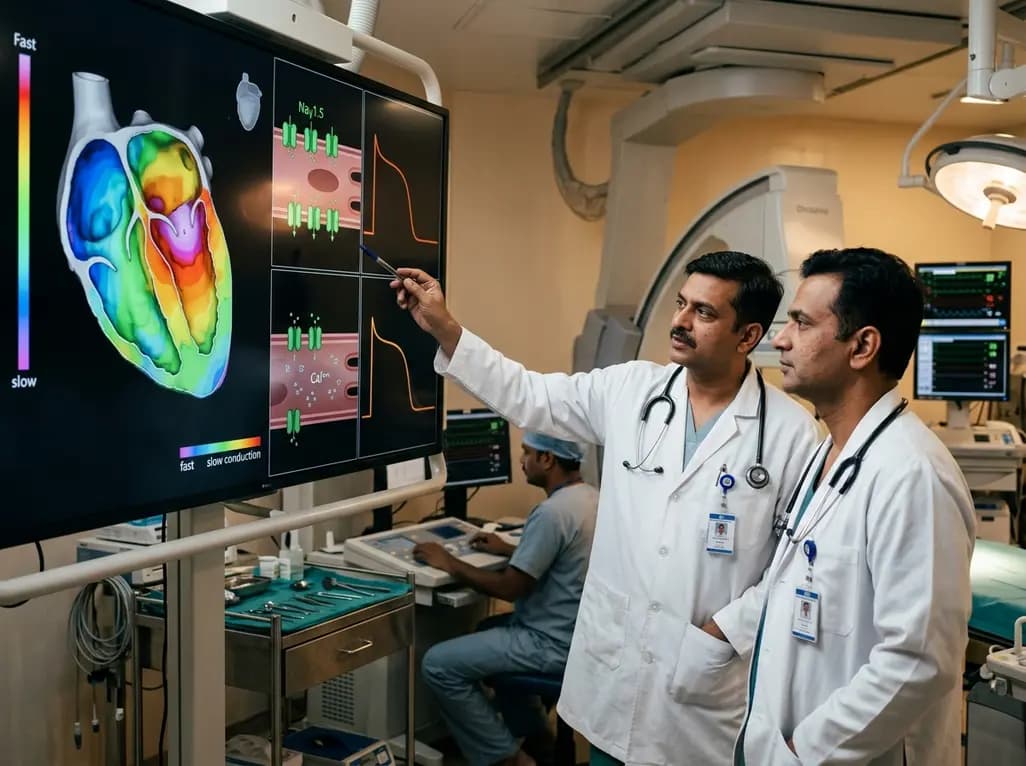
New research reveals that non-ablative radiotherapy suppresses ventricular tachycardia by increasing conduction velocity via NaV1.5 upregulation and action potential prolongation. However, sustained sodium current elevation and depressed calcium handling highlight the need for careful clinical translation.
6 days back

A single-cell transcriptomic atlas reveals how peripheral nerve injuries cause dorsal root ganglion remodeling. By evaluating proximal nerve crush and resection, researchers identify distinct glial and immune programs that resolve neuropathic pain and promote regeneration.
4 days back

A breakthrough study demonstrates that fullerol-primed extracellular vesicles generated in a 3D SECCS bioreactor attenuate ferroptosis and restore myogenic regeneration in diabetes via the FOXO3 pathway, offering a cell-free therapeutic strategy for diabetic musculoskeletal degeneration.
4 days back
