.webp&w=384&q=75)

Loading, please wait...
Loading, please wait...
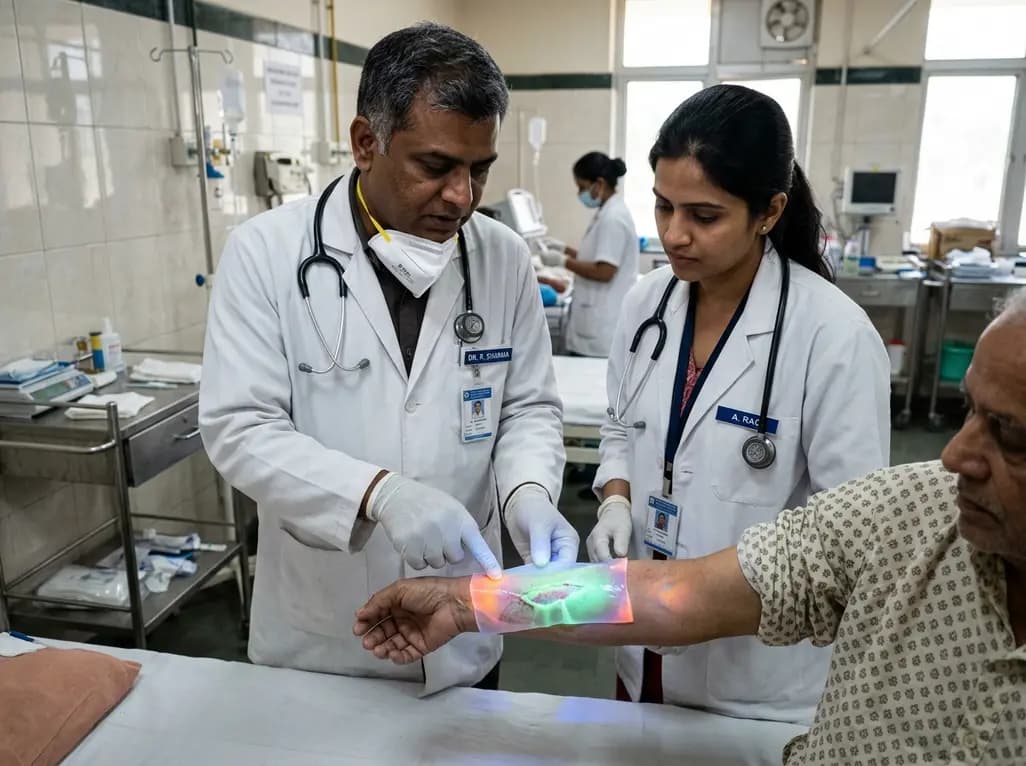
Managing infectious and non-healing wounds presents a continuous challenge for clinicians across surgical, dermatological, and critical care settings. Traditional wound care relies heavily on periodic visual inspections and empirical antimicrobial therapy. Consequently, clinicians frequently struggle to detect early microbial shifts or determine the precise moment when active inflammation resolves into tissue proliferation. This diagnostic gap often leads to either antibiotic overtreatment or delayed intervention. However, recent breakthroughs in bio-materials are fundamentally reshaping wound management. A novel platform utilizing stepwise aggregation-induced-emission (AIE) luminogen hydrogels introduces dynamic, real-time optical tracking of physiological wound pH. By converting microenvironmental acidity changes into clear fluorescent signals, this system advances smart hydrogel wound care into an actionable diagnostic and therapeutic tool. As a result, medical teams can monitor infection progression at the bedside without removing dressings or disturbing delicate healing tissue. Furthermore, this dynamic feedback mechanism establishes a seamless sense-decide-treat therapeutic loop, offering unprecedented clinical precision.
The underlying mechanism of this advanced hydrogel relies on three distinct AIE fluorophores: TPE-SA, TPE-SAC, and TPE-SDOX. These specialized molecules exhibit specific pK threshold values of 5.8, 6.0, and 6.8, respectively. In healthy resting skin, the physiological microenvironment remains mildly acidic. However, when bacterial pathogens colonize a wound, local metabolic shifts alter tissue acidity significantly. The hydrogel matrix integrates these fluorophores into a durable, tissue-adhesive framework to create a highly sensitive, multi-stage optical sensor. As local pH shifts across critical physiological thresholds, the fluorophores undergo rapid deprotonation transitions. Consequently, this chemical change extinguishes the fluorophore's bright fluorescence in an instantaneous on-off fashion. Additionally, because each luminogen responds to a specific pH boundary, the composite hydrogel generates distinct visual cues corresponding to fluctuating acidity. Surgeons and infectious disease specialists can immediately read these optical signals with handheld UV light sources, providing objective biochemical readouts.
Accurate identification of the phase transition from acute inflammation to tissue proliferation remains vital for optimal wound therapy. Infection and ongoing tissue damage cause prolonged acidic microenvironments, whereas healthy healing shifts local pH back toward neutral levels. In polymicrobial wound models, researchers discovered that the optical signal from TPE-SDOX vanishes precisely at pH 6.8. Thus, the extinction of TPE-SDOX fluorescence serves as an exact, non-invasive optical marker for inflammatory resolution. Furthermore, tracking these optical cues allows clinicians to distinguish specific bacterial species, evaluate bacterial burden, and continuously assess overall infection status throughout the healing journey. In addition, this continuous optical feedback helps care teams distinguish between active bacterial proliferation and benign tissue colonization. Therefore, integrating this smart hydrogel wound care platform into routine dressing changes provides a clear roadmap for therapeutic timing, ensuring that targeted treatments align perfectly with underlying biological healing stages.
The clinical consequences of guided precision treatment are profoundly impactful for patient care and antimicrobial stewardship. In comparative studies, dynamic AIE hydrogel guidance reduced total antibiotic exposure by an impressive 41.3% compared to conventional fixed-dose empirical regimens. Minimizing unnecessary antimicrobial usage is crucial for preventing local tissue toxicity and suppressing the emergence of multidrug-resistant bacterial strains. Beyond reducing drug exposure, guided therapy significantly accelerates histological re-epithelialization and tissue regeneration. Moreover, the precise timing of interventions synchronizes neutrophil apoptosis with active cutaneous angiogenesis. As a result, the biological transition into the proliferative phase proceeds smoothly without destructive secondary inflammation or excessive scarring. Consequently, patients experience faster wound closure, decreased local pain, and reduced overall risk of chronic ulceration. By bridging diagnostic feedback directly with targeted therapeutic delivery, this technology provides an effective shield against both overtreatment and undertreatment in complex surgical wounds.
The development of stepwise AIE-luminogen hydrogel films represents a transformative leap forward in smart biomaterial design. Beyond infectious wound care, this versatile hydrogel platform can adapt to surgical incisions, diabetic foot ulcers, chronic venous ulcers, and extensive burn injuries. Furthermore, integrating smart optical hydrogels into clinical practice aligns seamlessly with current efforts toward personalized, data-driven patient management. Because the hydrogel functions autonomously without complex electronic sensors or external power sources, clinicians can easily deploy it across diverse healthcare settings, including outpatient clinics and resource-limited facilities. Moving forward, combining these optical hydrogels with digital mobile imaging tools could enable automated, smartphone-based wound assessment at home. Ultimately, closing the sense-decide-treat loop empowers healthcare providers to deliver highly tailored, effective, and safe care, setting a new standard for modern wound management.
Integrating stepwise AIE-luminogen hydrogels into surgical and dermatological workflows offers tangible operational advantages. Traditional wound assessment often mandates invasive biopsies or delayed microbiological cultures that require days for laboratory processing. In contrast, optical hydrogel films provide instantaneous feedback directly at the point of care during routine dressing changes. Medical teams can quickly illuminate the wound site with portable ultraviolet light and evaluate the colorimetric response. If the TPE-SDOX signal remains extinguished, clinicians receive definitive verification that inflammatory resolution is occurring naturally. This real-time insight prevents unnecessary empirical escalation of topical or systemic antibiotics. Furthermore, nursing staff can easily document optical color shifts during daily monitoring, facilitating seamless interdisciplinary communication. Consequently, healthcare systems can optimize antimicrobial stewardship while improving patient comfort and reducing treatment costs.
AIE-luminogen hydrogels detect wound pH changes through three integrated fluorophores: TPE-SA, TPE-SAC, and TPE-SDOX. Each fluorophore possesses a distinct pK value. When local bacterial activity or tissue healing alters wound acidity, the fluorophores undergo rapid deprotonation. This chemical transition extinguishes their bright fluorescent signal under UV light. Consequently, clinicians observe clear, stage-specific optical changes that indicate exact shifts in local wound pH without disturbing the healing wound bed.
Wound pH directly reflects biological status, infection severity, and inflammatory stage. Infectious, non-healing wounds typically maintain an altered acidic or alkaline microenvironment driven by bacterial metabolism and persistent immune activation. Monitoring local pH fluctuations allows clinicians to track the transition from acute inflammation to tissue proliferation accurately. Consequently, healthcare providers can time antimicrobial interventions precisely, avoiding unnecessary antibiotic administration while preventing undertreatment during active bacterial surges.
Guided hydrogel therapy reduces antibiotic exposure by replacing routine, empiric drug administration with precise, real-time diagnostic feedback. The hydrogel provides immediate visual cues when inflammatory resolution occurs at pH 6.8. Consequently, clinicians discontinue or adjust antimicrobial agents exactly when infection resolves. Preclinical trials demonstrate that this closed-loop approach reduces total drug exposure by 41.3%, minimizing antibiotic side effects and limiting the development of multidrug-resistant bacterial strains.
Disclaimer: This content is for informational and educational purposes only and should not be used as professional medical advice, diagnosis, or treatment. Always consult qualified healthcare professionals for medical decisions. Refer to the latest local and national guidelines for clinical practice.
References

Read summarized clinical updates, watch expert medical content, and earn CME certifications right from your smartphone.
Open your smartphone camera to scan and install.





A novel stepwise pH-responsive AIE-luminogen hydrogel dynamically tracks wound pH transitions, enabling precise optical monitoring of inflammation and reducing unnecessary antibiotic exposure by over 40%.
last month

A breakthrough study using human colonic organoids demonstrates that bacterial serine protease EspP, an EHEC cytotoxin, halts epithelial proliferation and preferentially triggers enteroendocrine cell differentiation, promoting pro-inflammatory chemokine release and immune cell recruitment.
2 days back
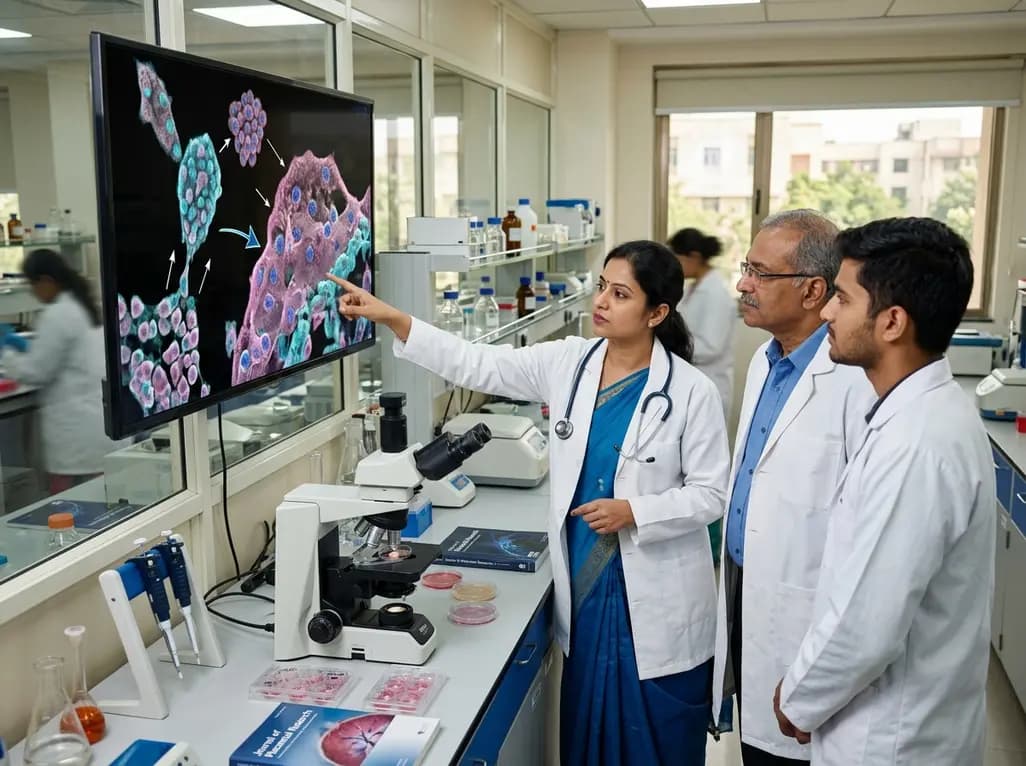
Recent research reveals that downregulating YAP1/TAZ-TEAD via Hippo signaling triggers spontaneous human trophoblast syncytialization in 3D cultures, illuminating placental biology and preeclampsia.
3 days back

A landmark comparative study evaluates atrial electrophysiology across humans, swine, and rodents. By linking cellular recordings with transcriptomics and in silico modeling, researchers resolve cross-species gaps, explaining translational failures to advance targeted therapies for atrial arrhythmias.
2 days back

A novel pathology-adaptive surface engineering strategy uses functionalized plasma polymer coatings to selectively modulate AGE adsorption, reducing oxidative stress and restoring bone formation in diabetic and aging microenvironments.
4 weeks back

Researchers have developed an innovative ultrasound-responsive nano-contrast agent that co-delivers CIITA-siRNA and rapamycin directly to inflamed thyroid tissue, significantly reducing autoimmune injury and thyroid autoantibodies in preclinical models of Hashimoto thyroiditis.
3 days back
