.webp&w=384&q=75)

Loading, please wait...
Loading, please wait...

The Sentio bone-conduction implant offers a promising solution for individuals suffering from conductive or mixed hearing loss. Specifically, this active transcutaneous system received approval in 2024 and targets patients who cannot benefit from traditional hearing aids. Clinicians recently analyzed its initial performance to establish efficacy and safety benchmarks.
Notably, the study results revealed substantial improvements in hearing sensitivity. For instance, the mean hearing threshold improved significantly from 56.3 dB HL (unaided) to 25.3 dB HL post-activation. Consequently, this gain outperformed outcomes previously achieved with softband solutions. Furthermore, speech recognition testing in free field conditions showed marked progress. Patients also reported significant subjective benefits, as evidenced by improved Abbreviated Profile of Hearing Aid Benefit (APHAB) scores. Therefore, the device effectively addresses the core communication challenges faced by this patient population.
Moreover, the surgical procedure demonstrated a high safety profile. Researchers reported that all initial surgeries were completed without complications. However, one patient did require a revision surgery, which surgeons performed successfully. Aside from this single event, no other adverse outcomes occurred. In addition, the hearing thresholds remained remarkably stable during the one-month follow-up period. Because the system utilizes a transcutaneous design, it avoids many of the skin-related complications common with percutaneous implants.
The Sentio system provides significant improvements in hearing thresholds and speech recognition. Clinical data shows an average threshold improvement from 56.3 dB HL to 25.3 dB HL, alongside high patient satisfaction rates.
Yes, the implant demonstrates a strong safety profile. Most surgeries are completed without complications, and the transcutaneous design minimizes the risk of long-term skin-related issues typically associated with older bone-conduction technologies.
Disclaimer: This content is for informational and educational purposes only. It does not constitute medical advice or establish a doctor-patient relationship. Refer to the latest local and national guidelines for clinical practice.
References
Cywka KB et al. Sentio Bone-Conduction Implant: Early Outcomes in Patients With Conductive or Mixed Hearing Loss. Laryngoscope. 2026 Jun 22. doi: 10.1002/lary.70704. PMID: 42332362.
Hol MKS et al. A Prospective, Multicenter Clinical Investigation on the Safety and Performance of a New Active Transcutaneous Bone-Anchored Implant System. Otol Neurotol. 2026;47(1):15-22.
Oticon Medical. Sentio System: Technical Specifications and Clinical Indications. 2024.

Read summarized clinical updates, watch expert medical content, and earn CME certifications right from your smartphone.
Open your smartphone camera to scan and install.





The Sentio bone-conduction implant demonstrates significant hearing improvements and high safety for conductive or mixed hearing loss. Early 2026 data shows mean thresholds improving from 56.3 to 25.3 dB HL with high patient satisfaction and minimal surgical complications.
4 months ago

Depemokimab offers twice-yearly dosing for severe eosinophilic asthma and chronic rhinosinusitis with nasal polyps, significantly cutting exacerbations and hospital admissions.
4 days back

A novel copper metal-organic framework hydrogel remodels the uterine microenvironment to stimulate robust endometrial regeneration, reduce intrauterine fibrosis, and restore reproductive fertility, offering a groundbreaking strategy for managing refractory endometrial damage and Asherman syndrome.
4 days back
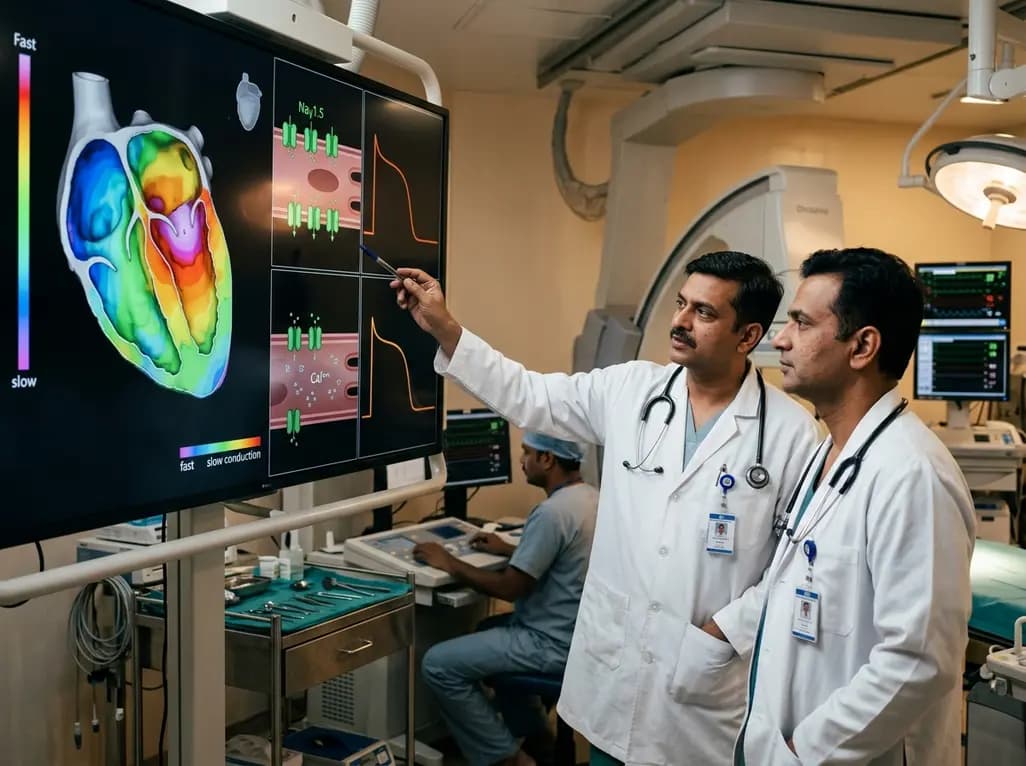
New research reveals that non-ablative radiotherapy suppresses ventricular tachycardia by increasing conduction velocity via NaV1.5 upregulation and action potential prolongation. However, sustained sodium current elevation and depressed calcium handling highlight the need for careful clinical translation.
6 days back

A single-cell transcriptomic atlas reveals how peripheral nerve injuries cause dorsal root ganglion remodeling. By evaluating proximal nerve crush and resection, researchers identify distinct glial and immune programs that resolve neuropathic pain and promote regeneration.
4 days back

A breakthrough study demonstrates that fullerol-primed extracellular vesicles generated in a 3D SECCS bioreactor attenuate ferroptosis and restore myogenic regeneration in diabetes via the FOXO3 pathway, offering a cell-free therapeutic strategy for diabetic musculoskeletal degeneration.
4 days back
