.webp&w=384&q=75)

Loading, please wait...
Loading, please wait...

Sarcopenia and sepsis risk are increasingly recognized as interconnected factors in critical care outcomes. While clinicians traditionally associate sarcopenia with higher mortality in septic patients, its role in the actual incidence of sepsis has remained less clear. A recent study published in Shock investigated this relationship through a combination of Mendelian Randomization (MR) and prospective observational analysis. By evaluating muscle strength, quantity, and physical performance, the researchers aimed to pinpoint specific traits that might offer protection against or increase susceptibility to sepsis.
The researchers conducted a robust MR analysis using nine genome-wide association study (GWAS) datasets. This approach allowed them to explore the genetic causal links between various sarcopenia traits and sepsis. Interestingly, the results indicated that physical performance, specifically usual walking pace, was significantly associated with a 71% reduction in sepsis risk (OR: 0.29). This suggests that baseline physical fitness and muscle performance may serve as a protective genetic buffer against systemic infection.
Furthermore, the study included a prospective observational component involving 172 ICU patients. Researchers utilized ultrasound to assess several muscle quantity indices, such as the thickness of the rectus femoris and vastus intermedius. However, the most significant finding from the observational data focused on muscle quality rather than just mass. Specifically, the tibialis anterior pennation angle (TA-PA), which correlates closely with walking pace, was identified as an independent factor associated with a reduced risk of sepsis (OR: 0.76). Consequently, patients with higher muscle quality demonstrated better resilience during their ICU stay.
These findings provide essential insights for risk stratification in the intensive care unit. Identifying patients with poor muscle quality or low physical performance early in their admission could allow for more vigilant monitoring and tailored interventions. Moreover, the study reinforces the importance of physical activity and muscle maintenance as preventive measures that extend beyond simple mobility. Overall, integrating ultrasound-based muscle assessments like TA-PA might enhance our ability to predict which patients are most at risk for developing sepsis.
Muscle quality, particularly indices like the pennation angle, reflects the functional architecture of the muscle. Better muscle quality often indicates a more robust physiological reserve, which helps the body withstand the inflammatory stress associated with sepsis.
According to this Mendelian Randomization study, a faster usual walking pace is genetically linked to a reduced risk of sepsis. It serves as a clinical surrogate for overall physical performance and metabolic health.
While both are relevant, this study suggests that muscle quality (TA-PA) and physical performance (walking pace) may have a more direct independent association with reduced sepsis risk than muscle quantity alone.
Disclaimer: This content is for informational and educational purposes only. It does not constitute medical advice or establish a doctor-patient relationship. Healthcare professionals should always rely on their clinical judgment and refer to the latest local and national guidelines for clinical practice.
References
Zhou Y et al. Sarcopenia-associated traits and sepsis risk: a Mendelian Randomization and Prospective Observational Study. Shock. 2026 Jun 22. doi: 10.1097/SHK.0000000000002890. PMID: 42320005.
Liu C-Y et al. Mendelian randomization analysis reveals causal association of anthropometric measures on sepsis risk and mortality. PLOS One. 2024;19(9):e0301234.
Puthucheary ZA et al. Acute skeletal muscle wasting in critical illness. JAMA. 2013;310(15):1591-1600.
"
Read summarized clinical updates, watch expert medical content, and earn CME certifications right from your smartphone.
Open your smartphone camera to scan and install.





A new study using Mendelian Randomization and prospective observation identifies a causal link between sarcopenia traits—specifically walking pace and muscle quality—and reduced sepsis risk, offering new avenues for early risk stratification in the ICU.
4 months ago

Depemokimab offers twice-yearly dosing for severe eosinophilic asthma and chronic rhinosinusitis with nasal polyps, significantly cutting exacerbations and hospital admissions.
3 days back

A novel copper metal-organic framework hydrogel remodels the uterine microenvironment to stimulate robust endometrial regeneration, reduce intrauterine fibrosis, and restore reproductive fertility, offering a groundbreaking strategy for managing refractory endometrial damage and Asherman syndrome.
4 days back
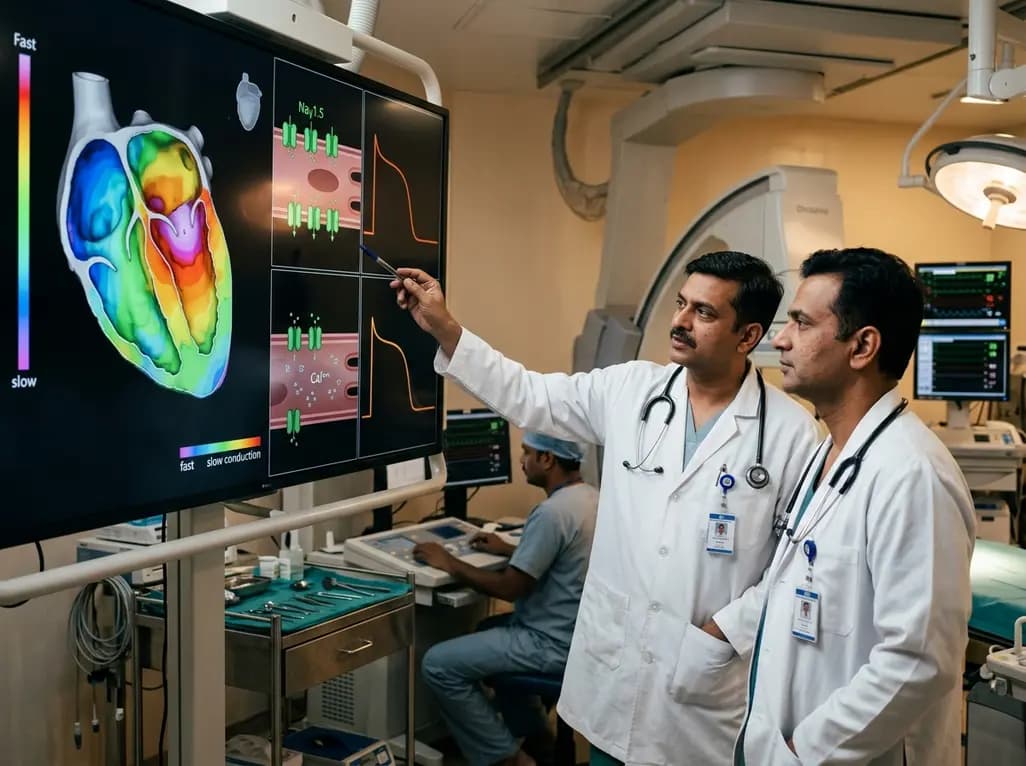
New research reveals that non-ablative radiotherapy suppresses ventricular tachycardia by increasing conduction velocity via NaV1.5 upregulation and action potential prolongation. However, sustained sodium current elevation and depressed calcium handling highlight the need for careful clinical translation.
6 days back

A single-cell transcriptomic atlas reveals how peripheral nerve injuries cause dorsal root ganglion remodeling. By evaluating proximal nerve crush and resection, researchers identify distinct glial and immune programs that resolve neuropathic pain and promote regeneration.
4 days back

A breakthrough study demonstrates that fullerol-primed extracellular vesicles generated in a 3D SECCS bioreactor attenuate ferroptosis and restore myogenic regeneration in diabetes via the FOXO3 pathway, offering a cell-free therapeutic strategy for diabetic musculoskeletal degeneration.
4 days back
