.webp&w=384&q=75)

Loading, please wait...
Loading, please wait...

As space agencies worldwide, including India’s ISRO with the Gaganyaan mission, prepare for long-duration travel, understanding physiological changes in microgravity is critical. Spaceflight-Associated Neuro-Ocular Syndrome (SANS) remains a top concern for medical teams. This condition typically manifests as optic disc edema and expansion of the brain’s ventricular volume. A recent study published in JAMA Ophthalmology addressed whether astronauts flying multiple missions face an increased risk of worsening structural changes.
The research compared structural changes between a first and second exposure to either spaceflight or head-down tilt bed rest (HDTBR), a common terrestrial analog. Investigators used optical coherence tomography (OCT) to measure peripapillary total retinal thickness (TRT). Magnetic resonance imaging (MRI) was also employed to quantify lateral ventricular volume (LVV) expansion. Surprisingly, the study found that repeat exposure did not significantly augment the magnitude of change for either metric.
Specifically, the mean difference in retinal thickness between missions was negligible. Furthermore, brain ventricular expansion remained consistent across subsequent exposures. Consequently, these findings suggest that the acute physiological response to microgravity may not have a cumulative structural effect on these specific tissues during a second mission. However, medical experts emphasize that the potential for long-term functional changes remains a subject for further investigation.
For clinicians involved in aerospace medicine, these results provide a framework for predicting physiological shifts in multi-mission crewmembers. Monitoring remains essential, as individual variability in SANS development is high. Moreover, the use of terrestrial analogs like HDTBR continues to be a valid method for studying these phenomena. Future research will likely focus on whether recovery intervals between missions influence these structural outcomes.
SANS is characterized by optic disc edema, posterior globe flattening, choroidal folds, and hyperopic refractive shifts. It is primarily observed during long-duration spaceflight missions.
According to recent case series data, a second exposure to spaceflight or bed rest does not appear to significantly increase the magnitude of optic disc edema or brain ventricular expansion compared to the first exposure.
The expansion of brain ventricles in microgravity is thought to be related to cephalad fluid shifts and changes in cerebrospinal fluid resorption. Understanding this expansion is vital for assessing long-term neurological health.
Disclaimer: This content is for informational and educational purposes only and does not constitute medical advice. It is not intended to be a substitute for professional medical advice, diagnosis, or treatment. Refer to the latest local and national guidelines for clinical practice.
References
Carter KJ et al. Repeat Exposures to Spaceflight or Bed Rest and Spaceflight-Associated Neuro-Ocular Syndrome Findings. JAMA Ophthalmol. 2026 Jun 18. doi: 10.1001/jamaophthalmol.2026.2140. PMID: 42313423.
NASA. Spaceflight Associated Neuro-Ocular Syndrome (SANS) Evidence Report. 2024. Available from: https://www.nasa.gov/
Laurie SS et al. Optic Disc Edema and Brain Volumetrics in Astronauts. JAMA Ophthalmol. 2020;138(2):165-172.

Read summarized clinical updates, watch expert medical content, and earn CME certifications right from your smartphone.
Open your smartphone camera to scan and install.





A recent study investigates whether repeat exposure to spaceflight or bed rest increases the severity of Spaceflight-Associated Neuro-Ocular Syndrome (SANS), finding no significant cumulative effect on optic disc edema or brain ventricular volume expansion across multiple missions.
4 months ago

Depemokimab offers twice-yearly dosing for severe eosinophilic asthma and chronic rhinosinusitis with nasal polyps, significantly cutting exacerbations and hospital admissions.
3 days back

A novel copper metal-organic framework hydrogel remodels the uterine microenvironment to stimulate robust endometrial regeneration, reduce intrauterine fibrosis, and restore reproductive fertility, offering a groundbreaking strategy for managing refractory endometrial damage and Asherman syndrome.
3 days back
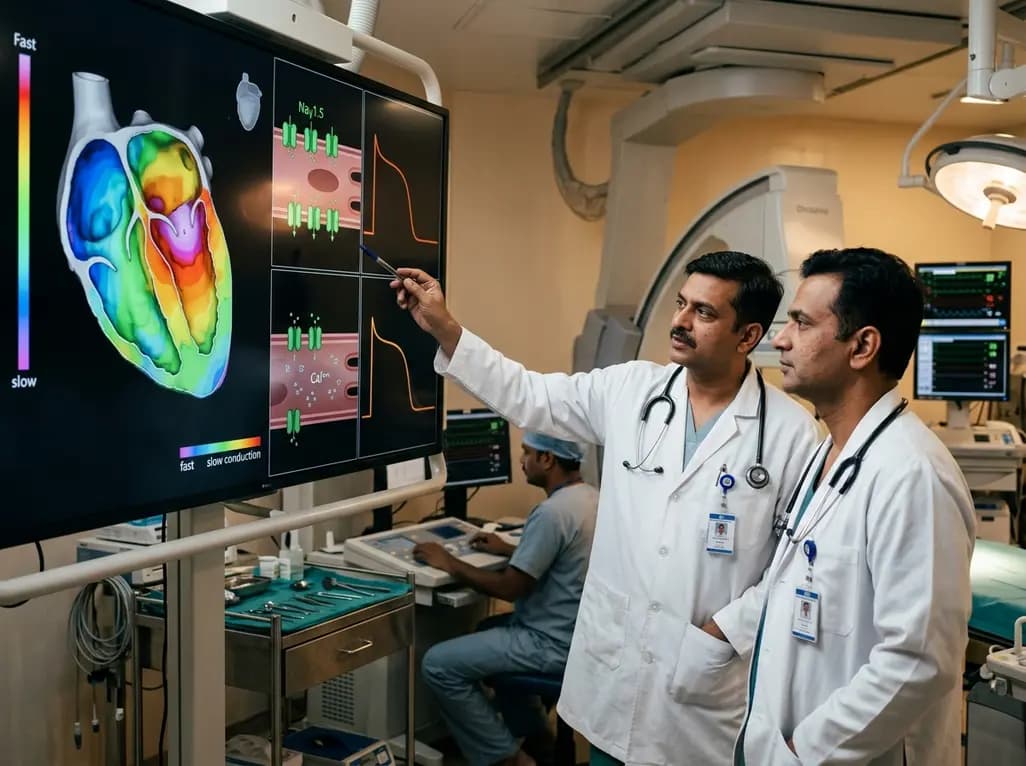
New research reveals that non-ablative radiotherapy suppresses ventricular tachycardia by increasing conduction velocity via NaV1.5 upregulation and action potential prolongation. However, sustained sodium current elevation and depressed calcium handling highlight the need for careful clinical translation.
6 days back

A single-cell transcriptomic atlas reveals how peripheral nerve injuries cause dorsal root ganglion remodeling. By evaluating proximal nerve crush and resection, researchers identify distinct glial and immune programs that resolve neuropathic pain and promote regeneration.
3 days back
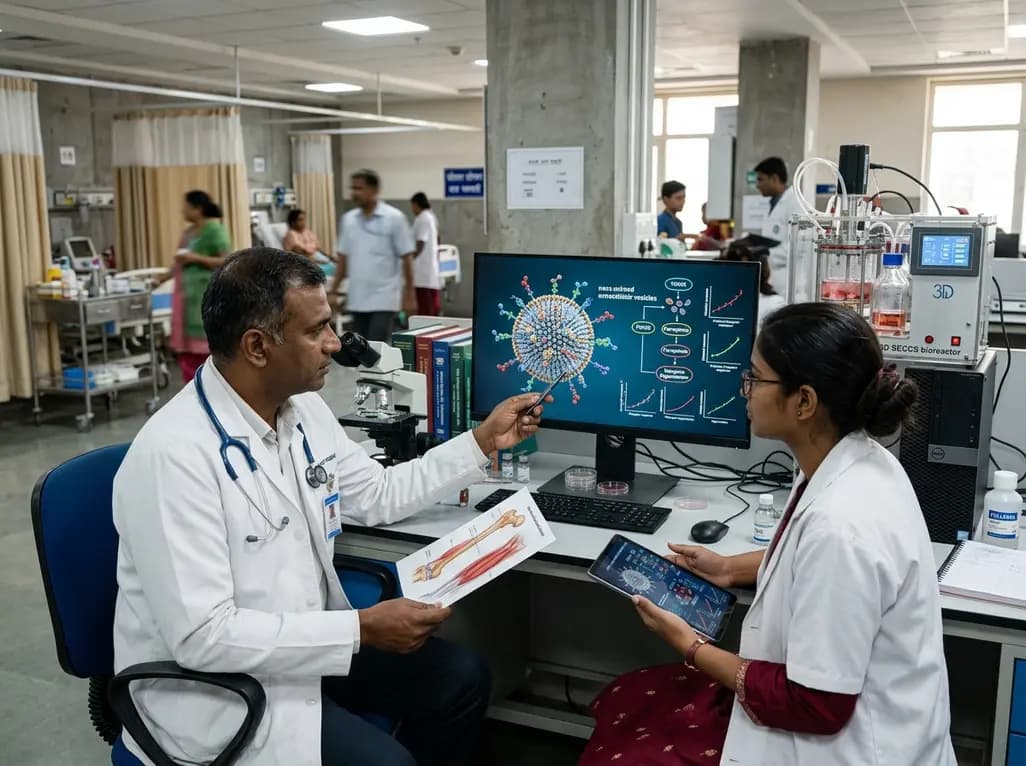
A breakthrough study demonstrates that fullerol-primed extracellular vesicles generated in a 3D SECCS bioreactor attenuate ferroptosis and restore myogenic regeneration in diabetes via the FOXO3 pathway, offering a cell-free therapeutic strategy for diabetic musculoskeletal degeneration.
3 days back
