.webp&w=384&q=75)

Loading, please wait...
Loading, please wait...

Accurately assessing fracture healing is vital for orthopedic trauma management, especially in high-energy injuries. This study investigated the reliability of the modified Radiographic Union Scale for Tibial Fractures (mRUST) scores ballistic trauma for assessing lower extremity injuries. Researchers focused on ballistic femoral and tibial shaft fractures treated with intramedullary nailing. The results provide clarity on how consistently surgeons can evaluate these challenging injuries during the healing phase.
The analysis involved three fellowship-trained orthopedic trauma surgeons evaluating over 350 radiograph sets. For ballistic femoral shaft fractures, the inter-rater reliability (Intraclass Correlation Coefficient, ICC) was 0.64. However, the intra-rater reliability was significantly higher at 0.87. Similarly, tibial shaft fractures showed an inter-rater ICC of 0.61 and an intra-rater ICC of 0.81. Consequently, while individual surgeons remain highly consistent with their own assessments, there is moderate variation between different observers. These metrics suggest that the scale is robust but requires standardized training for multi-user consistency.
Clinical decision-making often relies on early indicators of healing to prevent long-term disability. The study specifically evaluated the ability of 3-month post-operative mRUST scores ballistic trauma to predict union status at nine months. Identifying potential nonunion early allows for proactive surgical or pharmacological intervention. Furthermore, using a standardized scale like mRUST helps minimize subjective bias in the assessment of callus formation and cortical bridging. Surgeons can use these early markers to refine patient counseling and follow-up schedules.
The mRUST score provides a quantified method to track bone healing. In ballistic trauma, where injuries are often high-energy and complex, this scale offers a more objective assessment than general clinical impression. It helps surgeons identify progress or stagnation in healing by the three-month mark, allowing for earlier intervention if nonunion is suspected.
Intra-rater reliability refers to the consistency of a single surgeon’s scores over time, which was high in this study (0.81–0.87). Inter-rater reliability measures agreement between different surgeons, which was moderate (0.61–0.64). This suggests that while the scale is very consistent for individual monitoring, multidisciplinary teams should ensure they are aligned on interpretation when comparing scores from different raters.
Disclaimer: This content is for informational and educational purposes only... Refer to the latest local and national guidelines for clinical practice.
References
Sun P et al. Reliability of modified Radiographic Union Scale for Tibial Fractures (mRUST) Scores in Ballistic Lower Extremity Trauma. J Orthop Trauma. 2026 Jun 22. doi: 10.1097/BOT.0000000000003236. PMID: 42320012.
Litrenta J, et al. Determination of Radiographic Healing: An Assessment of Consistency, Reliability, and Validity of the modified Radiographic Union Scale for Tibia fractures (mRUST). J Orthop Trauma. 2015;29(11):516-20.
Mundi R, et al. Association of Three-Month Radiographic Union Score for Tibia Fractures (RUST) with Nonunion in Tibial Shaft Fracture Patients. Cureus. 2020;12(5):e8314.

Read summarized clinical updates, watch expert medical content, and earn CME certifications right from your smartphone.
Open your smartphone camera to scan and install.





Researchers evaluated the reliability of the modified Radiographic Union Scale for Tibial Fractures (mRUST) in 169 ballistic lower extremity fractures. Results show high intra-rater reliability and moderate inter-rater agreement, confirming mRUST as a viable tool for early nonunion prediction.
4 months ago

Depemokimab offers twice-yearly dosing for severe eosinophilic asthma and chronic rhinosinusitis with nasal polyps, significantly cutting exacerbations and hospital admissions.
2 days back

A novel copper metal-organic framework hydrogel remodels the uterine microenvironment to stimulate robust endometrial regeneration, reduce intrauterine fibrosis, and restore reproductive fertility, offering a groundbreaking strategy for managing refractory endometrial damage and Asherman syndrome.
3 days back
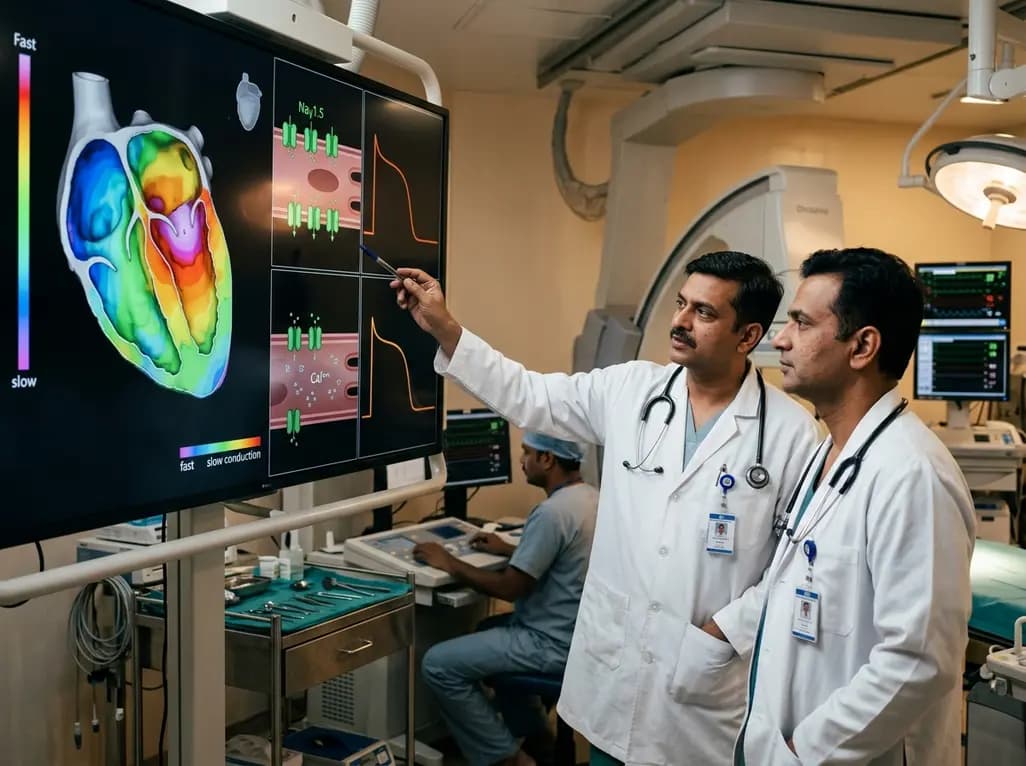
New research reveals that non-ablative radiotherapy suppresses ventricular tachycardia by increasing conduction velocity via NaV1.5 upregulation and action potential prolongation. However, sustained sodium current elevation and depressed calcium handling highlight the need for careful clinical translation.
5 days back

A single-cell transcriptomic atlas reveals how peripheral nerve injuries cause dorsal root ganglion remodeling. By evaluating proximal nerve crush and resection, researchers identify distinct glial and immune programs that resolve neuropathic pain and promote regeneration.
3 days back

A breakthrough study demonstrates that fullerol-primed extracellular vesicles generated in a 3D SECCS bioreactor attenuate ferroptosis and restore myogenic regeneration in diabetes via the FOXO3 pathway, offering a cell-free therapeutic strategy for diabetic musculoskeletal degeneration.
3 days back
