.webp&w=384&q=75)

Loading, please wait...
Loading, please wait...
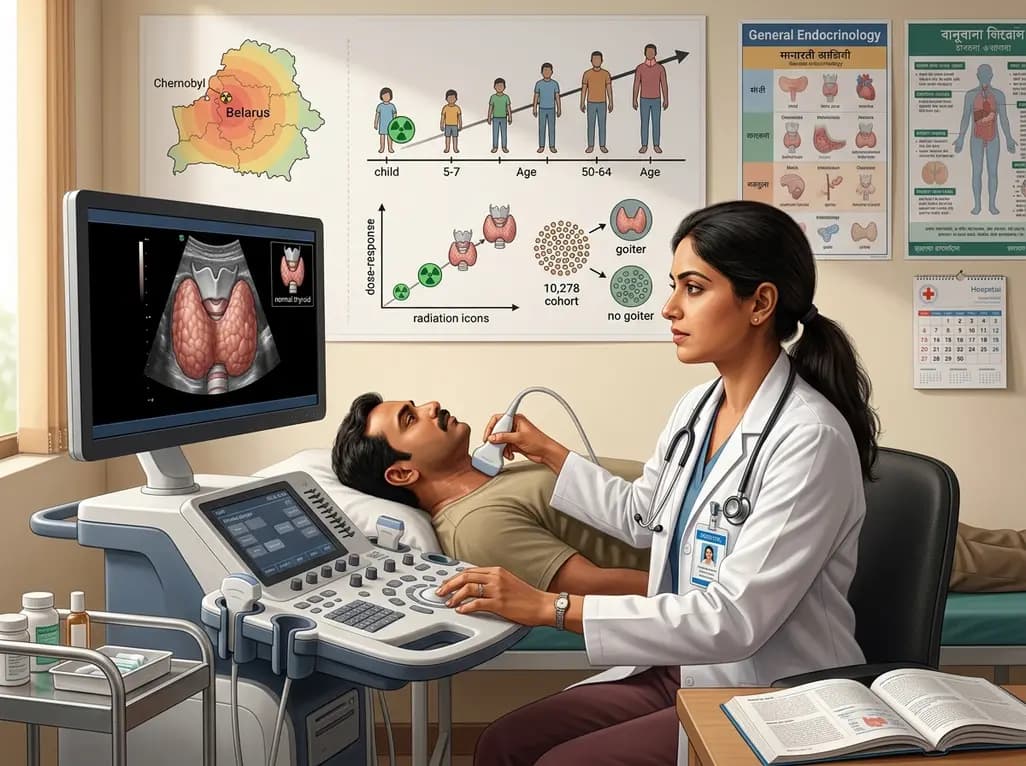
New research underscores the significant radiation risk diffuse goiter presents for individuals exposed to radioactive iodine during their youth. Scientists recently analyzed data from over 10,000 Belarusian participants who experienced iodine-131 (131I) exposure after the 1986 Chernobyl disaster. The findings clarify the complex relationship between radiation dose and benign thyroid conditions.
The study utilized logistic regression to evaluate thyroid health in a cohort with a mean dose of 0.63 gray (Gy). Notably, the results demonstrated a clear linear dose-response relationship between 131I and diffuse goiter development. For every 1 Gy of exposure, the odds ratio for developing a goiter reached 2.14. This statistical link remained robust even when researchers adjusted for regional iodine levels and other environmental factors.
Furthermore, the age at exposure played a critical role in determining future health outcomes. Children who were younger during the accident showed a much higher sensitivity to radiation. Consequently, the radiation risk diffuse goiter is most pronounced in those exposed during early childhood compared to those in their late teens. These individuals require more intensive monitoring as they reach adulthood.
This research carries vital implications for clinical practice and public health management. Previously, medical experts noted that individuals with diffuse goiter faced five times the risk of developing thyroid cancer. Therefore, understanding the origin of goiters in radiation-exposed populations helps clinicians identify high-risk patients earlier. Regular ultrasound screening and palpation remain essential tools for managing these cohorts effectively.
Moreover, the study confirms that the effects of I-131 persist for many decades. Physicians must remain vigilant even 15 years after the initial exposure event. By recognizing the linear nature of this risk, medical teams can better predict the burden of thyroid disease in affected communities. This proactive approach facilitates early intervention and potentially improves long-term outcomes for patients with related malignancies.
Younger children are much more susceptible to the effects of iodine-131. Their rapidly developing thyroid tissue absorbs more radiation, leading to a higher likelihood of developing goiters and other thyroid abnormalities later in life.
Individuals diagnosed with diffuse goiter following radiation exposure have a significantly higher risk—approximately five times—of developing thyroid cancer. Consequently, goiter serves as a critical clinical marker for increased oncological risk.
Disclaimer: This content is for informational and educational purposes only. It is not intended as a substitute for professional medical advice, diagnosis, or treatment. Always seek the advice of your physician or other qualified health provider with any questions you may have regarding a medical condition. Never disregard professional medical advice or delay in seeking it because of something you have read here. Refer to the latest local and national guidelines for clinical practice.
References

Read summarized clinical updates, watch expert medical content, and earn CME certifications right from your smartphone.
Open your smartphone camera to scan and install.





A study of 10,278 Belarusian individuals exposed to Chernobyl's I-131 as children finds a significant linear dose-response relationship between radiation and diffuse goiter risk. Younger age at exposure elevates this risk, highlighting the importance of long-term thyroid screening in exposed populations.
4 months ago

Depemokimab offers twice-yearly dosing for severe eosinophilic asthma and chronic rhinosinusitis with nasal polyps, significantly cutting exacerbations and hospital admissions.
3 days back

A novel copper metal-organic framework hydrogel remodels the uterine microenvironment to stimulate robust endometrial regeneration, reduce intrauterine fibrosis, and restore reproductive fertility, offering a groundbreaking strategy for managing refractory endometrial damage and Asherman syndrome.
4 days back
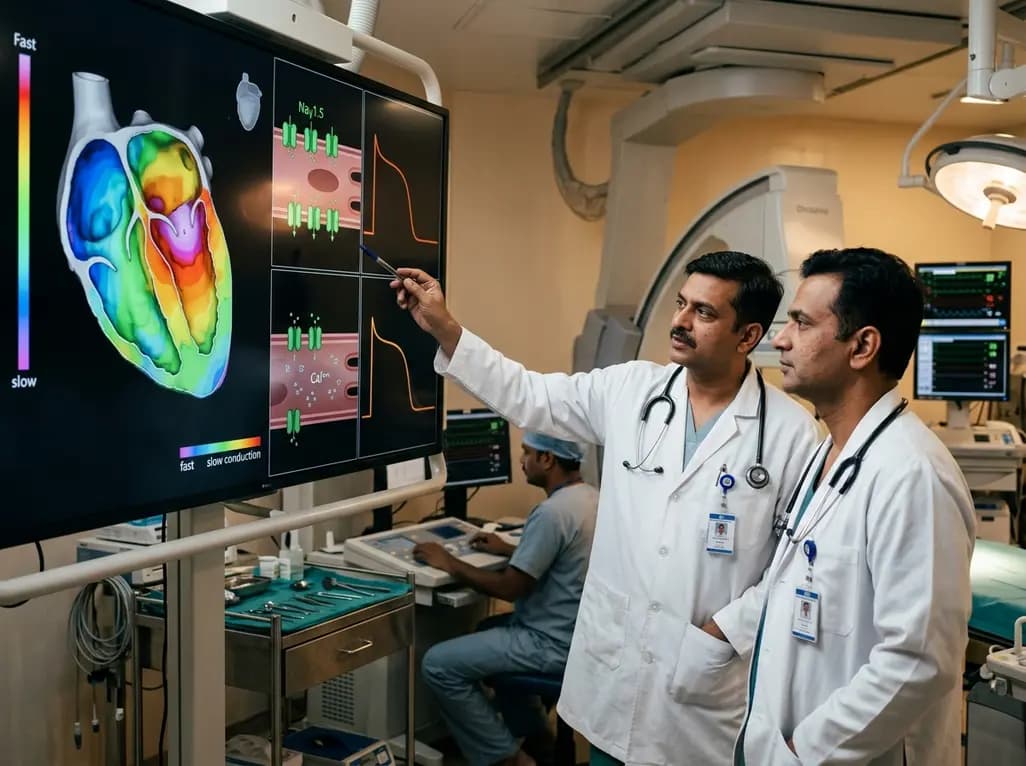
New research reveals that non-ablative radiotherapy suppresses ventricular tachycardia by increasing conduction velocity via NaV1.5 upregulation and action potential prolongation. However, sustained sodium current elevation and depressed calcium handling highlight the need for careful clinical translation.
6 days back

A single-cell transcriptomic atlas reveals how peripheral nerve injuries cause dorsal root ganglion remodeling. By evaluating proximal nerve crush and resection, researchers identify distinct glial and immune programs that resolve neuropathic pain and promote regeneration.
3 days back

A breakthrough study demonstrates that fullerol-primed extracellular vesicles generated in a 3D SECCS bioreactor attenuate ferroptosis and restore myogenic regeneration in diabetes via the FOXO3 pathway, offering a cell-free therapeutic strategy for diabetic musculoskeletal degeneration.
3 days back
