.webp&w=384&q=75)

Loading, please wait...
Loading, please wait...
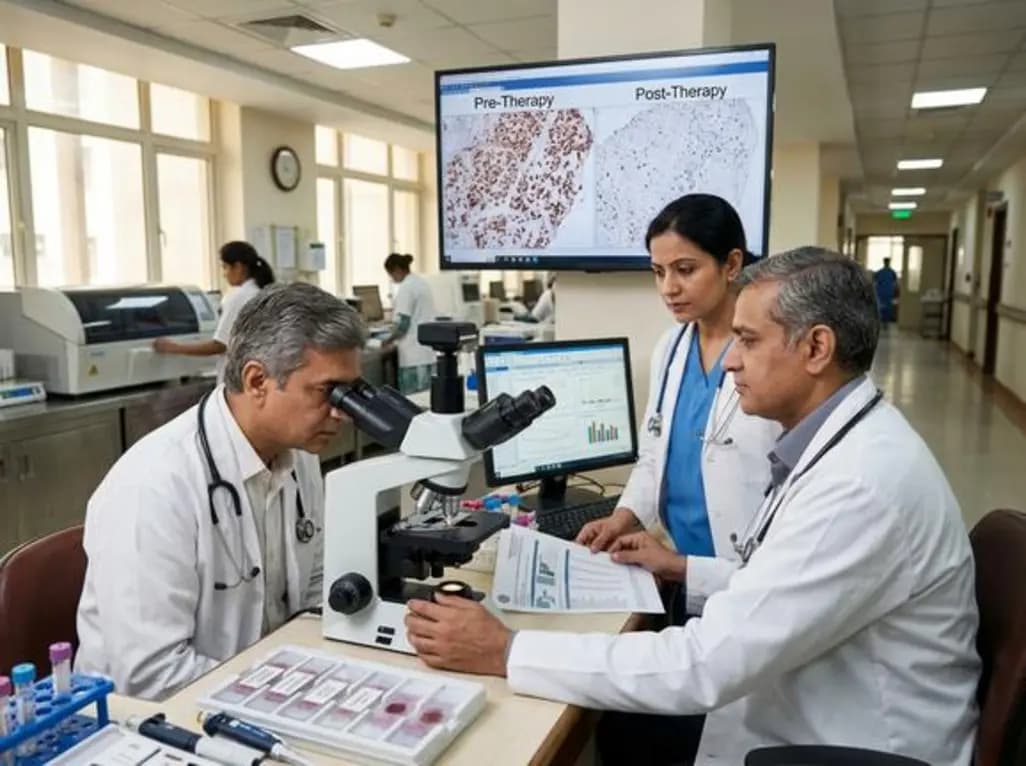
Short-course preoperative endocrine therapy response acts as a functional test for hormone-sensitive breast cancer. Clinicians increasingly use this brief window to evaluate how a tumor reacts before definitive surgery. This approach helps tailor subsequent management for individual patients. Research highlights significant changes in tumor morphology after brief exposure to endocrine agents. Most notably, the mitotic count decreases dramatically during this period.
In a recent retrospective study, nearly 74% of patients achieved a Ki67 level of 10% or less after treatment. This reduction serves as a primary indicator of treatment success. Conversely, patients who underwent primary surgery without therapy showed no such decline in proliferation markers. These findings suggest that even a median duration of 29 days triggers measurable biological changes.
Furthermore, the MammaPrint assay provides valuable genomic insights into these outcomes. Patients with low-risk genomic profiles are much more likely to respond favorably to endocrine agents. Additionally, high baseline progesterone receptor levels correlate with improved sensitivity. Interestingly, while epithelial cells change, stromal elements like tumor-infiltrating lymphocytes remain stable. Consequently, the primary focus of response monitoring remains on the epithelial component. These insights assist surgeons and oncologists in refining personalized treatment plans for early-stage breast cancer.
A decrease in Ki67 levels after endocrine therapy indicates that the treatment effectively inhibits cancer cell division. Specifically, a post-treatment Ki67 level of 10% or less suggests high sensitivity to hormone-based treatments.
The MammaPrint assay identifies the genomic risk of a tumor. Studies show that tumors with a low-risk genomic profile are significantly more likely to achieve a robust endocrine response compared to high-risk cases.
Disclaimer: This content is for informational and educational purposes only. It does not constitute medical advice or a substitute for professional healthcare consultations. Refer to the latest local and national guidelines for clinical practice.
References
Grosse C et al. Effects of short-course preoperative endocrine therapy on tumour morphology and immunohistochemical profile in oestrogen receptor-positive, HER2-negative breast cancer. Histopathology. 2026 Jun 18. doi: 10.1111/his.70203. PMID: 42315983.
Cleveland Clinic. Ki67 Protein Levels Predict Which Breast Cancer Patients Respond to Endocrine Therapy. Journal of Clinical Oncology. 2017.
Nardin S et al. Role of endocrine therapy in early-stage HR-positive breast cancer. ESMO Breast Cancer Annual Congress. 2024.

Read summarized clinical updates, watch expert medical content, and earn CME certifications right from your smartphone.
Open your smartphone camera to scan and install.





A study confirms that short-course preoperative endocrine therapy significantly reduces Ki67 levels in ER-positive breast cancer, with the MammaPrint assay acting as a key predictor of this functional response.
4 months ago

Depemokimab offers twice-yearly dosing for severe eosinophilic asthma and chronic rhinosinusitis with nasal polyps, significantly cutting exacerbations and hospital admissions.
3 days back

A novel copper metal-organic framework hydrogel remodels the uterine microenvironment to stimulate robust endometrial regeneration, reduce intrauterine fibrosis, and restore reproductive fertility, offering a groundbreaking strategy for managing refractory endometrial damage and Asherman syndrome.
4 days back

New research reveals that non-ablative radiotherapy suppresses ventricular tachycardia by increasing conduction velocity via NaV1.5 upregulation and action potential prolongation. However, sustained sodium current elevation and depressed calcium handling highlight the need for careful clinical translation.
6 days back

A single-cell transcriptomic atlas reveals how peripheral nerve injuries cause dorsal root ganglion remodeling. By evaluating proximal nerve crush and resection, researchers identify distinct glial and immune programs that resolve neuropathic pain and promote regeneration.
3 days back

A breakthrough study demonstrates that fullerol-primed extracellular vesicles generated in a 3D SECCS bioreactor attenuate ferroptosis and restore myogenic regeneration in diabetes via the FOXO3 pathway, offering a cell-free therapeutic strategy for diabetic musculoskeletal degeneration.
4 days back
