.webp&w=384&q=75)

Loading, please wait...
Loading, please wait...

Postoperative hallucinations cardiac surgery are a frequent but often overlooked complication that significantly impacts patient recovery. A recent multicenter prospective study, known as the VAACS study, has provided new insights into how hypertension (HTN) modifies the risk factors for these neuropsychiatric events. While the overall incidence of hallucinations remains similar between hypertensive and non-hypertensive groups, the specific independent predictors vary significantly based on the patient's vascular status.
Researchers found that in hypertensive patients, visual hallucinations were primarily predicted by a higher EuroSCORE II. This score reflects increased baseline surgical risk and clinical complexity. Additionally, patients undergoing heart valve surgery rather than coronary artery bypass grafting (CABG) faced a higher risk of these sensory disturbances. Interestingly, for auditory hallucinations, hyperlipidemia emerged as a significant independent predictor within this hypertensive group. Consequently, clinicians should maintain a higher index of suspicion for patients with complex cardiac histories and lipid imbalances.
Conversely, the predictors for patients without hypertension were markedly different. For this cohort, the duration of anesthesia served as the primary independent predictor for visual hallucinations. This suggests that the physiological stress of prolonged anesthetic exposure plays a larger role when cerebrovascular autoregulation is presumably more intact. Furthermore, hyperlipidemia was identified as a common predictor for visual hallucinations in non-hypertensive individuals, highlighting the importance of metabolic health across all patient types.
Medical teams must recognize these distinct risk profiles to improve early detection and intervention. By tailoring postoperative monitoring based on a patient's hypertensive status and surgical complexity, providers can better manage neuropsychiatric outcomes. Ensuring a quiet environment and reorienting patients early may mitigate the distress caused by these episodes and improve overall patient satisfaction.
While hallucinations are often a component of delirium, many patients experience isolated hallucinations without meeting the full clinical criteria for delirium. Hallucinations are sensory perceptions without external stimuli, whereas delirium involves a broader disturbance of consciousness, attention, and cognition.
Most postoperative hallucinations occur within the first seven days following surgery. They usually resolve within a few days as the effects of anesthesia and acute physiological stress diminish, though the psychological impact may persist longer.
Disclaimer: This content is for informational and educational purposes only. It does not constitute professional medical advice, diagnosis, or treatment. Always seek the advice of your physician or other qualified health provider with any questions you may have regarding a medical condition. Refer to the latest local and national guidelines for clinical practice.
References
1. Abu Khadija H et al. Predictors of postoperative visual and auditory hallucinations in hypertensive vs. non-hypertensive cardiac surgery patients: insights from the prospective multicenter VAACS study. J Cardiothorac Surg. 2026 Jun 16. doi: 10.1186/s13019-026-04396-z. PMID: 42304176.
2. Ottens TH et al. Hallucinations after cardiac surgery: A prospective observational study. Medicina. 2020;56(3):104.
3. Abu Khadija H et al. Hyperlipidemia and Postoperative Hallucinations After Cardiac Surgery: Insights from the VAACS Cohort Study. J Cardiothorac Surg. 2026.

Read summarized clinical updates, watch expert medical content, and earn CME certifications right from your smartphone.
Open your smartphone camera to scan and install.





The prospective VAACS study reveals that hypertension significantly alters the predictors of postoperative hallucinations after cardiac surgery. While EuroSCORE II and valve surgery predict issues in hypertensive patients, anesthesia duration is the key factor for non-hypertensive cohorts.
4 months ago

Depemokimab offers twice-yearly dosing for severe eosinophilic asthma and chronic rhinosinusitis with nasal polyps, significantly cutting exacerbations and hospital admissions.
3 days back

A novel copper metal-organic framework hydrogel remodels the uterine microenvironment to stimulate robust endometrial regeneration, reduce intrauterine fibrosis, and restore reproductive fertility, offering a groundbreaking strategy for managing refractory endometrial damage and Asherman syndrome.
3 days back
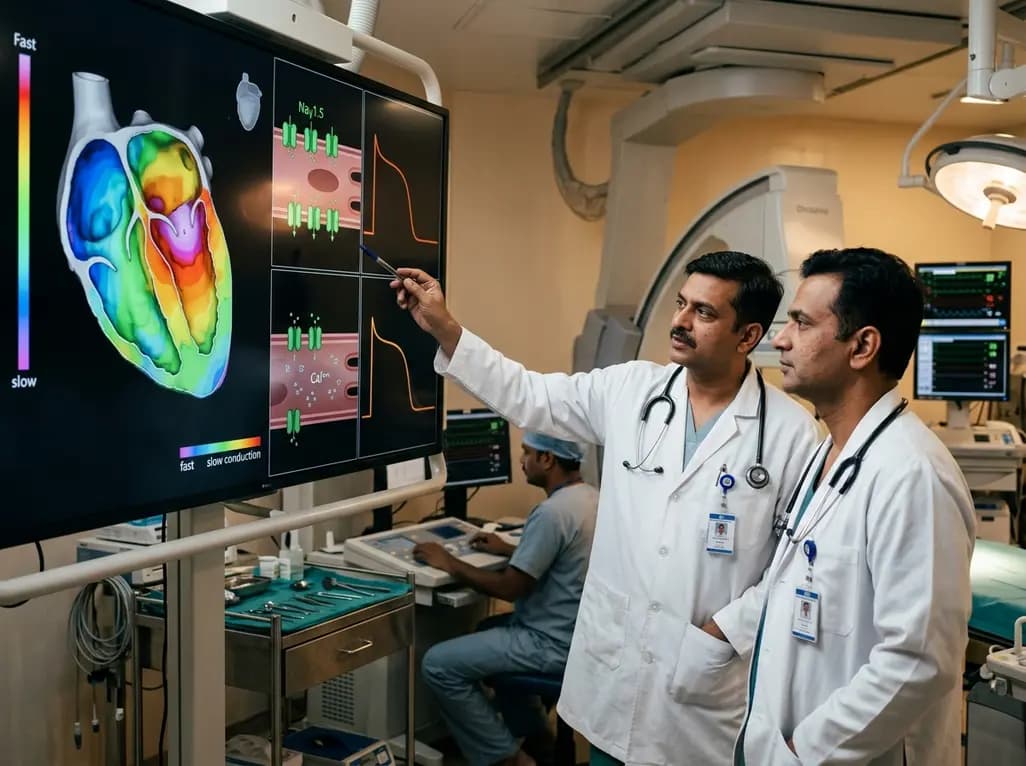
New research reveals that non-ablative radiotherapy suppresses ventricular tachycardia by increasing conduction velocity via NaV1.5 upregulation and action potential prolongation. However, sustained sodium current elevation and depressed calcium handling highlight the need for careful clinical translation.
5 days back

A single-cell transcriptomic atlas reveals how peripheral nerve injuries cause dorsal root ganglion remodeling. By evaluating proximal nerve crush and resection, researchers identify distinct glial and immune programs that resolve neuropathic pain and promote regeneration.
3 days back

A breakthrough study demonstrates that fullerol-primed extracellular vesicles generated in a 3D SECCS bioreactor attenuate ferroptosis and restore myogenic regeneration in diabetes via the FOXO3 pathway, offering a cell-free therapeutic strategy for diabetic musculoskeletal degeneration.
3 days back
