.webp&w=384&q=75)

Loading, please wait...
Loading, please wait...

Managing critically ill children on extracorporeal membrane oxygenation (ECMO) presents unique challenges, particularly regarding hematological support. Platelet transfusion in ECMO is a common intervention designed to mitigate the high risk of bleeding associated with the extracorporeal circuit. However, doctors often face uncertainty about which product characteristics most significantly impact the clinical effectiveness of these transfusions. A recent secondary analysis of the ECSTATIC trial has provided vital insights into how specific platelet attributes influence post-transfusion count increments in this vulnerable population.
The researchers conducted a detailed evaluation of various product factors, including the age of the platelet unit, the volume transfused, and ABO compatibility. These factors are crucial because the ECMO circuit itself can lead to platelet consumption and dysfunction. Furthermore, the study aimed to identify whether certain types of platelet products, such as apheresis versus pooled units, yielded better results. Consequently, understanding these variables helps clinicians optimize transfusion strategies and manage resources more effectively in the pediatric intensive care unit.
The study results revealed that several product-related factors significantly influence the success of a transfusion. For example, the age of the platelet product played a measurable role in the resulting count increment. Fresher units generally provided a more robust response compared to older units. Additionally, the volume of platelets administered per kilogram of patient weight remained a primary driver of the post-transfusion count change. Therefore, pediatric intensivists must carefully consider these parameters when ordering blood products for patients on life support.
Moreover, the analysis highlighted the complexities of ABO compatibility in the ECMO setting. While minor mismatches occur frequently, they may impact the overall count increment more than previously suspected. Indeed, the study suggests that a standardized approach to selecting platelet products could improve hemostatic management. These findings are particularly relevant for Indian healthcare settings where platelet availability and product types can vary significantly across different centers. Ultimately, refining these transfusion practices can lead to better patient safety and reduced exposure to unnecessary blood products.
In summary, the characteristics of the platelet product are not merely administrative details but vital clinical variables. Clinicians should prioritize fresher units when possible and ensure precise weight-based dosing to achieve desired count increments. This analysis underscores the need for ongoing research into specialized transfusion protocols tailored for children on ECMO. By focusing on high-quality product selection, medical teams can better balance the risks of bleeding and thrombosis in critically ill pediatric patients.
Research suggests that fresher platelet products generally lead to a higher post-transfusion count increment compared to older units, as older platelets may have reduced viability and function within the ECMO circuit.
The ECMO circuit causes mechanical stress and activates platelets, leading to rapid consumption. This environment makes it difficult to maintain stable platelet counts despite frequent transfusions.
Yes, while non-identical transfusions are often performed, the secondary analysis of the ECSTATIC trial indicates that compatibility can influence the effectiveness of the count increment.
Disclaimer: This content is for informational and educational purposes only. It does not constitute professional medical advice, diagnosis, or treatment. Always seek the advice of your physician or other qualified healthcare provider with any questions you may have regarding a medical condition. Refer to the latest local and national guidelines for clinical practice.
References
Karam O et al. Impact of platelet characteristics on post-transfusion count response in critically ill children on Extracorporeal Membrane Oxygenation: A secondary analysis of the ECSTATIC trial. Transfusion. 2026 Jun 18. doi: 10.1111/trf.70299. PMID: 42313454.
Nellis ME et al. Platelet Transfusion Thresholds for Children Supported by Extracorporeal Membrane Oxygenation: The ECSTATIC Feasibility Clinical Trial. Crit Care Med. 2026 Mar 1;54(3):410-421. doi: 10.1097/CCM.0000000000006995.
Muszynski JA et al. Pediatric Critical Care Transfusion and Coagulation Management. Crit Care Clin. 2017;33(4):881-891. doi: 10.1016/j.ccc.2017.06.001.

Read summarized clinical updates, watch expert medical content, and earn CME certifications right from your smartphone.
Open your smartphone camera to scan and install.





This secondary analysis of the ECSTATIC trial investigates how specific platelet product characteristics, such as age and volume, affect the count increment response in critically ill children receiving ECMO support.
4 months ago

Depemokimab offers twice-yearly dosing for severe eosinophilic asthma and chronic rhinosinusitis with nasal polyps, significantly cutting exacerbations and hospital admissions.
4 days back

A novel copper metal-organic framework hydrogel remodels the uterine microenvironment to stimulate robust endometrial regeneration, reduce intrauterine fibrosis, and restore reproductive fertility, offering a groundbreaking strategy for managing refractory endometrial damage and Asherman syndrome.
4 days back
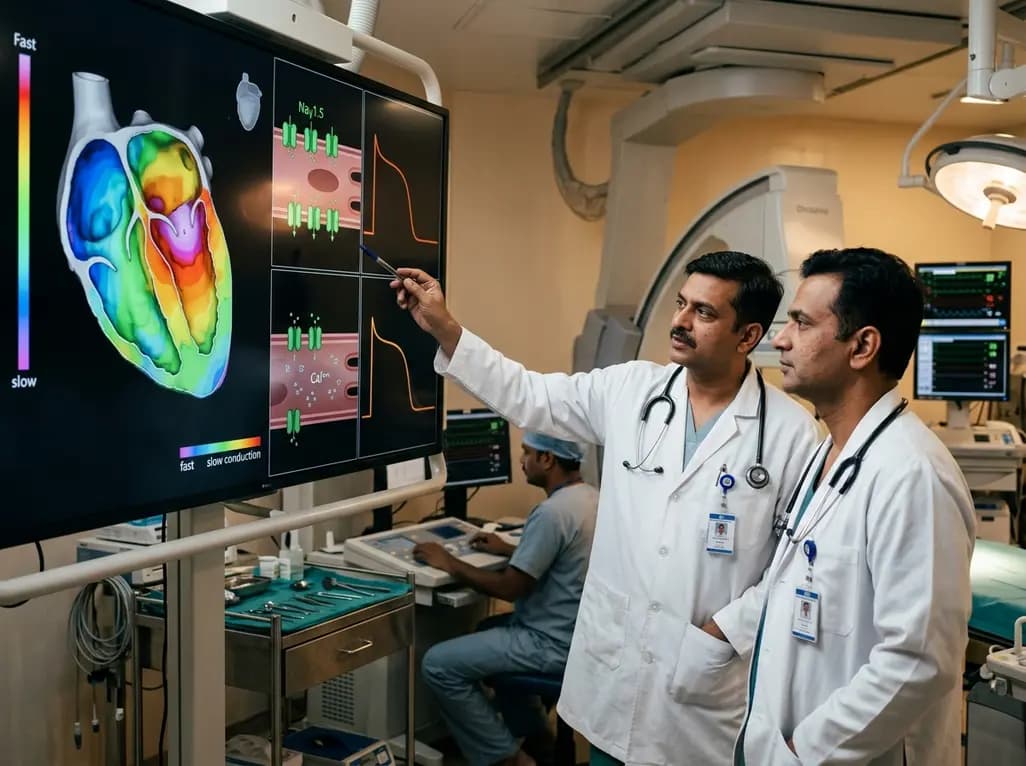
New research reveals that non-ablative radiotherapy suppresses ventricular tachycardia by increasing conduction velocity via NaV1.5 upregulation and action potential prolongation. However, sustained sodium current elevation and depressed calcium handling highlight the need for careful clinical translation.
6 days back

A single-cell transcriptomic atlas reveals how peripheral nerve injuries cause dorsal root ganglion remodeling. By evaluating proximal nerve crush and resection, researchers identify distinct glial and immune programs that resolve neuropathic pain and promote regeneration.
4 days back

A breakthrough study demonstrates that fullerol-primed extracellular vesicles generated in a 3D SECCS bioreactor attenuate ferroptosis and restore myogenic regeneration in diabetes via the FOXO3 pathway, offering a cell-free therapeutic strategy for diabetic musculoskeletal degeneration.
4 days back
