.webp&w=384&q=75)

Loading, please wait...
Loading, please wait...

Researchers at Colorado State University have developed LightPro, a fully programmable linear photonic processor. This innovation marks a significant leap in photonic AI acceleration, optimizing deep neural networks for clinical use. Traditional silicon chips often face physical scaling limits due to optical losses and crosstalk noise. Consequently, hardware like Mach-Zehnder interferometers requires a prohibitive footprint. LightPro solves these issues by integrating a neural architecture search (NAS) framework with tunable phase-change materials.
The integration of artificial intelligence into radiology and cardiology has increased the demand for high-performance hardware. Specifically, matrix-vector multiplication (MVM) serves as the primary computational bottleneck for neural networks. LightPro utilizes nonvolatile phase-change materials to modulate optical splitting ratios with extreme precision. Furthermore, this approach eliminates the need for continuous power draws to maintain device states. Notably, system evaluations reveal an 85% reduction in physical footprint compared to conventional devices.
The shift toward photonic AI acceleration represents a green revolution for medical imaging centers in India. For instance, high-volume radiology departments require immense computing power to process MRI and CT scans. By using light instead of electricity, LightPro reduces power consumption by over 50%. This efficiency ensures that diagnostic AI can run on smaller, more affordable hardware. Consequently, healthcare providers can deploy advanced screening tools even in resource-limited settings. Additionally, experimental prototyping validates that LightPro maintains high computational accuracy with minimal degradation.
Moreover, the programmability of the LightPro architecture allows it to adapt to various datasets, including handwritten digits and Gaussian distributions. This versatility is crucial for medical AI, which must handle diverse patient data types. Therefore, LightPro establishes a scalable pathway for next-generation accelerators. Finally, this technology promises to minimize the carbon footprint of digital healthcare while maximizing diagnostic speed.
A linear photonic processor is a type of computing hardware that uses light (photons) instead of electricity (electrons) to perform mathematical operations. It is particularly efficient at matrix-vector multiplications, which are essential for running AI algorithms.
LightPro offers a massive 85% reduction in size and a 50% reduction in power use. This allows high-speed AI diagnostic tools to be integrated into portable medical devices, making advanced imaging more accessible in India.
While GPUs remain versatile, photonic processors like LightPro are likely to act as specialized accelerators. They handle the most energy-intensive AI tasks faster and more efficiently than traditional silicon-based chips.
Disclaimer: This content is for informational and educational purposes only. It does not constitute medical advice or endorse any specific technology for clinical use. Refer to the latest local and national guidelines for clinical practice.
References
Shafiee A et al. LightPro: a linear photonic processor with full programmability. Commun Eng. 2026 Jun 17. doi: 10.1038/s44172-026-00707-3. PMID: 42310466.
Zhang H et al. Tunable phosphorene modulators – accelerating medical diagnosis with ultra-efficient photonic platforms. Opt-Electron Adv. 2026 May 28. doi: 10.29026/oea.2026.250012.

Read summarized clinical updates, watch expert medical content, and earn CME certifications right from your smartphone.
Open your smartphone camera to scan and install.





LightPro is a revolutionary linear photonic processor designed to optimize AI scalability and power efficiency. Using phase-change materials, it achieves an 85% footprint reduction, paving the way for high-speed, energy-efficient medical AI diagnostics and next-generation neural network hardware.
4 months ago

Depemokimab offers twice-yearly dosing for severe eosinophilic asthma and chronic rhinosinusitis with nasal polyps, significantly cutting exacerbations and hospital admissions.
3 days back

A novel copper metal-organic framework hydrogel remodels the uterine microenvironment to stimulate robust endometrial regeneration, reduce intrauterine fibrosis, and restore reproductive fertility, offering a groundbreaking strategy for managing refractory endometrial damage and Asherman syndrome.
3 days back
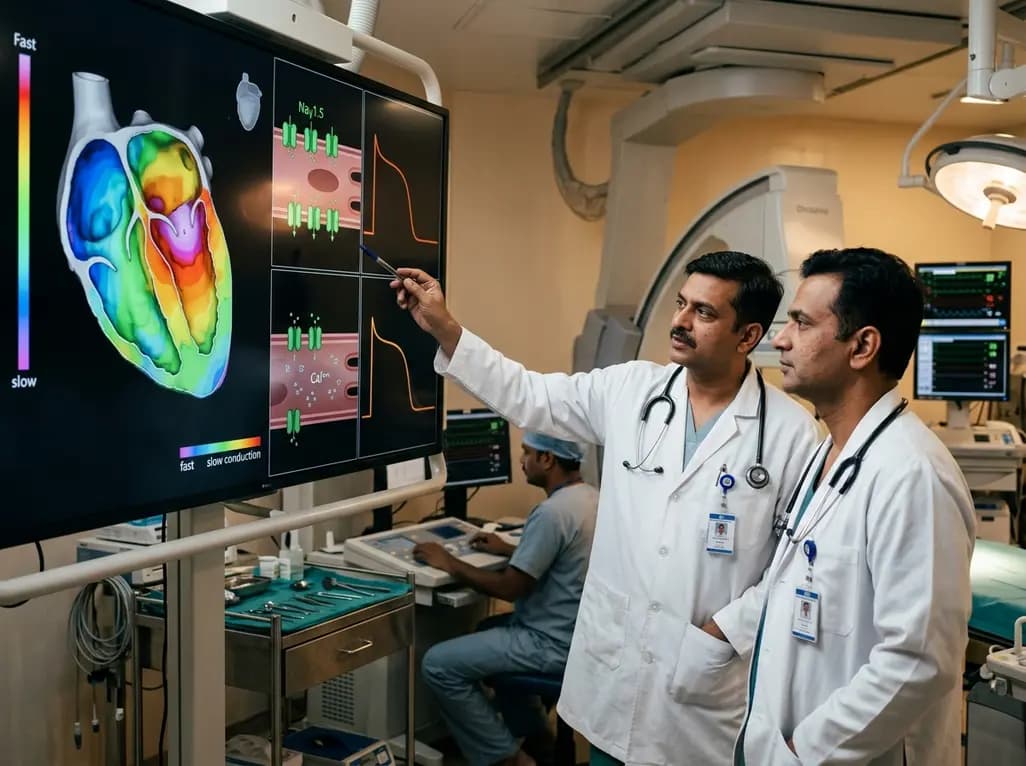
New research reveals that non-ablative radiotherapy suppresses ventricular tachycardia by increasing conduction velocity via NaV1.5 upregulation and action potential prolongation. However, sustained sodium current elevation and depressed calcium handling highlight the need for careful clinical translation.
5 days back

A single-cell transcriptomic atlas reveals how peripheral nerve injuries cause dorsal root ganglion remodeling. By evaluating proximal nerve crush and resection, researchers identify distinct glial and immune programs that resolve neuropathic pain and promote regeneration.
3 days back

A breakthrough study demonstrates that fullerol-primed extracellular vesicles generated in a 3D SECCS bioreactor attenuate ferroptosis and restore myogenic regeneration in diabetes via the FOXO3 pathway, offering a cell-free therapeutic strategy for diabetic musculoskeletal degeneration.
3 days back
