.webp&w=384&q=75)

Loading, please wait...
Loading, please wait...
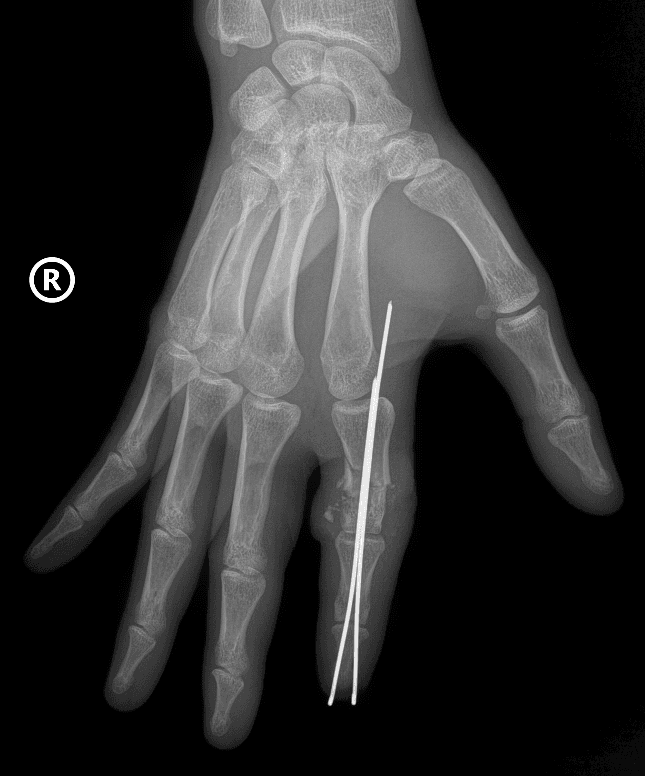
Scaphoid waist fractures are vulnerable to delayed union and nonunion because of the bone's blood supply and the mechanical demands placed on the wrist. A prospective randomized study compared percutaneous screw fixation with cast immobilisation in acute scaphoid waist fractures. Patients treated with percutaneous fixation achieved radiographic union faster than those managed in a cast, while also benefiting from earlier functional recovery. The trial is especially relevant to active patients in whom prolonged immobilisation has a meaningful occupational or sporting cost. At the same time, percutaneous fixation is not appropriate for every fracture. Stability, displacement, comminution, surgeon experience and the risk of complications must be considered. The paper demonstrates how minimally invasive fixation can provide a mechanical advantage without necessarily requiring open exposure of the fracture. For clinicians, the main takeaway is to match treatment to fracture morphology and patient priorities. When a scaphoid waist fracture is suitable for stable percutaneous fixation, earlier union and recovery may justify operative treatment. The decision should still incorporate high-quality imaging and a clear discussion of the benefits and risks of surgery versus immobilisation.

Read summarized clinical updates, watch expert medical content, and earn CME certifications right from your smartphone.
Open your smartphone camera to scan and install.





Scaphoid waist fractures are vulnerable to delayed union and nonunion because of the bone's blood supply and the mechanical demands placed on the wrist. A prospective randomized study compared percutaneous screw fixation with cast immobilisation in acute scaphoid waist fractures. Patients treated with percutaneous fixation achieved radiographic union faster than those managed in a cast, while also benefiting from earlier functional recovery. The trial is especially relevant to active patients in whom prolonged immobilisation has a meaningful occupational or sporting cost. At the same time, percutaneous fixation is not appropriate for every fracture. Stability, displacement, comminution, surgeon experience and the risk of complications must be considered. The paper demonstrates how minimally invasive fixation can provide a mechanical advantage without necessarily requiring open exposure of the fracture. For clinicians, the main takeaway is to match treatment to fracture morphology and patient priorities. When a scaphoid waist fracture is suitable for stable percutaneous fixation, earlier union and recovery may justify operative treatment. The decision should still incorporate high-quality imaging and a clear discussion of the benefits and risks of surgery versus immobilisation.
3 weeks back

Discover how catalytic nanozymes redefine autoimmune disease therapy by establishing a physiological redox set-point to restore immune tolerance without broad immunosuppression.
Last week

Recent research reveals that downregulating YAP1/TAZ-TEAD via Hippo signaling triggers spontaneous human trophoblast syncytialization in 3D cultures, illuminating placental biology and preeclampsia.
3 weeks back

A landmark comparative study evaluates atrial electrophysiology across humans, swine, and rodents. By linking cellular recordings with transcriptomics and in silico modeling, researchers resolve cross-species gaps, explaining translational failures to advance targeted therapies for atrial arrhythmias.
3 weeks back

A novel pathology-adaptive surface engineering strategy uses functionalized plasma polymer coatings to selectively modulate AGE adsorption, reducing oxidative stress and restoring bone formation in diabetic and aging microenvironments.
last month
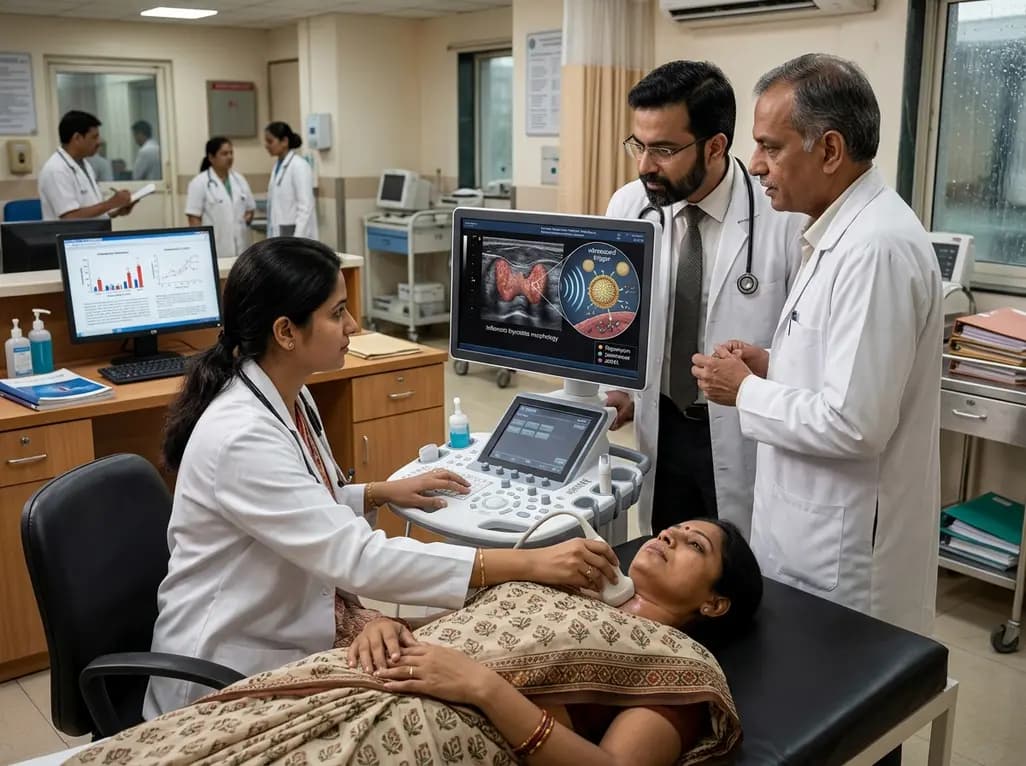
Researchers have developed an innovative ultrasound-responsive nano-contrast agent that co-delivers CIITA-siRNA and rapamycin directly to inflamed thyroid tissue, significantly reducing autoimmune injury and thyroid autoantibodies in preclinical models of Hashimoto thyroiditis.
3 weeks back
