.webp&w=384&q=75)

Loading, please wait...
Loading, please wait...
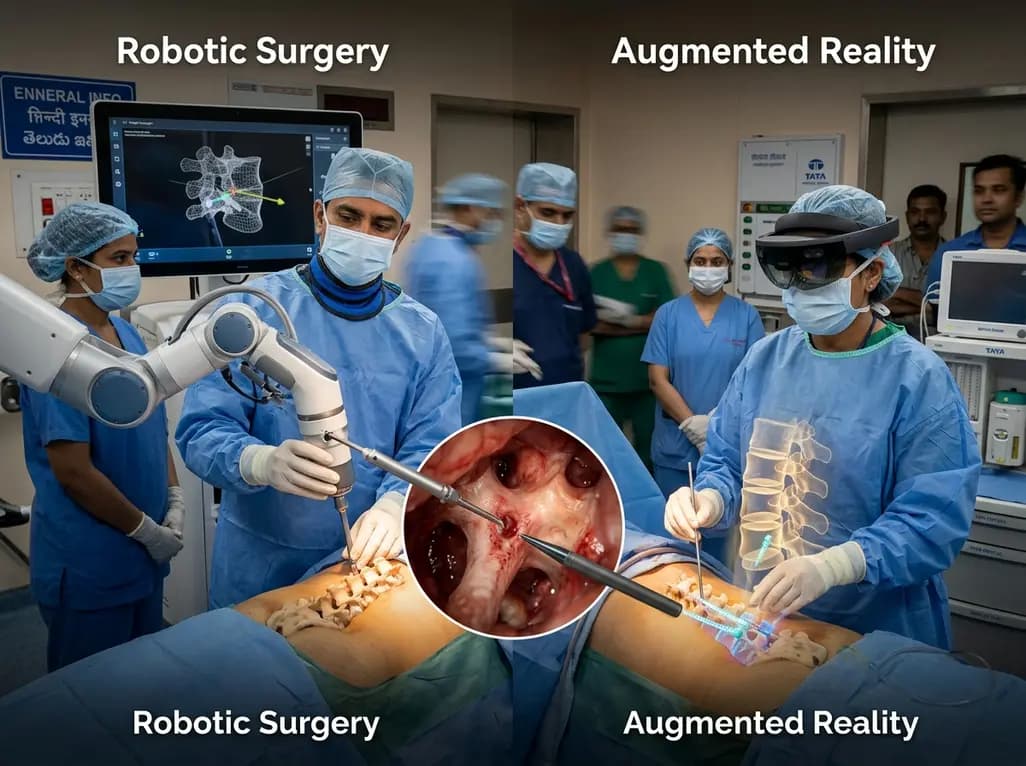
Pedicle screw placement accuracy remains a fundamental determinant of surgical success in lumbosacral spinal instrumentation procedures. Historically, surgeons relied on conventional free-hand techniques, which carried higher risks of cortical breach and neurovascular injury. However, recent technological advancements have introduced robotic-assisted navigation and head-mounted augmented reality to improve surgical precision. Both innovative platforms significantly enhance anatomical visualization and instrument tracking during complex spinal reconstructive procedures. Consequently, modern spine surgeons frequently utilize these advanced digital solutions to optimize clinical outcomes, minimize intraoperative radiation exposure, and improve patient safety across diverse surgical settings.
Surgical management of lumbosacral degenerative conditions often requires stable pedicle screw fixation to achieve solid arthrodesis. Over the past decade, image-guided navigation systems have reshaped operative workflows by providing real-time anatomical feedback. Robotic-assisted navigation combines rigid mechanical arms with computerized trajectory planning software, allowing precise pre-planned drilling and screw insertion. In contrast, augmented reality headsets project three-dimensional anatomical images directly onto the surgeon's visual field, overlaying virtual representations onto actual patient anatomy.
Both technological modalities aim to eliminate human error associated with subtle anatomical variations and obscured landmarks. While both tools demonstrate clinical superiority over traditional free-hand placement, surgical teams previously lacked direct comparative evidence regarding their relative precision. Understanding these comparative performance metrics is essential for hospitals and surgical departments deciding where to invest resources. Additionally, evaluating these tools helps clinicians tailor technology selection based on specific anatomical challenges and patient pathologies. Consequently, evaluating intraoperative performance across large patient cohorts offers vital guidance for contemporary spinal care.
To rigorously evaluate pedicle screw placement accuracy, investigators conducted a prospective clinical and radiographic study comparing robotic-assisted navigation against head-mounted augmented reality. The investigation focused on adult patients undergoing lumbosacral spinal instrumentation from L1 to S1 for various degenerative conditions. Two independent reviewers evaluated post-insertion intraoperative three-dimensional fluoroscopic scans using the standardized Gertzbein and Robbins grading scale.
This classification system categorizes screw positioning based on cortical breach distance, where Grade A represents perfect intra-pedicular placement without any breach. Grade B represents a breach of less than two millimeters, while Grades C and D reflect progressively larger cortical breaches exceeding acceptable margins. In addition, statistical analysts utilized a generalized linear mixed model to account for potential confounding variables and nested patient data. By evaluating over twelve hundred pedicle screws across more than two hundred surgical cases, researchers established a robust framework to evaluate accuracy differences objectively between robotic-assisted systems and augmented reality platforms in real-world clinical environments.
The prospective study analyzed two hundred and twelve patients receiving a total of twelve hundred and eleven lumbosacral pedicle screws. Within this cohort, robotic-assisted navigation guided the placement of eight hundred and twenty-seven screws across one hundred and eight patients. Meanwhile, augmented reality supported three hundred and eighty-four screws across one hundred and four patients. Overall, the study demonstrated exceptional safety standards, with Grade A accuracy achieved in ninety-two point six percent of all placed screws.
Furthermore, when examining clinically acceptable screw placement—defined as combined Grade A and Grade B screws—both modalities performed exceptionally well without statistical divergence. Robotic-assisted navigation achieved acceptable accuracy in ninety-nine point six percent of screws, while augmented reality achieved ninety-eight point seven percent. Consequently, inaccurate screw rates requiring potential correction remained remarkably low in both groups. However, when evaluating optimal Grade A placement alone, robotic navigation demonstrated a statistically significant advantage over augmented reality. Specifically, robotic navigation achieved optimal positioning in ninety-five point two percent of screws compared to eighty-nine point eight percent in augmented reality cases, highlighting subtle mechanical advantages in trajectory execution.
These comparative findings carry significant practical implications for orthopedic and neurological spine surgeons adopting advanced intraoperative guidance systems. Both robotic-assisted navigation and augmented reality provide outstanding overall accuracy, far exceeding historical benchmarks reported for free-hand techniques. Consequently, clinical teams can confidently utilize either platform to maintain high safety standards and minimize catastrophic neurological or vascular complications during lumbosacral instrumentation.
However, the statistically significant superiority of robotic guidance in achieving optimal Grade A placement warrants detailed consideration. Robotic systems utilize rigid guidance arms that actively reduce manual tremor and involuntary mechanical deflection during pedicle preparation. Conversely, augmented reality relies on optical heads-up displays where instrument guidance still depends entirely on manual free-hand execution by the surgeon. Therefore, while augmented reality offers superior line-of-sight ergonomics and eliminates line-of-sight obstruction issues common to traditional navigation displays, robotic guidance provides physical trajectory constraint that translates into higher rates of perfect intra-pedicular screw trajectories. Surgical teams must weigh these ergonomic and mechanical tradeoffs when choosing optimal tools.
As digital health technology continues to evolve, the integration of robotics and augmented reality represents the logical next step for complex spine surgery. Future system iterations may combine the rigid mechanical guidance of robotic arms with the intuitive visual overlays provided by augmented reality headsets. Such hybrid platforms could offer unprecedented intraoperative control, allowing surgeons to visualize concealed anatomical structures while simultaneously benefiting from robotic trajectory stabilization.
Additionally, ongoing software enhancements, artificial intelligence-driven trajectory planning, and refined registration algorithms will likely narrow the performance gap between visual navigation and robotic execution. As training programs incorporate these advanced modalities into surgical residency and fellowship curricula, operating room efficiency will continue to improve. Ultimately, both technologies significantly advance patient safety and surgical precision in spinal arthrodesis. As clinical adoption expands globally, ongoing prospective registries will further clarify long-term functional outcomes, cost-effectiveness, and operative efficiency across diverse clinical settings and patient populations.
Robotic navigation utilizes mechanical arms and computerized guidance software to direct instrument trajectories during surgery. In contrast, augmented reality projects three-dimensional anatomical images directly onto a surgeon's headset, superimposing digital navigation maps over the patient's actual anatomy while the surgeon manually manipulates surgical instruments.
While both techniques demonstrate excellent overall accuracy, robotic-assisted navigation achieves a statistically higher rate of optimal Grade A pedicle screw placements compared to augmented reality. This difference is primarily attributed to the physical trajectory stabilization provided by robotic guidance arms during pedicle drilling and screw insertion.
Yes, both modalities are highly safe and effective. Recent clinical studies show that both robotic-assisted navigation and augmented reality achieve clinically acceptable accuracy rates exceeding ninety-eight percent, significantly reducing the risk of cortical breaches and neurovascular complications compared to traditional free-hand placement techniques.
Disclaimer: This content is for informational and educational purposes only and does not constitute medical advice, diagnosis, or treatment. Always seek the advice of a qualified healthcare provider with any questions you may have regarding a medical condition or clinical procedure. Refer to the latest local and national guidelines for clinical practice.
References

Read summarized clinical updates, watch expert medical content, and earn CME certifications right from your smartphone.
Open your smartphone camera to scan and install.





A comparative prospective study evaluates pedicle screw placement accuracy between robotic-assisted navigation and augmented reality in lumbosacral spine surgery.
2 months ago

Depemokimab offers twice-yearly dosing for severe eosinophilic asthma and chronic rhinosinusitis with nasal polyps, significantly cutting exacerbations and hospital admissions.
3 days back

A novel copper metal-organic framework hydrogel remodels the uterine microenvironment to stimulate robust endometrial regeneration, reduce intrauterine fibrosis, and restore reproductive fertility, offering a groundbreaking strategy for managing refractory endometrial damage and Asherman syndrome.
3 days back
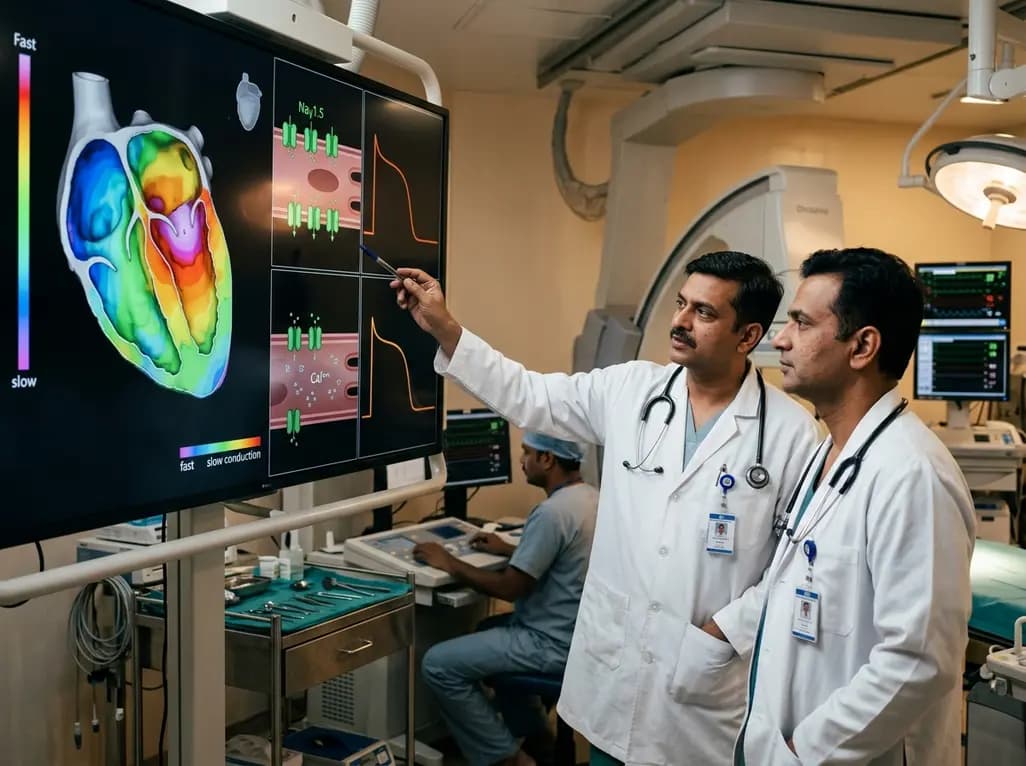
New research reveals that non-ablative radiotherapy suppresses ventricular tachycardia by increasing conduction velocity via NaV1.5 upregulation and action potential prolongation. However, sustained sodium current elevation and depressed calcium handling highlight the need for careful clinical translation.
5 days back

A single-cell transcriptomic atlas reveals how peripheral nerve injuries cause dorsal root ganglion remodeling. By evaluating proximal nerve crush and resection, researchers identify distinct glial and immune programs that resolve neuropathic pain and promote regeneration.
3 days back

A breakthrough study demonstrates that fullerol-primed extracellular vesicles generated in a 3D SECCS bioreactor attenuate ferroptosis and restore myogenic regeneration in diabetes via the FOXO3 pathway, offering a cell-free therapeutic strategy for diabetic musculoskeletal degeneration.
3 days back
