.webp&w=384&q=75)

Loading, please wait...
Loading, please wait...

Hepatocellular carcinoma remains a highly lethal malignancy worldwide. It poses severe challenges due to high recurrence rates, late diagnosis, and rapid metastatic progression. Traditional systemic monotherapies frequently yield limited efficacy due to dense tumor stroma, poor drug accumulation, and intense immunosuppressive microenvironments. Consequently, clinicians urgently require advanced strategies that enhance targeted delivery while overcoming drug resistance. To address these obstacles, scientists developed innovative approaches using HCC targeted nanomedicine. These platforms integrate multiple therapeutic modalities into single nanocarriers. Recent breakthroughs showcase multifunctional nanostructures capable of dynamically responding to specific microenvironmental signals. Thus, these systems significantly improve drug accumulation inside primary hepatic tumors while minimizing systemic toxicities. By utilizing covalent organic frameworks, researchers can systematically load multiple therapeutic drugs into stable porous structures. Moreover, these systems combine active targeting with light-triggered photodynamic activation. Ultimately, HCC targeted nanomedicine offers a transformative strategy for combating aggressive primary hepatic malignancies effectively.
Selectively delivering drugs to tumor cells without harming healthy liver tissue represents a major challenge. Researchers addressed this hurdle by engineering a dual-targeting nanoparticle system named SC@GRT-COF-366. Specifically, this platform features Gal-D5HT surface modifications that recognize two distinct target molecules. First, the platform targets asialoglycoprotein receptors, which are overexpressed on hepatocellular carcinoma cells. Second, the system exploits myeloperoxidase, an enzyme abundant within inflammatory stroma. When nanoparticles enter inflammatory tumor microenvironments, localized myeloperoxidase triggers nanoparticle aggregation. Consequently, this reaction causes smaller particles to coalesce into larger structures, trapping them inside hepatic tumor tissue. Meanwhile, galactose moieties bind asialoglycoprotein receptors to facilitate rapid endocytosis into tumor cells. Therefore, this dual-targeting mechanism operates sequentially to ensure precise tumor localization. Furthermore, this cooperative targeting strategy dramatically reduces off-target clearance by non-parenchymal tissue. As a result, the delivery system achieves significantly higher intra-tumoral accumulation than single-targeted nanocarriers.
Sustaining high drug concentrations within malignant tissue is vital for long-term therapeutic success. The SC@GRT-COF-366 nanoplatform addresses this through a self-amplifying retention cascade. Upon exposure to light irradiation, the covalent organic framework core generates singlet oxygen. This reactive oxygen species directly triggers apoptotic cell death in surrounding hepatocytes. Simultaneously, localized photodynamic stress induces acute inflammatory responses within the tumor microenvironment. This oxidative stress markedly upregulates myeloperoxidase expression and recruits infiltrating neutrophils. Consequently, elevated myeloperoxidase levels promote further aggregation of incoming nanoparticles. This feedback loop creates a self-reinforcing cascade of nanoparticle retention and localized drug release. Therefore, initial photodynamic treatment actively enhances subsequent nanoparticle accumulation in a continuous cycle. Furthermore, this self-amplifying cascade extends therapeutic exposure within primary hepatic lesions. As a result, the nanoplatform overcomes rapid clearance typically observed with conventional small-molecule drugs, ensuring sustained anti-tumor activity without frequent dosing schedules.
To suppress drug resistance and metastasis, the nanoplatform integrates chemotherapy, photodynamic therapy, and autophagy regulation. Specifically, the covalent organic framework co-loads sorafenib and chloroquine. Sorafenib acts as a potent multikinase inhibitor that suppresses tumor angiogenesis and cell proliferation. However, cancer cells frequently activate protective autophagy pathways to survive sorafenib-induced stress. Consequently, tumor cells develop resistance to single-agent sorafenib over time. To overcome this defense mechanism, chloroquine serves as an autophagy inhibitor within the nanocarrier. Chloroquine blocks autophagic flux, preventing malignant cells from recycling intracellular components. Moreover, combining singlet oxygen generation with sorafenib cytotoxicity creates profound intracellular damage. Meanwhile, chloroquine prevents tumor cells from clearing damaged organelles through autophagic degradation. Thus, this synergistic triple-combination therapy triggers irreversible cell death in aggressive liver cancer cells. Furthermore, this multi-tiered strategy prevents the emergence of secondary drug resistance, providing superior anti-tumor efficacy compared to standard monotherapies.
Preclinical evaluations demonstrated remarkable therapeutic efficacy for the dual-targeted nanoplatform in rodent models. In subcutaneous models, treatment with SC@GRT-COF-366 produced an extraordinary tumor growth inhibition rate of 93.5 ± 1.02%. Furthermore, in orthotopic hepatocellular carcinoma models, the nanoplatform successfully suppressed distant pulmonary metastasis. Importantly, researchers observed significant structural and immunological remodeling within the tumor microenvironment following treatment. Specifically, treatment markedly reduced the formation of neutrophil extracellular traps within tumor stroma. Neutrophil extracellular traps normally facilitate metastatic dissemination and shield malignant cells from immune surveillance. By dismantling these extracellular traps, the nanoplatform effectively normalizes the tumor immune landscape. Additionally, the nanoplatform exhibited enhanced accumulation and extended retention within tumor tissues compared with single-targeted control systems. Notably, histopathological analyses confirmed minimal systemic toxicity in major organs, underscoring excellent biosafety. Therefore, this self-amplifying nanoplatform addresses both primary liver tumors and metastatic cascades effectively.
The development of dual-targeted self-amplifying nanoplatforms marks a major advancement in clinical oncology. For hepatologists, oncologists, and gastroenterologists, this strategy offers compelling solutions to longstanding therapeutic barriers. Traditional systemic therapies for advanced hepatocellular carcinoma often fail due to rapid drug resistance and off-target side effects. However, combining MPO-responsive dynamic retention with ASGPR targeting enables precise drug delivery. Furthermore, incorporating photodynamic therapy alongside sorafenib and chloroquine establishes a potent multimodal therapeutic regimen. This multi-targeted attack eradicates primary hepatic tumors while suppressing metastatic spread to distant organs. Moreover, remodeling the tumor immune microenvironment through neutrophil extracellular trap reduction provides vital immunotherapeutic benefits. As nanomedicine continues to evolve, smart covalent organic frameworks may streamline complex combination therapies into single clinical interventions. Consequently, future clinical translation of self-amplifying nanoplatforms could significantly improve survival outcomes for liver cancer patients worldwide.
The asialoglycoprotein receptor (ASGPR) is heavily expressed on hepatocellular carcinoma cells. In HCC targeted nanomedicine, surface modifications using galactose ligands allow nanoparticles to bind specifically with ASGPR. Consequently, this specific binding triggers rapid receptor-mediated endocytosis, delivering chemotherapeutic drugs directly into malignant hepatocytes. Ultimately, this receptor-targeted mechanism minimizes off-target drug accumulation in healthy tissues while maximizing localized anti-tumor activity inside primary liver lesions.
Myeloperoxidase (MPO) is abundant in inflammatory tumor stroma. When Gal-D5HT-modified nanoparticles enter these inflammatory zones, MPO triggers nanoparticle aggregation into larger clusters. This structural change physically traps nanoparticles within tumor tissue. Additionally, light irradiation generates singlet oxygen, which further recruits neutrophils and upregulates local MPO expression. Consequently, this self-amplifying feedback cascade continually enhances nanoparticle accumulation and prolongs drug retention within hepatic tumor sites.
Sorafenib is a potent targeted drug, but liver cancer cells frequently survive treatment by initiating protective autophagy. Chloroquine functions as a powerful autophagy inhibitor that blocks this metabolic defense pathway. By co-delivering sorafenib and chloroquine within a single nanoplatform, the system prevents malignant cells from recycling damaged organelles. Consequently, this combination overcomes sorafenib resistance, severely disrupts cellular homeostasis, and synergistically accelerates apoptotic cell death.
Disclaimer: This content is for informational and educational purposes only, and does not constitute medical advice, diagnosis, or treatment. Always consult a qualified healthcare professional regarding clinical decisions. Refer to the latest local and national guidelines for clinical practice.
References
Wang L et al. Myeloperoxidase/ASGPR Dual-Targeting Self-Amplifying Nanoplatform for Synergistic Anti-Metastatic Therapy of Hepatocellular Carcinoma. Small. 2026 Aug 08. doi: 10.1002/smll.74938. PMID: 42568324.
Yin J et al. Bimodal Treatment of Hepatocellular Carcinoma by Targeted Minimally Interventional Photodynamic/Chemotherapy Using Glyco-Covalent-Organic Frameworks-Guided Porphyrin/Sorafenib. Acta Biomater. 2022 Sep 15;150:372-383.

Read summarized clinical updates, watch expert medical content, and earn CME certifications right from your smartphone.
Open your smartphone camera to scan and install.





A dual-targeted nanotherapeutic platform (SC@GRT-COF-366) combining chemotherapy, photodynamic therapy, and autophagy inhibition achieves a 93.5% tumor growth inhibition rate in HCC models and suppresses lung metastasis by remodeling the tumor immune microenvironment.
last month

A randomized trial shows oral DL-3-n-butylphthalide (200 mg thrice daily) significantly slows functional decline in spinocerebellar ataxia type 3 over 12 months, improving SARA and SCAFI scores with favorable safety and zero serious adverse events.
Last week
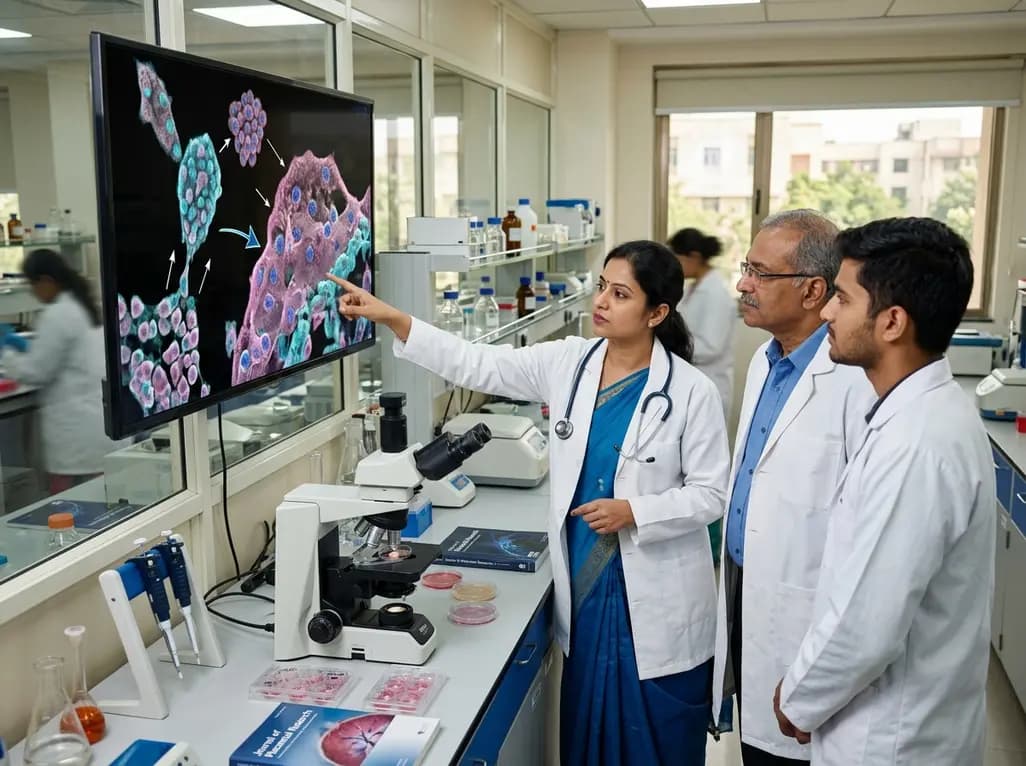
Recent research reveals that downregulating YAP1/TAZ-TEAD via Hippo signaling triggers spontaneous human trophoblast syncytialization in 3D cultures, illuminating placental biology and preeclampsia.
2 weeks back

A landmark comparative study evaluates atrial electrophysiology across humans, swine, and rodents. By linking cellular recordings with transcriptomics and in silico modeling, researchers resolve cross-species gaps, explaining translational failures to advance targeted therapies for atrial arrhythmias.
2 weeks back

A novel pathology-adaptive surface engineering strategy uses functionalized plasma polymer coatings to selectively modulate AGE adsorption, reducing oxidative stress and restoring bone formation in diabetic and aging microenvironments.
last month

Researchers have developed an innovative ultrasound-responsive nano-contrast agent that co-delivers CIITA-siRNA and rapamycin directly to inflamed thyroid tissue, significantly reducing autoimmune injury and thyroid autoantibodies in preclinical models of Hashimoto thyroiditis.
2 weeks back
