.webp&w=384&q=75)

Loading, please wait...
Loading, please wait...
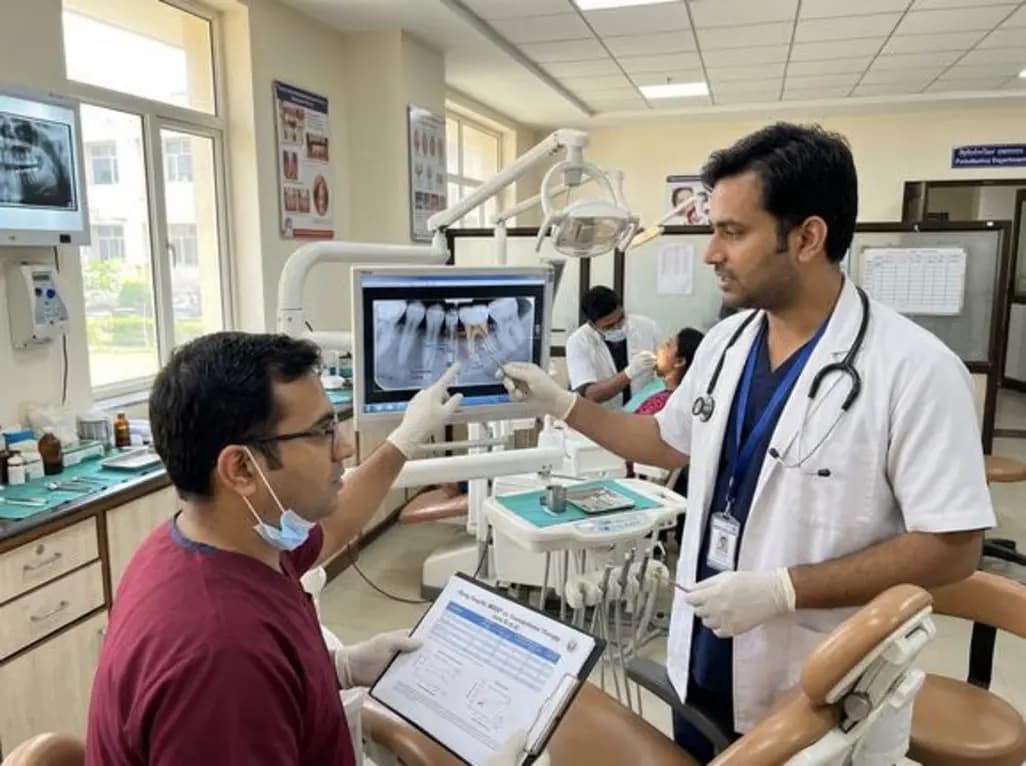
Minimally invasive periodontal therapy (MINST) represents a significant shift in managing residual pockets for patients with periodontitis. A recent randomized clinical trial by Isola G et al. demonstrates that MINST is more effective than conventional non-surgical therapy. Specifically, the study found superior median periodontal outcome reduction at a 12-month follow-up. This approach focuses on reducing tissue trauma while maximizing the thorough cleaning of deep periodontal pockets. Consequently, dental professionals now view MINST as a superior choice for maintaining long-term periodontal health.
The study highlights that while MINST provides better results, several patient-specific factors can alter these outcomes. For instance, heavy smoking and erratic compliance with supportive treatment negatively impacted the overall pocket reduction. Additionally, patients with high Full Mouth Bleeding Scores (FMBS) showed lower success rates. Therefore, clinicians must strictly evaluate patient habits and hygiene during the treatment planning phase. Moreover, addressing the number of existing deep pockets is essential for predictable results.
Furthermore, the precision of minimally invasive periodontal therapy allows for faster and more comfortable healing for the patient. Conventional scaling and root planing, although effective, often cause more significant tissue trauma. By adopting MINST, dental professionals can achieve more predictable pocket depth reduction. However, this success remains highly dependent on managing systemic and behavioral risk factors effectively. Patients should prioritize consistent follow-up care to ensure the best possible clinical outcome.
MINST utilizes smaller, more precise instruments alongside magnification techniques. This combination minimizes soft tissue trauma and promotes better healing of the periodontal attachment compared to standard scaling methods.
Smoking impairs the microvasculature and the body\'s natural immune response. As a result, even advanced techniques like MINST struggle to achieve optimal pocket depth reduction in heavy smokers.
While highly effective for residual pockets, the success of MINST depends on patient compliance and systemic health. Your dentist will determine if this minimally invasive approach is right for your specific condition.
Disclaimer: This content is for informational and educational purposes only. It does not constitute professional medical advice, diagnosis, or treatment. Always seek the advice of your physician, dentist, or other qualified healthcare provider with any questions you may have regarding a medical condition. Refer to the latest local and national guidelines for clinical practice.
References
Isola G et al. Minimally Invasive (MINST) Versus Conventional Non-Surgical Therapy for Residual Pockets in Patients With Periodontitis: A Randomized Clinical Trial. J Periodontal Res. 2026 Jun 18. doi: 10.1111/jre.70083. PMID: 42313431.
Nibali L, Giedraitis V, Gabutite A, et al. Minimally invasive non-surgical therapy (MINST) in non-contained periodontal bony defects: A randomized controlled trial. J Clin Periodontol. 2017;44(8):824-832.
Graziani F, Karapetsa D, Alonso B, Herrera D. Nonsurgical periodontal therapy: pocket elimination, pocket closure or therapeutic pocket soft? Periodontol 2000. 2017;74(1):32-49.

Read summarized clinical updates, watch expert medical content, and earn CME certifications right from your smartphone.
Open your smartphone camera to scan and install.





A randomized clinical trial by Isola G et al. highlights that Minimally Invasive Non-Surgical Therapy (MINST) significantly outperforms conventional treatment for residual pockets, though lifestyle factors like smoking and treatment compliance remain critical determinants of success.
4 months ago

Depemokimab offers twice-yearly dosing for severe eosinophilic asthma and chronic rhinosinusitis with nasal polyps, significantly cutting exacerbations and hospital admissions.
4 days back

A novel copper metal-organic framework hydrogel remodels the uterine microenvironment to stimulate robust endometrial regeneration, reduce intrauterine fibrosis, and restore reproductive fertility, offering a groundbreaking strategy for managing refractory endometrial damage and Asherman syndrome.
4 days back

New research reveals that non-ablative radiotherapy suppresses ventricular tachycardia by increasing conduction velocity via NaV1.5 upregulation and action potential prolongation. However, sustained sodium current elevation and depressed calcium handling highlight the need for careful clinical translation.
6 days back

A single-cell transcriptomic atlas reveals how peripheral nerve injuries cause dorsal root ganglion remodeling. By evaluating proximal nerve crush and resection, researchers identify distinct glial and immune programs that resolve neuropathic pain and promote regeneration.
4 days back

A breakthrough study demonstrates that fullerol-primed extracellular vesicles generated in a 3D SECCS bioreactor attenuate ferroptosis and restore myogenic regeneration in diabetes via the FOXO3 pathway, offering a cell-free therapeutic strategy for diabetic musculoskeletal degeneration.
4 days back
