.webp&w=384&q=75)

Loading, please wait...
Loading, please wait...
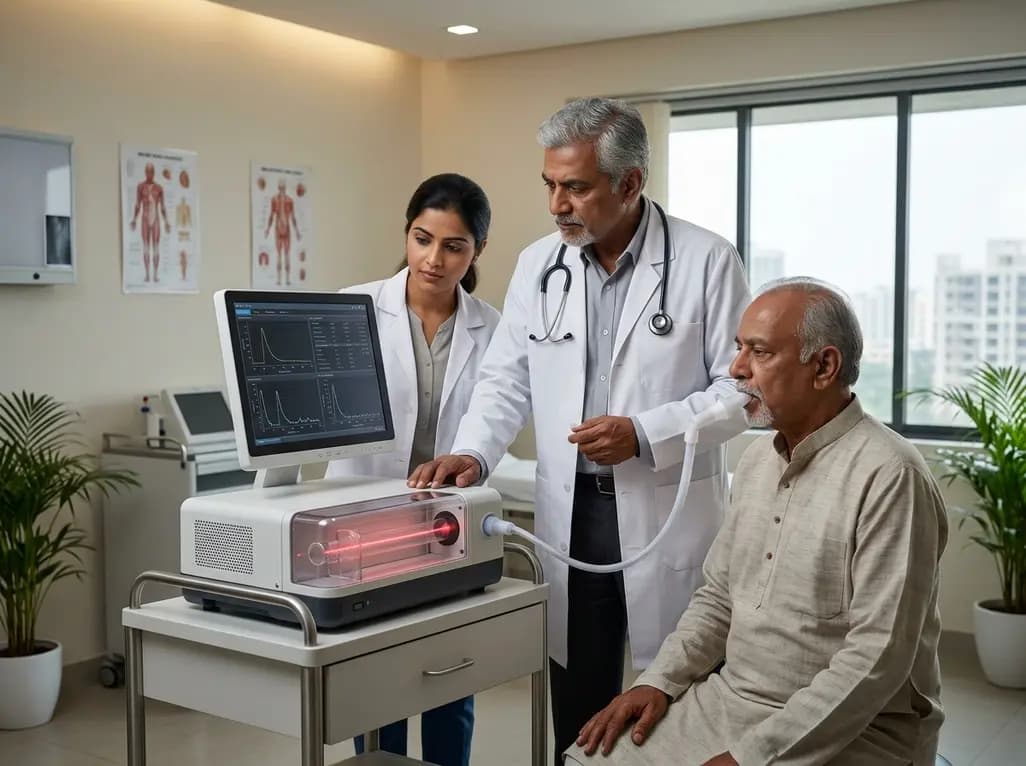
The landscape of modern medical diagnostics is rapidly evolving, with a clear and growing emphasis on non-invasive monitoring techniques that reduce patient discomfort and procedural risk. Among the most promising avenues in this evolution is the analysis of exhaled breath, a field that allows clinicians to peer into the metabolic and physiological state of a patient without a single needle prick. At the center of this progress, the advancement of trace gas detection technology stands as a pivotal development, offering the ability to identify and quantify microscopic concentrations of biomarkers that correlate with specific disease states. Furthermore, for practitioners in India, where the burden of chronic respiratory and cardiovascular diseases is high, these technological breakthroughs represent more than just incremental science. They are the precursors to the next generation of point-of-care diagnostic tools. Traditionally, the detection of such gases has relied on laser absorption spectroscopy, a method known for its specificity but often hampered by physical limitations. However, a recent and innovative study has introduced a paradigm shift in how we approach this measurement, moving away from simple power readings toward more stable, phase-based signals that promise to redefine the limits of clinical sensitivity and diagnostic reliability.
To appreciate the significance of this new approach, one must first understand the fundamental barriers that have historically limited the precision of laser-based gas sensing in clinical environments. Conventional laser absorption spectroscopy typically utilizes intensity-modulated schemes, where the system measures changes in the optical power of a laser beam as it passes through a gas sample. While this method is conceptually straightforward, it is inherently vulnerable to what researchers call intensity noise. Consequently, any slight fluctuation in the laser’s output power or instability in the optical path can be misinterpreted as a change in gas concentration. For doctors who require absolute accuracy for patient management, this susceptibility to noise means that traditional sensors often require frequent calibration and highly controlled environments. Moreover, these conditions are not always available in busy hospital wards or rural clinics across India. Furthermore, as the concentration of the target gas decreases into the parts-per-billion range, the signal-to-noise ratio often becomes too low for reliable clinical interpretation. Therefore, overcoming these limitations requires a fundamental change in the signal processing architecture, moving beyond simple amplitude measurements to a more robust physical property that remains immune to the inherent fluctuations of the light source itself.
In response to the limitations of power-based measurements, the study by Song and colleagues proposes a groundbreaking strategy where gas concentration information is encoded within the optical phase rather than its intensity. This technique, known as absorption-induced phase shift, leverages the dispersive response of the medium—a physical phenomenon where the refractive index of the gas changes alongside its absorption characteristics. Specifically, when the laser intensity is modulated and transmitted through the gas, it experiences a subtle phase variation that is strictly proportional to the concentration of the molecules present. By employing advanced phase-demodulation of the first-harmonic component of the transmitted signal, the researchers were able to extract this data with remarkable clarity. Most importantly, this phase-based information provides an intrinsic immunity to intensity noise. Because the phase shift is independent of the absolute power of the laser, the system remains stable even if the light source itself fluctuates. This robustness is a critical requirement for medical devices intended for long-term bedside monitoring or for use in diverse environmental conditions. Ultimately, this innovation essentially transforms a traditionally noisy measurement into a stable, high-fidelity signal, paving the way for unprecedented diagnostic sensitivity in modern trace gas detection technology applications.
The efficacy of this phase-demodulation approach was rigorously tested using Acetylene (C2H2) as a primary target gas, a choice that has significant implications for both industrial safety and medical diagnostics. To validate the system across a wide dynamic range, the researchers utilized two distinct setups: a 20 cm single-pass cell for high-concentration regimes and a high-finesse optical resonator for low-concentration detection. The results were nothing short of transformative for the field of spectroscopy. Specifically, the system achieved a detection limit of 0.9 parts per million in the high-concentration regime and an astounding 18.6 parts per billion in the low-concentration regime. When compared directly to conventional intensity-demodulation schemes, these figures represent a 7.1-fold and 3.6-fold improvement in sensitivity, respectively. Additionally, the phase-demodulation method demonstrated superior stability over extended periods, a factor that is often the Achilles' heel of traditional optical sensors. Such dramatic improvements in detection limits suggest that gases previously considered too faint to monitor in real-time may now be accessible for clinical study. Moreover, the ability to achieve these results without complex, bulky equipment hints at the possibility of integrating these sensors into compact, handheld diagnostic devices for use in diverse primary care settings.
For the practicing cardiologist or pulmonologist, the most immediate clinical application of enhanced Acetylene detection lies in the non-invasive measurement of cardiac output and pulmonary blood flow. The Acetylene rebreathing method is a well-established physiological technique that relies on the rate at which the lungs absorb a trace amount of the gas to calculate the amount of blood circulating through the heart. Historically, this method has been limited by the need for highly sensitive and stable gas analyzers that can distinguish tiny changes in concentration within a closed rebreathing circuit. Because previous sensors were susceptible to drift and noise, clinicians often had to use higher concentrations of tracer gases, which could be cumbersome. With the advent of this new phase-shift technology, it is now possible to measure these parameters with significantly higher precision using much lower, and therefore safer, concentrations of the gas. Furthermore, the intrinsic stability of the phase-demodulation technique means that measurements are less likely to be affected by the patient’s breathing patterns or the mechanical vibrations of a busy clinical setting. This could lead to more frequent, bedside monitoring of cardiac output in heart failure patients, providing a safer alternative to invasive catheterization.
Looking ahead, the integration of high-sensitivity phase-shift sensors into the Indian healthcare ecosystem could significantly lower the barrier to advanced physiological monitoring. As India continues to modernize its medical infrastructure, there is a clear demand for diagnostic solutions that are both cost-effective and highly accurate. The simplicity of the proposed laser sensing strategy, which avoids the need for expensive and fragile amplitude-stabilization hardware, makes it an ideal candidate for local manufacturing and distribution. Beyond cardiac output monitoring, this technology could be adapted to detect other critical biomarkers in the breath, such as ammonia for renal function or nitric oxide for airway inflammation. Consequently, we may soon see a new generation of multi-gas analyzers that provide a comprehensive metabolic snapshot of a patient in a matter of seconds. In conclusion, the transition from intensity-based to phase-based laser spectroscopy represents a major milestone in analytical science. By providing a robust solution to the perennial problem of laser noise, this research offers a clear path toward more reliable, non-invasive diagnostics that could ultimately improve patient outcomes across the diverse clinical landscape of India.
Traditional intensity-based sensing is inherently limited by laser intensity noise, where any fluctuation in the laser’s power is wrongly interpreted as a change in gas concentration. In contrast, the phase-demodulation technique encodes concentration data in the optical phase shift. Because this phase shift is a fundamental property of the gas-medium interaction and is independent of the laser's power, the system becomes immune to intensity noise, resulting in significantly higher stability and sensitivity.
Acetylene is a crucial tracer gas used in clinical rebreathing tests to measure non-invasive cardiac output and pulmonary blood flow. By demonstrating that this new technology can detect Acetylene with 7.1-fold higher sensitivity than previous methods, the study proves its potential for clinical application. High sensitivity allows for the use of lower, safer gas concentrations while maintaining the accuracy needed for diagnosing complex conditions like heart failure or pulmonary hypertension in patients.
This advancement allows for the development of more precise, stable, and compact bedside monitors for measuring cardiac output. Currently, many non-invasive methods lack the reliability of invasive gold standards like thermodilution. However, by providing high-fidelity trace gas detection that is immune to environmental noise and laser instability, this technology bridges the gap. It enables clinicians to perform frequent, accurate assessments of a patient's hemodynamic status without the risks associated with invasive catheterization procedures.
Disclaimer: This content is for informational and educational purposes only and does not constitute professional medical advice, diagnosis, or treatment. Always seek the advice of your physician or other qualified health provider with any questions you may have regarding a medical condition. Refer to the latest local and national guidelines for clinical practice.
References
Song Y et al. Gas Detection via Absorption-Induced Phase Shift Retrieved by Phase Demodulation in Intensity-Modulated Absorption Spectroscopy. Anal Chem. 2026 Jul 16. doi: 10.1021/acs.analchem.6c03325. PMID: 42463995.

Read summarized clinical updates, watch expert medical content, and earn CME certifications right from your smartphone.
Open your smartphone camera to scan and install.





A breakthrough in trace gas detection technology utilizes laser phase-shift demodulation to achieve a 7.1-fold sensitivity boost. This innovation overcomes intensity noise in spectroscopy, enabling highly stable and accurate non-invasive monitoring of biomarkers like Acetylene for cardiac and respiratory care.
3 months ago

Depemokimab offers twice-yearly dosing for severe eosinophilic asthma and chronic rhinosinusitis with nasal polyps, significantly cutting exacerbations and hospital admissions.
3 days back

A novel copper metal-organic framework hydrogel remodels the uterine microenvironment to stimulate robust endometrial regeneration, reduce intrauterine fibrosis, and restore reproductive fertility, offering a groundbreaking strategy for managing refractory endometrial damage and Asherman syndrome.
3 days back
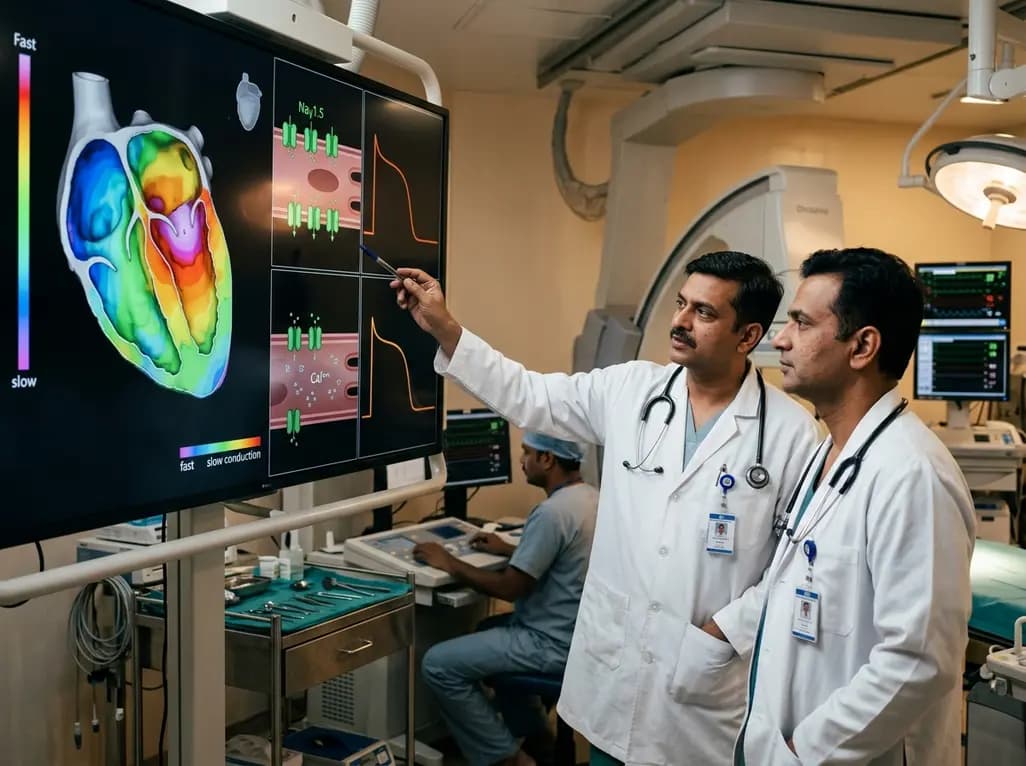
New research reveals that non-ablative radiotherapy suppresses ventricular tachycardia by increasing conduction velocity via NaV1.5 upregulation and action potential prolongation. However, sustained sodium current elevation and depressed calcium handling highlight the need for careful clinical translation.
5 days back

A single-cell transcriptomic atlas reveals how peripheral nerve injuries cause dorsal root ganglion remodeling. By evaluating proximal nerve crush and resection, researchers identify distinct glial and immune programs that resolve neuropathic pain and promote regeneration.
3 days back

A breakthrough study demonstrates that fullerol-primed extracellular vesicles generated in a 3D SECCS bioreactor attenuate ferroptosis and restore myogenic regeneration in diabetes via the FOXO3 pathway, offering a cell-free therapeutic strategy for diabetic musculoskeletal degeneration.
3 days back
