.webp&w=384&q=75)

Loading, please wait...
Loading, please wait...
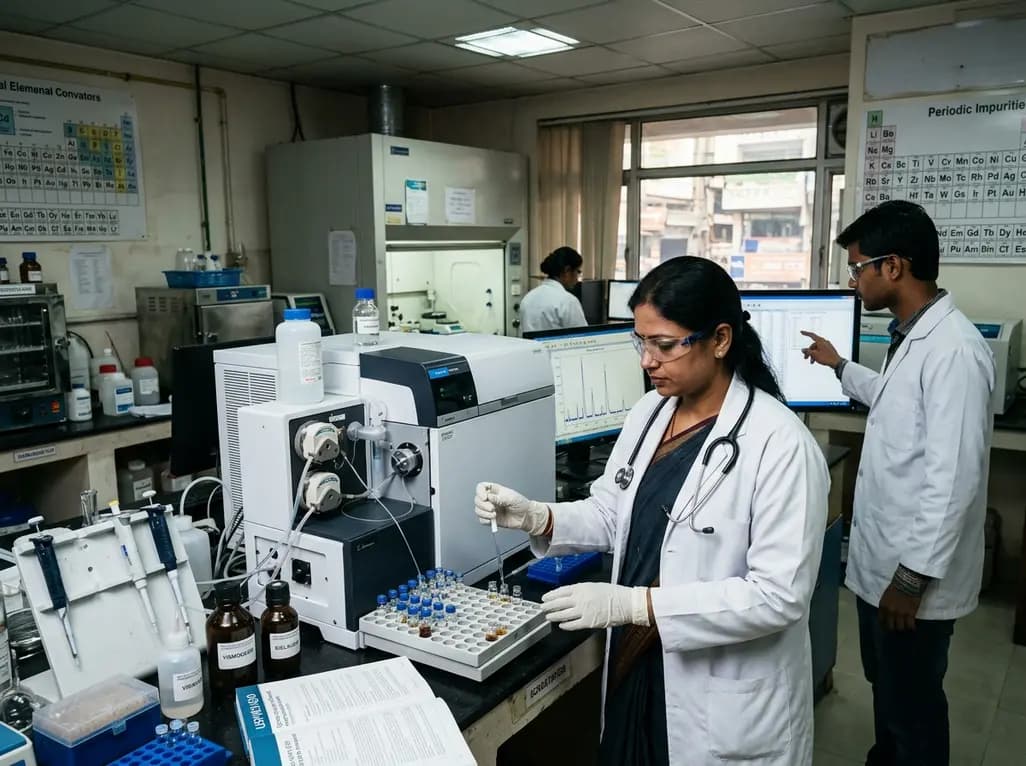
Modern pharmaceutical manufacturing requires stringent control over metallic contaminants. These impurities can arise from catalysts, synthesis machinery, or storage containers. Consequently, a recent study introduced a breakthrough analytical method for the inorganic impurities in anti-cancer drugs like vismodegib and idelalisib. Using Inductively Coupled Plasma Mass Spectrometry (ICP-MS), researchers successfully quantified 24 different metal trace elements with high precision.
The research team utilized a specific chemical diluent consisting of 3% nitric acid and 1% hydrochloric acid. Furthermore, they employed argon as the carrier gas while helium functioned as the collision gas at 4.3 mL/min. These specific parameters ensured that the instrument could detect trace levels without spectral interference. Specifically, the plasma gas flow rate remained at 16 L/min to maintain optimal stability. Therefore, the method achieved results that fall perfectly within the USP acceptance range of 70-150% recovery.
Notably, this is the first unified research study reporting the quantification of 24 different elemental impurities in these specific drug substances. Manufacturers previously lacked a combined detection protocol for these two critical medications. Consequently, clinicians and producers can now rely on a validated procedure that meets ICH Q3D(R2) guidelines. By enhancing detection accuracy, this method directly contributes to the overall safety and quality of life-saving oncology treatments. Researchers confirmed the selectivity and accuracy through rigorous calibration blanks, showing no observed interference.
Inorganic impurities typically originate from manufacturing machinery, chemical catalysts used during drug synthesis, and various container-closure systems. External environment factors during production also contribute to trace metal presence.
ICP-MS offers exceptional sensitivity and selectivity for trace elements. It allows for the interference-free detection of multiple metals simultaneously. This ensures strict compliance with global regulatory standards like USP and ICH.
Disclaimer: This content is for informational and educational purposes only and does not constitute medical advice or professional laboratory recommendations. Always consult the latest pharmacopeial standards and regulatory documents for official testing protocols. Refer to the latest local and national guidelines for clinical practice.
References
Kodishala RK et al. Quantification of 24 Inorganic Impurities in Vismodegib and Idelalisib Anti-Cancer Drug Substances by Using ICP-MS. J AOAC Int. 2026 Jun 17. doi: undefined. PMID: 42308554.
International Council for Harmonisation. ICH Q3D(R2) Guideline for Elemental Impurities. 2022.
United States Pharmacopeia. USP Chapter <233> Elemental Impurities – Procedures. 2024.

Read summarized clinical updates, watch expert medical content, and earn CME certifications right from your smartphone.
Open your smartphone camera to scan and install.





Researchers developed a unified ICP-MS method to quantify 24 inorganic impurities in the anti-cancer drug substances vismodegib and idelalisib. Validated against USP and ICH Q3D(R2) standards, the method ensures high selectivity and accuracy for trace metal detection in critical oncology medications.
4 months ago

Depemokimab offers twice-yearly dosing for severe eosinophilic asthma and chronic rhinosinusitis with nasal polyps, significantly cutting exacerbations and hospital admissions.
2 days back

A novel copper metal-organic framework hydrogel remodels the uterine microenvironment to stimulate robust endometrial regeneration, reduce intrauterine fibrosis, and restore reproductive fertility, offering a groundbreaking strategy for managing refractory endometrial damage and Asherman syndrome.
3 days back

New research reveals that non-ablative radiotherapy suppresses ventricular tachycardia by increasing conduction velocity via NaV1.5 upregulation and action potential prolongation. However, sustained sodium current elevation and depressed calcium handling highlight the need for careful clinical translation.
5 days back

A single-cell transcriptomic atlas reveals how peripheral nerve injuries cause dorsal root ganglion remodeling. By evaluating proximal nerve crush and resection, researchers identify distinct glial and immune programs that resolve neuropathic pain and promote regeneration.
3 days back
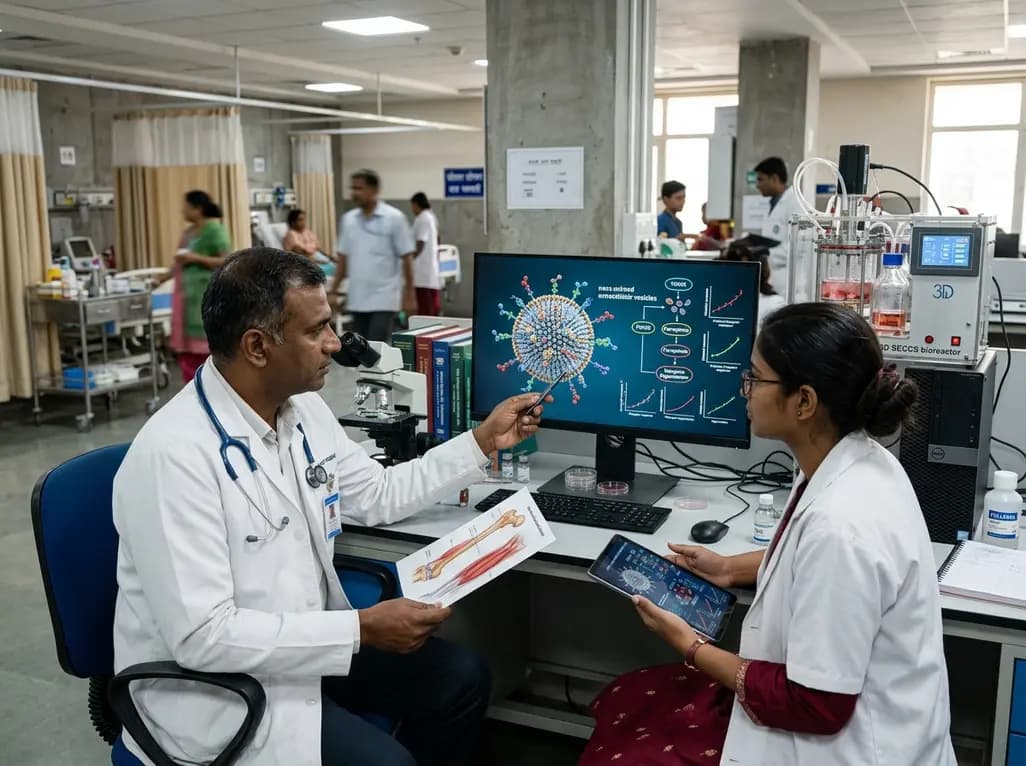
A breakthrough study demonstrates that fullerol-primed extracellular vesicles generated in a 3D SECCS bioreactor attenuate ferroptosis and restore myogenic regeneration in diabetes via the FOXO3 pathway, offering a cell-free therapeutic strategy for diabetic musculoskeletal degeneration.
3 days back
