.webp&w=384&q=75)

Loading, please wait...
Loading, please wait...

Sleep serves as much more than a simple state of rest; it is a vital period for neurological restoration and memory consolidation. Recent neuroscientific research has highlighted the role of infraslow sleep fluctuations in balancing environmental disconnection with internal brain maintenance. These fluctuations, technically known as the infraslow fluctuation of sigma power (ISFS), involve the rhythmic clustering of sleep spindles occurring every 10 to 100 seconds. Consequently, these cycles regulate the brain's ability to alternate between fragile periods of high arousability and stable, spindle-rich periods dedicated to memory processing.
A recent large-scale study investigated the presence and maturation of ISFS in 154 individuals ranging from 8 to 26 years of age. The results revealed that while these rhythms are present as early as childhood, their strength, frequency, and variability increase significantly during late adolescence. Furthermore, the researchers discovered that electrophysiological markers of memory reactivation, such as slow wave-sleep spindle coupling, are precisely organized within the peaks of these spindle-rich cycles. This suggests that the adolescent brain undergoes a dynamic refinement of sleep architecture to optimize cognitive functions.
Understanding infraslow sleep fluctuations provides a valuable new lens for clinicians in pediatrics, neurology, and psychiatry. Because these rhythms coordinate the trade-off between arousal and memory, disruptions in the ISFS pattern might eventually serve as biomarkers for developmental or psychiatric disorders. Moreover, these insights could guide the development of targeted sleep interventions designed to enhance the restorative quality of sleep in young people. Therefore, monitoring the maturation of these infraslow rhythms may become a vital component of assessing neurological health across the developmental spectrum.
Infraslow sleep fluctuations, or ISFS, are rhythmic cycles in brain activity lasting between 10 and 100 seconds. During these cycles, sleep spindles cluster together, helping the brain switch between states that allow for environmental awareness and states that protect memory consolidation processes.
The study identifies adolescence as a critical window because this period shows the most significant increase in the strength and organization of these sleep rhythms. This maturation likely supports the complex cognitive and emotional development occurring during these years.
Disclaimer: This content is for informational and educational purposes only. It does not constitute professional medical advice, diagnosis, or treatment. Always seek the advice of your physician or other qualified healthcare provider with any questions you may have regarding a medical condition. Refer to the latest local and national guidelines for clinical practice.
References
Dimitriades ME et al. The infraslow fluctuation of sigma power during sleep and its links to markers of arousal and memory reactivation across development. Sci Rep. 2026 Jun 18. doi: 10.1038/s41598-026-58423-z. PMID: 42310467.
Lecci S, et al. (2017). Infraslow oscillations in human sleep spindle activity. Sci Adv. 3(2):e1601548.
Fernandez LMJ, Lüthi A. (2020). The Sleep Spindle: An Essential Signal for Brain Development. Annu Rev Neurosci. 43:187-204.

Read summarized clinical updates, watch expert medical content, and earn CME certifications right from your smartphone.
Open your smartphone camera to scan and install.





New research characterizes infraslow sleep fluctuations (ISFS) from childhood to young adulthood, revealing how these rhythms coordinate memory reactivation and arousability during development.
4 months ago

Depemokimab offers twice-yearly dosing for severe eosinophilic asthma and chronic rhinosinusitis with nasal polyps, significantly cutting exacerbations and hospital admissions.
6 days back

A novel copper metal-organic framework hydrogel remodels the uterine microenvironment to stimulate robust endometrial regeneration, reduce intrauterine fibrosis, and restore reproductive fertility, offering a groundbreaking strategy for managing refractory endometrial damage and Asherman syndrome.
Last week
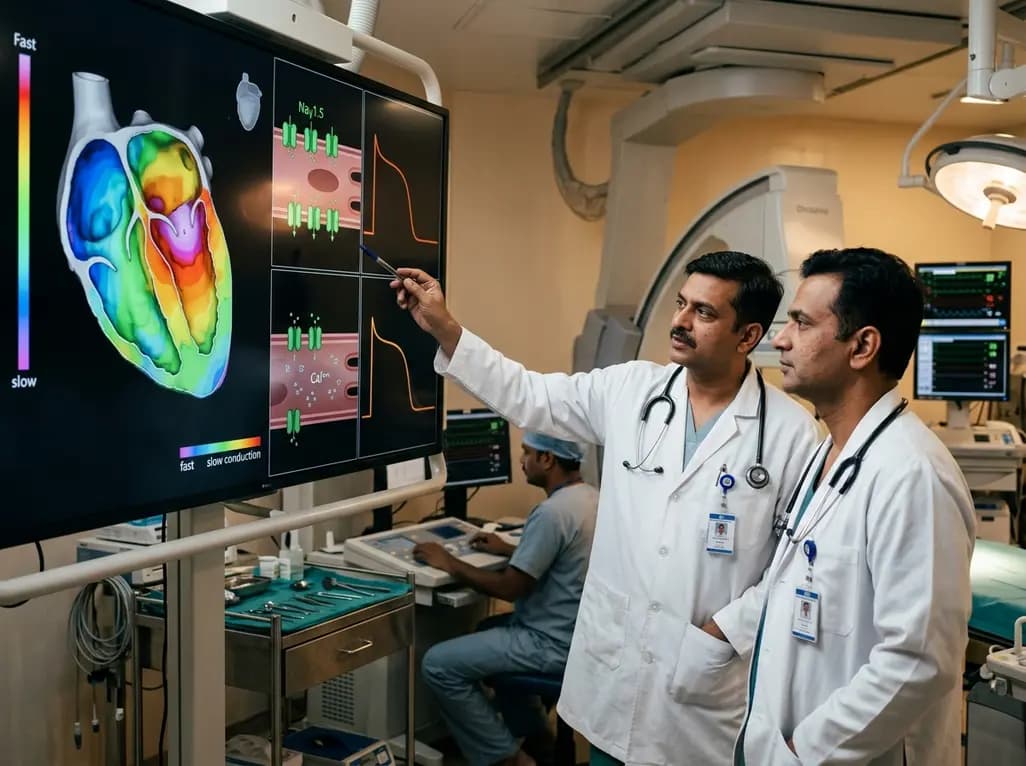
New research reveals that non-ablative radiotherapy suppresses ventricular tachycardia by increasing conduction velocity via NaV1.5 upregulation and action potential prolongation. However, sustained sodium current elevation and depressed calcium handling highlight the need for careful clinical translation.
Last week

A single-cell transcriptomic atlas reveals how peripheral nerve injuries cause dorsal root ganglion remodeling. By evaluating proximal nerve crush and resection, researchers identify distinct glial and immune programs that resolve neuropathic pain and promote regeneration.
6 days back
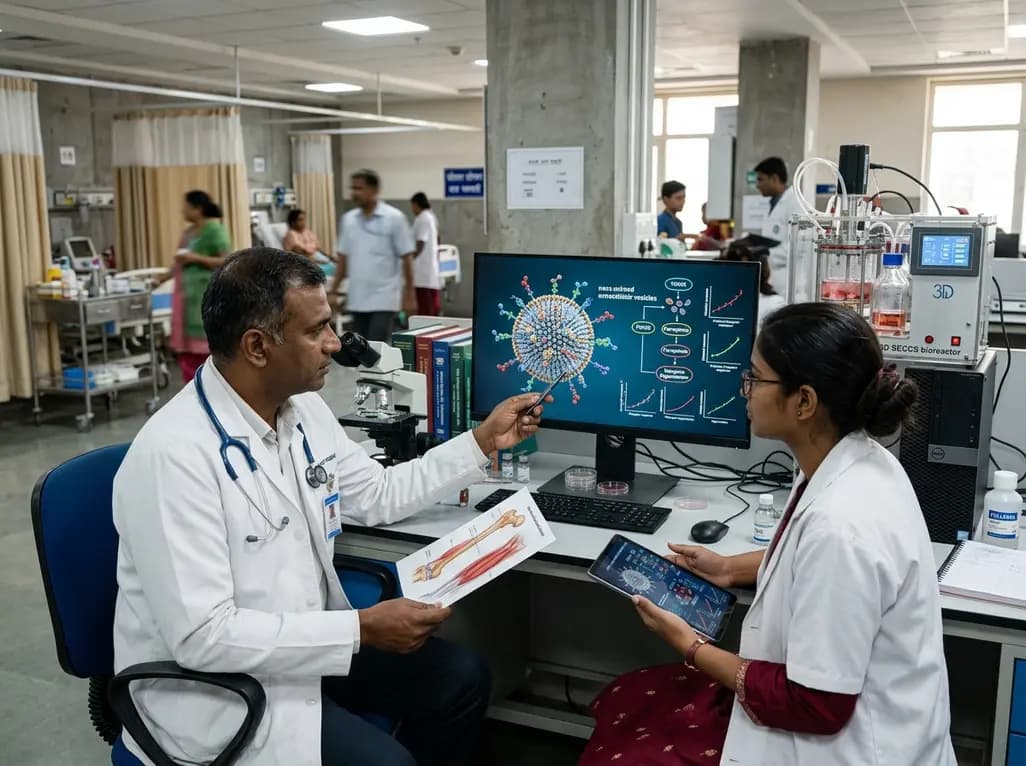
A breakthrough study demonstrates that fullerol-primed extracellular vesicles generated in a 3D SECCS bioreactor attenuate ferroptosis and restore myogenic regeneration in diabetes via the FOXO3 pathway, offering a cell-free therapeutic strategy for diabetic musculoskeletal degeneration.
6 days back
