.webp&w=384&q=75)

Loading, please wait...
Loading, please wait...

Giant Cell Arteritis (GCA) represents a critical medical emergency because it carries a high risk of permanent, irreversible vision loss if not treated immediately. Consequently, effective Giant Cell Arteritis management requires high clinical suspicion and swift coordination between various medical specialties. A recent 10-year retrospective study conducted at a large academic medical center reveals that the journey for patients suspected of having GCA is often convoluted and involves numerous providers.
The study analyzed 162 patients who underwent a temporal artery biopsy (TAB). Interestingly, patients saw an average of 3.31 different specialists during their prebiopsy evaluation. Some patients encountered as many as six different specialists. Although over half of these patients saw an ophthalmologist before the biopsy, the study found that seeing an eye specialist was not specifically associated with a higher rate of positive biopsy results or earlier steroid treatment. This suggests that while ophthalmologists are frequently involved, the fragmented nature of the current healthcare journey may lead to delays.
Ophthalmologists play a pivotal role in identifying ischemic vision loss, which is often the first sign of GCA. In the study, ocular symptoms were present in 60% of the subjects. Furthermore, ophthalmologists performed the TAB in 33% of the cases. However, the data highlights that the involvement of multiple subspecialists can lead to a "convoluted journey." Therefore, the focus should shift toward better integration of care rather than just increasing the number of expert consultations.
The findings reinforce the need for multidisciplinary fast-track GCA clinics. Such clinics streamline the patient journey by providing immediate access to rheumatologists, ophthalmologists, and imaging services. Research indicates that fast-track pathways significantly reduce the incidence of permanent blindness and lower healthcare costs by preventing unnecessary hospitalizations. By centralizing expertise, these clinics ensure that life-altering treatment begins without the delays associated with navigating multiple independent departments.
GCA affects multiple systems and carries severe risks like stroke and blindness. A multidisciplinary team ensures that diagnostic steps, such as laboratory testing and biopsies, are coordinated quickly to initiate steroid therapy and prevent complications.
While ophthalmologists are experts at identifying visual complications of GCA, the study showed that their involvement alone did not necessarily speed up steroid treatment. This emphasizes that systemic coordination across all specialties is more critical than any single consultation.
Fast-track clinics provide 24/7 access to specialists and priority imaging. This approach has been shown to improve visual outcomes and reduce the time from symptom onset to the start of treatment.
Disclaimer: This content is for informational and educational purposes only and does not constitute medical advice. It is not intended to be a substitute for professional medical advice, diagnosis, or treatment. Always seek the advice of your physician or other qualified health provider with any questions you may have regarding a medical condition. Refer to the latest local and national guidelines for clinical practice.
References

Read summarized clinical updates, watch expert medical content, and earn CME certifications right from your smartphone.
Open your smartphone camera to scan and install.





Giant Cell Arteritis (GCA) requires rapid diagnosis to prevent permanent vision loss. This study highlights the complex, multi-specialty journey of GCA suspects, emphasizing that while ophthalmologists are central, integrated fast-track clinics may be the key to streamlining care and improving outcomes.
4 months ago

Depemokimab offers twice-yearly dosing for severe eosinophilic asthma and chronic rhinosinusitis with nasal polyps, significantly cutting exacerbations and hospital admissions.
3 days back

A novel copper metal-organic framework hydrogel remodels the uterine microenvironment to stimulate robust endometrial regeneration, reduce intrauterine fibrosis, and restore reproductive fertility, offering a groundbreaking strategy for managing refractory endometrial damage and Asherman syndrome.
3 days back
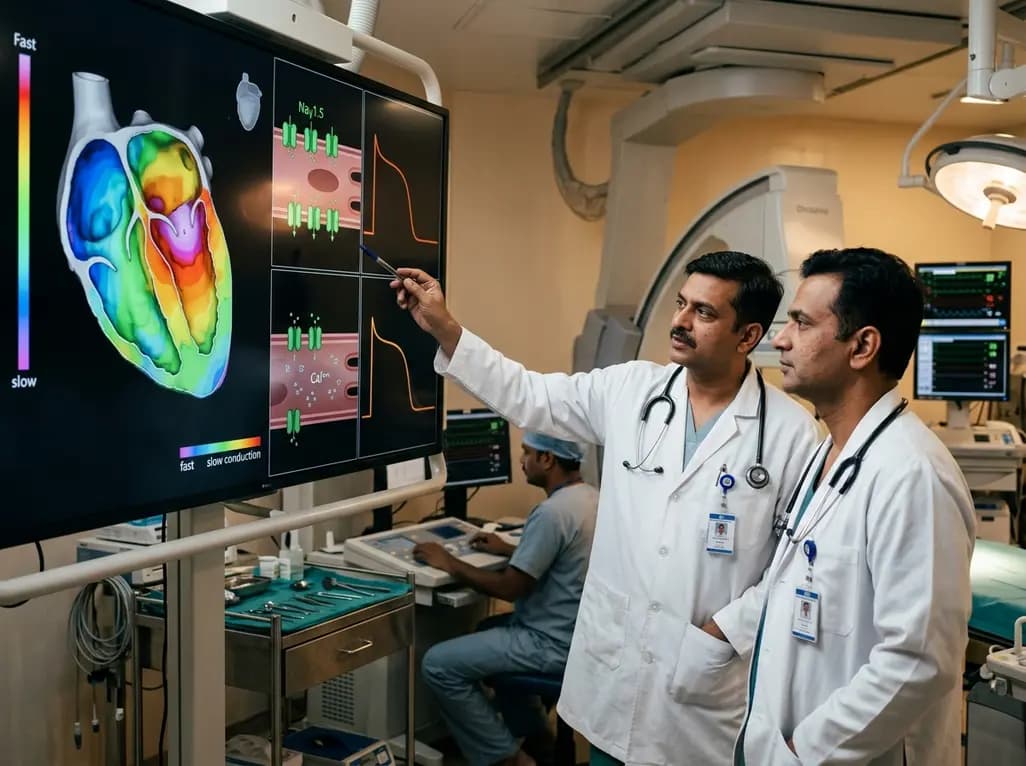
New research reveals that non-ablative radiotherapy suppresses ventricular tachycardia by increasing conduction velocity via NaV1.5 upregulation and action potential prolongation. However, sustained sodium current elevation and depressed calcium handling highlight the need for careful clinical translation.
5 days back

A single-cell transcriptomic atlas reveals how peripheral nerve injuries cause dorsal root ganglion remodeling. By evaluating proximal nerve crush and resection, researchers identify distinct glial and immune programs that resolve neuropathic pain and promote regeneration.
3 days back
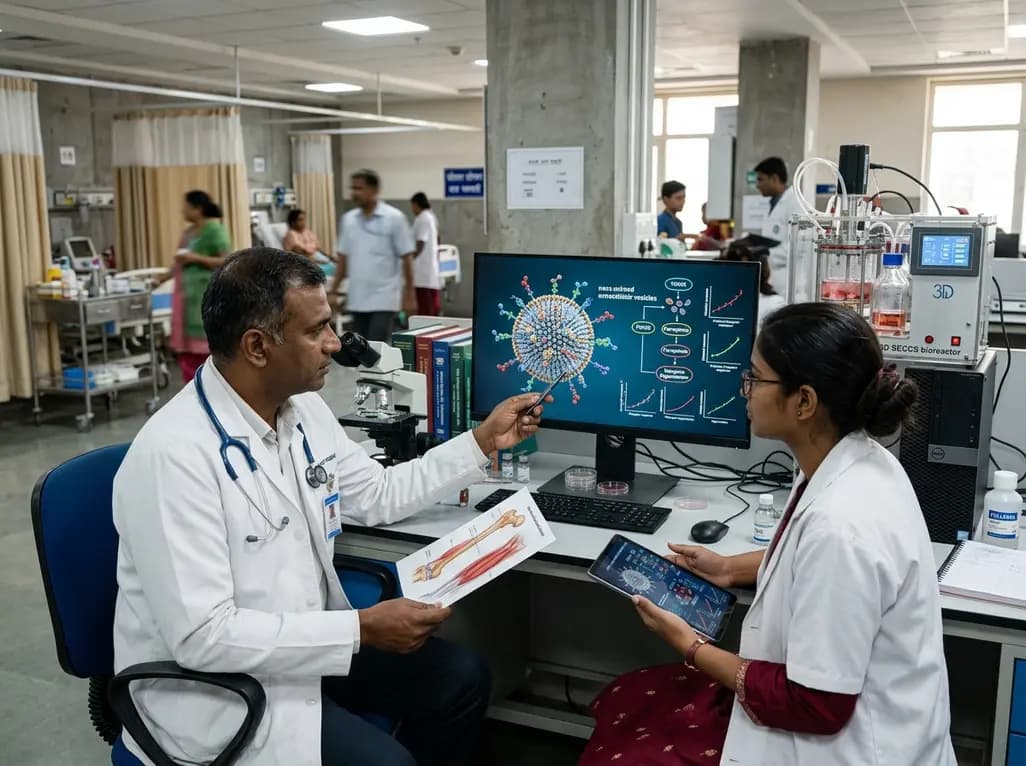
A breakthrough study demonstrates that fullerol-primed extracellular vesicles generated in a 3D SECCS bioreactor attenuate ferroptosis and restore myogenic regeneration in diabetes via the FOXO3 pathway, offering a cell-free therapeutic strategy for diabetic musculoskeletal degeneration.
3 days back
