.webp&w=384&q=75)

Loading, please wait...
Loading, please wait...
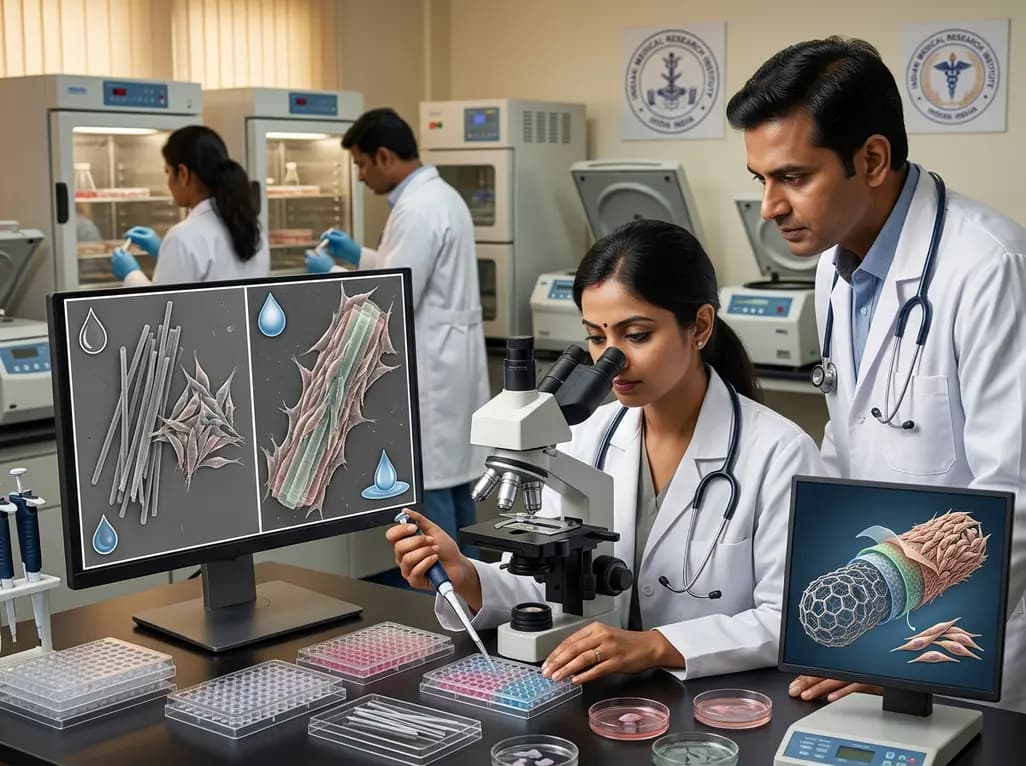
Scientists are exploring new ways to enhance cell growth using nanotechnology. Specifically, researchers have developed fullerene microrods cell feeding techniques to improve how cells interact with synthetic surfaces. These advancements involve layer-by-layer (LbL) surface modification to create more biocompatible structures. By combining amphiphilic polymers with natural biomolecules, this technology offers a versatile strategy for tailoring self-assembled nanostructures.
Using the liquid-liquid interfacial precipitation method, the team produced supramolecular fullerene microrods (FMR). Afterward, they coated these rods with amphiphilic polymers and natural biomolecules. Consequently, this process formed multilayer-coated fullerene microrods with significantly higher hydrophilicity. The addition of gelatin and Pluronic layers reduced the contact angle from 104° to 44°. In fact, this change markedly improved surface wettability and biological compatibility.
The fullerene microrods cell feeding mechanism was tested on NIH/3T3 fibroblasts. During the early stages of culture, the modified microrods boosted cell viability to approximately 152% after one day. Furthermore, this value rose to 349% by the third day. Because the interfacial properties were improved, the material facilitated better cell attachment. Additionally, the study showed comparable survival levels during extended culture periods.
This study demonstrates that surface-engineered interfaces can effectively modulate cellular responses. Therefore, LbL-engineered fullerene constructs offer a promising pathway for designing advanced biomedical materials. Eventually, such technology could lead to better implants and tissue scaffolds in clinical practice. These results highlight the feasibility of using self-assembled nanostructures for biointerface-related applications.
Cell feeding refers to a phenomenon where specific surface-modified nanostructures facilitate enhanced interactions between cells and materials. This leads to significantly higher cell viability and growth rates during the early stages of culture.
Layer-by-layer (LbL) modification allows for precise control over surface properties. By adding layers of polymers and biomolecules like gelatin, researchers can transform hydrophobic fullerenes into hydrophilic surfaces that promote better biological integration.
Disclaimer: This content is for informational and educational purposes only and does not constitute medical advice, diagnosis, or treatment. Always seek the advice of your physician or other qualified health provider with any questions you may have regarding a medical condition. Refer to the latest local and national guidelines for clinical practice.
References
Yang PS et al. Layer-by-Layer Surface-Modified Supramolecular Fullerene Microrods for Cell Feeding. ACS Appl Mater Interfaces. 2026 Jun 16. doi: 10.1021/acsami.6c10978. PMID: 42304186.
Goodarzi S et al. Fullerene: Biomedical Engineers Get to Revisit an Old Friend. Materials Today. 2017;20(8):460-480.
"
Read summarized clinical updates, watch expert medical content, and earn CME certifications right from your smartphone.
Open your smartphone camera to scan and install.





Researchers have developed layer-by-layer surface-modified fullerene microrods that significantly boost fibroblast viability. By improving hydrophilicity and interfacial properties, these constructs provide a new strategy for advanced biomedical material design and tissue engineering applications.
4 months ago

Depemokimab offers twice-yearly dosing for severe eosinophilic asthma and chronic rhinosinusitis with nasal polyps, significantly cutting exacerbations and hospital admissions.
3 days back

A novel copper metal-organic framework hydrogel remodels the uterine microenvironment to stimulate robust endometrial regeneration, reduce intrauterine fibrosis, and restore reproductive fertility, offering a groundbreaking strategy for managing refractory endometrial damage and Asherman syndrome.
4 days back

New research reveals that non-ablative radiotherapy suppresses ventricular tachycardia by increasing conduction velocity via NaV1.5 upregulation and action potential prolongation. However, sustained sodium current elevation and depressed calcium handling highlight the need for careful clinical translation.
6 days back

A single-cell transcriptomic atlas reveals how peripheral nerve injuries cause dorsal root ganglion remodeling. By evaluating proximal nerve crush and resection, researchers identify distinct glial and immune programs that resolve neuropathic pain and promote regeneration.
3 days back

A breakthrough study demonstrates that fullerol-primed extracellular vesicles generated in a 3D SECCS bioreactor attenuate ferroptosis and restore myogenic regeneration in diabetes via the FOXO3 pathway, offering a cell-free therapeutic strategy for diabetic musculoskeletal degeneration.
4 days back
