.webp&w=384&q=75)

Loading, please wait...
Loading, please wait...
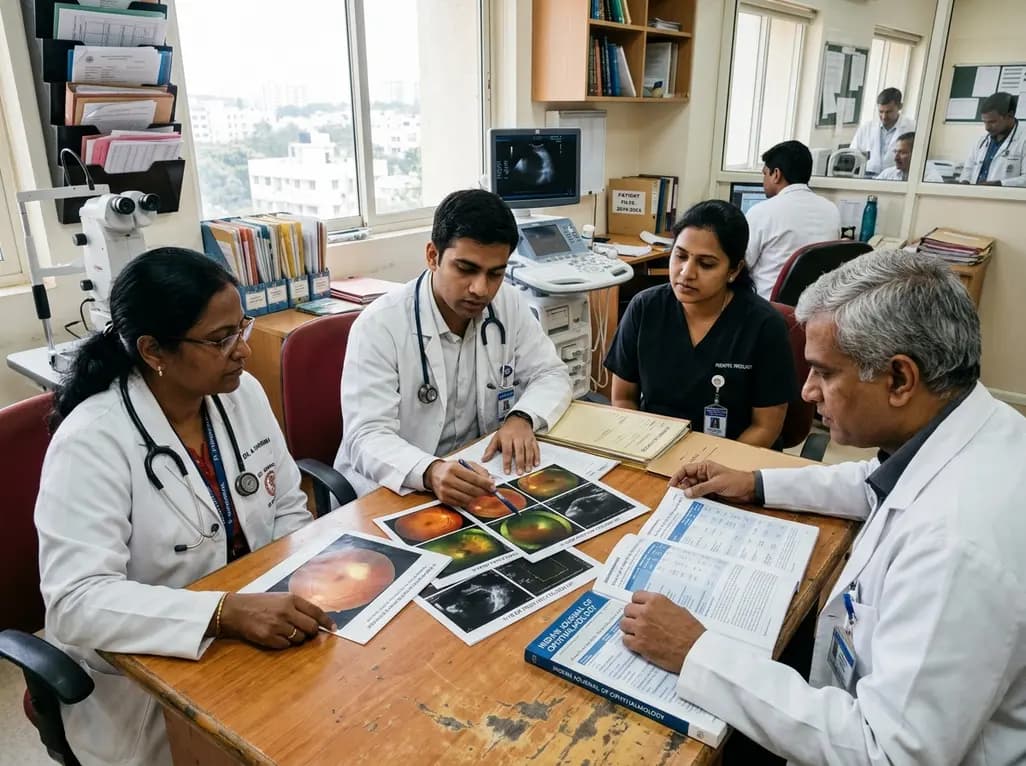
A large retrospective series of 341 retinoblastoma eyes treated with intra-arterial chemotherapy (IAC) reported five-year globe-salvage estimates of about 74% across the overall cohort. The study included more than 1,200 infusions using agents such as melphalan, topotecan, and carboplatin, providing substantial clinical experience with IAC as a primary or secondary globe-preserving strategy. For ocular oncology teams, the publication illustrates how treatment selection is driven by tumor classification, eye-specific disease severity, prior treatment, and the feasibility of preserving a functional globe. IAC has become an important component of multimodal retinoblastoma management, but systemic evaluation and coordinated care remain essential. Outcomes are not uniform across tumor stages, and globe salvage is not synonymous with normal vision. The study is therefore most useful as evidence that IAC can achieve meaningful control and preservation in appropriately selected eyes, while reminding clinicians that long-term surveillance for recurrence, vitreous seeds, vascular complications, and visual development remains part of the care pathway. The data can inform counseling without implying that one modality should replace all other treatment strategies.

Read summarized clinical updates, watch expert medical content, and earn CME certifications right from your smartphone.
Open your smartphone camera to scan and install.





A large retrospective series of 341 retinoblastoma eyes treated with intra-arterial chemotherapy (IAC) reported five-year globe-salvage estimates of about 74% across the overall cohort. The study included more than 1,200 infusions using agents such as melphalan, topotecan, and carboplatin, providing substantial clinical experience with IAC as a primary or secondary globe-preserving strategy. For ocular oncology teams, the publication illustrates how treatment selection is driven by tumor classification, eye-specific disease severity, prior treatment, and the feasibility of preserving a functional globe. IAC has become an important component of multimodal retinoblastoma management, but systemic evaluation and coordinated care remain essential. Outcomes are not uniform across tumor stages, and globe salvage is not synonymous with normal vision. The study is therefore most useful as evidence that IAC can achieve meaningful control and preservation in appropriately selected eyes, while reminding clinicians that long-term surveillance for recurrence, vitreous seeds, vascular complications, and visual development remains part of the care pathway. The data can inform counseling without implying that one modality should replace all other treatment strategies.
4 weeks back

Discover how catalytic nanozymes redefine autoimmune disease therapy by establishing a physiological redox set-point to restore immune tolerance without broad immunosuppression.
Last week
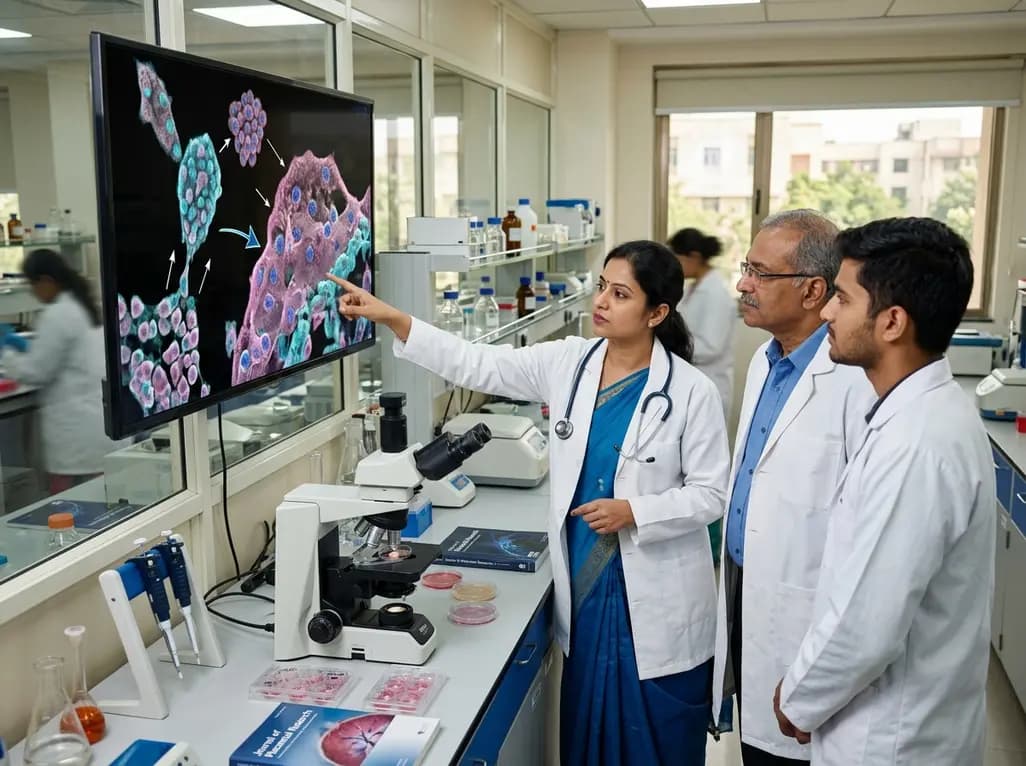
Recent research reveals that downregulating YAP1/TAZ-TEAD via Hippo signaling triggers spontaneous human trophoblast syncytialization in 3D cultures, illuminating placental biology and preeclampsia.
3 weeks back

A landmark comparative study evaluates atrial electrophysiology across humans, swine, and rodents. By linking cellular recordings with transcriptomics and in silico modeling, researchers resolve cross-species gaps, explaining translational failures to advance targeted therapies for atrial arrhythmias.
3 weeks back
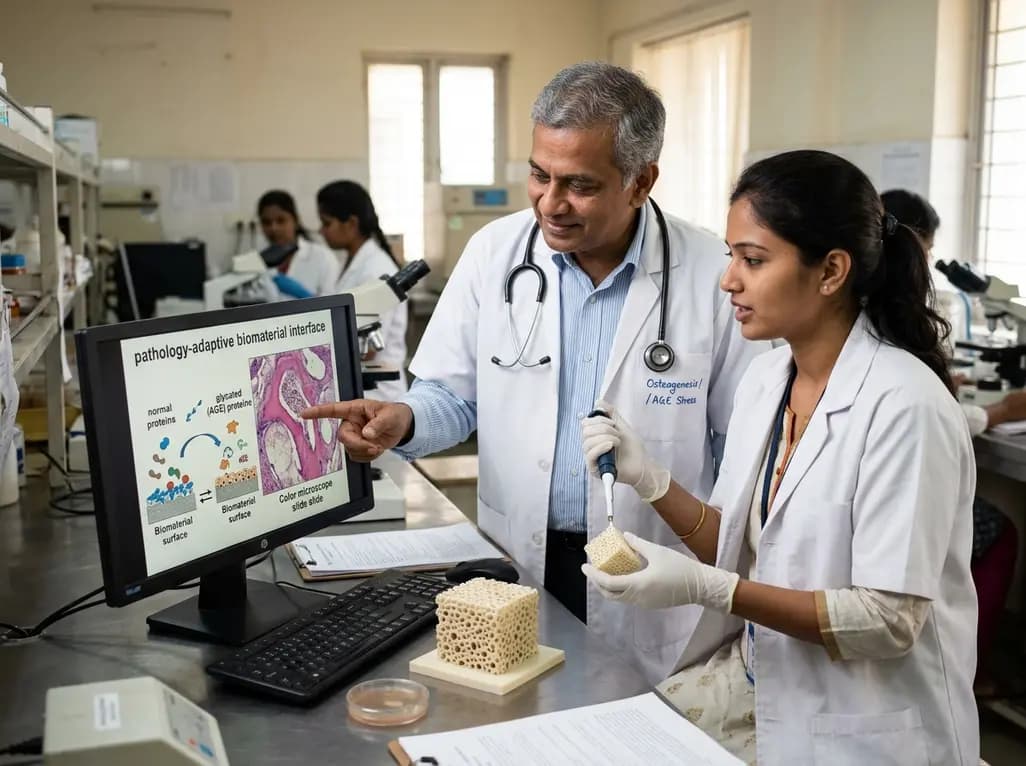
A novel pathology-adaptive surface engineering strategy uses functionalized plasma polymer coatings to selectively modulate AGE adsorption, reducing oxidative stress and restoring bone formation in diabetic and aging microenvironments.
last month

Researchers have developed an innovative ultrasound-responsive nano-contrast agent that co-delivers CIITA-siRNA and rapamycin directly to inflamed thyroid tissue, significantly reducing autoimmune injury and thyroid autoantibodies in preclinical models of Hashimoto thyroiditis.
3 weeks back
