.webp&w=384&q=75)

Loading, please wait...
Loading, please wait...
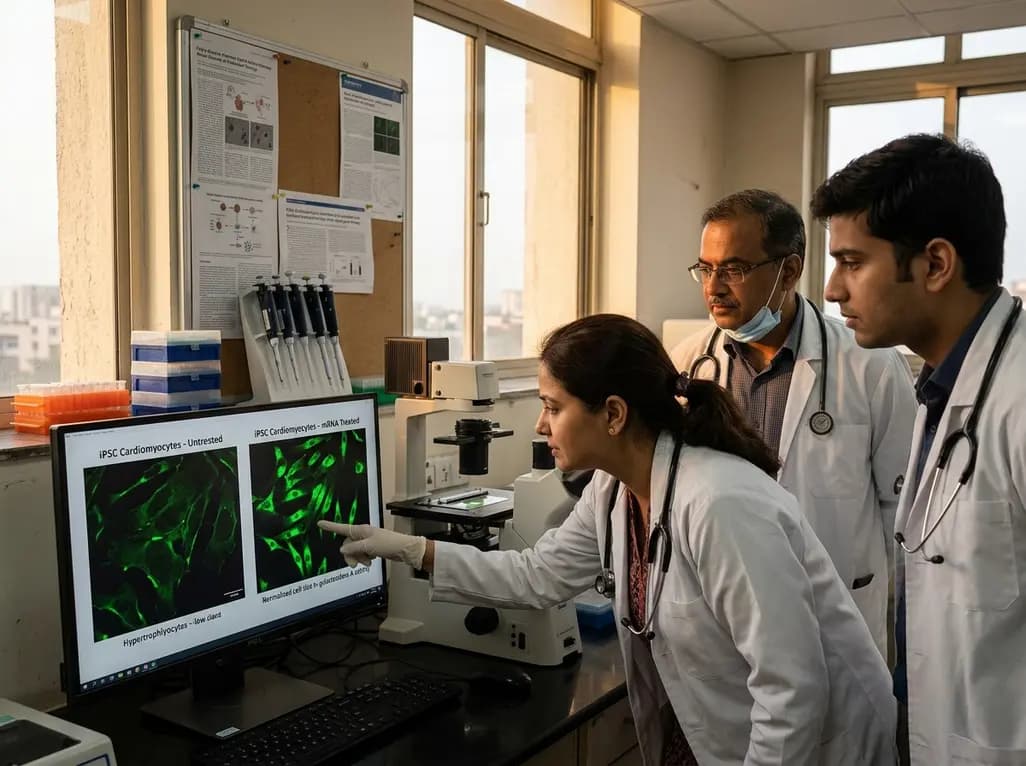
Fabry disease represents an X-linked lysosomal storage disorder caused by functional deficiency in the enzyme alpha-galactosidase A. This deficiency causes progressive intracellular accumulation of glycosphingolipids, primarily globotriaosylceramide, across multiple organ systems. Cardiovascular complications, particularly progressive left ventricular hypertrophy and heart failure, represent the leading cause of premature mortality. Traditional treatments, including enzyme replacement and chaperone therapies, offer incomplete organ protection and frequently face biological limitations. Recent preclinical investigations highlight Fabry disease mRNA therapy as an innovative strategy capable of reversing cardiac cellular pathology directly.
The cellular mechanisms driving Fabry cardiomyopathy remain complex and multifaceted. Primary glycosphingolipid deposition initiates cascade events that disrupt cardiac homeostasis long before gross hypertrophy appears. In human cardiomyocytes, substrate overload impairs mitochondrial architecture, compromising cellular bioenergetics and accelerating reactive oxygen species generation. Consequently, affected cardiac cells suffer from chronic oxidative stress, elevated apoptosis rates, and widespread transcriptional dysregulation.
Furthermore, substrate accumulation significantly impairs intracellular calcium signaling kinetics. Researchers observed prolonged calcium transient decay parameters in Fabry disease models, which directly compromises excitation-contraction coupling. Mechanistically, hyperphosphorylation of phospholamban emerges as a primary contributor to this calcium handling failure. Because traditional rodent models fail to recapitulate human cardiac responses, evaluating disease mechanisms requires human-relevant platforms. Human induced pluripotent stem cell models successfully bridge this translational gap. By generating cardiomyocytes carrying patient-specific mutations, investigators can study pathological features with high fidelity. This platform provides a robust environment for dissecting metabolic cascades and evaluating targeted therapies under realistic biological conditions.
To evaluate novel therapeutic strategies effectively, investigators engineered two human induced pluripotent stem cell platforms representing Fabry cardiomyopathy. These platforms included both gene-edited knock-out lines and patient-derived cells, which were differentiated into functional cardiomyocytes. Both models faithfully mirrored canonical pathological hallmarks, demonstrating complete enzyme deficiency alongside massive substrate storage.
Thereafter, researchers administered nucleoside-modified messenger RNA encoding alpha-galactosidase A to these diseased cardiomyocytes. The synthetic transcript delivers precise genetic instructions directly into the cytoplasm, bypassing mutated genomic DNA entirely. Host ribosomes translate the mRNA into functional enzyme molecules that translocate to lysosomal compartments. Experimental analyses revealed that Fabry disease mRNA therapy successfully restored physiological enzyme levels in both models. Crucially, treatment significantly reduced intracellular substrate burden within treated cells. By re-establishing intracellular substrate breakdown, this genetic approach effectively corrects the root biochemical defect driving cellular toxicity. These findings confirm that nucleoside-modified transcripts achieve robust expression and functional rescue in human cardiac tissues.
Restoring enzymatic activity represents only the initial phase of therapeutic success. True clinical benefit requires reversing downstream cellular damage and restoring baseline transcriptomic profiles. Comprehensive transcriptomic profiling demonstrated that untreated Fabry cardiomyocytes express widespread transcriptional anomalies, reflecting persistent metabolic strain and cellular injury. Following administration of nucleoside-modified transcripts, investigators observed remarkable normalization of these disrupted genetic networks.
Specifically, treatment attenuated pathways associated with apoptotic signaling and cellular stress responses. The functional restoration of alpha-galactosidase A reduced background oxidative stress, helping cardiomyocytes maintain mitochondrial integrity. Consequently, treated heart cells exhibited lower rates of apoptosis compared to untreated cohorts. Furthermore, transcriptomic normalization extended to structural and metabolic gene clusters, indicating comprehensive cellular rejuvenation rather than superficial substrate removal. These transcriptomic shifts underscore the broad biological impact of direct enzyme restoration at the cellular level. By resolving chronic substrate stress, messenger RNA delivery restores physiological transcription patterns, supporting long-term myocardial survival.
Beyond biochemical and transcriptomic clearance, restoring physiological contractility remains a critical objective for advanced heart failure therapies. Untreated Fabry cardiomyocytes present severe functional deficits, particularly regarding intracellular calcium handling. In healthy cardiac tissue, rapid calcium cycling dictates precise contraction and relaxation dynamics. However, Fabry cardiomyocytes exhibit prolonged calcium transient decay parameters, leading to impaired relaxation.
Mechanistic investigations pinpointed hyperphosphorylated phospholamban as a principal driver of this calcium dysregulation. Elevated phospholamban phosphorylation alters sarcoplasmic reticulum calcium ATPase activity, delaying cytosolic calcium clearance during diastole. Strikingly, therapy with nucleoside-modified mRNA normalized phospholamban phosphorylation states and restored healthy calcium decay kinetics. This functional recovery directly corrected electromechanical parameters, enabling cardiomyocytes to regain normal contractile behavior. By resolving calcium transient decay and contractile dysfunction, the therapy demonstrates physiological rescue. This functional normalization proves that eliminating substrate accumulation can reverse established excitation-contraction coupling defects in human heart cells.
The compelling preclinical evidence generated in human cardiac models marks a major advancement for translational cardiovascular medicine. Current management strategies for Fabry disease rely primarily on biweekly enzyme replacement therapy infusions or oral chaperones. Although these modalities delay systemic progression, they often fail to halt heart failure effectively. Limited tissue penetration, neutralising antibody formation, and target mutation restrictions frequently constrain long-term clinical efficacy.
In contrast, nucleoside-modified messenger RNA therapeutics offer distinct pharmacological advantages. Systemic delivery via lipid nanoparticles facilitates efficient uptake by cardiac tissues, enabling endogenous production of fully functional enzyme. This localized intracellular synthesis ensures immediate lysosomal targeting while minimizing systemic immunogenicity risks. Furthermore, messenger RNA approaches operate independently of specific patient gene mutations, making the strategy broadly applicable across all Fabry genotypes. As lipid nanoparticle delivery technologies mature, mRNA-based enzyme restoration stands poised to transform rare disease management and improve cardiovascular outcomes.
Fabry disease mRNA therapy delivers synthetic, nucleoside-modified transcripts encoding alpha-galactosidase A directly into host cells. Host ribosomes translate this genetic code into functional enzyme molecules that translocate into lysosomes. Inside lysosomes, the restored enzyme degrades accumulated globotriaosylceramide, resolving toxic substrate accumulation. This intracellular production bypasses host genetic mutations, offering a universal therapeutic strategy that targets the root cause of lysosomal substrate storage and associated cellular damage.
Fabry disease causes intracellular calcium dysregulation through hyperphosphorylation of phospholamban, which impairs sarcoplasmic reticulum calcium reuptake and prolongs calcium transient decay parameters. Nucleoside-modified mRNA therapy restores functional enzyme activity, clearing glycosphingolipid deposits and normalizing phospholamban phosphorylation levels. This molecular reset restores physiological calcium decay kinetics and improves excitation-contraction coupling, thereby reversing electrophysiological dysfunction in human cardiomyocytes suffering from Fabry-induced metabolic stress.
Standard animal models of Fabry disease often fail to replicate human cardiac phenotypes, such as progressive cardiomyocyte hypertrophy, calcium handling defects, and electrophysiological dysregulation. Human iPSC-derived cardiomyocytes accurately reproduce patient-specific pathology, including profound alpha-galactosidase A deficiency, globotriaosylceramide accumulation, mitochondrial dysfunction, and transcriptomic dysregulation. Consequently, these human cellular models provide an ideal translational platform for uncovering precise disease mechanisms and validating novel mRNA therapies prior to human clinical trials.
Disclaimer: This content is for informational and educational purposes only and should not be considered medical advice. Refer to the latest local and national guidelines for clinical practice.
References
1. Juchem M et al. Nucleoside-Modified mRNA Encoding Alpha-Galactosidase A Ameliorates Fabry Disease Phenotypes in Human IPSC-Derived Cardiomyocytes. Adv Sci (Weinh). 2026 Aug 13. doi: 10.1002/advs.77151. PMID: 42591063.
2. ter Huurne M et al. GLA-modified RNA treatment lowers GB3 levels in iPSC-derived cardiomyocytes from Fabry-affected individuals. Am J Hum Genet. 2023 Sep 7;110(9):1532-1547. doi: 10.1016/j.ajhg.2023.08.003.
3. Germain DP et al. Fabry disease: an overview of current and emerging therapies. Expert Opin Pharmacother. 2021 Jul;22(10):1241-1258. doi: 10.1080/14656566.2021.1895371.

Read summarized clinical updates, watch expert medical content, and earn CME certifications right from your smartphone.
Open your smartphone camera to scan and install.





A breakthrough study shows nucleoside-modified GLA mRNA therapy restores alpha-galactosidase A activity and reverses cardiomyopathy phenotypes in human iPSC-derived cardiomyocytes.
last month

Discover how catalytic nanozymes redefine autoimmune disease therapy by establishing a physiological redox set-point to restore immune tolerance without broad immunosuppression.
2 days back
Recent research reveals that downregulating YAP1/TAZ-TEAD via Hippo signaling triggers spontaneous human trophoblast syncytialization in 3D cultures, illuminating placental biology and preeclampsia.
2 weeks back

A landmark comparative study evaluates atrial electrophysiology across humans, swine, and rodents. By linking cellular recordings with transcriptomics and in silico modeling, researchers resolve cross-species gaps, explaining translational failures to advance targeted therapies for atrial arrhythmias.
2 weeks back

A novel pathology-adaptive surface engineering strategy uses functionalized plasma polymer coatings to selectively modulate AGE adsorption, reducing oxidative stress and restoring bone formation in diabetic and aging microenvironments.
last month

Researchers have developed an innovative ultrasound-responsive nano-contrast agent that co-delivers CIITA-siRNA and rapamycin directly to inflamed thyroid tissue, significantly reducing autoimmune injury and thyroid autoantibodies in preclinical models of Hashimoto thyroiditis.
2 weeks back
