.webp&w=384&q=75)

Loading, please wait...
Loading, please wait...
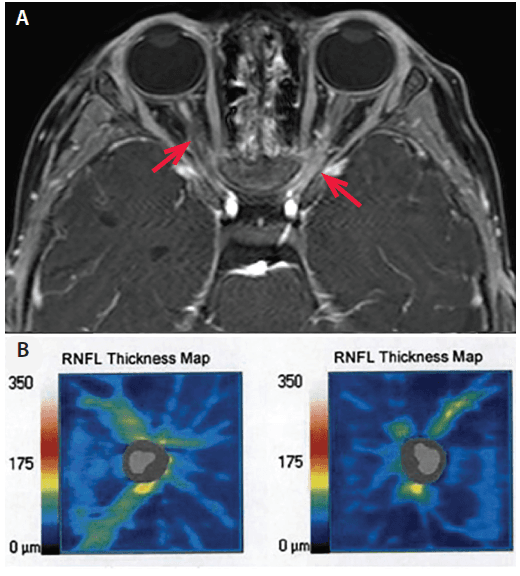
Optic neuritis is not a single disease entity. It can occur as part of multiple sclerosis, neuromyelitis optica spectrum disorder, MOG-antibody disease or other inflammatory disorders, and the treatment implications differ. This 2024 evidence review summarises contemporary diagnosis and management, including the role of MRI and disease-specific antibody testing. A key practical message is that atypical optic neuritis—such as severe bilateral disease, prominent disc swelling, unusual age or poor recovery—should trigger consideration of alternatives to typical MS-associated optic neuritis. High-dose corticosteroids remain central to acute treatment, while plasma exchange is considered when recovery is inadequate in severe inflammatory cases. The review also highlights that long-term relapse prevention depends on identifying the underlying disorder correctly. For HCPs, an apparent optic neuritis diagnosis should therefore trigger careful phenotyping rather than automatic labelling as MS. Accurate distinction between MS, NMOSD and MOGAD can determine prognosis, acute treatment intensity and maintenance therapy. The topic fits IANCON's dedicated neuro-ophthalmology workshop and its emphasis on visual field interpretation, OCT, pupils and neuro-ophthalmic signs in special scenarios.

Read summarized clinical updates, watch expert medical content, and earn CME certifications right from your smartphone.
Open your smartphone camera to scan and install.





Optic neuritis is not a single disease entity. It can occur as part of multiple sclerosis, neuromyelitis optica spectrum disorder, MOG-antibody disease or other inflammatory disorders, and the treatment implications differ. This 2024 evidence review summarises contemporary diagnosis and management, including the role of MRI and disease-specific antibody testing. A key practical message is that atypical optic neuritis—such as severe bilateral disease, prominent disc swelling, unusual age or poor recovery—should trigger consideration of alternatives to typical MS-associated optic neuritis. High-dose corticosteroids remain central to acute treatment, while plasma exchange is considered when recovery is inadequate in severe inflammatory cases. The review also highlights that long-term relapse prevention depends on identifying the underlying disorder correctly. For HCPs, an apparent optic neuritis diagnosis should therefore trigger careful phenotyping rather than automatic labelling as MS. Accurate distinction between MS, NMOSD and MOGAD can determine prognosis, acute treatment intensity and maintenance therapy. The topic fits IANCON's dedicated neuro-ophthalmology workshop and its emphasis on visual field interpretation, OCT, pupils and neuro-ophthalmic signs in special scenarios.
4 weeks back

Discover how catalytic nanozymes redefine autoimmune disease therapy by establishing a physiological redox set-point to restore immune tolerance without broad immunosuppression.
Last week

Recent research reveals that downregulating YAP1/TAZ-TEAD via Hippo signaling triggers spontaneous human trophoblast syncytialization in 3D cultures, illuminating placental biology and preeclampsia.
3 weeks back

A landmark comparative study evaluates atrial electrophysiology across humans, swine, and rodents. By linking cellular recordings with transcriptomics and in silico modeling, researchers resolve cross-species gaps, explaining translational failures to advance targeted therapies for atrial arrhythmias.
3 weeks back

A novel pathology-adaptive surface engineering strategy uses functionalized plasma polymer coatings to selectively modulate AGE adsorption, reducing oxidative stress and restoring bone formation in diabetic and aging microenvironments.
last month
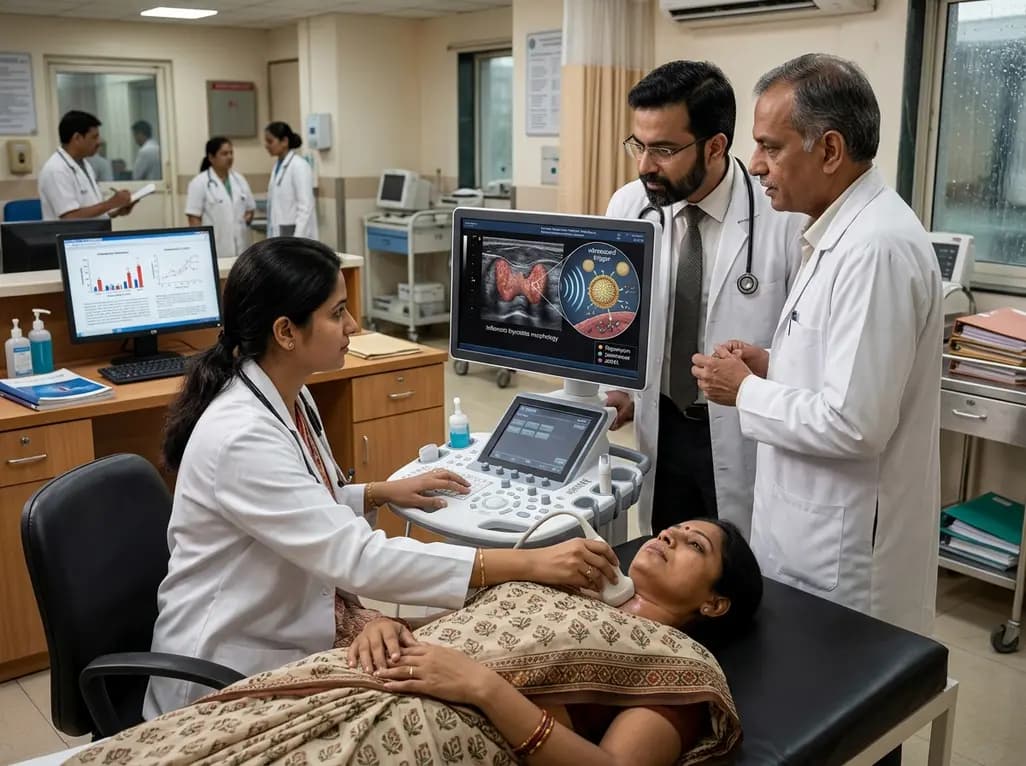
Researchers have developed an innovative ultrasound-responsive nano-contrast agent that co-delivers CIITA-siRNA and rapamycin directly to inflamed thyroid tissue, significantly reducing autoimmune injury and thyroid autoantibodies in preclinical models of Hashimoto thyroiditis.
3 weeks back
